Written by Shreshtha Das, Consultant for SRHM
Sexual and Reproductive Health Matters (SRHM, formerly Reproductive Health Matters) has long been regarded as a truly global peer-reviewed open access journal. However, it was always much more than a magazine. A wider commitment has been made to translate selected works into seven language editions other than English. By building capacity and partnering with local organizations, SRHM ensures that the next generation of researchers, policy makers, service providers and advocates from the Global South are well equipped to address SRHR issues locally and globally.
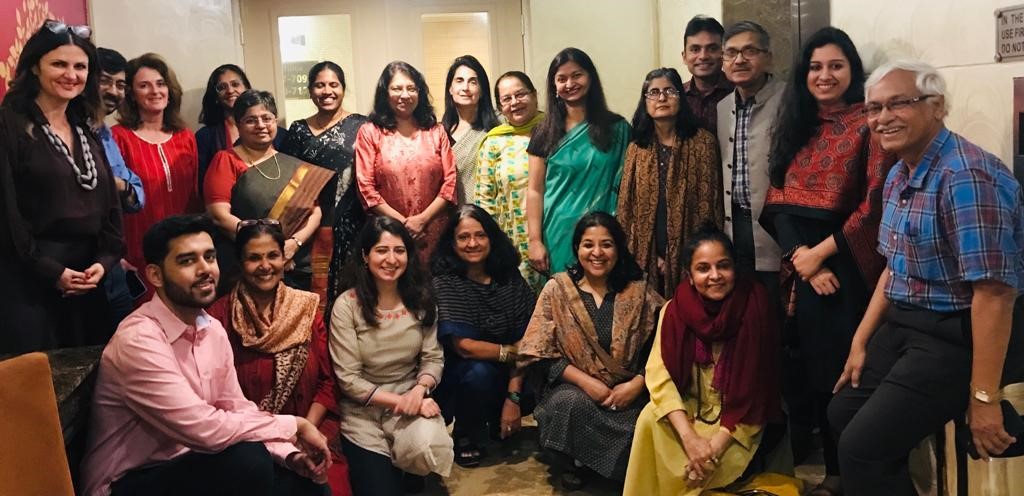
In 2018, SRHM launched a new strategy that includes the reorientation of language publications towards a stronger regional organizational presence as a journal, but also as a knowledge hub for dialogue and action on SRHR, with the aim of creating regional, national and community ownership of knowledge creation. With the support of the Gates Foundation India, SRHM launched its first regional initiative in South Asia and hosted a strategy meeting on 5-6 March 2020 in New Delhi, India. The strategy meeting brought together SRHR organizations, practitioners, researchers, academics and advocates, government champions, youth leaders and other key stakeholders committed to progressive social and political change on SRHR issues, especially from India and some prominent experts from Bangladesh. Further dialogues to promote the newly developed regional strategy are planned to be held in Sri Lanka, Nepal and Pakistan.
Over the past 27 years, SRHM has already published over 150 articles from the South Asian region, covering a range of topics such as maternal health, abortion, adolescent SRHR, health systems, policy and access, family planning and contraception, among others. However, through this initiative, SRHM aims to dive deeper into the regional context and address priority areas of concern from a rights-based and evidence-based perspective. The strategy meeting provided a critical space for key stakeholders in the region to discuss and debate critical questions about what constitutes rights-based and evidence-based knowledge for SRHR from a regional perspective. what forms capacity building should take; and what are the emerging and priority issues around SRHR in the region.
Creating rights-based and evidence-based knowledge
As one of the priority areas of research in need of greater research globally and regionally, the sessions explored the question of what constitutes ‘rights’ and ‘evidence’, how to incorporate a rights-based approach into knowledge generation methodologies, and how research and knowledge can be used to advance policy and program development and advocacy.
Given that SRHM plays a critical role in introducing alternative sources of knowledge into the SRHR discourse, the team considered the importance of recognizing various rights-based methodologies for evidence and knowledge creation, including qualitative, quantitative and mixed methods, legal and policy research and analysis within a multidisciplinary field of interest.
Acknowledging the space that SRHM provides for legitimizing and credence to local knowledge held by community groups, the meeting highlighted the need to promote and further adopt knowledge creation methodologies that highlight community voices, whether these communities may be rural women, sex workers, transgender people, women with disabilities, etc. We therefore need to push the boundaries of what constitutes ‘knowledge’ and ‘evidence’, to ensure that meaningful community participation is ensured as an equal at every stage, including both the right to meaningfully participate in the knowledge creation process and the right to use the knowledge product that is created.
There was consensus among the group on the importance of defining research questions and whether and how they include rights issues such as consent, choice, decision-making capacity, accountability, equity, access and quality. Participants emphasized the need for research questions to be expansive enough to address discrimination and stigma in service delivery and to consider social determinants of health. The discussions also unpacked critical questions around ethical considerations that guide the researcher, emphasizing that any research and accompanying process should be guided by the best interests of affected populations.
Thus, the discussions highlighted some key issues that could guide SRHM and its partners as they move towards further developing and influencing knowledge creation in the region in general, and in the SRHM Journal space in particular.

Capacity building and mentoring
The second critical point of discussion focused on building capacity to undertake rights-based and evidence-based research and publication in peer-reviewed scholarly spaces. As is customary in the SRHM process, an important companion to the regional journal issue would be a capacity building and mentoring component. While mentoring has always been an integral part of journal article development, enhanced through the editorial process, the capacity building initiative being considered as part of this process seeks deeper, more sustained and long-term engagement rooted in regional expertise, engagement and collaboration.
As decided in the meeting, a key element of the regional initiative focused on the South Asia Regional Edition of the SRHM Journal, will be capacity building in the form of a regionally developed, owned and managed mentorship programme. Part of this program would be to announce the scholarships and identify the mentors, who will work together in a guided 20-month mentoring program. The mentoring process will include a range of activities, from methodology workshops, to webinars, one-on-one meetings with mentors, analysis and writing workshops.
Through the meeting it emerged that the scholarship and mentoring process must necessarily involve a wide range of stakeholders, from academics, researchers and activists to community groups themselves. By reaching out to this broad cohort, the SRHM will aim to provide a space for both young and experienced researchers who would like to have a more in-depth knowledge of rights-based methodology. By this means, the knowledge creation process can be truly decentralized and democratic and challenge the assumptions of knowledge power hierarchies between researchers and community groups. The participants offered many solutions for how this diverse group could be considered in the design of the fellowship workshops.
Most importantly, the fellowship and mentoring process would be a partnership between mentors and fellows, to ensure the promotion of a common good of fostering and strengthening a community of global and regional thinkers advancing rights-based and evidence-based knowledge on SRHR.
Scope of the SRHM South Asia Regional Journal Issue
The meeting also shed light on emerging and priority issues as well as gaps related to SRHR dialogue in the region. An analysis conducted by SRHM of journal articles published from the South Asian region revealed that most research publications in the past 27 years, since the journal’s inception, focused on abortion (21%), health systems, policy and access (16%), maternal health (15%), family planning and contraception (8%), and adolescents and youth (8%). There was engagement on issues related to human rights (5%), HIV/AIDS (5%), sexuality and sexual rights (5%) and sexual violence (5%), but more limited coverage of sexual health education (2%), sex work (2%), infertility (1%), menstrual hygiene (1%), refugee and migration issues (1%) and reproductive cancers (1%).
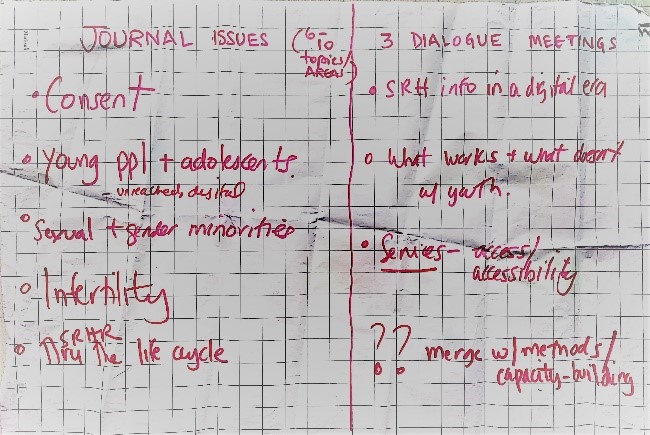
Based on the trends revealed by the SRHM study and the assessment of stakeholders present at the meeting, gaps were identified to determine which areas of knowledge creation needed emphasis and a list of priority topics was developed. These included areas such as adolescent SRHR. SRHR of LGBTI populations. the impact of socio-political and economic development on SRHR; the impact of marginalization and discrimination; Exploring the relevance of power and hierarchy of SRHR. consent, agency and choice; examining opportunities and challenges related to technology and SRHR; and transmedicalization and authoritarian interventions.
It was decided that the call for papers for the Regional Journal Issue would have a more general focus on SRHR, while drawing attention to the importance of the aforementioned areas of concern.
 |  |
Way ahead
The strategy meeting and the establishment of the South Asia Regional Hub mark the beginning of an exciting journey for SRHM, allowing it to build on existing collaborations, networks and partnerships to advance a rights-based agenda to generate knowledge on SRHR in the region and with global relevance. In the coming months, watch the SRHM space for calls for submissions, mentorships and fellowships from the South Asia region. SRHM will also launch the rights-based methodology knowledge-building initiative, starting in the coming months with webinars and thematic dialogue meetings focused on the South Asian region, but with global partnerships and relevance.
Beyond the regional issue and upcoming scholarship, the SRHR community can also look forward to the addition of new tools and webinars for conducting rights-based capacity building that will emerge from the process and feed into a repository of analytical tools and approaches for capacity building in SRHR.
In turn, SRHM looks forward to continued engagement and support from the SRHM community as we and our partners in South Asia embark on this new initiative, based on collaborations, exchanges and inclusive cross-cutting processes in regional settings.
For more information contact [email protected] or visit our website at SRHM.org.