

Close Menu
Healthtost
  • News
  • Mental Health
  • Men’s Health
  • Women’s Health
  • Skin Care
  • Sexual Health
  • Pregnancy
  • Nutrition
  • Fitness
  • Recommended Essentials
What's Hot

The dual strategy of blood donation and early screening offers hope to families

June 15, 2026

Knowing your plants is a plus – but formulation has different rules – Sally B’s Skin Yummies

June 15, 2026

Complete Career Guide — Sexual Health Alliance

June 15, 2026
Facebook X (Twitter) Instagram
  • About Us
  • Contact Us
  • Privacy Policy
  • Terms and Conditions
  • Disclaimer
Facebook X (Twitter) Instagram
Healthtost
SUBSCRIBE
  • News

    The dual strategy of blood donation and early screening offers hope to families

    June 15, 2026

    Study reveals frequent stop and start patterns with GLP-1 drugs

    June 14, 2026

    New DNA test improves diagnosis of rare genetic disorders

    June 14, 2026

    Non-invasive sequencing expands the possibilities of prenatal genetic testing

    June 13, 2026

    Clever student masters art of fake wounds to create life-saving simulations for army and NHS

    June 13, 2026
  • Mental Health

    Performing under pressure? For athletes it depends on 3 main things

    June 14, 2026

    GLP-1 drugs like Ozempic promise more than just weight loss. But what is science versus hype?

    June 10, 2026

    Expectations of Indian Daughters: 10 Weird

    June 8, 2026

    How to Encourage a Child to Try New, Scary Things (Without Injuring Him in the Process)

    June 5, 2026

    Why your wearable health tracker can make you feel anxious

    June 1, 2026
  • Men’s Health

    Fathers shape childhood obesity risk long before birth

    June 10, 2026

    5 Diet-Boosting Tips to Spread Protein Throughout the Day

    June 9, 2026

    The Louis L’Amour Workout | The Art of Manliness

    June 9, 2026

    Stopping authoritarian strongmen and returning to the roots of our partnership

    June 8, 2026

    Low testosterone changes your body: See what a DEXA scan can reveal

    June 4, 2026
  • Women’s Health

    Uncovering the Latest Amino Acid Link to Weight Loss: The Cysteine ​​Link

    June 14, 2026

    Our Health Survey is ongoing. We have until July 13 to fight back.

    June 14, 2026

    Why is my sex drive so low? 10 common causes of low libido in women

    June 13, 2026

    “How to Show Up” – Supporting a woman undergoing cancer treatment

    June 13, 2026

    Does your cervix dilate during your period? Truth About Dilation And Cramps – Vuvatech

    June 12, 2026
  • Skin Care

    Knowing your plants is a plus – but formulation has different rules – Sally B’s Skin Yummies

    June 15, 2026

    Why Skin Barrier Repair C – Lifeline Skin Care

    June 14, 2026

    Can You Eat Your Way To Dewier Skin? Hyaluronic acid for skin hydration

    June 14, 2026

    The New Shower Standard | Get to know the body cleansing gels

    June 13, 2026

    Why adult acne occurs and how to care for breakout-prone skin

    June 12, 2026
  • Sexual Health

    Complete Career Guide — Sexual Health Alliance

    June 15, 2026

    Sex after 50—Sexuality as we age

    June 12, 2026

    5 unexpected ways to improve your sex life

    June 11, 2026

    Fildena 100 Safety Guide | Tips and information for safe use

    June 10, 2026

    Pride Month and LGBTQ+ Men’s Health: Why Inclusive Care Matters

    June 9, 2026
  • Pregnancy

    Nosebleeds in Pregnancy: Causes and Safe Treatments

    June 14, 2026

    What can they do for women? – Pink stork

    June 14, 2026

    A one-of-a-kind pregnancy magazine: for reflection, healing and growth

    June 11, 2026

    Your No-BS guide to surviving a summer pregnancy

    June 9, 2026

    How to detect pre-eclampsia early before it becomes dangerous

    June 7, 2026
  • Nutrition

    The vaginal health boom and why it matters

    June 14, 2026

    Diagon Alley, Gringotts, Toothsome & Our Last Day • Kath Eats

    June 14, 2026

    Which beans are best at preventing the spread of cancer?

    June 13, 2026

    The energy equation: PFF at every meal

    June 12, 2026

    How to fuel a marathon, according to a nutritionist and ultra runner

    June 11, 2026
  • Fitness

    My experience at Korean Head Spa

    June 14, 2026

    The Fitness Zeitgeist – Tony Gentilcore

    June 13, 2026

    Too busy for the gym? Try this 21-minute workout

    June 12, 2026

    5 Reasons Yoga Moms Turned to Silent Heavy Silicone Vests

    June 11, 2026

    Ankles, knees and hips: 10 joint-friendly exercises

    June 9, 2026
  • Recommended Essentials
Healthtost
Home»News»The dual strategy of blood donation and early screening offers hope to families
News

The dual strategy of blood donation and early screening offers hope to families

healthtostBy healthtostJune 15, 2026No Comments4 Mins Read
Facebook Twitter Pinterest LinkedIn Tumblr Reddit WhatsApp Email
The Dual Strategy Of Blood Donation And Early Screening Offers
Share
Facebook Twitter LinkedIn Pinterest WhatsApp Email

Every two to five weeks, patients with thalassemia major undergo a life-saving ritual: a mandatory blood transfusion. Without it, severe anemia quickly leads to organ failure, stunted growth and early death. This treatment typically drains up to USD 60,000 per patient each year, overwhelming both household incomes and strained healthcare systems in developing countries.

For families, the burden of this treatment is staggering, stretching emotional and financial resources to breaking point. However, health experts worldwide agree on one critical fact: combining sustained blood donation efforts with effective prevention strategies offers the most promising path to reducing the long-term impact of thalassemia.

Science and Economics of Prevention

Thalassemia is an inherited hemoglobin disorder characterized by reduced or absent synthesis of globin chains, resulting in chronic anemia of varying severity. It is estimated that approximately 5.2% of the world’s population carries a clinically significant hemoglobin variant, contributing to the birth of hundreds of thousands of children with severe hemoglobin disorders each year.

“Available options may include avoiding inter-carrier marriage in certain communities, prenatal diagnosis, preimplantation genetic testing, or preparation for the birth and optimal care of an affected child, depending on the legal, cultural, religious and social context of each country,” states Dr.

Carrier screening offers a detailed genetic profile that supports informed decision making. By taking this step early, couples buy time to explore their options—whether mindful natural conception, IVF with genetic testing, or other personalized family planning approaches.

When both parents are carriers of pathogenic variants associated with thalassemia, each pregnancy has a 25% chance of giving birth to an affected child with a severe form of the disease.

Although the global incidence of thalassemia is estimated at approximately 4.4 cases per 10,000 live births, the disease burden is disproportionately concentrated in the Mediterranean region, the Middle East, Africa, South Asia, Southeast Asia, and southern China. In some regions of Southeast Asia, carrier frequencies have been reported to exceed 20% of the population.

“In Thailand, approximately 100,000 patients with thalassemia major require lifelong blood transfusions and iron-deprivation therapy. The Thai government spends approximately 12-12.6 billion THB (approximately 364-382 million USD) annually to support the long-term management of these patients,” notes Chiprasert University Professor Pornang.

Several countries have demonstrated that population-based prevention programs can significantly reduce the incidence of thalassemia major. Saudi Arabia and Iran, for example, have reported significant reductions in affected births after implementing mandatory premarital screening initiatives.

A study conducted in Thailand showed that incorporating genetic testing into standard thalassemia screening programs generated an estimated net economic benefit of approximately USD 490 per person screened compared with conventional screening approaches alone. These findings suggest that the integration of genetic testing can improve both clinical effectiveness and long-term cost-effectiveness.

“Genetic testing offers a significantly higher diagnostic yield than conventional screening methods because it can simultaneously identify a wide range of pathogenic variants, including rare mutations that may be missed by targeted analyses,” explains Professor Sakorn.

How education empowers communities

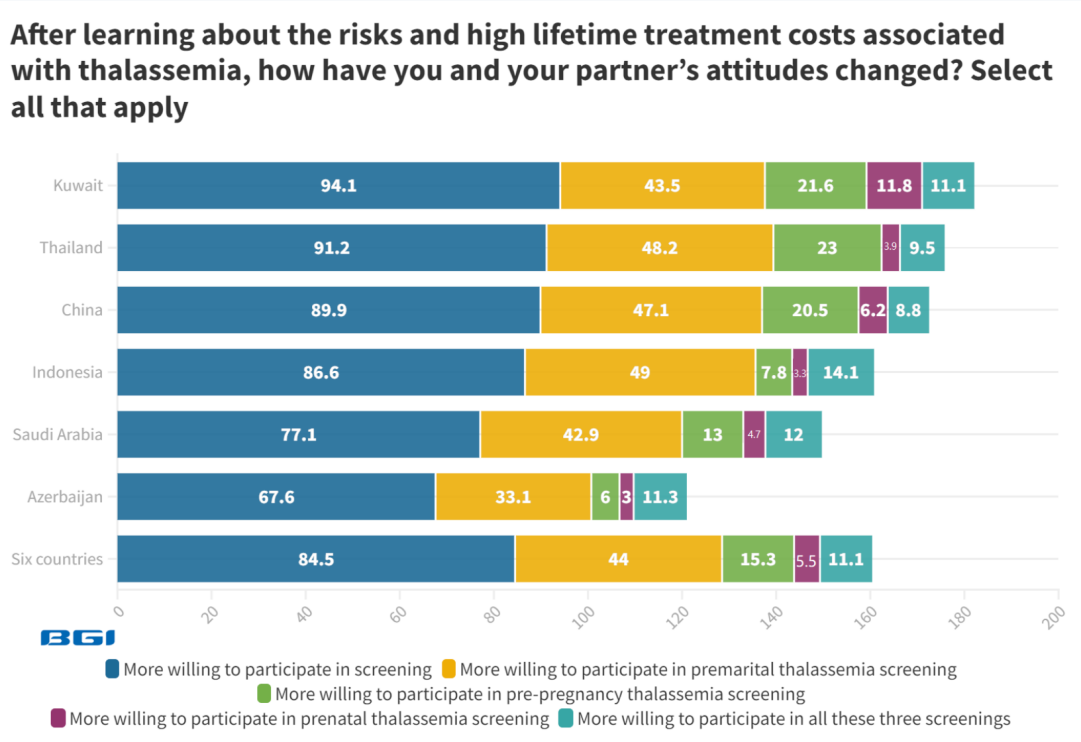
Evidence shows that awareness and education play a critical role in improving participation in carrier screening programs. A global survey found that 84.5% of women reported a greater willingness to be screened for thalassemia after receiving information about the health consequences and long-term economic burden associated with the disease. The decision to participate in screening is influenced by a number of practical factors, including accessibility to testing services, affordability, and the timing of screening, particularly before marriage or family planning.

BGI Genomics Global Status of Thalassemia Awareness Report 2023. Image credit: BGI Genomics

Despite advances in screening technologies, public awareness remains insufficient in many areas. Dr Eleftheriou emphasizes that limited access to education, counseling and diagnostic services continues to hamper global prevention efforts, highlighting the need for sustained community engagement and public health initiatives.

Dr Dina Garniasih from Harapan Kita Women’s and Children’s Hospital, Indonesia, advocates the integration of thalassemia screening into routine health care services, particularly during adolescence, premarital health assessments and early pregnancy.

To enhance diagnostic capacity, her institution is working with BGI Genomics, a precision medicine company, to apply high-throughput sequencing technologies to routine diagnostic workflows. In the institution’s experience, this approach has improved diagnostic accuracy and expanded access to molecular testing. The collaboration also aims to improve affordability, support the development of local genome databases, and expand population-level screening programs.

A double march forward

The combination of voluntary blood donation and early screening represents a complementary strategy to address the burden of thalassemia. While blood donation remains essential for patients living with transfusion-dependent disease, screening and prevention programs offer an opportunity to reduce the number of future affected births.

As high-throughput sequencing technologies become more accessible and comprehensive screening programs gain wider political support across Asia and other high-prevalence regions, reducing the burden of thalassemia major is becoming an increasingly realistic public health goal.

blood donation dual EARLY Families hope offers screening strategy
bhanuprakash.cg
healthtost
  • Website

Related Posts

Study reveals frequent stop and start patterns with GLP-1 drugs

June 14, 2026

New DNA test improves diagnosis of rare genetic disorders

June 14, 2026

Non-invasive sequencing expands the possibilities of prenatal genetic testing

June 13, 2026

Leave A Reply Cancel Reply

Don't Miss
News

The dual strategy of blood donation and early screening offers hope to families

By healthtostJune 15, 20260

Every two to five weeks, patients with thalassemia major undergo a life-saving ritual: a mandatory…

Knowing your plants is a plus – but formulation has different rules – Sally B’s Skin Yummies

June 15, 2026

Complete Career Guide — Sexual Health Alliance

June 15, 2026

The vaginal health boom and why it matters

June 14, 2026
Stay In Touch
  • Facebook
  • Twitter
  • Pinterest
  • Instagram
  • YouTube
  • Vimeo
TAGS
Baby benefits body brain cancer care Day Diet disease exercise finds Fitness food Guide health healthy heart Improve Life Loss Men mental Natural Nutrition Patients Pregnancy protein research reveals risk routine sex sexual Skin Skincare study Therapy Tips Top Training Treatment ways weight women Workout
About Us
About Us

Welcome to HealthTost, your trusted source for breaking health news, expert insights, and wellness inspiration. At HealthTost, we are committed to delivering accurate, timely, and empowering information to help you make informed decisions about your health and well-being.

Latest Articles

The dual strategy of blood donation and early screening offers hope to families

June 15, 2026

Knowing your plants is a plus – but formulation has different rules – Sally B’s Skin Yummies

June 15, 2026

Complete Career Guide — Sexual Health Alliance

June 15, 2026
New Comments
    Facebook X (Twitter) Instagram Pinterest
    • About Us
    • Contact Us
    • Privacy Policy
    • Terms and Conditions
    • Disclaimer
    © 2026 HealthTost. All Rights Reserved.

    Type above and press Enter to search. Press Esc to cancel.