


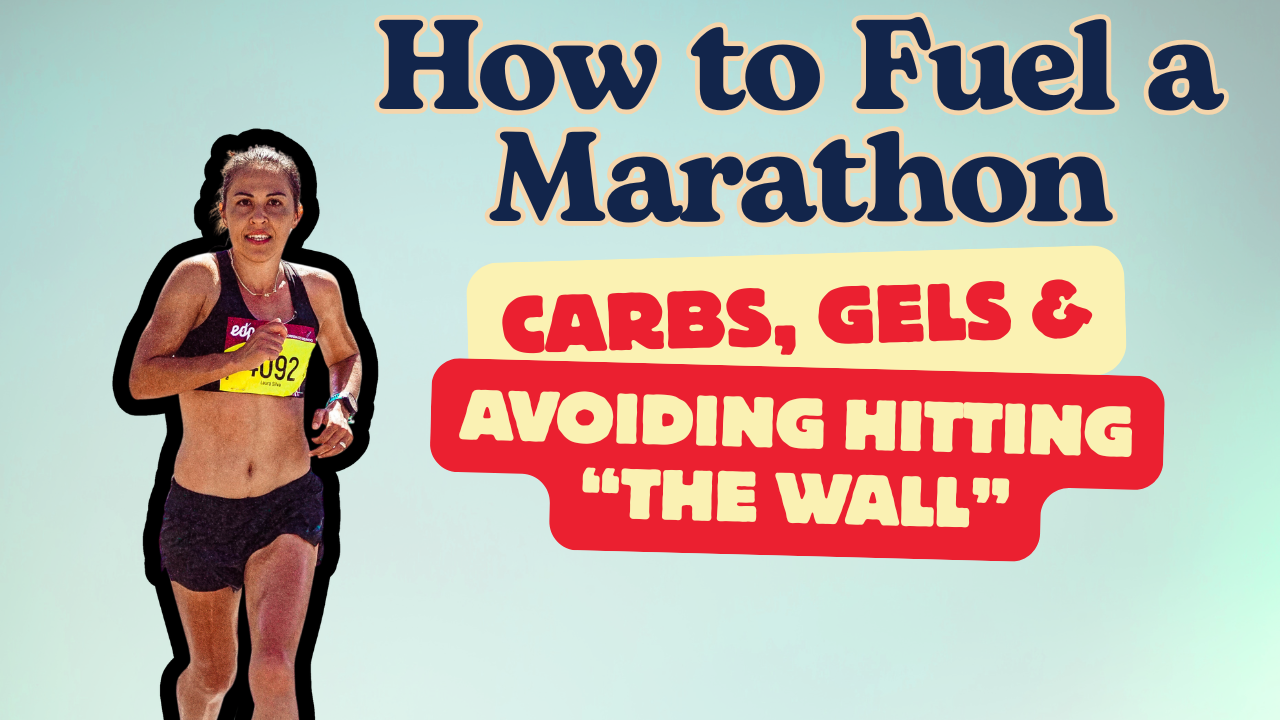
If you’ve ever hit a wall during a long run, you know how brutal it feels. It happened to me during my first marathon and running the last 10k was beyond brutal.
Your legs feel heavy, your energy plummets, and suddenly the miles ahead feel impossible. Most runners assume it’s a training issue, but more often than not it’s a nutrition issue.
In this post, I break down exactly how to fuel a marathon (and long runs in general) with insights from registered dietitian and ultramarathoner Amy Goblirsch. From carbs per hour to gels vs. real food, here’s what you need to know to run strong from start to finish.
Why most runners give up
One of the biggest mistakes runners make is simply not eating enough during their run.
Even seasoned runners fall into this trap. As Amy shared:
“I look back at my first marathon where I made all the mistakes I tell runners not to make… I didn’t carb load, I took half a gel at mile 15… I didn’t eat after the run… every mistake.”
The result? Poor performance, slow recovery and that terrible crash late in the race. Most runners think they don’t need sugary gels to play or think sports products are “bad” for them. But, in reality, your body needs fuel after the first hour of exercise.
Glycogen stores run out after about 60 minutes and your body runs on empty. This seriously affects performance and makes you feel awful, especially during a multi-hour race like a marathon. You can’t rely on willpower to get through a marathon. You need fuel.
How many carbs do you need per hour?
When it comes to fueling during a run, carbs are king. Amy recommends focusing less on total calories and more on carbohydrate intake. “If you’re going to run over two and a half hours … you’re going to aim for 60 to 90 grams of carbs per hour,” says Goblirsch.
That might sound like a lot, but newer research (and what elite runners are doing) pushes those numbers even higher.
Why? Because carbohydrates are your body’s preferred energy source during endurance exercise. If you don’t replenish them, you’ll eventually run out—aka, hit the wall.
However, you can’t push to the upper end of the carb range without training the gut to tolerate that amount. Start small (15-30g/hr) during training runs and work your way up to something more substantial).
When should you start fueling?
This is where most runners go wrong: they wait too long to start fueling during the race.
“You want to fuel from the first 30 minutes,” says Goblirsh. “You don’t want to wait too long to refuel and dig yourself into a hole. It’s going to be so hard to dig yourself out of it.”
You need to use up a lot of fuel during a marathon, so it’s best to start early to fuel up. Even if your run is less than 2 hours, practicing early fueling helps you:
- Train your gut
- Create a match day strategy
- Avoid delayed energy crises
Bottom line: Don’t wait until you feel tired. Fuel before you need it.
Gels vs. Chews vs. Real Food
There is no one size fits all approach to power feeding – it’s all about what works for you. “This can be from gels, chews… or food sources like a banana, a granola bar… and endurance drinks like Gatorade… all of these can help you meet those carb needs,” says Goblirsch.
Not a fan of gels? You have other options, including:
- Chunks or chews
- Sports drinks
- Caramel (yes, really)
- Real food like bananas or bars
Sports drinks, gums and chews are designed to be tolerable for runners during a race, meaning they shouldn’t cause excessive gastrointestinal distress. But other options work too. Find out what works best for you during training.
Can you train your gut? (Yes — And You Should)
If you think, There’s no way my stomach can handle that much fuelyou are not alone.
But bowel training is real and it works. “Training your gut is one thing… it’s not just training your legs… it’s also training your stomach to figure out what fuel works best for you,” says Goblirsch.
Start small and create:
- Start with a lower carb intake per hour such as 15-30 grams, then increase to 30-60 grams and so on
- Increase gradually during training runs
- Try different fuel types and timing
This is how you avoid GI issues on race day and actually absorb the fuel you consume.
Hydration is more important than you think
Catering is not just about food. Hydration plays a huge role in performance and digestion. “Dehydration can not only reduce performance, it can lead to gastrointestinal problems. So it’s very important to stay hydrated,” says Goblirsh.
As an added bonus, sports drinks can also help you reach your carb goals.
For example:
- One gel = ~20–40g carbs
- A sports drink = ~20g carbs
Combine them and you’re much closer to your hourly carb goal without needing extra fuel.
The mistake that leads to injury and burnout
The feed doesn’t stop when your run is over. In fact, one of the biggest issues Goblirsch sees is runners not eating enough after long runs: “You can’t just listen to your hunger cues…your hunger cues won’t lead to supporting recovery.”
After long runs, appetite often disappears, but your body still needs carbohydrates to replace glycogen stores and protein to help repair muscles.
If you feel exhausted after a long time, try these recovery strategies:
- Drink your calories (smoothies, chocolate milk)
- Set food reminders
- Add high-calorie foods like avocado
Failure to refuel can lead to poor recovery, which can increase your risk of injury and make tomorrow’s workout more difficult.
Do slower runners need less fuel?
The short answer is no. “It still needs to be within that 60 to 90 grams of carbs per hour,” confirms Goblirsch.
In fact, slower runners may need more overall fuel because they are off the course more. This is why feeding strategies should be based on this time, not pace.
For years, carbs and sugar have been misunderstood – but in endurance sports, they’re essential.
As Amy put it: “The goal is to use what works best for you… and understand that sugar is what your body needs to perform.”
When you feed right, everything changes. You feel stronger in the middle of the run. You finish faster. You’re recovering better.
And most importantly – you really enjoy running.
Listen to the full episode
Want to hear the full discussion and get even more practical advice?
🎧 Listen to it Apple or Spotify.
📺 Watch the full episode at YouTube
