

Close Menu
Healthtost
  • News
  • Mental Health
  • Men’s Health
  • Women’s Health
  • Skin Care
  • Sexual Health
  • Pregnancy
  • Nutrition
  • Fitness
  • Recommended Essentials
What's Hot

Researchers identify molecular pathway that delays diabetic wound healing

June 23, 2026

What chess has taught me about my ADHD brain

June 23, 2026

Redefine your fitness with hybrid training

June 23, 2026
Facebook X (Twitter) Instagram
  • About Us
  • Contact Us
  • Privacy Policy
  • Terms and Conditions
  • Disclaimer
Facebook X (Twitter) Instagram
Healthtost
SUBSCRIBE
  • News

    Researchers identify molecular pathway that delays diabetic wound healing

    June 23, 2026

    The menstrual cycle changes heart rate variability but not strength

    June 23, 2026

    Using the mathematics of quantum mechanics to improve neuroblastoma outcomes

    June 22, 2026

    Prolonged use of Instagram can change the way the brain perceives our body

    June 21, 2026

    NYU Langone Performs World’s First HIV-to-HIV Lung Transplant

    June 21, 2026
  • Mental Health

    five tips from influential thinkers to calm your nerves

    June 19, 2026

    10 Ways to Find Your Purpose as a Married Woman

    June 17, 2026

    Performing under pressure? For athletes it depends on 3 main things

    June 14, 2026

    GLP-1 drugs like Ozempic promise more than just weight loss. But what is science versus hype?

    June 10, 2026

    Expectations of Indian Daughters: 10 Weird

    June 8, 2026
  • Men’s Health

    What chess has taught me about my ADHD brain

    June 23, 2026

    Mix up your workout with Myo-Reps

    June 23, 2026

    Why we keep dating the wrong person and how you can find the right life partner now

    June 22, 2026

    Higher BMI increases risk of 19 cancers as global review widens obesity-cancer link

    June 17, 2026

    Lane 1 of the track

    June 16, 2026
  • Women’s Health

    Redefine your fitness with hybrid training

    June 23, 2026

    Judenth and Black Women Who Made Freedom Practice

    June 23, 2026

    What are the 5 GYN Cancers?

    June 22, 2026

    Causes, Treatment and Treatment Tips – Vuvatech

    June 21, 2026

    Lara Kerner on music, fitness and life without limits

    June 19, 2026
  • Skin Care

    Redefining Glow: Why Secretome Skincare and AI Are the Future of Beauty | Skin secrets

    June 23, 2026

    Men’s Skin Care: Why a Gentleman’s Facial is the Only Treatment You Really Need

    June 22, 2026

    DIY Castor Oil Eye Serum Roll On

    June 19, 2026

    What is my skin type and why it matters

    June 18, 2026

    Ingredient Spotlight: Betaine – Woohoo Body

    June 17, 2026
  • Sexual Health

    Creating supportive recovery spaces for LGBTQ+ people

    June 23, 2026

    Complete career guide for 2026 — Sexual Health Alliance

    June 23, 2026

    Menopause and sexual health | American Association for Sexual Health

    June 20, 2026

    Hormone therapy: Testosterone and its use in sexual health

    June 20, 2026

    4 Reasons to Do Pelvic Floor Exercises (and How!)

    June 19, 2026
  • Pregnancy

    “Is it a boy or a girl?” Old Wives’ Tales Gender Prediction Summary

    June 23, 2026

    Daily exposure to chemicals during pregnancy may be linked to older, smaller babies

    June 22, 2026

    What to consider when choosing a stem cell bank in India

    June 21, 2026

    Should women over 30 take creatine? – Pink stork

    June 20, 2026

    Hidradenitis suppurativa: When HS joins the journey of pregnancy

    June 20, 2026
  • Nutrition

    10 Diet Mistakes to Avoid

    June 23, 2026

    What is body liberation? Moving beyond mainstream body positivity

    June 22, 2026

    Strong Men, Healthy Men: The Truth About Energy, Testosterone, Strength, and Longevity

    June 21, 2026

    Heart-healthy hot sauce: Fire up the flavor, watch the salt

    June 21, 2026

    20 High-Protein Snacks for Busy Moms (Prep and Go)

    June 19, 2026
  • Fitness

    Some Postpartum Thoughts – Tony Gentilcore

    June 21, 2026

    The best sleep routine for men over 50 who want more energy

    June 20, 2026

    Is it a good source?

    June 20, 2026

    How to Stay Active and Get Your 10,000 Daily Steps in Auto-centric Houston

    June 18, 2026

    ‘Squatter Hunter’ Flash Shelton Reveals The Scaling Tactics That Help Him Reclaim Homes Safely

    June 16, 2026
  • Recommended Essentials
Healthtost
Home»Mental Health»Why your wearable health tracker can make you feel anxious
Mental Health

Why your wearable health tracker can make you feel anxious

healthtostBy healthtostJune 1, 2026No Comments5 Mins Read
Facebook Twitter Pinterest LinkedIn Tumblr Reddit WhatsApp Email
Why Your Wearable Health Tracker Can Make You Feel Anxious
Share
Facebook Twitter LinkedIn Pinterest WhatsApp Email

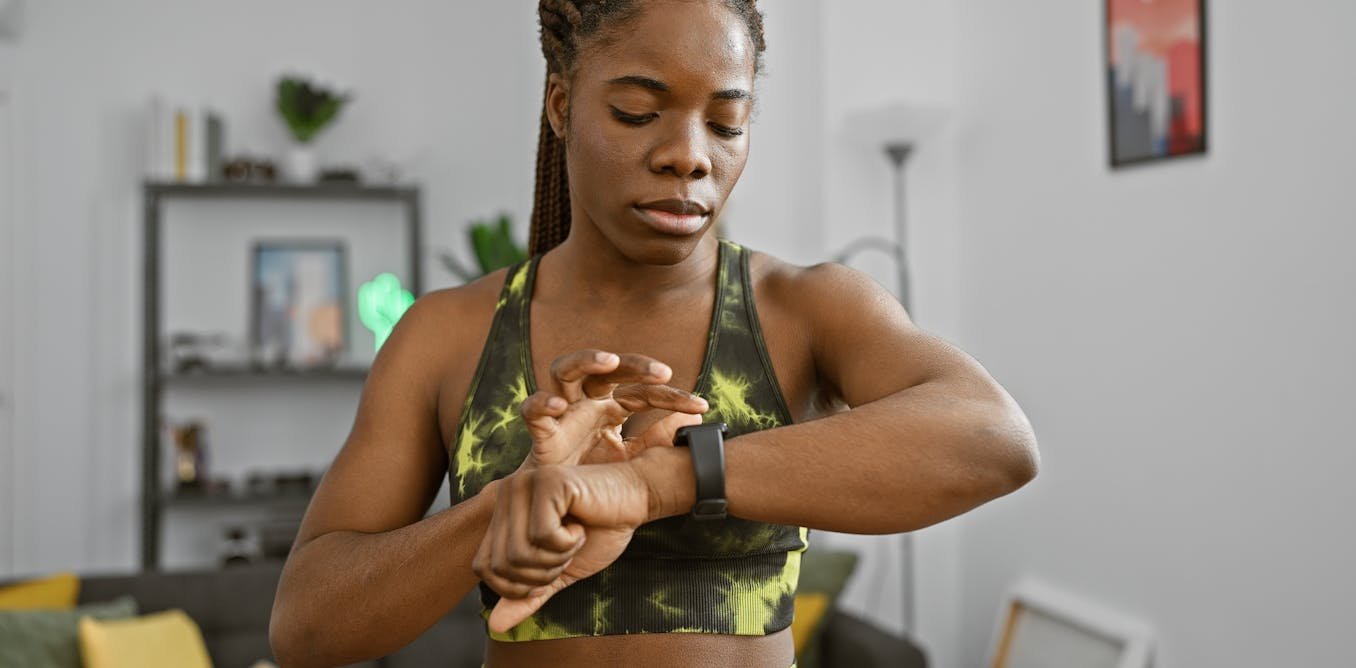
Millions of people use a portable health and fitness tracker. These devices can be useful for monitoring activity levels, sleep quality and heart rate. But for some, wearables may have unintended consequences on well-being.

This is something I came across recently. At a public speaking event, I spoke to a man who told me a story that stuck with me.

He had just finished a long hike and felt great. Then he glanced at his smart watch. Heart rate: 130 bpm. Momentary panic.

About 30 minutes later he realized the cause: the altitude. However, in that moment, it had gone from feeling great to awful – all because of the smartwatch’s readout.

This man is not alone. Some users have found that the wearable increases their stress just as much as they needed stop wearing it.

A key reason wearable health devices can increase anxiety for some people comes down to a mismatch between expectations and what the device says.

Our brain is a prediction engine. It continuously, automatically creates and updates a mental model of our environment by comparing its predictions with the sensory information it receives.

Processing each sensory input from scratch would be slow and inefficient. By anticipating what it expects to encounter, the brain can interpret noisy sensory information quickly and usually accurately.

Some examples of this include feeling your phone vibrate when you’re expecting an important message – only to discover it never rang. Or existence abel ot raed tihs snetnece despite the typos, because your brain predicts what should be there.

The same principle applies to us physical conditions. Our brains don’t just read physical states, they predict them.

We go through the day with an internal model of what our body “should” be doing: roughly what our heart rate, temperature, and breathing usually look like when we’re calm, active, or nervous.

When sensory information arrives that does not match these expectations – such as a higher heart rate – the brain produces a “prediction errorThis alerts us that the sensory information is not meeting our expectations.

Most forecast errors are trivial and simply a mismatch between expectations and incoming information. The brain often resolves these errors automatically by updates its model and adjusting his predictions.

Since this process usually happens automatically, we usually don’t notice it. But if it reaches the level of our conscious awareness, we may seek an explanation for why our expectations and experience differ.

So, if your heart rate is faster than expected, you can attribute it to the fact that you drank too much coffee. Because we expect our bodily sensations to vary throughout the day, such explanations may be enough to prevent us from worrying about prediction error.

The same can happen when we have a portable indicator that contradicts expectations. However, because smartwatch metrics seem clear and objective, we can put more weight on them and may not dismiss an unexpected reading as easily. Even if you feel great, seeing an elevated heart rate on your smartwatch can make you think something is wrong and start a cycle of worry.

My research shows that this can be especially worrying for people prone to anxiety, who already tend to pay close attention to their internal bodily signals.

The research my colleagues and I did during COVID also found that the more anxious a person was in general, the more likely they were to monitor their physical condition through objective measures (such as taking their temperature).

This behavior in people with anxiety is not surprising. Hypervigilance towards the body can they feel protectivea way to spot problems early and reduce uncertainty. But it can quickly lead to a cycle of worry and reassurance seeking.

When such safety-seeking behavior is reduced through treatment, anxiety symptoms tend to diminish—at least in part because people are less hyper-focused on their bodies.

However, the relationship can go one of two ways. In the same study on COVID, we found a two-way connection between anxiety and attention to bodily signals. Paying more attention to bodily states increased anxiety, and anxiety increased attention to bodily states – a negative loop.

People prone to stress may be at particular risk.
Krievietka/Shutterstock

Emerging research suggests that mobile devices may reinforce this loop. In a study of people with atrial fibrillation, heart rate monitors were associated with more frequent symptom screening and higher stress.

A larger study, involving a random sample of about 500 smartwatch users, found a similar pattern. People reported feeling anxious when their normal data looked abnormal. Some participants even reported feeling dependent on their health tracker and getting frustrated when they couldn’t wear their device or forgot it. Some recognized the effect and considered abandoning the device altogether.

However, wearables don’t seem to have the same effect on everyone. For some, this information may be reassuring and it can even reduce stress.

Essentially, we don’t know why for some wearables they provide reassurance and for others they increase anxiety.

Avoiding health stress

There are many reasons why people may wish to use mobile devices. Often, this is because this health information can be useful – like alerting us to issues we might otherwise miss. But tracking the body in this way can also sometimes they make us feel worse.

Taken together, the current evidence suggests that this effect may be particularly pronounced in anxiety-prone individuals, as well as in situations where hypermonitoring of the body or behavior may be maladaptive – such as eating disorders.

As with many things in life, it’s all about moderation. If you’re more concerned about your data than your well-being, try an experiment: leave the watch off for a day or hide the data so you don’t get constant feedback about your body.

Notice how your body feels unmonitored. You might discover what this hiker did: that sometimes trusting what you feel is best.

anxious feel health Tracker Wearable
bhanuprakash.cg
healthtost
  • Website

Related Posts

Complete career guide for 2026 — Sexual Health Alliance

June 23, 2026

Menopause and sexual health | American Association for Sexual Health

June 20, 2026

Hormone therapy: Testosterone and its use in sexual health

June 20, 2026

Leave A Reply Cancel Reply

Don't Miss
News

Researchers identify molecular pathway that delays diabetic wound healing

By healthtostJune 23, 20260

Diabetic foot ulcer (DFU) is one of the most serious complications of diabetes and a…

What chess has taught me about my ADHD brain

June 23, 2026

Redefine your fitness with hybrid training

June 23, 2026

Creating supportive recovery spaces for LGBTQ+ people

June 23, 2026
Stay In Touch
  • Facebook
  • Twitter
  • Pinterest
  • Instagram
  • YouTube
  • Vimeo
TAGS
Baby benefits body brain cancer care Day Diet disease exercise finds Fitness food Guide health healthy heart Improve Life Loss Men mental Natural Nutrition Patients People Pregnancy research reveals risk routine sex sexual Skin Skincare study Therapy Tips Top Training Treatment ways weight women Workout
About Us
About Us

Welcome to HealthTost, your trusted source for breaking health news, expert insights, and wellness inspiration. At HealthTost, we are committed to delivering accurate, timely, and empowering information to help you make informed decisions about your health and well-being.

Latest Articles

Researchers identify molecular pathway that delays diabetic wound healing

June 23, 2026

What chess has taught me about my ADHD brain

June 23, 2026

Redefine your fitness with hybrid training

June 23, 2026
New Comments
    Facebook X (Twitter) Instagram Pinterest
    • About Us
    • Contact Us
    • Privacy Policy
    • Terms and Conditions
    • Disclaimer
    © 2026 HealthTost. All Rights Reserved.

    Type above and press Enter to search. Press Esc to cancel.