

Close Menu
Healthtost
  • News
  • Mental Health
  • Men’s Health
  • Women’s Health
  • Skin Care
  • Sexual Health
  • Pregnancy
  • Nutrition
  • Fitness
  • Recommended Essentials
What's Hot

Azenta announces the completion of the sale of B Medical Systems to Thelema Sa rl. Whitestone Group acquires 40% stake in Thelema Sa rl, a special purpose vehicle (SPV) established to own B Medical Systems

July 11, 2026

Low testosterone or just stress? How to tell the difference

July 11, 2026

They heard us. Now will they listen?

July 11, 2026
Facebook X (Twitter) Instagram
  • About Us
  • Contact Us
  • Privacy Policy
  • Terms and Conditions
  • Disclaimer
Facebook X (Twitter) Instagram
Healthtost
SUBSCRIBE
  • News

    Azenta announces the completion of the sale of B Medical Systems to Thelema Sa rl. Whitestone Group acquires 40% stake in Thelema Sa rl, a special purpose vehicle (SPV) established to own B Medical Systems

    July 11, 2026

    Specialized therapies offer a new approach to regenerative medicine

    July 10, 2026

    New genomic map identifies hundreds of genes governing bone health

    July 10, 2026

    UCSF and Samsung launch remote study of aging brain health

    July 9, 2026

    Active birth control pills may increase emotional eating

    July 9, 2026
  • Mental Health

    Almost 20% of new mums have anxiety or depression, but a promising psychedelic treatment is on the horizon

    July 7, 2026

    How can ART help us improve our mental health? With 3 Ways

    July 5, 2026

    How much do friends affect the mental health of teenagers? What a new study can (and can’t) tell us

    July 3, 2026

    What happens in your blood when you are stressed? We put it to the test

    June 28, 2026

    Why negative news grabs our attention and what it means for our mental health

    June 25, 2026
  • Men’s Health

    Low testosterone or just stress? How to tell the difference

    July 11, 2026

    Gut-friendly diet linked to lower risk of coronary heart disease mortality

    July 9, 2026

    Men don’t just avoid their health. Many lose themselves.

    July 8, 2026

    The Crazy Hard Standards of the Hardest PE Program in History

    July 8, 2026

    Why our relationships are becoming more dishonest and what we can do about it

    July 7, 2026
  • Women’s Health

    They heard us. Now will they listen?

    July 11, 2026

    Taite Heller on Why Barre Became a Top-5 Fitness Trend

    July 8, 2026

    Sunscreen TikTok convinces young people

    July 7, 2026

    Biology, Myths and Real Care

    July 7, 2026

    The shape of the strong black woman

    July 6, 2026
  • Skin Care

    Coconut Allergy and Skin Care: 20 Questions Finally Answered by a Pharmacist

    July 11, 2026

    New Sunscreen Ingredient: Is This The SPF Upgrade We’ve Been Waiting For?

    July 9, 2026

    How to achieve the perfect tan

    July 8, 2026

    How I did it: I plump the skin without fillers

    July 6, 2026

    Natural bug bite relief with herbal remedies

    July 4, 2026
  • Sexual Health

    Painful sex after menopause: When is it time to seek treatment?

    July 11, 2026

    Emotional capitalism and artificial intimacy

    July 10, 2026

    Why report e-6929 matters in Canada — Sexual Health Research Lab

    July 9, 2026

    Complete Career Guide — Sexual Health Alliance

    July 8, 2026

    Because your sexual health matters more than you think

    July 5, 2026
  • Pregnancy

    Calf Raises During Pregnancy: Step-by-Step Guide and Benefits

    July 8, 2026

    Tri-Tri Triplet Pregnancy with Vaginal Birth Story – The Birth Hour Triplet Pregnancy and Vaginal Birth Story with Ashlie Holladay

    July 7, 2026

    Common pregnancy drugs linked to higher rates of autism diagnosis in large study

    July 6, 2026

    Monsoon Infections During Pregnancy: Safety Tips for Expectant Moms

    July 5, 2026

    How to be the support she really needs

    July 4, 2026
  • Nutrition

    5 Easy High Fiber Bowl Recipes

    July 8, 2026

    Salmon Teriyaki Recipe (Ridiculously Easy!) • Kath Eats

    July 8, 2026

    Can exercise counteract a high-fat meal?

    July 6, 2026

    Natural ways to boost energy throughout the day

    July 6, 2026

    My story with iron deficiency as a plant-based nutritionist and runner

    July 4, 2026
  • Fitness

    where we ate in Tokyo (and gluten-free options!)

    July 9, 2026

    Using External Signaling to Improve Linear Acceleration – Tony Gentilcore

    July 8, 2026

    5 Simple Screen Changes That Can Improve Sleep and Focus

    July 7, 2026

    How to prevent muscle loss while losing weight

    July 5, 2026

    The role of nutrition in maintaining energy during regular exercise

    July 5, 2026
  • Recommended Essentials
Healthtost
Home»Skin Care»How to reduce skin redness | Skin care routine for skin prone to redness
Skin Care

How to reduce skin redness | Skin care routine for skin prone to redness

healthtostBy healthtostApril 10, 2026No Comments6 Mins Read
Facebook Twitter Pinterest LinkedIn Tumblr Reddit WhatsApp Email
How To Reduce Skin Redness | Skin Care Routine For
Share
Facebook Twitter LinkedIn Pinterest WhatsApp Email

Redness is one of the most common – and often misunderstood – skin problems.

It can come on suddenly, linger unpredictably, and shift from day to day, which is exactly why it can lead to overly complicated routines. More products, more steps, more attempts to fix what is difficult to control.

In fact, treating redness-prone skin is less about tension and more about consistency. The most effective approach focuses on supporting the skin barrier, reducing irritation and choosing products that offer both immediate and long-term results.

What causes skin redness?

Redness is not a single condition. it is often the result of many factors working together.

Common triggers include:

  • Temperature changes and difficult weather conditions
  • Stress and lifestyle factors
  • A disrupted skin barrier
  • Excessive exfoliation or overly active skin care
  • Naturally sensitive or rosacea-prone skin

When the skin barrier is weakened or overwhelmed, it becomes more reactive. This is when redness occurs more easily, lasts longer, and becomes more difficult to treat with quick fixes alone. The good news? With the right routine, it becomes manageable.

A step-by-step skincare routine for redness-prone skin

A consistent, well-balanced routine will always outperform a complex routine. The goal is to reduce visible redness while supporting the skin so it becomes less reactive over time. Here’s how to create a routine using Tropic products, from first cleansing to SPF.

1. Clean gently

Start with a cleanser that revitalizes skin without stripping it.

Redness-prone skin benefits from formulas that respect the skin barrier, such as the Hydrating Cleansing Revitalizing Facial Gel and the unscented Skin Smoothing Cleanser Purifier. Over-cleansing or using harsh surfactants can increase sensitivity, making redness more noticeable. The golden rule: if your skin feels tight after cleansing, your cleanser is working against you.

2. Moisturize and support the skin barrier

Hydration plays a central role in soothing sensitive skin care.

Look for formulas that replenish moisture and help maintain a strong, resilient skin barrier, like Rainforest Dew Hydration Serum. When the barrier is supported, the skin is better equipped to self-regulate and appears more even over time.

3. Keep exfoliation in mind

Exfoliation can improve skin texture, but for redness-prone skin, restraint is key.

Excessive exfoliation is one of the most common causes of increased sensitivity and visible redness. Limiting your use and choosing gentle formulas like Juicy Greens Exfoliating Toning Essence helps maintain balance without upsetting the skin.

4. Introduce formulas that reduce redness

This is where your routine begins to actively address redness on a deeper level.

Our Skin Re-Leaf Soothing Moisturizer harnesses the regenerative properties of Madagascar leaf of life with a soothing blend of tamanu oil and tiger grass, reducing the appearance of redness by 28% after an average of 28 days*. It’s the kind of consistent, targeted care that makes the biggest difference over time.

*Independent clinical study. Average result after 28 days.

5. Finish with calm and correct for immediate and continuous results

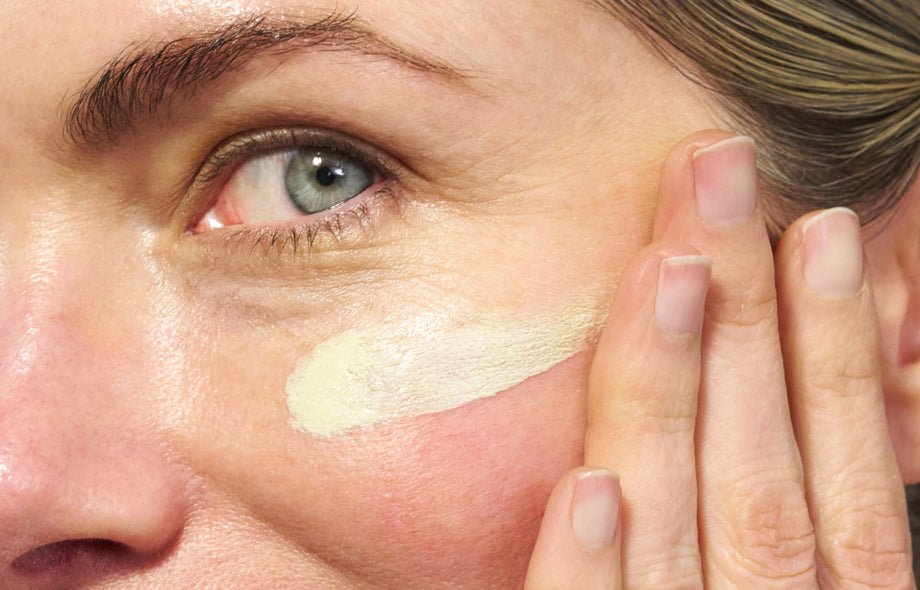
To quickly reduce facial redness, a well-designed color correcting treatment can make a noticeable difference.

Calm & Correctour new 4 in 1 color correcting treatment is specially designed for skin prone to redness and rosacea. Conceals, primes, protects and conditions in a beautifully lightweight formula.

Here’s what makes it different from a typical color corrector:

Direct support: Natural green pigments instantly neutralize the appearance of redness, while SkinSync™ adaptive pigments match your skin tone for seamless, natural-looking coverage – without a flat, ashy finish.

Progressive support: Clinically proven cica exosomes help calm visible inflammation and strengthen the skin barrier over time, while barrier-supporting marine bioactives soothe reactivity and maintain hydration. Used daily, Calm & Correct doesn’t just hide redness – it actively works to reduce it. In an independent clinical study, users saw an 18% reduction in skin redness after 28 days, with 98% reporting visibly reduced redness, less sensitivity and more even skin*.

Proactive Support: UV exposure is a known trigger for flare-ups. Calm & Correct is built in SPF 50 with PA++++ UVA defense – the highest level of UVA protection – to help defend against one of the most common aggravators of redness.

The result is a single step that replaces a color-correcting skin tone, an SPF, a primer and a supportive skin treatment, without sacrificing performance on any front.

*Independent clinical study. Average results after 28 days when tested on rosacea-prone skin.

Daily habits that help reduce redness

Skin care is only part of the picture. Daily habits play an important role in how redness-prone skin behaves, and small adjustments can make a noticeable difference:

  • Avoid very hot water on the face
  • Pat the skin dry instead of rubbing it
  • Introduce new products gradually
  • Keep your routine consistent
  • Protect the skin from environmental factors – especially UV exposure

What to avoid if you have skin prone to redness

When skin is reactive, simplicity matters. Helps to avoid:

  • Overloading your routine with multiple active ingredients at once
  • Hard scrub or aggressive exfoliation
  • Switch between products frequently
  • Anything that leaves the skin feeling tight, dry or uncomfortable

A helpful check-in is how your skin feels after each step. Peace of mind and comfort are always the goal.

Frequently asked questions

How do you quickly reduce redness on the face?

To quickly reduce the appearance of redness, use gentle skincare, avoid common triggers such as heat or harsh products, and apply a color correcting treatment to instantly even out skin tone. Calm & Correct’s natural green pigments neutralize redness on contact for an instant, even finish.

What helps to calm redness-prone skin long-term?

A consistent routine that focuses on hydration, barrier support, and minimal irritation helps skin feel calmer and look more even over time. Targeted ingredients such as chika exosomes and marine bioactives – found in Calm & Correct – can also help gradually reduce sensitivity with daily use.

Is the redness the same as rosacea?

Not always. Redness can be temporary and caused by environmental or lifestyle factors, while rosacea is a long-term chronic skin condition that may require special treatment. If you are unsure, it is always worth seeking professional advice.

Why does my skin redden so easily?

The skin becomes more reactive when the barrier is degraded or frequently exposed to factors such as temperature changes, stress or certain ingredients. Continuously supporting your skin barrier is one of the most effective ways to reduce reactivity over time.

Can makeup make redness worse?

Heavier or irritating formulas can sometimes make redness worse. Light, breathable products designed for sensitive skin are less likely to disturb the skin and can actively support it throughout the day.

care Prone redness reduce routine Skin
bhanuprakash.cg
healthtost
  • Website

Related Posts

Coconut Allergy and Skin Care: 20 Questions Finally Answered by a Pharmacist

July 11, 2026

New Sunscreen Ingredient: Is This The SPF Upgrade We’ve Been Waiting For?

July 9, 2026

How to achieve the perfect tan

July 8, 2026

Leave A Reply Cancel Reply

Don't Miss
News

Azenta announces the completion of the sale of B Medical Systems to Thelema Sa rl. Whitestone Group acquires 40% stake in Thelema Sa rl, a special purpose vehicle (SPV) established to own B Medical Systems

By healthtostJuly 11, 20260

Azenta, Inc. announced today that it has closed the previously announced sale of B Medical…

Low testosterone or just stress? How to tell the difference

July 11, 2026

They heard us. Now will they listen?

July 11, 2026

Coconut Allergy and Skin Care: 20 Questions Finally Answered by a Pharmacist

July 11, 2026
Stay In Touch
  • Facebook
  • Twitter
  • Pinterest
  • Instagram
  • YouTube
  • Vimeo
TAGS
Baby benefits body brain cancer care Day Diet disease exercise finds Fitness food Guide health healthy heart Improve Life Loss Men mental Natural Nutrition Patients People Pregnancy research reveals risk routine sex sexual Skin Skincare study Therapy Tips Top Training Treatment ways weight women Workout
About Us
About Us

Welcome to HealthTost, your trusted source for breaking health news, expert insights, and wellness inspiration. At HealthTost, we are committed to delivering accurate, timely, and empowering information to help you make informed decisions about your health and well-being.

Latest Articles

Azenta announces the completion of the sale of B Medical Systems to Thelema Sa rl. Whitestone Group acquires 40% stake in Thelema Sa rl, a special purpose vehicle (SPV) established to own B Medical Systems

July 11, 2026

Low testosterone or just stress? How to tell the difference

July 11, 2026

They heard us. Now will they listen?

July 11, 2026
New Comments
    Facebook X (Twitter) Instagram Pinterest
    • About Us
    • Contact Us
    • Privacy Policy
    • Terms and Conditions
    • Disclaimer
    © 2026 HealthTost. All Rights Reserved.

    Type above and press Enter to search. Press Esc to cancel.