


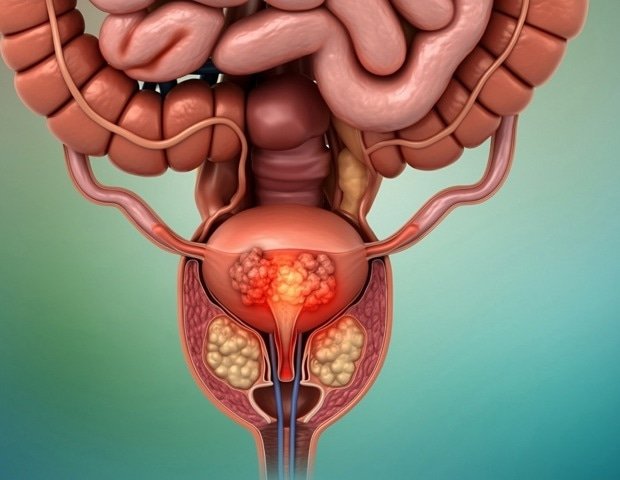
Two larger doses of radiation therapy for prostate cancer do not cause additional side effects compared to the standard five doses of radiation therapy, according to results presented at the European Society of Radiotherapy and Oncology Conference (ESTRO 2026). Experts say the research brings us one step closer to safe and effective radiotherapy in just two outpatient sessions.
The HERMES study, one of the first to randomize patients to two or five radiotherapy sessions, was presented by Dr Sian Cooper, Clinical Research Fellow at The Royal Marsden NHS Foundation Trust and the Institute of Cancer Research, London, UK.
Radiation therapy is one of the main treatments used to treat prostate cancer. The current standard of care in many countries for localized prostate cancer is five sessions of radiotherapy. In recent years, there has been a move to deliver radiation therapy in fewer sessions, with a higher dose each session.
For patients, a two-session treatment schedule would be far less disruptive than the weeks of daily hospital visits that radiation therapy has traditionally required. This convenience comes with clear benefits for work, leisure, family life and travel. For clinicians and health systems, fewer fractions mean faster workflow and getting patients the right treatment faster.
We wanted to find out if giving the equivalent dose in just two treatment sessions could be feasible and safe for patients, and understand how it might affect potential side effects that patients might experience, such as problems with urinary and bowel function.”
Dr Sian Cooper, Clinical Researcher at The Royal Marsden NHS Foundation Trust and Institute of Cancer Research, London, UK.
The team recruited 46 patients with prostate cancer. 24 patients were treated with the standard five doses over two weeks and 22 patients were treated with the equivalent dose but in just two sessions over eight days.
The treatment was delivered on a state-of-the-art machine that combines an MRI scanner with a radiation therapy machine, allowing for extreme precision in targeting the prostate while protecting the surrounding healthy tissue.
The team found that two sessions of radiation therapy using MRI-guided technology was safe and feasible, and that condensing the treatment plan into fewer doses had no effect on the side effects patients experienced.
Dr. Cooper explains: “About one in four patients in both groups experienced moderate urinary side effects such as increased frequency or urgency at any point between six months and two years after treatment. No serious urinary or bowel side effects were seen in either group. Bowel side effects were very low, with no patients in the two-session group reporting bowel side effects.
“After two years, our patients reported little change in their quality of life. There was no difference or little difference in the side effects patients had in the two-dose group compared to the standard five-dose group.”
ESTRO President Professor Matthias Guckenberger, from the University Hospital of Zurich, Switzerland, who was not involved in the research, said: “Radiotherapy is one of the main ways to treat and cure prostate cancer. It is non-invasive, minimizes the risk of damage to the bladder and preserves sexual function.
Until recently it was thought that providing multiple treatments over a longer period of time was more effective. This study suggests that giving patients treatment in fewer, higher doses is effective in treating cancer and has little effect on the side effects that patients may experience.
“Limiting the treatment to two doses is more convenient for patients, who would need fewer hospital visits, making it easier for those who live far from radiotherapy centers to complete their treatment. It is reassuring for patients to know that potential side effects are not affected by a more concentrated treatment plan. It can also reduce the associated costs for hospitals and treatment centres.
“While the technology used in this trial is currently only available in a limited number of specialized centers worldwide, it is being rapidly developed. These results can help guide how it is used and help us understand whether two-session radiation therapy should become a new standard of care.”
