


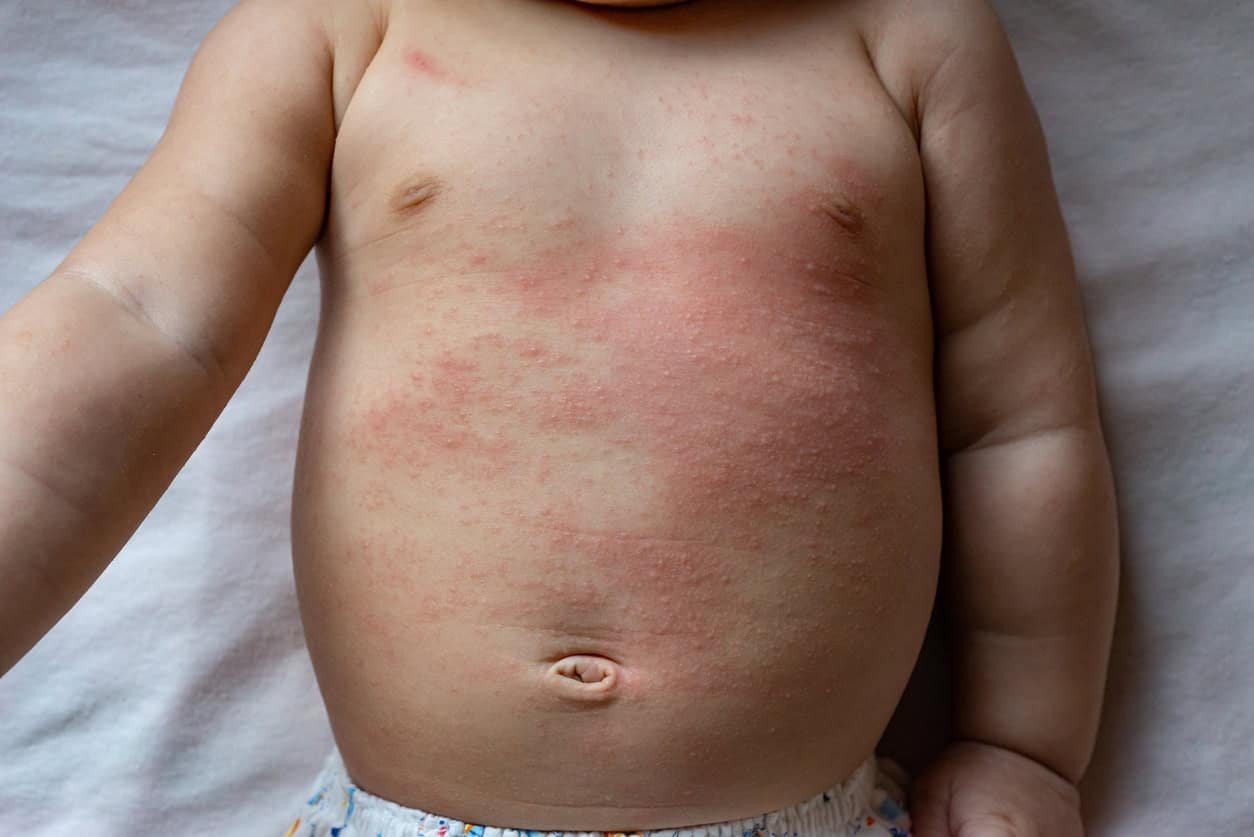
Your baby’s skin can seem so sensitive and fragile and many parents feel responsible if something irritates it. A common skin condition in infants is baby heat rash. While this condition can sometimes cause discomfort to your baby, knowing its causes and treatments can help you avoid, recognize and manage it effectively. Here, we’ll explore what baby heat rash is, and its symptoms, causes, types, duration, treatments and prevention.
Baby heat rash (also called miliaria, stings or sweat rash) is a skin condition that occurs when the eccrine glands and ducts in the skin that create and release sweat become blocked.1 This blockage leads to small, red bumps or blisters or a pink rash on the skin that can be itchy or painful. These symptoms usually occur in areas where sweat accumulates, such as the groin, neck, arms, chest, and upper back.1.2 Heat rash rarely affects the baby’s face.1
When babies’ bodies heat up and sweat, their sweat ducts can become blocked.2 Babies have thin skin and a less efficient sweating system than adults, which makes them more susceptible to conditions that cause sweating and overheating.3 Some common causes of baby heat rash include:
- Hot and humid conditions: Sweaty weather can contribute to baby’s heat rash.1.2
- Fever: Just as hot weather can heat up a baby’s body and make them sweat, so can a fever.9
- Salve: Babies can also develop heat rash in the winter if creams or ointments applied to their skin clog the ducts and trap sweat. Lanolin ointment applied to a mother’s nipples for breastfeeding can also cause a baby’s heat rash if it transfers to the baby’s skin on their face and clogs their pores.2 This could be mistaken for teething, a similar condition caused by saliva irritation rather than sweat.4
- Tight clothes: Clothes that are tight or rub against the skin can block sweat ducts.1.2
- Exercise: Heat rash can also occur in a young child and in an older child due to exercise that causes sweating.2
There are three types of heat rash, each varying in severity and appearance. Heat rash is classified according to how deep the blockage occurs and how they present differently:1
Miliaria crystallina is the mildest and most superficial form of heat rash, presenting as tiny, clear, fluid-filled blisters that look like water droplets and break easily. It generally does not cause discomfort and subsides quickly with cooling measures.1
This is the most common type of heat rash in babies. Miliaria rubra involves a deeper blockage of the sweat ducts. Sweat gets trapped deeper in the skin, causing an inflammatory response, usually seen as redness. The inflammation causes the classic symptoms of heat rash, such as red bumps, itching, and discomfort that may worsen with increased sweating.1
This is a rarer form of heat rash that occurs deeper in the layers of the skin. It usually occurs after many repeated episodes of miliaria rubra and in extremely hot environments, so it is less common in babies than adults. Miliaria profunda appears as larger, flesh-colored bumps or cysts that may be extremely itchy or have no symptoms.1
The duration of heat rash varies depending on the type, severity, and measures taken to treat it. In most mild cases, heat rash can go away on its own within a few hours to a few days after the baby is moved to a cooler environment and their sweat glands are no longer blocked.1 However, if the rash persists or worsens despite treatment, your baby develops a fever with no known cause, or the rash spreads or has pus that indicates an infection, you should contact your child’s pediatrician.2
Remember, heat rash usually goes away without treatment.1 To speed recovery, effective heat rash treatment focuses on relieving symptoms and preventing further sweating. Here are some methods to consider:
The simplest treatments for heat rash include trying to lower your baby’s temperature. Move your baby to a cooler, less humid environment. Dress them in light, breathable clothing and keep them in a well-ventilated room. You can try a cool washcloth or a lukewarm bath without soap to cool them down, but don’t let them soak in the cold for more than 10 minutes.2 You can also use a fan to cool them, supervising them to make sure their fingers stay away from the fan blades.
When your baby has a known cause of a fever, such as a cold or other viral illness, treating the fever can help lower their body temperature and thus help treat heat rash. Tylenol (acetaminophen) and Motrin (ibuprofen) are the most common medications used to treat fever.10 If you’re not sure which one or how much to use, contact your pediatrician’s office for guidance. Also, get in touch if you are unsure of the cause of the fever and/or rash.
Over-the-counter creams specifically designed for heat rash can help soothe the affected area. However, many of these creams are not intended for young infants, so consult your pediatrician before applying them. Here are some ingredients to look for in a rash cream for your baby:
- Aloe Vera: This can clean, cool, hydrate and disinfect the skin, but be careful not to apply too much and clog the sweat ducts.5
- Calamine: Calamine lotion can also be helpful when applied to a heat rash, but again, make sure it’s safe for your baby’s age.2
- Hydrocortisone: For more severe cases of baby heat rash, a mild steroid cream such as baby hydrocortisone cream or triamcinolone (prescription) can reduce inflammation and itching. Make sure you use a cream, not an ointment, which could further clog the sweat ducts.1.2

Similar to treatment, prevention of heat rash involves keeping your baby cool and comfortable to minimize sweating. Here are some practical tips on how to prevent heat rash:
Choose light, breathable fabrics such as cotton for your baby’s clothes. Cotton and other natural fabrics absorb moisture, keeping the skin cool and dry.6 Don’t dress them in anything too tight and stick to light-colored clothing that won’t trap heat in your baby’s body.7
Make sure your baby drinks plenty of fluids to stay hydrated. Proper hydration can help regulate their body temperature and reduce sweating. Babies under 6 months should have only breast milk or formula to stay hydrated, but may need more milk than usual in hot conditions.7
Maintain a cool environment where possible. If there is no air conditioning, use fans and keep the room well ventilated.6 Also, make sure you cool the car – my babies always sweat so much in the car in the summer because the air conditioning doesn’t reach them right away. If possible, start your car and run your air conditioner for a minute or two before putting them in the warm car seat. Just remember: Never leave a baby alone in a parked car, even if it feels cool outside!7
Keep your baby out of direct sunlight (especially during the hottest hours of the day) to avoid overheating. It is best to keep them in the shade or use UV protective hats and clothing whenever possible.2 If they must be in the sun, use a light mineral baby sunscreen that won’t clog their pores.8
5. Avoid ointments and powders
Ointments and other oily and thick skin products, such as those used to treat another skin condition called eczema, can clog sweat glands and make heat rash worse.2 Baby powder was once thought to absorb moisture, but it doesn’t prevent heat rash. It can actually clog pores and trap heat, contributing to heat rash in babies.6
Give your baby lukewarm baths to cool his skin and remove sweat when he overheats. Avoid using harsh soaps or shower gels that may further irritate the skin. Although exfoliation is not recommended for baby’s skin, gently rinsing and cleaning your baby frequently can help prevent the build-up of sweat and skin debris that clogs sweat ducts and causes heat rash.2
Baby heat rash can happen regardless of your efforts to prevent it. Fortunately, it is usually mild and resolves on its own within hours to days. While it may cause temporary discomfort for your baby and distress for you, it is usually not a serious health concern. By understanding the signs, symptoms, prevention and treatment, you can effectively manage and treat heat rash in your baby. Regular cooling, appropriate clothing and awareness of environmental factors are key to preventing and alleviating this condition. If you have concerns or your baby’s heat rash persists despite home remedies, consult your pediatrician. Keeping your baby comfortable and cool is the best way to ensure their well-being during these hot and humid days.
