


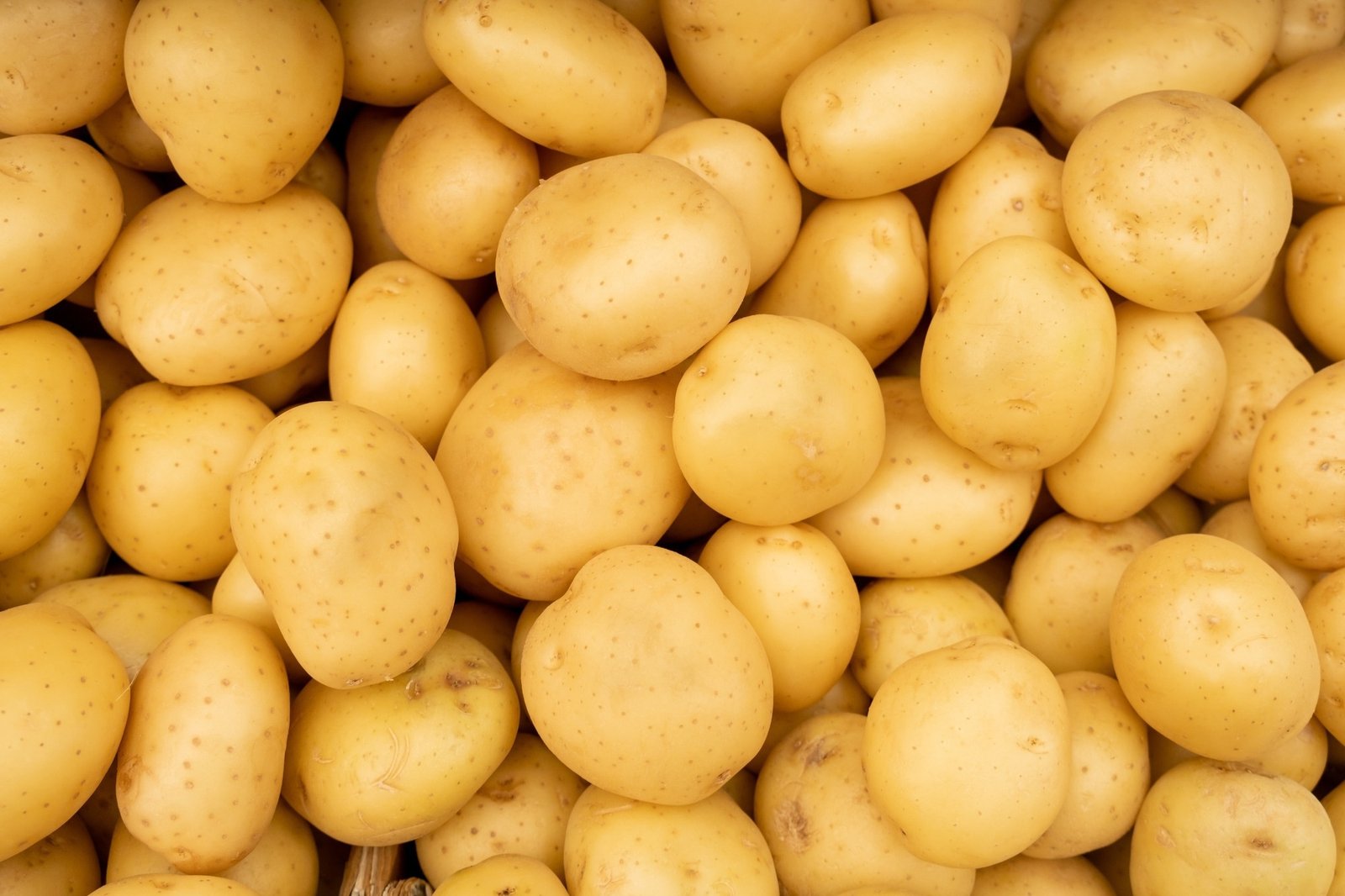
Researchers have shown that white potatoes provide vital nutrients that Americans lack, yet swapping them for whole grains causes significant losses in iron, folate and other key nutrients, reshaping our understanding of “healthy carbs.”
Study: Evaluating the unique nutritional contribution of the white potato to the diet and the nutritional implications of replacing refined and whole grains with starchy vegetables. Image credit: Lerner Vadim/Shutterstock.com
In a recent study published in Frontiers in Nutritionresearchers investigated the contribution of starchy vegetables such as white potatoes to nutrient intake in the United States, particularly compared to whole and refined grains.
White potatoes provide significant potassium, fiber and several vitamins, and starchy vegetables provide much more potassium and vitamin C than grains. However, replacing grains with starchy vegetables reduces intake of iron, folate, calcium and several B vitamins.
Why potatoes matter in Americans’ nutrient intake
Potatoes are naturally nutrient-dense, providing complex carbohydrates, potassium, fiber, protein and essential vitamins such as B6 and C. A medium potato contributes significant amounts of fiber and potassium, two nutrients that many Americans are deficient in.
Despite their nutrient density and popularity, overall consumption of vegetables and starchy vegetables remains below recommended levels, even though potatoes have been associated with better overall diet quality and show no harm in relation to chronic disease risk in observational and clinical research.
Recently, the Dietary Guidelines Advisory Committee (DGAC) reexamined the roles of vegetables and “carbohydrate staples,” including whether grains and starchy vegetables could be considered interchangeable.
The proposed pattern eventually reduced recommendations for starchy vegetables to expand legume servings. However, reducing the intake of a widely consumed, nutrient-dense, and already under-consumed subgroup may adversely affect nutrient adequacy.
Diet modeling to compare cereals and potatoes
This study modeled the dietary comparison of white potatoes and other starchy vegetables with refined and whole grains and examined how dietary patterns would change if these foods were substituted.
The researchers focused on women ages 19 to 30 and men ages 51 and older to reflect the 2,000-calorie Healthy American Style (HUSS) dietary pattern, using DGAC modeling methods and United States Department of Agriculture (USDA) data sets.
Their objectives were to determine how grains and starchy vegetables contribute to nutrient intake relative to HUSS recommendations. They also compared the nutritional profiles of whole grains, refined grains, white potatoes and other starchy vegetables. Finally, they assessed how nutrient intake changes when grain intake is reduced and starchy vegetable intake is increased, including scenarios where both grain subgroups are reduced simultaneously.
Nutrient values for the proxy were weighted by the proportion each food contributes to its subgroup, and cup or ounce equivalents were converted to grams. For white potatoes and other starchy vegetables, subgroup percentages were recalculated to reflect their internal composition.
The contribution of nutrients to both recommended and current dietary patterns was calculated by combining subgroup nutrient content with weighted dietary intake profiles. The replacement scenarios simulated incremental decreases in grains and increases in starchy vegetables to assess the impact of these changes on the percentage of nutrient recommendations met.
Potatoes increase key nutrients but decrease others
Recommended daily servings of white potatoes provided remarkable proportions of key nutrients: 11% of daily potassium, about 10% of vitamin B6 and copper, and at least 5% of fiber, magnesium, vitamin C, thiamin, and niacin, while contributing only 5% of daily calories.
The potassium content of white potatoes was significantly higher than that of whole grains and more than three times that of refined grains. However, whole grains provided much more fiber than starchy vegetables.
Current intake patterns showed overconsumption of refined grains and underconsumption of whole grains and white potatoes, while intake of other starchy vegetables nearly met recommendations.
Comparing nutrient profiles revealed that a one-cup equivalent of starchy vegetables or potatoes provided significantly more potassium and vitamin C than a two-ounce equivalent of grains, but provided lower amounts of minerals such as calcium, iron, zinc and several B vitamins.
The replacement model revealed that replacing refined grains with starchy vegetables increased potassium, fiber, vitamins B6 and C, and choline, but decreased iron, folate, selenium, riboflavin, and vitamin D.
Substituting whole grains caused greater reductions in fiber, calcium, iron, magnesium, zinc, and essential vitamins. When both grain subgroups were replaced simultaneously, choline increased. However, most micronutrient levels were further reduced, highlighting that grains and starchy vegetables provide separate nutrient packages and are therefore not nutritionally interchangeable.
Potatoes help fill the gaps, but they cannot replace grains
This analysis shows that white potatoes provide important nutrients that many Americans lack, including several vitamins, fiber and potassium. Modeling results consistently indicate that starchy vegetables and grains offer different nutrient profiles and cannot be substituted for each other without compromise.
Replacing grains with starchy vegetables increases potassium, vitamin C, and choline, but decreases iron, folate, riboflavin, and other micronutrients typically found in enriched or fortified grains.
The findings also highlight the potential implications of reducing starchy vegetable recommendations, particularly given widespread potassium deficiencies and evidence that potatoes are a top, affordable source of this nutrient. While the study does not directly evaluate DGAC decision-making, its results suggest that reductions in starchy vegetable targets could affect nutrient adequacy.
Strengths include alignment with DGAC modeling methods and clear estimation of both recommended and actual potato intake. Limitations stem from the theoretical nature of the modeling and the possibility that some substitution scenarios may be unrealistic for consumers.
Overall, the study concludes that lowering recommendations for starchy vegetables may compromise nutrient adequacy, particularly potassium, and that both grains and starchy vegetables remain necessary but non-interchangeable components of a healthy diet.
Journal Reference:
Richter, C., Fulgoni, K., Fulgoni III, VL, Johnson, B., Kijek, M., Maniscalco, S., Psota, T. (2025). Evaluation of the unique nutritional contribution of the white potato to the diet and the nutritional effects of replacing refined and whole grains with starchy vegetables. Limits to Nutrition 12. DOI: 10.3389/fnut.2025.1692564.
