

Close Menu
Healthtost
  • News
  • Mental Health
  • Men’s Health
  • Women’s Health
  • Skin Care
  • Sexual Health
  • Pregnancy
  • Nutrition
  • Fitness
  • Recommended Essentials
What's Hot

Aging in place takes more than good intentions — It takes smart infrastructure

May 5, 2026

Breaking Barriers, Building Strength: The Maya Nassar Story

May 5, 2026

5 Ways to Improve Heart Health for Men

May 5, 2026
Facebook X (Twitter) Instagram
  • About Us
  • Contact Us
  • Privacy Policy
  • Terms and Conditions
  • Disclaimer
Facebook X (Twitter) Instagram
Healthtost
SUBSCRIBE
  • News

    The use of symptom dimensions may provide more accurate, personalized mental health care

    May 4, 2026

    Randomized controlled trial validates total hip arthroplasty to improve functional capacity

    May 4, 2026

    New genetic risk report reveals hidden risk of heart disease before symptoms appear

    May 3, 2026

    Five-target drug beats GLP-1/GIP therapy in obese diabetic mice

    May 3, 2026

    How fast your face ages can predict cancer survival outcomes

    May 2, 2026
  • Mental Health

    Every mental health journey starts with being seen

    May 2, 2026

    What animal studies teach us about toxic work environments

    April 27, 2026

    I hate hope: How to manage hope when you have treatment-resistant bipolar disorder

    April 19, 2026

    Rose Byrne is raw, magnetic and unfiltered as a woman in crisis

    April 18, 2026

    Can a single mother change her child’s surname in India?

    April 16, 2026
  • Men’s Health

    Aging in place takes more than good intentions — It takes smart infrastructure

    May 5, 2026

    Dr. William O. Brant on male sexual health and the risks and benefits of supplements

    May 4, 2026

    3 Day Home Workout Plan: Build Muscle and Burn Fat

    April 30, 2026

    GLP-1 drugs promise broader health benefits, but experts advise caution on use

    April 28, 2026

    Trauma patients recover faster when medical teams know each other well, new study finds

    April 28, 2026
  • Women’s Health

    Breaking Barriers, Building Strength: The Maya Nassar Story

    May 5, 2026

    How to do a breast self-exam and spot lumps

    May 4, 2026

    Finding the best lupus treatments

    May 3, 2026

    What is the difference between UVA and UVB rays?

    May 1, 2026

    Are you a fungus fanatic? We unpack the nutritional trend of mushroom mania

    April 29, 2026
  • Skin Care

    How I Did It: Fading Hormonal Hyperpigmentation Without Lasers

    May 3, 2026

    The truth about waterless care: What your skin really needs

    May 2, 2026

    What happens to your skin while you sleep? (the science of “Beauty Sle

    May 1, 2026

    Face Peeling Mask Guide: Shine Without Irritation

    April 28, 2026

    Is your moisturizing face mist really drying out your skin?

    April 28, 2026
  • Sexual Health

    5 Ways to Improve Heart Health for Men

    May 5, 2026

    Early signs of Peyronie’s disease and when to seek help

    May 3, 2026

    Boost erectile health and confidence

    May 1, 2026

    Judicial Restrictions on Abortion COVID-19 < SRHM

    April 30, 2026

    Can herpes affect fertility?

    April 29, 2026
  • Pregnancy

    Why is anemia during pregnancy high in Indian women?

    May 2, 2026

    5 things you need for the third trimester

    May 1, 2026

    Eating disorders in pregnancy and breastfeeding: Why “healthy eating” is not always easy

    May 1, 2026

    Comprehensive yoga for pregnancy, birth and beyond

    April 29, 2026

    Midwifery and Life – The postnatal health check New mums don’t know they can ask for

    April 28, 2026
  • Nutrition

    Can magnesium help you lose weight?

    May 4, 2026

    9 Easy Chia Pudding Recipes (+ The Perfect Pudding Ratio) • Kath Eats

    May 4, 2026

    A cancer-causing contaminant in drugs and meat

    May 3, 2026

    How Nutrition Supports Mood, Energy and Gut Health

    May 2, 2026

    How to create a self-care plan when you’re stressed

    May 1, 2026
  • Fitness

    The most underrated skill I wish everyone learned

    May 3, 2026

    Landmine Training and Why I Love It – Tony Gentilcore

    May 3, 2026

    9 Powerful Fitness Tips for Pear Shaped Bodies

    May 2, 2026

    If you can still do these 7 things at 60, your body is aging better than most

    May 2, 2026

    A Hike Leader’s Must-Have Kit

    April 30, 2026
  • Recommended Essentials
Healthtost
Home»News»The “optical system” protein appears to be key to stabilizing the body’s circadian rhythms
News

The “optical system” protein appears to be key to stabilizing the body’s circadian rhythms

healthtostBy healthtostDecember 29, 2023No Comments4 Mins Read
Facebook Twitter Pinterest LinkedIn Tumblr Reddit WhatsApp Email
The "optical System" Protein Appears To Be Key To Stabilizing
Share
Facebook Twitter LinkedIn Pinterest WhatsApp Email

Scientists at the Johns Hopkins University School of Medicine and the National Institutes of Health have identified a protein in the visual system of mice that appears to be key to stabilizing the body’s circadian rhythms, regulating the brain’s response to light. The finding, published Dec. 5 in PLoS Biologyadvances efforts to better treat sleep disorders and jet lag, the study authors say.

If circadian rhythms adjusted to every rapid change in illumination, say an eclipse or a very dark and rainy day, they would not be very effective in regulating such periodic behaviors as sleep and hunger. The protein we identified helps the brain during neural development enable stable responses to circadian rhythm challenges from day to day.”


Alex Kolodkin, Ph.D., professor in the Johns Hopkins Department of Neuroscience and associate director of the Institute for Basic Biomedical Sciences

Kolodkin co-led the study with Samer Hattar, Ph.D., head of the Division of Light and Circadian Rhythms at the National Institute of Mental Health.

Scientists have long known that most living things have a circadian “clock,” a set of biological rhythms that operate on a roughly 24-hour cycle that affect alertness, sleepiness, appetite, and body temperature, among other cyclical behaviors. . Overturning this system -? through shift work or long-distance travel across multiple time and light zones in humans, for example – can have serious consequences. Previous studies have linked persistent circadian rhythm disturbances to an increased risk of cancer, depression and a host of other medical problems.

Circadian systems are essentially “trained” by exposure to light. Although researchers have made significant progress in recent decades in describing the mechanisms responsible for circadian rhythms, it has remained unclear how the brain is wired for them.

To learn more, Kolodkin and Hattar, along with study first authors John Hunyara and Kat Daly and their colleagues, searched a database of biological molecules present during development in the mouse brain’s circadian control center rhythms -. the suprachiasmatic nucleus (SCN);

Located deep in both mouse and human brains in the hypothalamus, the SCN is near areas that control vision and makes connections with brain cells leading to the retina, the part of the eye that detects light.

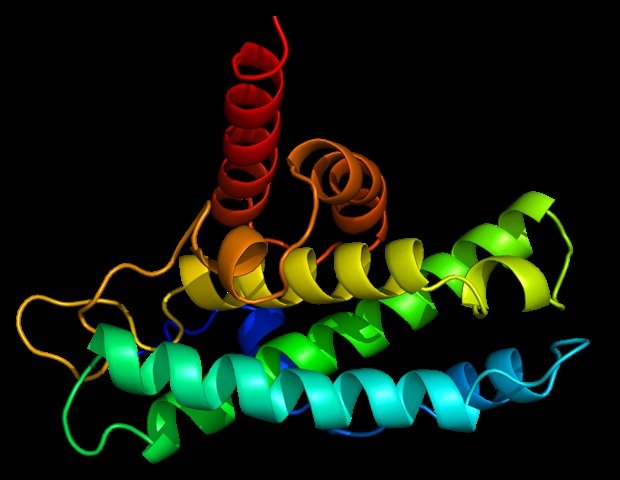
The research team quickly zeroed in on a cell surface protein called teneurin-3 (Tenm3), part of a larger family of proteins that play key roles in the assembly of the visual circuit and other central nervous system circuits more generally.

When the researchers genetically altered the mice to prevent the production of Tenm3, the animals developed fewer connections between the retina and the SCN, compared to animals with intact Tenm3. However, mice lacking Tenm3 developed much greater connectivity between cells in the core and shell of the SCN, where Tenm3 tends to localize.

To see how Tenm3 could stabilize circadian rhythms or have them disrupted by even a tiny bit of light, the scientists designed a set of experiments.

First, they trained mice lacking Tenm3 on a 12-hour light/dark cycle, then shifted the dark period forward by six hours. Mice with intact Tenm3 took about four days to readjust their circadian rhythms to the shift, as measured by activity patterns diagnostic of normal sleep cycles. Animals lacking Tenm3, however, adapted much faster, in about half the time.

When the researchers performed a similar experiment with light twice as dim as the previous test, it took the Tenm3-intact mice about eight days to adjust their circadian cycle, but only about four days for the mice without Tenm3. Even a 15-minute pulse of dim light triggered the mice lacking Tenm3 — but not the mice with normal Tenm3 protein. for the production of a brain chemical that serves as a proxy for light exposure, suggesting an increased sensitivity to light cues necessary to regulate or reset the circadian clock.

These findings suggest to the authors that Tenm3 helps the brain maintain stable circadian rhythms even when light exposure is variable. By learning more about this system and Tenm3’s role, Hattar says, researchers may eventually be able to diagnose and treat dysfunctions that lead to insomnia and other sleep disorders in humans, or possibly develop treatments for jet lag.

“There are very clear implications for human health,” he says.

Other Johns Hopkins researchers who contributed to this study include Katherine Torres.

This study was funded by grants from the NIH (R01EY032095) and the Intramural Research Program at NIMH (ZIAMH002964).

Source:

Journal Reference:

Hunyara, JL, et al. (2023). Teneurin-3 regulates non-image visual circuit generation and response to light in the suprachiasmatic nucleus. PLOS Biology. doi.org/10.1371/journal.pbio.3002412.

appears bodys circadian key optical protein rhythms stabilizing system
bhanuprakash.cg
healthtost
  • Website

Related Posts

The use of symptom dimensions may provide more accurate, personalized mental health care

May 4, 2026

Randomized controlled trial validates total hip arthroplasty to improve functional capacity

May 4, 2026

New genetic risk report reveals hidden risk of heart disease before symptoms appear

May 3, 2026

Leave A Reply Cancel Reply

Don't Miss
Men's Health

Aging in place takes more than good intentions — It takes smart infrastructure

By healthtostMay 5, 20260

By Dr. Frank Knofel Canada is aging faster than our systems are adapting. Almost…

Breaking Barriers, Building Strength: The Maya Nassar Story

May 5, 2026

5 Ways to Improve Heart Health for Men

May 5, 2026

Can magnesium help you lose weight?

May 4, 2026
Stay In Touch
  • Facebook
  • Twitter
  • Pinterest
  • Instagram
  • YouTube
  • Vimeo
TAGS
Baby benefits body brain cancer care Day Diet disease exercise finds Fitness food Guide health healthy heart Improve Life Loss Men mental Natural Nutrition Patients Pregnancy protein research reveals risk routine sex sexual Skin Skincare study Therapy Tips Top Training Treatment ways weight women Workout
About Us
About Us

Welcome to HealthTost, your trusted source for breaking health news, expert insights, and wellness inspiration. At HealthTost, we are committed to delivering accurate, timely, and empowering information to help you make informed decisions about your health and well-being.

Latest Articles

Aging in place takes more than good intentions — It takes smart infrastructure

May 5, 2026

Breaking Barriers, Building Strength: The Maya Nassar Story

May 5, 2026

5 Ways to Improve Heart Health for Men

May 5, 2026
New Comments
    Facebook X (Twitter) Instagram Pinterest
    • About Us
    • Contact Us
    • Privacy Policy
    • Terms and Conditions
    • Disclaimer
    © 2026 HealthTost. All Rights Reserved.

    Type above and press Enter to search. Press Esc to cancel.