

Close Menu
Healthtost
  • News
  • Mental Health
  • Men’s Health
  • Women’s Health
  • Skin Care
  • Sexual Health
  • Pregnancy
  • Nutrition
  • Fitness
  • Recommended Essentials
What's Hot

2.6 Friday Faves – The Fitnessista

February 7, 2026

How to avoid shaving irritation: 7 myths that keep your skin angry

February 7, 2026

Smart Shoulder Solutions: An Evidence-based Approach

February 7, 2026
Facebook X (Twitter) Instagram
  • About Us
  • Contact Us
  • Privacy Policy
  • Terms and Conditions
  • Disclaimer
Facebook X (Twitter) Instagram
Healthtost
SUBSCRIBE
  • News

    European collaboration turns immune cell data into cancer biomarkers

    February 7, 2026

    Senescent neutrophils promote tumor survival in all cancer types

    February 6, 2026

    Preoperative factors predict persistent opioid use after surgery

    February 6, 2026

    AI-enabled stethoscope doubles detection of valvular heart disease

    February 5, 2026

    Gut microbial butyrate enhances mucosal vaccine antibody responses

    February 5, 2026
  • Mental Health

    Advancing the Future of Behavioral Health Data Exchange

    February 7, 2026

    How to avoid watching disturbing videos on social media and protect your peace of mind

    February 6, 2026

    Mental Health in the Black Community: Addressing…

    February 3, 2026

    Some people gain confidence when they think things through, others lose it – new research

    February 2, 2026

    3 practical ways to improve a writer’s mental health

    January 31, 2026
  • Men’s Health

    Air conditioning in nursing homes reduces heat-related risk

    February 6, 2026

    Analysis: What it’s like to have non-verbal autism and what helped me

    February 5, 2026

    Testicular cancer self-examination and why it could save your life

    February 2, 2026

    25-Minute Bodyweight Functional Training Program for Beginners

    February 1, 2026

    Turning everyday eggs into powerful nutrient delivery systems

    January 30, 2026
  • Women’s Health

    2.6 Friday Faves – The Fitnessista

    February 7, 2026

    Enjoying Endorphins: How to Spoil Your Mood with Feel-Good Hormones

    February 5, 2026

    A critical maternal health data system is at risk

    February 5, 2026

    Prenatal care in 2026: New recommendations for healthy pregnancy

    February 1, 2026

    3 Teens Quit Social Media for a Week — and Loved It

    February 1, 2026
  • Skin Care

    How to avoid shaving irritation: 7 myths that keep your skin angry

    February 7, 2026

    TNW Rich Cream for Soft, Smooth Skin – The natural wash

    February 7, 2026

    Inside Susie Ma’s Makeup | Founder of Tropic – Tropic Skincare

    February 6, 2026

    5 Expert-Backed Tips on How to Reduce Forehead Wrinkles

    February 6, 2026

    5 Powerful Skincare Osmolytes (And Why Your Skin Loves Them)

    February 5, 2026
  • Sexual Health

    Adventurous intimacy is more common than you think — Alliance for Sexual Health

    February 5, 2026

    A guide to a comfortable cervical check with Dr. Unsworth

    February 1, 2026

    How “Bridgerton” and the Other Romances Evolved in Their Depictions of Consent

    January 30, 2026

    Extraction, gold mining and SRHR in Kenya

    January 29, 2026

    How the Wabi-Sabi Body Frame is Rewriting Body Image Therapy — Sexual Health Alliance

    January 28, 2026
  • Pregnancy

    Pregnant on Chhath Puja? Hydration and nutrition tips

    February 6, 2026

    The second trimester sweet spot is real. Here’s how to get the most out of it

    February 4, 2026

    Is it safe to drink milk during pregnancy? What to know

    January 31, 2026

    12 Expert Answers to Your Pregnancy Yoga Questions

    January 29, 2026

    Best Pregnancy and Postpartum Fitness Course 2026

    January 27, 2026
  • Nutrition

    5 Ways You’re Sabotaging Your Metabolism

    February 2, 2026

    How to Save Money on Travel • Kath Eats

    February 1, 2026

    How low can LDL cholesterol go on PCSK9 inhibitors?

    January 31, 2026

    Signs that your body is ready to reset

    January 31, 2026

    Healthy Pakistani Recipes: Low-Oil Versions of Beloved Classics

    January 30, 2026
  • Fitness

    Smart Shoulder Solutions: An Evidence-based Approach

    February 7, 2026

    Ja’Marr Chase Offseason Training: The Explosive Workouts Fueling NFL Elite Performance

    February 6, 2026

    What’s NEW in February 2026 for the BODi Community of Experience!

    February 5, 2026

    AI As a Learning Coach – BionicOldGuy

    February 5, 2026

    Can your customers actually do what you want them to do? – Tony Gentilcore

    February 2, 2026
  • Recommended Essentials
Healthtost
Home»News»Study identifies brain region that leads to visual learning
News

Study identifies brain region that leads to visual learning

healthtostBy healthtostFebruary 4, 2026No Comments6 Mins Read
Facebook Twitter Pinterest LinkedIn Tumblr Reddit WhatsApp Email
Study Identifies Brain Region That Leads To Visual Learning
Share
Facebook Twitter LinkedIn Pinterest WhatsApp Email

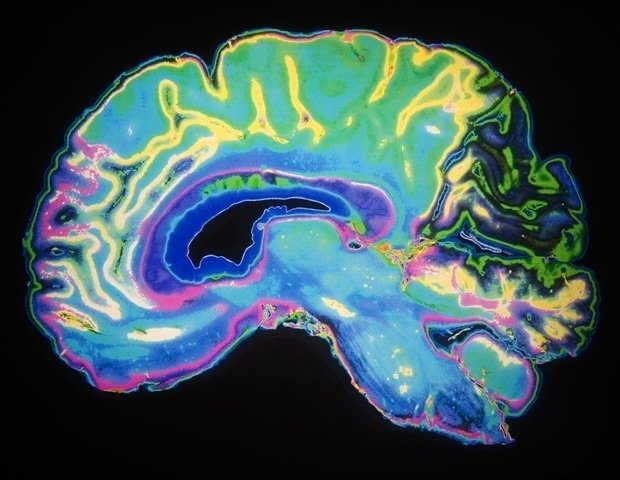
Despite decades of research, the mechanisms behind the quick flashes of insight that change the way a person perceives their world, called “one-shot learning,” have remained unknown. A mysterious type of one-shot learning is perceptual learning, in which seeing something once dramatically changes our ability to recognize it again.

A new study, led by researchers at NYU Langone Health, looks at the moments when we first recognize a blurry object, a primary ability that allowed our ancestors to avoid threats.

Posted online at Nature communicationsthe new work identifies for the first time the region of the brain called the high-level visual cortex (HLVC) as the place where “priors”—images seen in the past and then stored—are accessed to enable one-shot perceptual learning.

“Our work revealed, not only where the antecedents are stored, but also the brain computations involved,” said study co-senior author Biyu J. He, PhD, associate professor in the Departments of Neurology, Neuroscience, and Radiology at the NYU Grossman School of Medicine.

Importantly, previous studies have shown that patients with schizophrenia and Parkinson’s disease have abnormal one-shot learning, such that previously stored priorities overwhelm what a person is currently looking at to create hallucinations.

“This study has provided a directly testable theory of how the precursors act during hallucinations, and we are now investigating the relevant brain mechanisms in patients with neurological disorders to reveal what is going wrong,” added Dr.

The research team is also looking at possible connections between the brain mechanisms behind visual perception and the more familiar type of “aha moment” when we understand a new idea.

Sharper image

For the study, the team of Dr. He’s investigated changes in brain activity caused when people are shown Mooney pictures – faded pictures of animals and objects. Specifically, study participants are shown blurry images of the same object and then a clear version. In the study of Dr. He’s in 2018 of this procedure, after seeing the clean version (and experiencing one-shot learning), subjects became twice as good at image recognition because the experiment forced them to use their stored preferences.

The researchers “took pictures” of brain activity during the previous access using functional magnetic resonance imaging (fMRI), which measures the activity of brain cells by monitoring blood flow to active cells. Signaling strength along neural pathways (plasticity), however, is fine-tuned at the structural spaces (synapses) between brain cells, and fMRI can only measure activity within cells.

For this reason, the researchers combined fMRI with behavioral tests using Mooney images, electroencephalography (EEG) brain recordings, and a model based on machine learning—a form of artificial intelligence (AI)—to identify antecedents in HLVC.

To find the seat of one-shot perceptual learning, the research team first determined what kind of information is encoded in the signaling changes as prior access improves image recognition. To do this, the team changed the size of the images, their position on the page and their orientation (by rotating them) and recorded the effect of each change on image recognition rates. This behavioral study revealed that changes in image size did not alter single-shot learning, whereas rotating an image or changing its position partially reduced learning. The results suggested that perceptual priors encode prior patterns but not more abstract concepts (e.g., the breed of a dog in a picture).

The team then built statistical models that recorded patterns of brain cell activity via fMRI during prior access and found that only known patterns of neural coding in the high-level visual cortex matched the properties of the priors revealed by the behavioral study. The authors also investigated the temporal properties of activity changes using intracranial electroencephalography (iEEG) by asking patients already undergoing iEEG monitoring during neurosurgical treatment to perform a brief perceptual task. iEEG collects signals from electrodes in brain tissue to measure rapidly changing signaling patterns that fMRI cannot measure. HLVC showed the first changes in neural signaling strength, just as earlier guided object recognition did.

As a final step, the research team built a vision transformer — an artificial intelligence model that finds patterns in image parts and fills in what’s missing based on probabilities. Just as HLVC was found to add prior weight to information coming from the eyes, the AI ​​model stored accumulated image information (priors) in one unit and then used the stored data to better recognize incoming imaging data in another unit. After being trained on several images, the neural network model achieved one-shot learning ability similar to that seen in humans and better than other leading AI models without a comparable prior module.

“Although artificial intelligence has made great strides in object recognition over the past decade, no tool has yet been able to learn once like humans,” added co-senior author Eric K. Oermann, MD, assistant professor in the Departments of Neurosurgery and Radiology at NYU Langone. “We now expect the development of AI models with human-like perceptual mechanisms that classify new objects or learn new tasks with few or no training examples. This is further evidence of a growing convergence between computational neuroscience and the advancement of artificial intelligence.”

Together with Dr. He and Dr. Oermann, the authors included first authors Ayaka Hachisuka and Jonathan Shor, at the NYU Langone Institute for Translational Neuroscience, and first author Xujin Chris Liu of the NYU Tandon School of Engineering. Other authors from NYU Langone are Daniel Friedman, MD; Patricia C. Dugan, MD; and Orrin Devinsky, MD; in the Department of Neurology and Werner Doyle, MD, in the Department of Neurosurgery. Author Yao Wang is in the Department of Electrical and Computer Engineering at the NYU Tandon School of Engineering. Authors from the Icahn School of Medicine at Mount Sinai are Ignacio Saez in the Department of Neurosciences and Fedor Panov in the Department of Neurosurgery.

This work was supported by a WM Keck Foundation Medical Research Grant, National Science Foundation grant BCS-1926780, and NYU Grossman School of Medicine. Dr. Oermann owns equity in Artisight, Delvi and Eikon Therapeutics and has consulting agreements with Google and Sofinnova Partners. These relationships are managed in accordance with NYU policies.

Source:

Journal Reference:

Hachisuka, A., et al. (2026). Neural and computational mechanisms underlying simple perceptual learning in humans. Nature communications. DOI: 10.1038/s41467-026-68711-x.

brain identifies Leads learning region study Visual
bhanuprakash.cg
healthtost
  • Website

Related Posts

European collaboration turns immune cell data into cancer biomarkers

February 7, 2026

Senescent neutrophils promote tumor survival in all cancer types

February 6, 2026

Preoperative factors predict persistent opioid use after surgery

February 6, 2026

Leave A Reply Cancel Reply

Don't Miss
Women's Health

2.6 Friday Faves – The Fitnessista

By healthtostFebruary 7, 20260

Hello friends! Happy Friday! what are you doing What are you doing this weekend? We…

How to avoid shaving irritation: 7 myths that keep your skin angry

February 7, 2026

Smart Shoulder Solutions: An Evidence-based Approach

February 7, 2026

European collaboration turns immune cell data into cancer biomarkers

February 7, 2026
Stay In Touch
  • Facebook
  • Twitter
  • Pinterest
  • Instagram
  • YouTube
  • Vimeo
TAGS
Baby benefits body brain cancer care Day Diet disease exercise finds Fitness food Guide health healthy heart Improve Life Loss Men mental Natural Nutrition Patients People Pregnancy protein research reveals risk routine sex sexual Skin study Therapy Tips Top Training Treatment ways weight women Workout
About Us
About Us

Welcome to HealthTost, your trusted source for breaking health news, expert insights, and wellness inspiration. At HealthTost, we are committed to delivering accurate, timely, and empowering information to help you make informed decisions about your health and well-being.

Latest Articles

2.6 Friday Faves – The Fitnessista

February 7, 2026

How to avoid shaving irritation: 7 myths that keep your skin angry

February 7, 2026

Smart Shoulder Solutions: An Evidence-based Approach

February 7, 2026
New Comments
    Facebook X (Twitter) Instagram Pinterest
    • About Us
    • Contact Us
    • Privacy Policy
    • Terms and Conditions
    • Disclaimer
    © 2026 HealthTost. All Rights Reserved.

    Type above and press Enter to search. Press Esc to cancel.