

Close Menu
Healthtost
  • News
  • Mental Health
  • Men’s Health
  • Women’s Health
  • Skin Care
  • Sexual Health
  • Pregnancy
  • Nutrition
  • Fitness
  • Recommended Essentials
What's Hot

The new molecular framework paves the way for targeted therapeutic interventions for Parkinson’s disease

May 5, 2026

Aging in place takes more than good intentions — It takes smart infrastructure

May 5, 2026

Breaking Barriers, Building Strength: The Maya Nassar Story

May 5, 2026
Facebook X (Twitter) Instagram
  • About Us
  • Contact Us
  • Privacy Policy
  • Terms and Conditions
  • Disclaimer
Facebook X (Twitter) Instagram
Healthtost
SUBSCRIBE
  • News

    The new molecular framework paves the way for targeted therapeutic interventions for Parkinson’s disease

    May 5, 2026

    The use of symptom dimensions may provide more accurate, personalized mental health care

    May 4, 2026

    Randomized controlled trial validates total hip arthroplasty to improve functional capacity

    May 4, 2026

    New genetic risk report reveals hidden risk of heart disease before symptoms appear

    May 3, 2026

    Five-target drug beats GLP-1/GIP therapy in obese diabetic mice

    May 3, 2026
  • Mental Health

    Every mental health journey starts with being seen

    May 2, 2026

    What animal studies teach us about toxic work environments

    April 27, 2026

    I hate hope: How to manage hope when you have treatment-resistant bipolar disorder

    April 19, 2026

    Rose Byrne is raw, magnetic and unfiltered as a woman in crisis

    April 18, 2026

    Can a single mother change her child’s surname in India?

    April 16, 2026
  • Men’s Health

    Aging in place takes more than good intentions — It takes smart infrastructure

    May 5, 2026

    Dr. William O. Brant on male sexual health and the risks and benefits of supplements

    May 4, 2026

    3 Day Home Workout Plan: Build Muscle and Burn Fat

    April 30, 2026

    GLP-1 drugs promise broader health benefits, but experts advise caution on use

    April 28, 2026

    Trauma patients recover faster when medical teams know each other well, new study finds

    April 28, 2026
  • Women’s Health

    Breaking Barriers, Building Strength: The Maya Nassar Story

    May 5, 2026

    How to do a breast self-exam and spot lumps

    May 4, 2026

    Finding the best lupus treatments

    May 3, 2026

    What is the difference between UVA and UVB rays?

    May 1, 2026

    Are you a fungus fanatic? We unpack the nutritional trend of mushroom mania

    April 29, 2026
  • Skin Care

    How I Did It: Fading Hormonal Hyperpigmentation Without Lasers

    May 3, 2026

    The truth about waterless care: What your skin really needs

    May 2, 2026

    What happens to your skin while you sleep? (the science of “Beauty Sle

    May 1, 2026

    Face Peeling Mask Guide: Shine Without Irritation

    April 28, 2026

    Is your moisturizing face mist really drying out your skin?

    April 28, 2026
  • Sexual Health

    5 Ways to Improve Heart Health for Men

    May 5, 2026

    Early signs of Peyronie’s disease and when to seek help

    May 3, 2026

    Boost erectile health and confidence

    May 1, 2026

    Judicial Restrictions on Abortion COVID-19 < SRHM

    April 30, 2026

    Can herpes affect fertility?

    April 29, 2026
  • Pregnancy

    Why is anemia during pregnancy high in Indian women?

    May 2, 2026

    5 things you need for the third trimester

    May 1, 2026

    Eating disorders in pregnancy and breastfeeding: Why “healthy eating” is not always easy

    May 1, 2026

    Comprehensive yoga for pregnancy, birth and beyond

    April 29, 2026

    Midwifery and Life – The postnatal health check New mums don’t know they can ask for

    April 28, 2026
  • Nutrition

    Can magnesium help you lose weight?

    May 4, 2026

    9 Easy Chia Pudding Recipes (+ The Perfect Pudding Ratio) • Kath Eats

    May 4, 2026

    A cancer-causing contaminant in drugs and meat

    May 3, 2026

    How Nutrition Supports Mood, Energy and Gut Health

    May 2, 2026

    How to create a self-care plan when you’re stressed

    May 1, 2026
  • Fitness

    The most underrated skill I wish everyone learned

    May 3, 2026

    Landmine Training and Why I Love It – Tony Gentilcore

    May 3, 2026

    9 Powerful Fitness Tips for Pear Shaped Bodies

    May 2, 2026

    If you can still do these 7 things at 60, your body is aging better than most

    May 2, 2026

    A Hike Leader’s Must-Have Kit

    April 30, 2026
  • Recommended Essentials
Healthtost
Home»Nutrition»Nutrient Loss in Modern Cooking: How Frying, Microwaving and Overcooking Deplete Vitamins
Nutrition

Nutrient Loss in Modern Cooking: How Frying, Microwaving and Overcooking Deplete Vitamins

healthtostBy healthtostFebruary 9, 2026No Comments6 Mins Read
Facebook Twitter Pinterest LinkedIn Tumblr Reddit WhatsApp Email
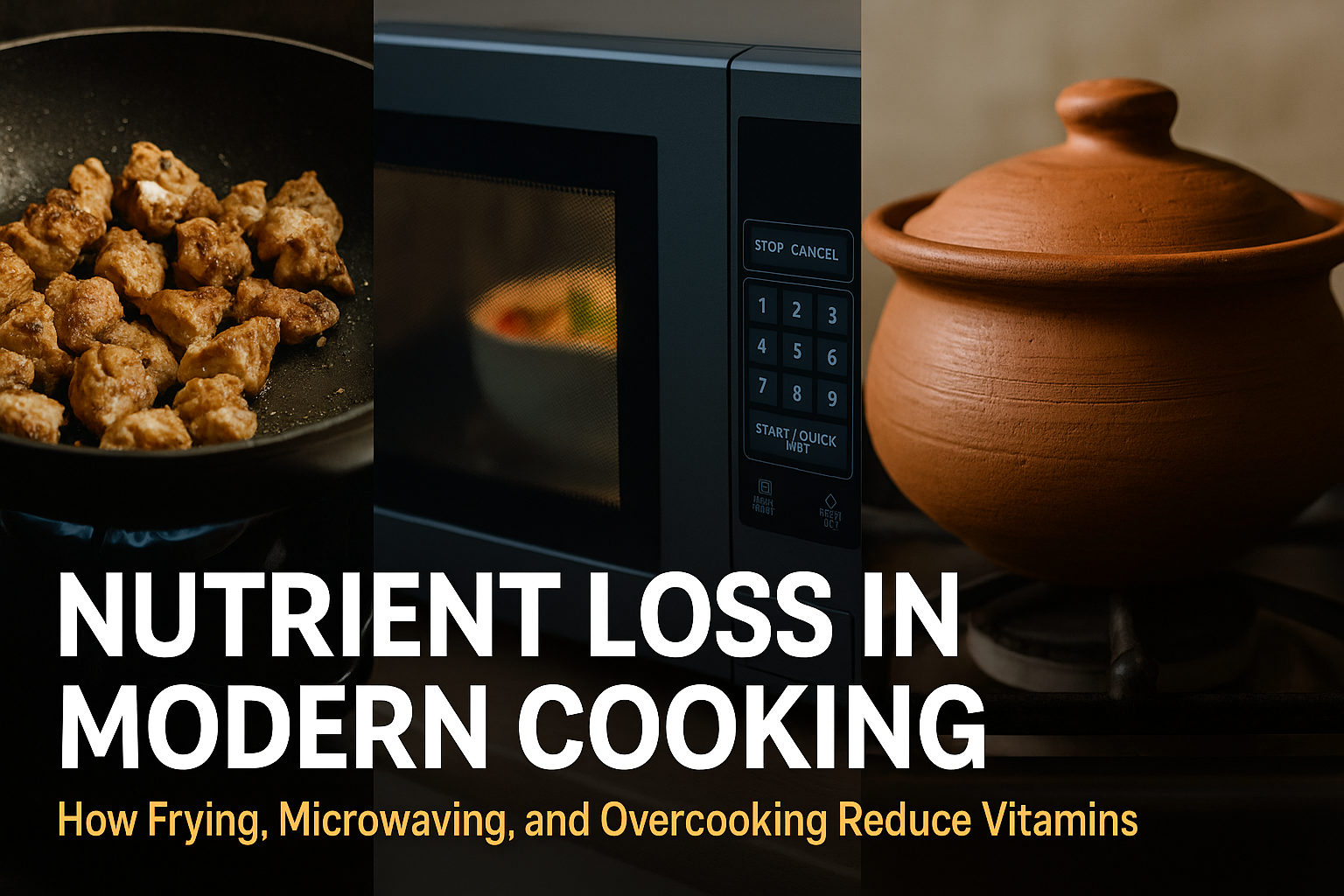
Nutrient Loss In Modern Cooking: How Frying, Microwaving And Overcooking
Share
Facebook Twitter LinkedIn Pinterest WhatsApp Email

Food isn’t just about filling hunger – it’s about fueling life. Every spoonful you eat carries vitamins, minerals and antioxidants that your body needs to fight disease, boost energy and stay healthy. However, in today’s fast-paced kitchens, we often unknowingly cook these vital nutrients.

From the crisp Punjabi pakoras to reheat curries in the microwave and simmering pots niharicooking methods play a huge role in how much nutrition actually ends up on our plate. Vitamin C, B complex and antioxidants they are very sensitive to heat and cooking style and the wrong method can ruin up to 50–90% of these nutrients.

This article reveals it science of nutrient loss in cookingexplains how frying, microwaving and overcooking affect your food and your offerings smarter cooking alternatives rooted in both modern nutritional research and traditional wisdom.

🔥 Frying: Crispy taste, hidden nutrient damage

In Pakistan, frying is almost a cultural identity — be it samosas during Ramadan, parathas at breakfastor fried chicken on the weekends. The aroma is irresistible, but here’s the hidden truth: frying can turn nutrient-dense foods into calorie-dense, nutrient-poor meals.

The science of nutrient loss in frying

  • Vitamin breakdown – Vitamins such as Vitamin C (important for immunity) and B-vitamins (necessary for energy and brain health) are water soluble and extremely sensitive to heat. At frying temperatures (160–190°C), they decompose rapidly.

  • Mineral retention versus oil absorption – While minerals such as iron and calcium survive better, they are overshadowed by the oil absorptionwhich increases the fat and calorie content.

  • Toxic Compounds – Continuous oil reheating leads to trans fats and acrylamideslinked to cardiovascular risks and inflammation.

Real life example

I reflect baingan (eggplant) pancakes.. Raw baingan is rich in antioxidants such as nasuninbut when fried, much of this antioxidant is broken down and the eggplant absorbs large amounts of oil. What should have been a nutrient-dense side dish becomes a greasy calorie bomb.

Healthier alternatives to frying

  • Shallow Frying – Cook with minimal oil in a heavy-bottomed pan to reduce nutrient damage.

  • Air frying – Keeps the food crispy without drowning it in oil.

  • Correct choice of oil – Usage mustard oil or olive oil for high heat stability. For a traditional taste, desi ghee in moderation it is much better than repeatedly reused cooking oil.

⚡ Microwave: Fast but not always nutrient friendly

Microwaves have become the most useful appliance for busy Pakistani families. From reheating leftover daal to defrosting chicken, they are quick and convenient. But do microwaves destroy the nutrients in your food? The answer is subtle.

Nutrient Loss in Modern Cooking: How Frying, Microwaving and Overcooking Deplete Vitamins

The Science of Microwaving and Nutrients

  • Short bursts preserve nutrients – Microwaving for a short time actually preserves more nutrients than boiling because less water is used and the cooking time is shorter.

  • Reheating hazards – Continuous reheating, especially of vegetables, reduces antioxidants such as flavonoids and polyphenols that protect against chronic diseases.

  • Container security – Microwaving food in plastic containers can release harmful phthalates and BPAthat mimic hormones in the body and can cause long-term health risks.

Real life example

Remains chicken curry Reheating in the microwave once is generally safe, but reheating it three times in two days means repeated vitamin breakdown and possible bacterial growth if not properly refrigerated.

Healthier alternatives to the microwave

  • Use glass or ceramic dishesnever thin plastics.

  • Microwave with a splash of water and cover the food to trap the steam — this helps preserve the nutrients.

  • Avoid reheating the same dish more than once. Instead, reheat only the portion you will eat.

🍲 Overcooking: The Silent Nutrient Killer

Desi cuisine is famous for its slow-cooked richness — from haleem in karachi to paya in Lahore. While flavors intensify, overcooking robs your meal of its nutritional power.

Nutrient Loss in Modern Cooking: How Frying, Microwaving and Overcooking Deplete Vitamins

The Science of Overcooking

  • Vitamin C reduction – Found in green chilies, tomatoes and coriander, vitamin C begins to break down after just 10 minutes of continuous heat. Long hours of cooking destroy it almost completely.

  • Loss of polyphenols – Vegetables like spinach, okra and beans lose out polyphenols (plant antioxidants) when boiled or overcooked.

  • Texture-Nutrition Trade-Off – Soft textures appeal to taste, but nutrients are washed away, especially in the cooking water that is often drained.

Real life example

Think of daal simmering for hours until creamy. While the flavor deepens, a lot B-vitamins they dissolve in water and prolonged heat destroys them further. If the liquid is not consumed, most of the vitamins are gone.

Healthier alternatives

  • Pressure cooking – Reduces cooking time while retaining more vitamins.

  • Add vegetables last – Throw in spinach, cilantro or peas at the end to lock in their nutrition.

  • Gentle Simmer – Keep the flame low and avoid over-stirring to preserve structure and nutrients.

🌿 Smarter cooking techniques that preserve nutrition

Pakistani cuisines don’t have to sacrifice nutrition for taste. Traditional methods already offer healthier approaches:

Nutrient Loss in Modern Cooking: How Frying, Microwaving and Overcooking Deplete Vitamins

  1. Piping hot – Best for vegetables like carrots, cauliflower and beans. Locks in vitamin C and antioxidants while maintaining crunch.

  2. Cooking in a Clay Pot – A method of inheritance still used in villages. The clay distributes the heat evenly and cooks slowly at lower temperatures, protecting the delicate vitamins.

  3. Stir-Frying – Quick cooking over high heat with a little oil. Perfect for chicken vegetable mix or mix okrakeeping the diet intact.

  4. Pressure cooking – Reduces cooking time, reduces exposure to water and preserves the B complex of vitamins in dal and meats.

  5. Bleaching – Briefly boiling and then cooling the vegetables keeps the colors vibrant and the nutrients intact, making them ideal for salads and side dishes.

🍛 Practical advice for every home kitchen

Nutrient Loss in Modern Cooking: How Frying, Microwaving and Overcooking Deplete Vitamins

  • Do not over exfoliate – Potato and cucumber skins contain fiber and minerals.

  • Use Less Water – Cook rice, daal or vegetables with minimal water to prevent nutrients from being washed away.

  • Cook small batches – Fresh foods retain more vitamins than refrigerated, reheated meals.

  • Herbs at the end – Garnish with fresh mint, coriander and curry leaves adds flavor and preserved antioxidants.

  • Balance tradition with science – It’s okay to indulge in fried samosas occasionally — just balance them out with steamed samosas or a fresh salad.

🌟 Final word: Cooking that heals, not just fills

Nutrient Loss in Modern Cooking: How Frying, Microwaving and Overcooking Deplete Vitamins

Our food culture is rich and diverse, but modern cooking shortcuts and excessive use of oil and heat are silently destroying the very nutrients that make food life-giving. Moving to smarter methods — less frying, careful microwaving and avoiding overcooking — we can keep both taste and nutritional value alive in our kitchens.

At Nutric Food Fairour mission is to help every Pakistani household rediscover their joy cooking that heals, not just fills. After all, a stronger nation begins with stronger kitchens.

cooking Deplete frying Loss Microwaving Modern nutrient Overcooking Vitamins
bhanuprakash.cg
healthtost
  • Website

Related Posts

Can magnesium help you lose weight?

May 4, 2026

9 Easy Chia Pudding Recipes (+ The Perfect Pudding Ratio) • Kath Eats

May 4, 2026

A cancer-causing contaminant in drugs and meat

May 3, 2026

Leave A Reply Cancel Reply

Don't Miss
News

The new molecular framework paves the way for targeted therapeutic interventions for Parkinson’s disease

By healthtostMay 5, 20260

A new study led by researchers from VIB and KU Leuven shows that Parkinson’s disease…

Aging in place takes more than good intentions — It takes smart infrastructure

May 5, 2026

Breaking Barriers, Building Strength: The Maya Nassar Story

May 5, 2026

5 Ways to Improve Heart Health for Men

May 5, 2026
Stay In Touch
  • Facebook
  • Twitter
  • Pinterest
  • Instagram
  • YouTube
  • Vimeo
TAGS
Baby benefits body brain cancer care Day Diet disease exercise finds Fitness food Guide health healthy heart Improve Life Loss Men mental Natural Nutrition Patients Pregnancy protein research reveals risk routine sex sexual Skin Skincare study Therapy Tips Top Training Treatment ways weight women Workout
About Us
About Us

Welcome to HealthTost, your trusted source for breaking health news, expert insights, and wellness inspiration. At HealthTost, we are committed to delivering accurate, timely, and empowering information to help you make informed decisions about your health and well-being.

Latest Articles

The new molecular framework paves the way for targeted therapeutic interventions for Parkinson’s disease

May 5, 2026

Aging in place takes more than good intentions — It takes smart infrastructure

May 5, 2026

Breaking Barriers, Building Strength: The Maya Nassar Story

May 5, 2026
New Comments
    Facebook X (Twitter) Instagram Pinterest
    • About Us
    • Contact Us
    • Privacy Policy
    • Terms and Conditions
    • Disclaimer
    © 2026 HealthTost. All Rights Reserved.

    Type above and press Enter to search. Press Esc to cancel.