

Close Menu
Healthtost
  • News
  • Mental Health
  • Men’s Health
  • Women’s Health
  • Skin Care
  • Sexual Health
  • Pregnancy
  • Nutrition
  • Fitness
  • Recommended Essentials
What's Hot

Finding the best lupus treatments

May 3, 2026

How I Did It: Fading Hormonal Hyperpigmentation Without Lasers

May 3, 2026

Early signs of Peyronie’s disease and when to seek help

May 3, 2026
Facebook X (Twitter) Instagram
  • About Us
  • Contact Us
  • Privacy Policy
  • Terms and Conditions
  • Disclaimer
Facebook X (Twitter) Instagram
Healthtost
SUBSCRIBE
  • News

    Five-target drug beats GLP-1/GIP therapy in obese diabetic mice

    May 3, 2026

    How fast your face ages can predict cancer survival outcomes

    May 2, 2026

    AI scribes save doctors time, but fail to reduce overtime

    May 2, 2026

    Identifying the ages at which Alzheimer’s biomarkers change sharply

    May 1, 2026

    Timing of food may shape how T cells respond to infection and therapy

    May 1, 2026
  • Mental Health

    Every mental health journey starts with being seen

    May 2, 2026

    What animal studies teach us about toxic work environments

    April 27, 2026

    I hate hope: How to manage hope when you have treatment-resistant bipolar disorder

    April 19, 2026

    Rose Byrne is raw, magnetic and unfiltered as a woman in crisis

    April 18, 2026

    Can a single mother change her child’s surname in India?

    April 16, 2026
  • Men’s Health

    3 Day Home Workout Plan: Build Muscle and Burn Fat

    April 30, 2026

    GLP-1 drugs promise broader health benefits, but experts advise caution on use

    April 28, 2026

    Trauma patients recover faster when medical teams know each other well, new study finds

    April 28, 2026

    I did red light therapy for 3 months so I shouldn’t have

    April 27, 2026

    Sex Secrets for Men Over 40: Surviving Male Menopause

    April 27, 2026
  • Women’s Health

    Finding the best lupus treatments

    May 3, 2026

    What is the difference between UVA and UVB rays?

    May 1, 2026

    Are you a fungus fanatic? We unpack the nutritional trend of mushroom mania

    April 29, 2026

    What the Patients’ Bill of Rights Could Mean for Black Women

    April 29, 2026

    Navigating sexual health during and after cancer

    April 28, 2026
  • Skin Care

    How I Did It: Fading Hormonal Hyperpigmentation Without Lasers

    May 3, 2026

    The truth about waterless care: What your skin really needs

    May 2, 2026

    What happens to your skin while you sleep? (the science of “Beauty Sle

    May 1, 2026

    Face Peeling Mask Guide: Shine Without Irritation

    April 28, 2026

    Is your moisturizing face mist really drying out your skin?

    April 28, 2026
  • Sexual Health

    Early signs of Peyronie’s disease and when to seek help

    May 3, 2026

    Boost erectile health and confidence

    May 1, 2026

    Judicial Restrictions on Abortion COVID-19 < SRHM

    April 30, 2026

    Can herpes affect fertility?

    April 29, 2026

    The Importance of Personalized Care in Medication Assisted Therapy (MAT) Programs I Novus

    April 28, 2026
  • Pregnancy

    Why is anemia during pregnancy high in Indian women?

    May 2, 2026

    5 things you need for the third trimester

    May 1, 2026

    Eating disorders in pregnancy and breastfeeding: Why “healthy eating” is not always easy

    May 1, 2026

    Comprehensive yoga for pregnancy, birth and beyond

    April 29, 2026

    Midwifery and Life – The postnatal health check New mums don’t know they can ask for

    April 28, 2026
  • Nutrition

    A cancer-causing contaminant in drugs and meat

    May 3, 2026

    How Nutrition Supports Mood, Energy and Gut Health

    May 2, 2026

    How to create a self-care plan when you’re stressed

    May 1, 2026

    I answer the most HOT Questions about Fatty Liver

    April 29, 2026

    Why You’re Not Losing Weight After 35 (Even When You Eat Less)

    April 28, 2026
  • Fitness

    Landmine Training and Why I Love It – Tony Gentilcore

    May 3, 2026

    9 Powerful Fitness Tips for Pear Shaped Bodies

    May 2, 2026

    If you can still do these 7 things at 60, your body is aging better than most

    May 2, 2026

    A Hike Leader’s Must-Have Kit

    April 30, 2026

    Menopausal Hair Loss Solutions: 10 Expert Tips

    April 29, 2026
  • Recommended Essentials
Healthtost
Home»News»New type of mitochondrial DNA damage discovered
News

New type of mitochondrial DNA damage discovered

healthtostBy healthtostNovember 20, 2025No Comments4 Mins Read
Facebook Twitter Pinterest LinkedIn Tumblr Reddit WhatsApp Email
New Type Of Mitochondrial Dna Damage Discovered
Share
Facebook Twitter LinkedIn Pinterest WhatsApp Email

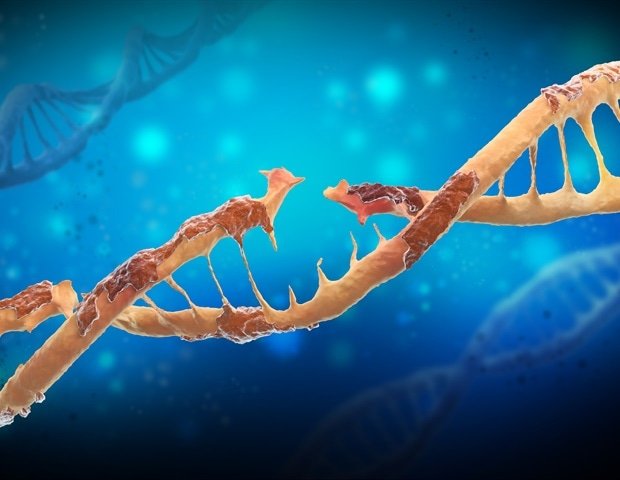
A previously unknown type of DNA damage in mitochondria, the tiny energy factories inside our cells, could shed light on how our bodies sense and respond to stress. The findings of the UC Riverside study are published today in the Proceedings of the National Academy of Sciences and have potential implications for a range of diseases associated with mitochondrial dysfunction, including cancer and diabetes.

Mitochondria have their own genetic material, known as mitochondrial DNA (mtDNA), which is essential for producing the energy that powers our bodies and sending signals in and out of cells. While it has long been known that mtDNA is prone to damage, scientists did not fully understand the biological processes involved. New research pinpoints a culprit: glutathionylated DNA adducts (GSH-DNA).

An adduct is a bulky chemical tag formed when a chemical, such as a carcinogen, attaches directly to DNA. If the damage is not repaired, it can lead to DNA mutations and increase the risk of disease.

A ‘sticky’ problem for mitochondrial DNA

The researchers found in their experiments in cultured human cells that these adducts accumulate to levels up to 80 times higher in mtDNA than in the cell’s nuclear DNA, suggesting that mtDNA is particularly vulnerable to this type of damage.

Linlin Zhao, senior author and associate professor of chemistry at UCR, explained that mtDNA makes up only a small fraction—about 1-5%—of the total DNA in a cell. It is circular in shape, has only 37 genes and is transmitted only from the mother. In contrast, nuclear DNA (nDNA) has a linear shape and is inherited from both parents.

mtDNA is more prone to damage than nDNA. Each mitochondrion has multiple copies of mtDNA, which provides some backup protection. The repair systems for mtDNA are not as strong or efficient as those for nuclear DNA.”


Linlin Zhao, senior author and associate professor of chemistry at UCR

Lead researcher and first author Yu Hsuan Chen, a doctoral student in Zhao’s lab, likened the mitochondrion to the cell’s engine and signaling hub.

“When the engine manual — the mtDNA — gets damaged, it’s not always a misspelling, a mutation,” Chen said. “Sometimes, it’s more like a sticky note that sticks to the pages, making it difficult to read and use. That’s what these GSH-DNA adducts do.”

From DNA damage to disease

The researchers linked the accumulation of sticky lesions to significant changes in mitochondrial function. They observed a decrease in proteins needed for energy production and a concomitant increase in proteins that help with the stress response and mitochondrial repair, suggesting that the cell is fighting back against the damage.

The researchers also used advanced computer simulations to model the effect of the adducts.

“We found that sticky tags can actually make mtDNA less flexible and more rigid,” Chen said. “This may be one way the cell ‘marks’ damaged DNA for disposal, preventing it from replicating and being passed on.”

The team’s findings hold promise for understanding the diseases. According to Zhao, the discovery of GSH-DNA adducts opens a new frontier for research into how damaged mtDNA can function as a stress signal.

“Mitochondrial problems and inflammation linked to damaged mtDNA have been linked to diseases such as neurodegeneration and diabetes,” he said. “When mtDNA is damaged, it can escape from the mitochondria and trigger immune and inflammatory responses. The new type of mtDNA modification we discovered could open new research directions to understand how it affects immune activity and inflammation.”

Zhao and Chen were joined in the study by researchers at UCR and The University of Texas MD Anderson Cancer Center.

The research was supported by grants from the National Institutes of Health and UCR.

Source:

University of California – Riverside

Journal Reference:

Chen, YH, et al. (2025). Glutathionylated DNA adducts accumulate in mitochondrial DNA and are regulated by AP endonuclease 1 and tyrosyl-DNA phosphodiesterase 1. Proceedings of the National Academy of Sciences. doi: 10.1073/pnas.2509312122.

damage discovered DNA mitochondrial type
bhanuprakash.cg
healthtost
  • Website

Related Posts

Five-target drug beats GLP-1/GIP therapy in obese diabetic mice

May 3, 2026

How fast your face ages can predict cancer survival outcomes

May 2, 2026

AI scribes save doctors time, but fail to reduce overtime

May 2, 2026

Leave A Reply Cancel Reply

Don't Miss
Women's Health

Finding the best lupus treatments

By healthtostMay 3, 20260

It’s May Lupus Awareness Month.Did you know that the word “wolf” is Latin for wolf?…

How I Did It: Fading Hormonal Hyperpigmentation Without Lasers

May 3, 2026

Early signs of Peyronie’s disease and when to seek help

May 3, 2026

A cancer-causing contaminant in drugs and meat

May 3, 2026
Stay In Touch
  • Facebook
  • Twitter
  • Pinterest
  • Instagram
  • YouTube
  • Vimeo
TAGS
Baby benefits body brain cancer care Day Diet disease exercise finds Fitness food Guide health healthy heart Improve Life Loss Men mental Natural Nutrition Patients Pregnancy protein research reveals risk routine sex sexual Skin Skincare study Therapy Tips Top Training Treatment ways weight women Workout
About Us
About Us

Welcome to HealthTost, your trusted source for breaking health news, expert insights, and wellness inspiration. At HealthTost, we are committed to delivering accurate, timely, and empowering information to help you make informed decisions about your health and well-being.

Latest Articles

Finding the best lupus treatments

May 3, 2026

How I Did It: Fading Hormonal Hyperpigmentation Without Lasers

May 3, 2026

Early signs of Peyronie’s disease and when to seek help

May 3, 2026
New Comments
    Facebook X (Twitter) Instagram Pinterest
    • About Us
    • Contact Us
    • Privacy Policy
    • Terms and Conditions
    • Disclaimer
    © 2026 HealthTost. All Rights Reserved.

    Type above and press Enter to search. Press Esc to cancel.