


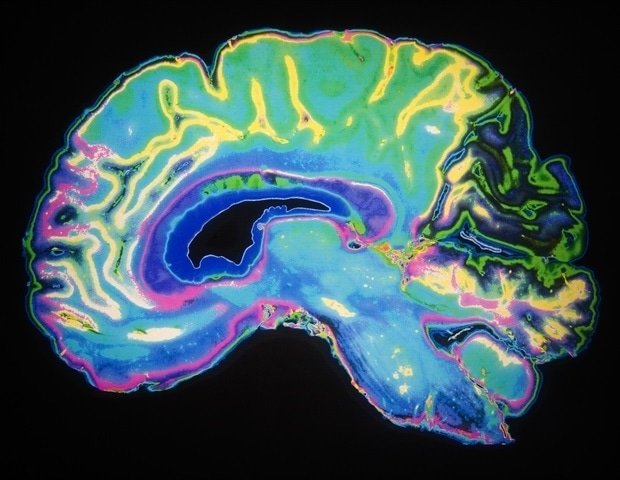
Most people have experienced the feeling: switching from one task to another, only to find the brain momentarily stuck in the old way of thinking. Sometimes, even after we realize that a strategy is no longer working, the mind keeps going back to it anyway.
Neuroscientists call the ability to adapt and change strategies “cognitive flexibility”—a key feature of higher cognition that allows the brain to abandon outdated rules and respond to changing circumstances. Impairments in cognitive flexibility are associated with disorders such as attention-deficit/hyperactivity disorder (ADHD), depression, obsessive-compulsive disorder (OCD), schizophrenia, and Alzheimer’s disease.
Now, researchers at the University of California, Riverside have identified a key neural circuit that helps the brain “shift gears.” The study, published in eLifeshows that a tiny brainstem structure called the locus coeruleus, or LC, plays a central role in helping the brain switch between behavioral rules and maintain flexible thinking.
The brain is constantly confronted with changing environments and demands. Our work shows that the locus coeruleus acts as a key regulator that helps the brain efficiently transition between behavioral states.”
Hongdian Yang, senior author of the study and associate professor of molecular, cellular and systems biology
Although small, the LC has a huge influence on the brain. It is the main source of norepinephrine, a neuromodulator involved in attention, arousal, learning, stress responses and decision making. Scientists have long suspected that the LC contributes to cognitive flexibility, but exactly how it modulates brain activity during behavioral change has remained unclear.
To investigate, UC Riverside researchers trained mice in a rule-switching task designed to test the flexibility of attention. The animals first learned to find food rewards using one type of sensory cue, such as the texture of bedding material. Then, without warning, the rule changed: the mice now had to ignore the old cue and rely on the smell.
The team then selectively suppressed activity in the LC using chemogenetic techniques. The team found that the mice had difficulty adapting to the new rule, continued to rely on outdated strategies, and took many more attempts to learn the switch.
“We found that LC signals help reorganize neural activity patterns in the prefrontal cortex so the brain can disengage from an old rule and engage with a new one,” Yang said.
The prefrontal cortex is an area of the brain involved in planning and decision making. The researchers recorded neural activity in the prefrontal cortex using tiny microscopes implanted in the mice, allowing them to monitor hundreds of neurons during the task.
Rather than simply reducing brain activity, disrupting the LC produced the opposite effect: more prefrontal neurons became active, and individual neurons responded to broader, more mixed information.
“The network has become noisier and less selective,” Yang said. “This suggests that the LC helps maintain a high neural ‘signal-to-noise ratio’, keeping the prefrontal cortex organized during complex decision-making rather than simply amplifying activity.”
The findings add to growing evidence that many psychiatric and neurological disorders may involve brains struggling not just with too much or too little activity, but with the ability to reorganize neural networks when conditions change.
The researchers also discovered that during normal learning the brain shifts between different “modes” of activity as it discovers a new rule. In the prefrontal cortex, groups of neurons were reorganized into clear, distinct patterns as the mice learned. But when the researchers suppressed the LC, these patterns became fuzzier and harder to discern, as if the brain could no longer clearly switch to the correct learning mode.
Using machine learning tools to analyze the data, the scientists found that the brain activity no longer clearly reflected what stage of learning the mice were in or what choices they were likely to make next. They found that the prefrontal cortex became worse at tracking the current rule that the mice were supposed to follow.
“Our findings also have implications for aging and Alzheimer’s disease, as the LC is affected early in neurodegeneration,” Yang said. “More broadly, our study provides potential new targets for therapeutic intervention by identifying neural circuits that may help restore cognitive flexibility and adaptive behavior.”
Yang was joined on the study by Marco Nigro, Lucas Silva Tortorelli, Machhindra Garad and Natalie Zlebnik.
The research was supported by grants from the National Institute of Neurological Disorders and Stroke and the National Institute on Drug Abuse.
Source:
Journal Reference:
