

Close Menu
Healthtost
  • News
  • Mental Health
  • Men’s Health
  • Women’s Health
  • Skin Care
  • Sexual Health
  • Pregnancy
  • Nutrition
  • Fitness
  • Recommended Essentials
What's Hot

Brain-Gut Health Initiative supports AI-assisted diagnosis of psychiatric disorders

April 25, 2026

Yeong Kim (Rian) – The Structural Elegance of Intellect and Honor

April 25, 2026

Researchers identify new genetic links to Hyperemesis Gravidarum

April 25, 2026
Facebook X (Twitter) Instagram
  • About Us
  • Contact Us
  • Privacy Policy
  • Terms and Conditions
  • Disclaimer
Facebook X (Twitter) Instagram
Healthtost
SUBSCRIBE
  • News

    Brain-Gut Health Initiative supports AI-assisted diagnosis of psychiatric disorders

    April 25, 2026

    Researchers uncover new mechanism linking metabolism, immunity and skeletal health

    April 25, 2026

    Genetic research identifies rare DNA changes that cause common heart valve damage

    April 24, 2026

    Air quality in infancy may fundamentally shape long-term immune development

    April 24, 2026

    The endoscopic procedure may prevent weight regain after stopping GLP-1

    April 23, 2026
  • Mental Health

    I hate hope: How to manage hope when you have treatment-resistant bipolar disorder

    April 19, 2026

    Rose Byrne is raw, magnetic and unfiltered as a woman in crisis

    April 18, 2026

    Can a single mother change her child’s surname in India?

    April 16, 2026

    Is it anxiety or OCD? 2 psychology experts explain the difference

    April 14, 2026

    Understanding the different types of treatment: C…

    April 10, 2026
  • Men’s Health

    45-Minute No-Equipment Home Workout (Full Body)

    April 23, 2026

    Study finds many UK adults want to avoid ultra-processed foods but can’t clearly define them

    April 21, 2026

    How can you get the best sleep?

    April 21, 2026

    The Crazy Hard Standards of the Hardest PE Program in History

    April 20, 2026

    Becoming revolutionaries in our time: Calling men to change the world for good

    April 20, 2026
  • Women’s Health

    Yeong Kim (Rian) – The Structural Elegance of Intellect and Honor

    April 25, 2026

    I felt ashamed of my dad’s illness

    April 25, 2026

    What are the different stages of puberty?

    April 24, 2026

    Understanding Hot Flashes – HealthyWomen

    April 24, 2026

    Because you are still inflamed

    April 22, 2026
  • Skin Care

    What it is and how to do it right – Lifeline Skin Care

    April 21, 2026

    Best Face Mask Set: What to Use for Your Skin Goals

    April 21, 2026

    Earth Day Activities: A Fun Guide to Plogging and More

    April 20, 2026

    Calm & Correct: The 4-in-1 color correcting treatment

    April 19, 2026

    How to Get Glowing Skin: Beauty Guide

    April 17, 2026
  • Sexual Health

    How accurate are herpes blood tests?

    April 22, 2026

    Understanding the Asexual Spectrum — Sexual Health Alliance

    April 21, 2026

    The importance of sex and intimacy in the elderly

    April 18, 2026

    Judicial reform is the only real way out of today’s political hell

    April 15, 2026

    Personal and Professional considerations between generations

    April 15, 2026
  • Pregnancy

    Researchers identify new genetic links to Hyperemesis Gravidarum

    April 25, 2026

    Loss of Appetite During Pregnancy: A Third Trimester Guide

    April 24, 2026

    Cameron Rodgers wants you to know you’re not the only one Googling “WTF is going on in my body” at 2 a.m.

    April 22, 2026

    A gentle space to navigate the becoming of motherhood

    April 21, 2026

    Transfer to birth center C-section, birth center VBAC and Surprise Footling Breech Transfer to home

    April 18, 2026
  • Nutrition

    Doing the work in the face of fear

    April 25, 2026

    Can the “dark shower” reduce stress and improve sleep?

    April 24, 2026

    High Fiber Smoothie Recipe • Kath Eats

    April 23, 2026

    Which potato is the most nutritious?

    April 22, 2026

    What Really Works (and What Doesn’t)

    April 22, 2026
  • Fitness

    4.24 Friday Faves – The Fitnessista

    April 25, 2026

    The workout we forgot (it’s time to bring it back 💪 )

    April 24, 2026

    Cardio or weightlifting? – Tony Gentilcore

    April 24, 2026

    7 super healthy ways to take care of yourself

    April 23, 2026

    Wake up with these symptoms? Your health may be at risk

    April 23, 2026
  • Recommended Essentials
Healthtost
Home»Nutrition»Food is chemistry: food pigments and risk
Nutrition

Food is chemistry: food pigments and risk

healthtostBy healthtostApril 8, 2025No Comments6 Mins Read
Facebook Twitter Pinterest LinkedIn Tumblr Reddit WhatsApp Email
Food Is Chemistry: Food Pigments And Risk
Share
Facebook Twitter LinkedIn Pinterest WhatsApp Email

As I move the news or social media positions, I see a very public fear of the “abnormal” or “synthetic” ingredients.

Did you know that the colors found in nature consist of chemicals?

Often the chemicals that produce the color themselves also have the health benefits. It is part of a group of chemicals we call phytochemicals (“phyto” meaning “plant”).

Think of the range of colors between all fruits and vegetables: chlorophyll (green vegetables such as leafy green, celery, parsley, basil and other green herbs), carotenoids (orange fruits and vegetables, (blues and reds – salmon, berries, berries)

What do these associations have in common? They have antioxidant properties. You may already know that vitamin C (ascorbic acid) is antioxidant. Why should you consume foods with antioxidants?

Think of antioxidants as guardians. Protect your body cells from “free radicals”. At high levels, these unstable “Free radical” molecules They cause oxidative stress within the body, which can damage your cells at a genetic level. Eating antioxidants can help keep free radicals under control.

Food is chemistry

You see, food is chemistry. All foods consist of chemicals. Actually, you They consist of chemicals!

There is this public perception that “natural” is better. You can listen to people in social media or printing articles that suggest that you “avoid any food or ingredients you cannot pronounce” (in fact our US government recently took this attitude).

Just because chemical names are difficult to pronounce, it does not make them harmful.

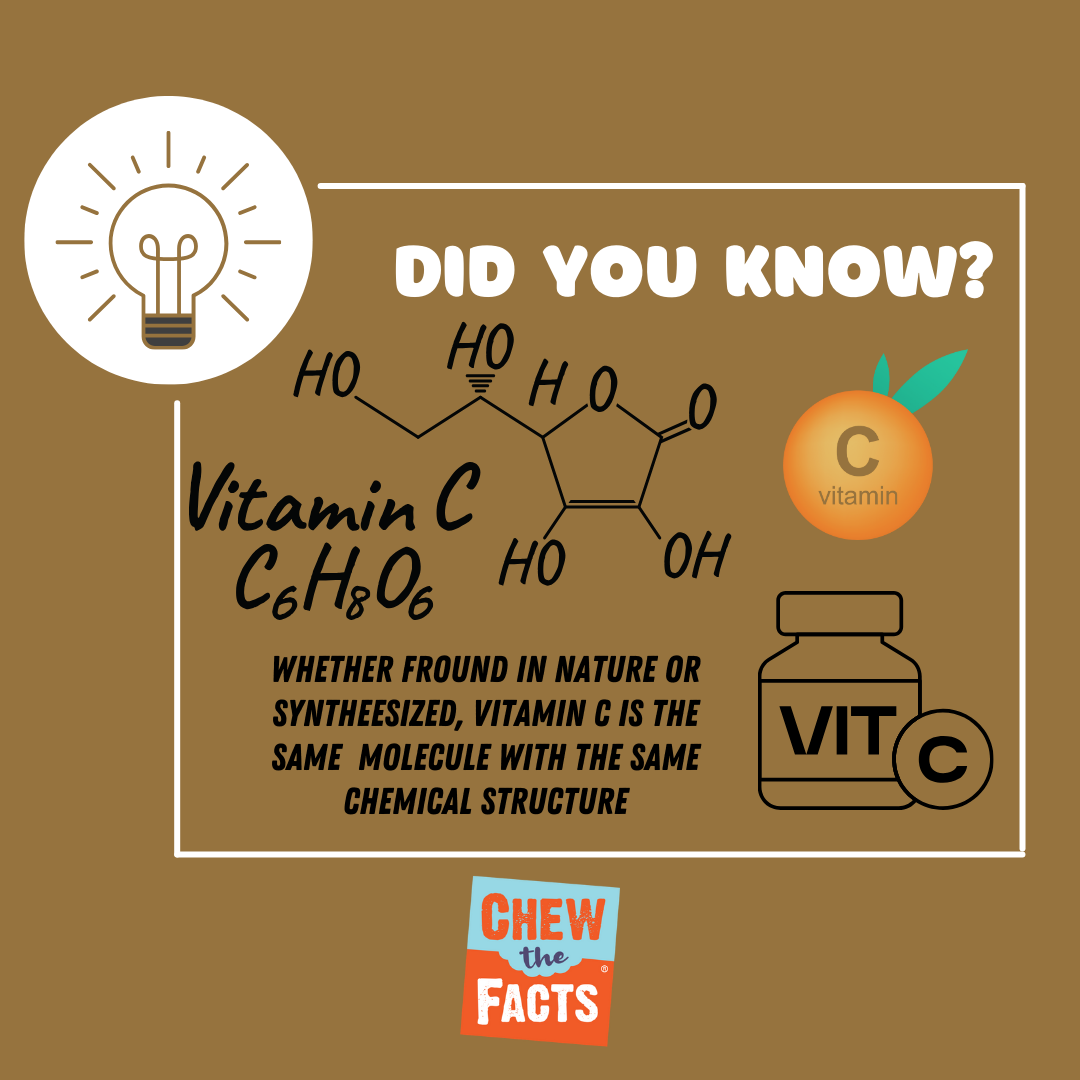
Take, for example, vitamin C. Vitamin C is found in many fruits (citrus, melon, kiwi) and vegetables (white potatoes, peppers, broccoli). Whether it is in nature or composed in a laboratory, vitamin C has the same chemical structure. Once swallowed, your body cannot say the difference and break it in the same way.

Synthetic food dyes

Natural sounds better. No one likes the word “synthetic”. In fact, if two identical compounds occur naturally or are manufactured in the laboratory, if they are chemically the same, they are the same compound and are metabolized as such in the body.

This brings me to food dyes. I think many consumers have hung the idea that these ingredients are “synthetic” and may not know how they have been studied for security.

Science for Red Dye No.3 shows this:

  • Is not genotoxic (do not hurt DNA, human genetic material)
  • Is carcinogenic Only in the male thyroid rat, Only in the highest dose tested and produces only benign (not malignant/cancer) tumors
  • Operates clearly through a secondary carcinogenesis mechanism associated with thyroid toxicity
  • It has a level of exposure -level threshold under which the risk of human cancer is negligible, as male rat tumors are not relevant to humans

FDA does not prohibit additives or ingredients based solely on a potential Risk in laboratory rats. Or at least, Did not get used to. How was Red Dye No 3 recognized, which was previously recognized as safe, took prohibited;

  • Pressure from CSPI reference and Californiaban.
  • The Delaney clause: This clause forbids FDA to approve the use of any additional food found to cause cancer to animals or people. Food scientists criticize the clause as overly restrictive by setting a zero level of risk (keep reading to find out more about the risk).

EU Halo

I often hear people who make statements about food being “healthier” in Europe than the United States because Europe “does not put this trash there” food. In some cases, they really use the ingredient, but with a different name. Event of fun: There’s really a lot of dyes and additives approved in Europe prohibited in the US.

The EU approaches food policy differently. The EU is using a Prophylaxis To make decisions about food ingredients while FDA uses a For example, a disgusting risk. In other words, the EU allows regulators to act even when scientific evidence is not decisive. Type of an approach ‘better safe than apologies’.

The American example favors an approach based at risk, taking into account the real risk. This is an important distinction between these two approaches.

If you enjoy swimming in the ocean, you run the risk that sharks (or other risk) could be close. However, the fact that sharks live in the ocean does not mean that you will see one every time you swim (or always throughout your life). Or that they will bite you. However, the risk is always there. You can also evaluate the risk on any given day. (Btw, shark bites are still rare, 1 in 4,332,817, and you are more likely to suffer from dog attack)

Danger to risk

The concepts of danger and danger are It is important to understand. A risk is something that has the potential be harmful or dangerous. A risk is the probability by this risk that is happening.

EU approach to assess the safety of prosthetic foods is evaluated How much damage can be avoided instead of asking How much risk is acceptable.

In the US, human security evidence is not considered decisive on the basis of data from a rat study. We are not rats. In addition, laboratory rats often come from tumors and give large doses of that substance. Rodent studies serve to start research or specify potential Damage mechanisms. US approach to assess the safety of prosthetic foods focuses on real risk, not the Ability to cause damage to the body based on high doses given to laboratory rats. However, red dye No. 3 will be removed from food by January 2027, according to the new decision.

The FDA approach is rooted in a 1958 legislation introduced by the “generally recognized” regime (Gras) for food additives.

‘For a substance to be GrasScientific data and information on the use of a substance must be widely known and there must be consensus between experts that data and information establish that the substance is safe under the conditions of its intended use. “

You will hear much more about it in the near future. What started as a productive way of managing the food system may need an update.

Can anything in life be completely without danger?

A large part of the toxicology study frame is that The result (risk) depends on the amount of Report (risk) and the actual use of one component. Or as we often say: “Dose makes the poison.”

Life is full of dangers. Certainly some people are more dangerous. It is absolutely good to make your own judgments about the dangers you want to take. The question is that policy should be defined based on dynamic something that happensor to discreet proof that it is likely to occur in real -life practices or scenarios? I tend to live with the “dose makes the poison” and modify my choices around this principle.

We live in a society extremely dependent on science and technology, in which almost no one knows anything about science and technology. ~ Carl sagan

chemistry food pigments risk
bhanuprakash.cg
healthtost
  • Website

Related Posts

Doing the work in the face of fear

April 25, 2026

Can the “dark shower” reduce stress and improve sleep?

April 24, 2026

High Fiber Smoothie Recipe • Kath Eats

April 23, 2026

Leave A Reply Cancel Reply

Don't Miss
News

Brain-Gut Health Initiative supports AI-assisted diagnosis of psychiatric disorders

By healthtostApril 25, 20260

Psychiatric disorders affect millions worldwide, but their diagnosis is still based on clinical observation rather…

Yeong Kim (Rian) – The Structural Elegance of Intellect and Honor

April 25, 2026

Researchers identify new genetic links to Hyperemesis Gravidarum

April 25, 2026

Doing the work in the face of fear

April 25, 2026
Stay In Touch
  • Facebook
  • Twitter
  • Pinterest
  • Instagram
  • YouTube
  • Vimeo
TAGS
Baby benefits body brain cancer care Day Diet disease exercise finds Fitness food Guide health healthy heart Improve Life Loss Men mental Natural Nutrition Patients Pregnancy research reveals risk routine sex sexual Skin Skincare study Therapy Tips Top Training Treatment Understanding ways weight women Workout
About Us
About Us

Welcome to HealthTost, your trusted source for breaking health news, expert insights, and wellness inspiration. At HealthTost, we are committed to delivering accurate, timely, and empowering information to help you make informed decisions about your health and well-being.

Latest Articles

Brain-Gut Health Initiative supports AI-assisted diagnosis of psychiatric disorders

April 25, 2026

Yeong Kim (Rian) – The Structural Elegance of Intellect and Honor

April 25, 2026

Researchers identify new genetic links to Hyperemesis Gravidarum

April 25, 2026
New Comments
    Facebook X (Twitter) Instagram Pinterest
    • About Us
    • Contact Us
    • Privacy Policy
    • Terms and Conditions
    • Disclaimer
    © 2026 HealthTost. All Rights Reserved.

    Type above and press Enter to search. Press Esc to cancel.