


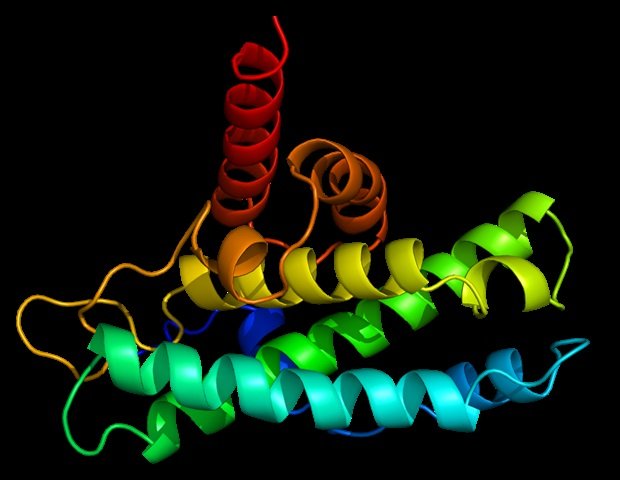
Scientists have captured the most detailed structural pictures yet of a DNA repair process of a specific type of protein, a finding that could reveal ways to inhibit the effects of BRCA1 and BRCA2 mutations that increase the risk of breast, ovarian and other cancers.
Previous research had shown that a protein in humans called RAD52 repairs DNA in cancer cells that lack the tumor-suppressing function of the normal BRCA genes, allowing the cells to survive and reproduce — an indication that blocking RAD52 would kill those cells.
However, blocking RAD52 requires a complete understanding of its repair activities, which have been difficult to capture even with the most sophisticated techniques. So the research team turned to the ancestral Mgm101 protein in yeast mitochondria and observed several key steps in the DNA repair process, called single-stranded DNA annealing.
A clearer understanding of how this family of proteins binds to DNA strands and rejoins them after a break provides insights into drug targets that could halt the process in cancer cells amplified by mutated BRCA genes.
“It’s still a proposed mechanism: Just because we see these snapshots of the process doesn’t mean we know all the details, but we have the best snapshots of any protein doing this single-strand annealing,” said senior author Charles Bell, professor of biological chemistry and pharmacology at The Ohio State University College of Medic. “This focuses our drug development strategies.”
The study is published today (April 27, 2026) in the journal Nucleic Acid Researchwhich characterized the document as a pioneering article.
DNA strands break every day in every cell, so proteins exist to repair the breaks and otherwise keep cellular processes running smoothly. But because repairs must be made quickly and human proteins are often more complex than their ancestral counterparts, even the most advanced imaging equipment cannot capture every step of the process.
The Bell Lab collaborated on this research with the lab led by co-author Vicki Wysocki, professor emeritus at Ohio State and chair of the School of Chemistry & Biochemistry at the Georgia Institute of Technology. Wysocki’s lab specializes in physical mass spectrometry and mass photometry, using light to measure the masses of protein-DNA complexes.
These techniques showed that Mgm101 assembled from a monomer, or a single copy of itself, into a large multiunit molecular complex called a 19-mer—essentially, a ring made up of 19 copies of the protein.
That ring sits there as a template so that the first strand of DNA can come down, and then the second strand comes in and starts annealing to the first strand.”
Vicki Wysocki, professor emeritus at Ohio State;
These findings were supported by what Bell’s lab determined using cryogenic electron microscopy, observing structures that float in solution and freeze in a thin layer of ice.
The high-resolution structures showed multiple phases of the process: the 19-membered ring with a single DNA strand attached (substrate), with the second strand in place for annealing (double intermediate), and then the release of the repaired DNA, visible as the classic DNA double helix formation (B-form product).
“High-resolution structures of RAD52 have been determined with single-stranded DNA, but not with the two DNAs it tries to anneal,” Bell said. “Its job is to bind single-stranded DNA and anneal it to its complementary sequence. It has been structurally captured, but only in a few situations related to the reaction.
“Here, we have more of the states along the full path from the substrate, to the intermediate, to the product. And the intermediate duplex is a configuration that’s never been seen before—when the protein binds the first DNA around the ring, it’s bound only by its sugar-phosphate backbone, with the nucleotide bases pointing up and apart so they can be exposed and fully exposed. It’s completely unfolded and it’s circular”.
Bell said the field has been uncertain about whether this mechanism occurs with one or two protein rings involved, but that these findings show that the process is managed by a single molecular complex—and, therefore, single-strand annealing is likely to be a conserved cis mechanism.
The team plans to try to capture the same phases of the DNA repair process as human RAD52, with particular emphasis on the duplex intermediate, and to expand the role of mass spectrometry in determining how DNA binds to the protein.
This work was supported by the US National Science Foundation and the National Institutes of Health. Cryo-EM data were collected at the Ohio State Center for Electron Microscopy and Analysis and processed using the Ohio Supercomputing Center.
Ohio State’s Carter Wheat and Zihao Qi, formerly of Ohio State and now at Georgia Tech, are the first authors of the study. Additional co-authors include Metro High School student Miqdad Hussain and Katerina Zakharova, formerly of Ohio State and now at CAS.
