



As a regular caffeine consumer and general nutritionist, there are few topics that intrigue both myself and my clients more than how to optimize the joys and benefits of caffeine while minimizing concerns about sleep disruption.
With March being Caffeine Awareness Month, there’s simply no better time to review the latest research on caffeine and sleep science.
Today’s article is sponsored by Canadian Beverage Associationbut the underlying messages and interpretation of the cited science are my own.
My goal is to offer new and valuable insights into caffeine and sleep that go above and beyond what I have explored in the past.
With that said, let’s get to the good stuff.
Canada sleep statistics
Before exploring the role of caffeine in the bigger picture, let’s start by reviewing some important sleep statistics in the Canadian context.
That is why I am addressing a A report recently released by Statistics Canada which used Canadian Community Health Survey 2020 data from nearly 10,000 respondents.
Here’s what they found:
- ~75% of Canadian adults aged 18-64 meet current sleep recommendations (7-9 hours).
- ~66% of Canadians report having high quality sleep.
The importance of this data for today’s purposes is to really outline the fact that while there is room for improvement in the quality and quantity of Canadians’ sleep, the majority of Canadians sleep well.
Caffeine content of common foods and beverages
To better understand the data I will report next, it will be helpful to review the caffeine content of commonly consumed foods and beverages.
As a friendly reminder, the physiological and structural properties of caffeine are identical whether it is natural (eg coffee) or synthetic (eg energy/soft drinks).
Keep these values in mind as we move into the next section!
Caffeine and sleep – New evidence
It won’t surprise anyone to hear that, for some, consuming caffeine too close to bedtime can compromise the ability to fall asleep as well as the nature, quality, and duration of sleep.
I believe it is reasonable and especially appropriate for regular caffeine consumers to understand the latest evidence regarding caffeine use and sleep quality/duration.
For more information, let’s turn to a recent systematic review and meta-analysis which includes 24 different studies on the effects of caffeine on sleep.
The aim of this particular review is to provide information about caffeine consumption in relation to the amount and timing of consumption, and what is least likely to lead to disturbances in any aspect of sleep duration and quality.
Their general findings:
Caffeine’s effect on sleep depends on both dosage and synchronizationmeaning that large doses later in the day have the greatest potential to affect sleep.
Their recommendations:
1. When you consume moderate doses of caffeine (about 100 mg) – Drinking about 9 hours before bed will completely reduce the risk of caffeine disrupting the quantity or quality of your sleep.
2. When you consume larger doses of caffeine (about 215 mg) – Drinking about 13 hours before bed will completely reduce the risk of caffeine disrupting the quantity or quality of your sleep.
3. When you consume smaller doses of caffeine (about 40-50 mg) – This amount appears to be much less likely to disrupt sleep, regardless of when it is consumed.
This review does not offer firm guidelines for this level of consumption.
A theoretical example:
Let’s imagine that we have a person who consumes two coffees from a coffee shop a day and wants to apply these findings to his life.
They consume a moderate amount of coffee (about 160-200 mg of caffeine) and a small cafe (about 80-100 mg of caffeine) daily or any equivalent caffeine from tea, pre-workout or energy drinks, depending on their preferences.
In this case, the person should aim to drink the larger medium cup of coffee within a few hours of waking up in the early morning and drink the second smaller cup of coffee in the early afternoon in order to minimize the impact on sleep.
Caffeine affects everyone differently
Caffeine is metabolized very differently by different people, and it is possible that the effect of the amount and timing of caffeine can affect different people’s sleep in different ways.
The caffeine restriction recommendations arrived at in this particular review can be seen as a general guideline, but need not be taken as a hard and fast rule by those who are confident in their sleep behaviors despite consuming caffeine in a way that is out of alignment with the findings presented.
For those who are regular caffeine consumers with less confidence in their sleep, the guidelines provided may prove to be important points of focus.
Food with Now added “Supplementary Foods”
You may have noticed that some of your favorite products that contain added caffeine have new “Supplemental Food Facts” tables that identify the supplemental ingredients and their amounts.
Products with 1 or more additional supplementary ingredients may be subject to a new labeling regulation.
The regulations for these labels were published by Health Canada in 2022 and all nutritional supplements must have them by January 1stSt2026, with the primary objective of enabling consumers to make more informed decisions.
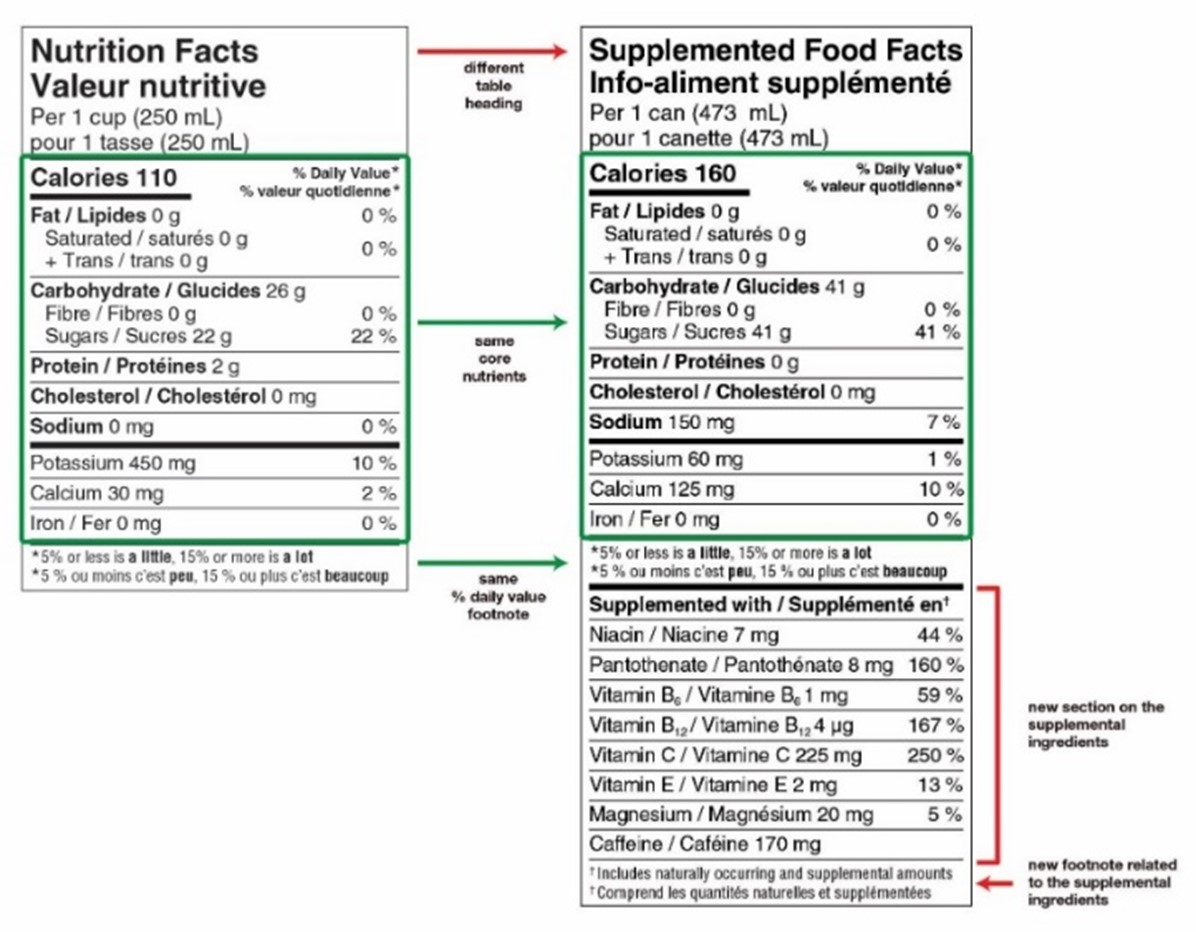
When it comes to caffeinated products, these labels will make it easier for people to determine how much they are getting and really allow them to make strategic decisions about product selection and timing of use.
However, caffeine is not the only example of a supplement ingredient, as various vitamins and minerals are also added to different types of foods and beverages.
Some supplemented foods will also have a supplemental food caution identifier on the front label.

The presence of this label indicates that there will be a warning box on the back or side of the package.
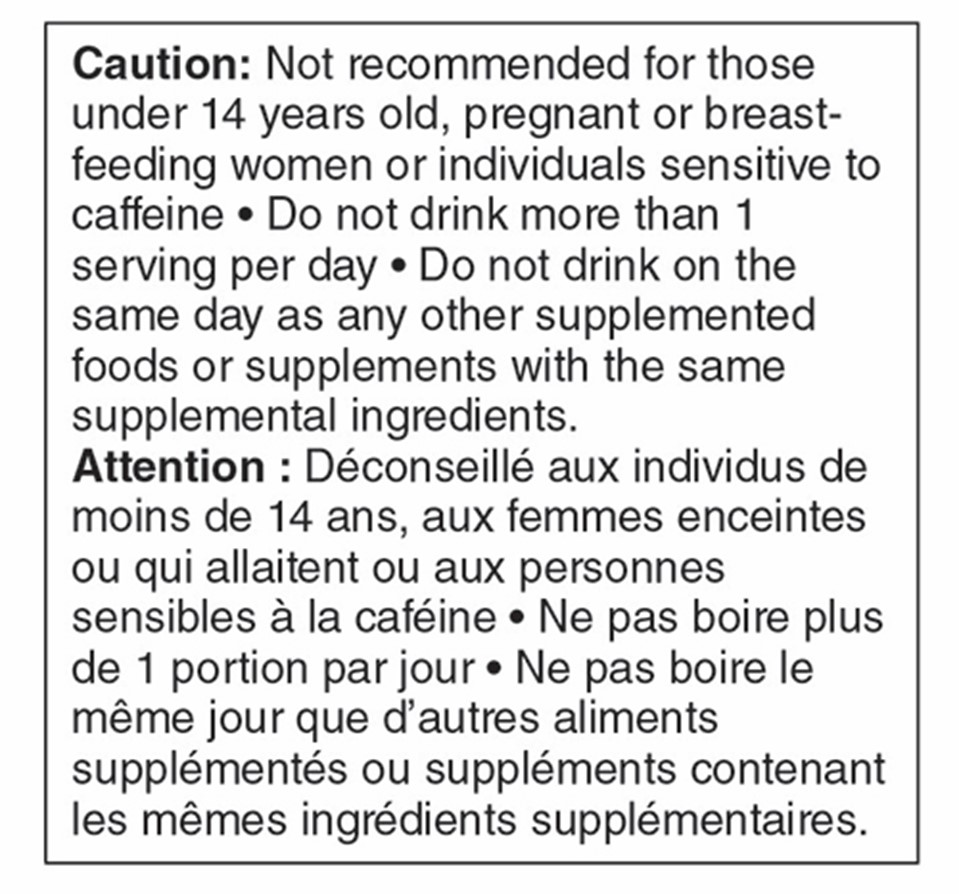
These warning boxes provide further information on the safe and appropriate use of the product, but let’s take a closer look at why Health Canada decided to add these statements to the products.
Why do some food supplements contain additional claims?
I’m glad you asked!
It is true that some supplemented foods contain ingredients that may be of concern in certain contexts, such as when:
- It is consumed in excess by the general population
- It is consumed by people who are:
- Under 14 years old
- Pregnant or breastfeeding
- Sensitive to caffeine
Supplemental foods that fall into this category will contain the additional attention identifier on the front of the package and the precaution box identified in the previous section.
Caffeinated energy drinks are an example of such a product and will therefore contain certain labels to help consumers understand how to use them most appropriately.
All caffeinated energy drinks must have:
- The “high caffeine content” statement
- A supplementary food warning identifier
- Warning statements:
- “Not recommended for people under 14, pregnant or nursing women, or people sensitive to caffeine”
Having worked with so many people over the years, I know the important roles that various nutritional supplements play in our daily lives and the level of enjoyment they bring to many of us.
That’s exactly why I wanted to close today’s article by reviewing these new labeling regulations to ensure you can approach them from a point of understanding as to their role in guiding your choices.
Until next time,
Andy De Santis RD MPH
