


Close Menu
Healthtost
  • News
  • Mental Health
  • Men’s Health
  • Women’s Health
  • Skin Care
  • Sexual Health
  • Pregnancy
  • Nutrition
  • Fitness
  • Recommended Essentials
What's Hot

The new molecular framework paves the way for targeted therapeutic interventions for Parkinson’s disease

May 5, 2026

Aging in place takes more than good intentions — It takes smart infrastructure

May 5, 2026

Breaking Barriers, Building Strength: The Maya Nassar Story

May 5, 2026
Facebook X (Twitter) Instagram
  • About Us
  • Contact Us
  • Privacy Policy
  • Terms and Conditions
  • Disclaimer
Facebook X (Twitter) Instagram
Healthtost
SUBSCRIBE
  • News

    The new molecular framework paves the way for targeted therapeutic interventions for Parkinson’s disease

    May 5, 2026

    The use of symptom dimensions may provide more accurate, personalized mental health care

    May 4, 2026

    Randomized controlled trial validates total hip arthroplasty to improve functional capacity

    May 4, 2026

    New genetic risk report reveals hidden risk of heart disease before symptoms appear

    May 3, 2026

    Five-target drug beats GLP-1/GIP therapy in obese diabetic mice

    May 3, 2026
  • Mental Health

    Every mental health journey starts with being seen

    May 2, 2026

    What animal studies teach us about toxic work environments

    April 27, 2026

    I hate hope: How to manage hope when you have treatment-resistant bipolar disorder

    April 19, 2026

    Rose Byrne is raw, magnetic and unfiltered as a woman in crisis

    April 18, 2026

    Can a single mother change her child’s surname in India?

    April 16, 2026
  • Men’s Health

    Aging in place takes more than good intentions — It takes smart infrastructure

    May 5, 2026

    Dr. William O. Brant on male sexual health and the risks and benefits of supplements

    May 4, 2026

    3 Day Home Workout Plan: Build Muscle and Burn Fat

    April 30, 2026

    GLP-1 drugs promise broader health benefits, but experts advise caution on use

    April 28, 2026

    Trauma patients recover faster when medical teams know each other well, new study finds

    April 28, 2026
  • Women’s Health

    Breaking Barriers, Building Strength: The Maya Nassar Story

    May 5, 2026

    How to do a breast self-exam and spot lumps

    May 4, 2026

    Finding the best lupus treatments

    May 3, 2026

    What is the difference between UVA and UVB rays?

    May 1, 2026

    Are you a fungus fanatic? We unpack the nutritional trend of mushroom mania

    April 29, 2026
  • Skin Care

    How I Did It: Fading Hormonal Hyperpigmentation Without Lasers

    May 3, 2026

    The truth about waterless care: What your skin really needs

    May 2, 2026

    What happens to your skin while you sleep? (the science of “Beauty Sle

    May 1, 2026

    Face Peeling Mask Guide: Shine Without Irritation

    April 28, 2026

    Is your moisturizing face mist really drying out your skin?

    April 28, 2026
  • Sexual Health

    5 Ways to Improve Heart Health for Men

    May 5, 2026

    Early signs of Peyronie’s disease and when to seek help

    May 3, 2026

    Boost erectile health and confidence

    May 1, 2026

    Judicial Restrictions on Abortion COVID-19 < SRHM

    April 30, 2026

    Can herpes affect fertility?

    April 29, 2026
  • Pregnancy

    Why is anemia during pregnancy high in Indian women?

    May 2, 2026

    5 things you need for the third trimester

    May 1, 2026

    Eating disorders in pregnancy and breastfeeding: Why “healthy eating” is not always easy

    May 1, 2026

    Comprehensive yoga for pregnancy, birth and beyond

    April 29, 2026

    Midwifery and Life – The postnatal health check New mums don’t know they can ask for

    April 28, 2026
  • Nutrition

    Can magnesium help you lose weight?

    May 4, 2026

    9 Easy Chia Pudding Recipes (+ The Perfect Pudding Ratio) • Kath Eats

    May 4, 2026

    A cancer-causing contaminant in drugs and meat

    May 3, 2026

    How Nutrition Supports Mood, Energy and Gut Health

    May 2, 2026

    How to create a self-care plan when you’re stressed

    May 1, 2026
  • Fitness

    The most underrated skill I wish everyone learned

    May 3, 2026

    Landmine Training and Why I Love It – Tony Gentilcore

    May 3, 2026

    9 Powerful Fitness Tips for Pear Shaped Bodies

    May 2, 2026

    If you can still do these 7 things at 60, your body is aging better than most

    May 2, 2026

    A Hike Leader’s Must-Have Kit

    April 30, 2026
  • Recommended Essentials
Healthtost
Home»Mental Health»Boredom gets a bad rap. But science says it can really be good for us
Mental Health

Boredom gets a bad rap. But science says it can really be good for us

healthtostBy healthtostMay 24, 2025No Comments5 Mins Read
Facebook Twitter Pinterest LinkedIn Tumblr Reddit WhatsApp Email
Boredom Gets A Bad Rap. But Science Says It Can
Share
Facebook Twitter LinkedIn Pinterest WhatsApp Email

We have all experienced boredom – this feeling of falling interest or reduced mental stimulation. Eventually we lose the focus, we get rid of it. Time seems to be going slow and maybe we start to feel anxious. Whether you watch a frustrating movie, a child complains that “there is nothing to do”, or an adult who puts out during a meeting – boredom is a global experience.

Is generally defined as Difficulty maintaining attention or interest In a current activity, boredom is usually regarded as a negative situation that we should try to avoid or prevent ourselves from experiencing.

But what if there is another way to see boredom as a positive situation? Could he learn to hug boredom to be beneficial?

The brain in boredom

The brain network is a system of interconnected areas that work together to support different functions. We can look like a city where the suburbs (brain areas) are connected to roads (nervous streets), everyone collaborates to allow the effective path of information.

When we experience boredom – let’s say, while watching a movie – our brain deals with specific networks. THE attention network It prioritizes relative stimuli while filtering the distractions and is active when we start the film.

However, as our attention weakens, the activity on the attention network decreases, reflecting our reduced ability to maintain focus on the contents it unfolds. Similarly, reduced activity appears in The Frontoparietal or Executive Control network Due to the struggle to maintain the commitment with the UNGENGING movie.

At the same time, the Default Mode Network It activates, shifting our attention to inner thoughts and self-reflecting. This is a key function of the default network network, which is referred to as endoscopy, and indicates a strategy for tackling boredom.

This complex interaction of networks includes several basic areas of the brain “cooperating” during the boredom state. THE island It is a key hub for sensory and emotional treatment. This area has increased activity when detecting internal body signals – such as boredom thoughts – indicating that the film is no longer involved. This is often referred to as “intermediate perception”.

THE almond It can be likened to an internal alarm system. It processes emotional information and plays a role in shaping emotional memories. During boredom, this area processes relatively negative feelings and abdominal middle frontal cortex It motivates us to look for alternative excavation activities.

The network of default function in our minds (highlighted here) shifts our attention to internal thoughts and self-reflecting when bored.
John Gerner/Wikipedia

Boredom against over -stimulation

We live in a society that submits us to overload and high stress. In this respect, many of us have adopted a quick lifestyle, constantly planning ourselves to keep busy. As adults they weigh work and family. If we have children, the habit of filling the day with school and after school activities allows us to work longer.

Among these activities, if we have time to stop, we may be on our screens constantly organizing, updating or moving to remain occupied. As a result, adults accidentally shape the need to constantly be “in” younger generations.

This constant stimulation may be expensive – especially for our nervous system. Our overcrowding can supply the nervous system over -stimulation. The sympathetic nervous system that manages our response to battle or flight is designed to face stress times.

However, when we are constantly underlined by receiving new information and weighing different activities, the sympathetic nervous system can remain activated for a long time, due to the cumulative effects of repeated exposure to different stress factors. This is sometimes referred to as “allostatic overload“It is when our nervous system is flooded, holding us in an increased stimulation state that can Increase the risk of stress.

Eliminating the condition of boredom deprives us of a simple and natural way to restore our nice nervous system.
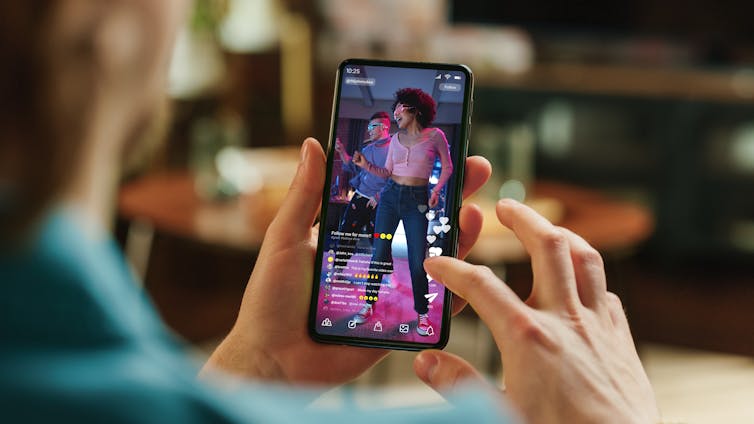
A man rolling a power supply of a social media application.
When we are constantly getting new information, our nervous system can be overwhelmed.
Gorodenkoff/Shutterstock

Could boredom be good for us?

In small doses, boredom is the necessary compensation in the over -stimulation of the world in which we live. Can offer unique benefits For our nervous system and our mental health. This is opposed to long boredom periods where increased pre -selected network activity may be related to depression.

There are many benefits from granting permission to get bored occasionally:

  • Improvements to creativityallowing us to build “flow” to our thoughts
  • is developing Independence in thought and encourages finding other interests rather than on continuous external input
  • Supports self -esteem and emotional arrangement, because unstructured times can help us sit down with our feelings that are important for stress management
  • Encourages periods without the use of devices and breaks the loop of direct satisfaction that contributes to forced use of devices
  • balances the nervous system and reduces sensory entrance to help the rest of stress.

Hug the pause

Stress levels are increasing worldwide, especially among our young people. Many factors contribute to this trend. We are constantly “on”, trying to ensure that we are planning for every moment. But in this way, we may deprive the brains and bodies of stopping time to restore and recharge.

We have to hug the pause. It is a place where creativity can prosper, emotions can be regulated and the nervous system can restore.

bad boredom Good rap Science
bhanuprakash.cg
healthtost
  • Website

Related Posts

Aging in place takes more than good intentions — It takes smart infrastructure

May 5, 2026

Every mental health journey starts with being seen

May 2, 2026

What happens to your skin while you sleep? (the science of “Beauty Sle

May 1, 2026

Leave A Reply Cancel Reply

Don't Miss
News

The new molecular framework paves the way for targeted therapeutic interventions for Parkinson’s disease

By healthtostMay 5, 20260

A new study led by researchers from VIB and KU Leuven shows that Parkinson’s disease…

Aging in place takes more than good intentions — It takes smart infrastructure

May 5, 2026

Breaking Barriers, Building Strength: The Maya Nassar Story

May 5, 2026

5 Ways to Improve Heart Health for Men

May 5, 2026
Stay In Touch
  • Facebook
  • Twitter
  • Pinterest
  • Instagram
  • YouTube
  • Vimeo
TAGS
Baby benefits body brain cancer care Day Diet disease exercise finds Fitness food Guide health healthy heart Improve Life Loss Men mental Natural Nutrition Patients Pregnancy protein research reveals risk routine sex sexual Skin Skincare study Therapy Tips Top Training Treatment ways weight women Workout
About Us
About Us

Welcome to HealthTost, your trusted source for breaking health news, expert insights, and wellness inspiration. At HealthTost, we are committed to delivering accurate, timely, and empowering information to help you make informed decisions about your health and well-being.

Latest Articles

The new molecular framework paves the way for targeted therapeutic interventions for Parkinson’s disease

May 5, 2026

Aging in place takes more than good intentions — It takes smart infrastructure

May 5, 2026

Breaking Barriers, Building Strength: The Maya Nassar Story

May 5, 2026
New Comments
    Facebook X (Twitter) Instagram Pinterest
    • About Us
    • Contact Us
    • Privacy Policy
    • Terms and Conditions
    • Disclaimer
    © 2026 HealthTost. All Rights Reserved.

    Type above and press Enter to search. Press Esc to cancel.