


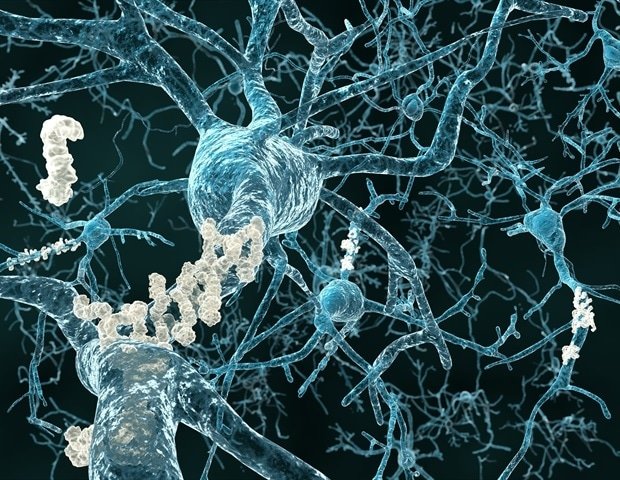
Alzheimer’s disease is characterized by the accumulation of two proteins in the brain: amyloid-beta and tau. Tau normally stabilizes the structure of nerve cells, but in this disease the protein undergoes chemical changes and begins to form tangles in neurons. This altered form is known as p-tau217 and can be measured in the blood.
However, the disease develops slowly over many years, and signs of Alzheimer’s in the brain can be detected in the blood up to 20 years before symptoms become apparent. An inherent challenge in using the new blood tests is determining whether the measurable biological changes are actually the cause of the person’s symptoms or whether they are due to something else.
New blood tests that have recently come into use are effective at detecting early signs of Alzheimer’s – sometimes almost too early, as the disease is not yet fully developed and symptoms may therefore be caused by another condition. More than 30 percent of the elderly population shows some signs of Alzheimer’s disease. So we investigated a marker associated with a later stage of the disease, which may be more clinically useful.”
Niklas Mattsson-Carlgren, researcher, Lund University
Mattsson-Carlgren is a researcher at Lund University and works as a medical specialist in the memory clinic at Skåne University Hospital and led the research.
The study included 572 people who had sought medical treatment for cognitive impairment and who had been included in the BioFinder2 study.
The researchers measured the subjects’ levels of the p-tau217 protein using advanced measurement techniques. Of the 350 people who had high levels of p-tau217, 341 of them (97 percent) also had amyloid in the brain. The results show that high levels of p-tau217 are a very strong indicator of the presence of Alzheimer’s disease-related changes in the brain, a finding that has also been demonstrated in previous studies.
However, the blood test alone cannot determine how advanced the disease is. Only 199 of the 350 patients had already developed Alzheimer’s disease.
“A blood marker can sometimes produce a positive result in people who do not yet meet the criteria for the disease. These are known as false-positive results. This was the case for 43 percent of those with high levels of p-tau217 – they showed the changes but did not meet all the criteria for the disease,” says Niklas Mattsson-Carlgren.
The researchers also analyzed another marker of tau in the blood, eMTBR-tau243. The picture then became clearer: of the patients who tested positive for p-tau217, 194 (55 percent) also had elevated levels of this marker. When the researchers combined both markers, they were able to identify people with established Alzheimer’s disease with an accuracy rate of about 80 percent. At the same time, the rate of false positive test results dropped from 43 percent to 16 percent.
The results were validated in another group of American participants with similar cognitive difficulties.
“By combining blood markers, we can better identify which people have Alzheimer’s disease and which of them have such an advanced stage of the disease that it leads to symptoms.”
In addition, people who had both biomarkers in their blood showed a faster decline in cognitive function over time and showed increased accumulation of tau protein in the brain.
“The new marker still requires analysis using advanced techniques such as mass spectrometry. The next step is to investigate whether the test can be simplified and whether it can be used more widely, for example in primary care,” says Niklas Mattsson-Carlgren.
The study was published in The Lancet Neurology and is a collaboration between researchers at Lund University and the University of Washington.
