Close Menu
Healthtost
  • News
  • Mental Health
  • Men’s Health
  • Women’s Health
  • Skin Care
  • Sexual Health
  • Pregnancy
  • Nutrition
  • Fitness
  • Recommended Essentials
What's Hot

How to improve accessibility in your gym

April 28, 2026

New blood-based method detects testicular cancer missed by standard tests

April 28, 2026

GLP-1 drugs promise broader health benefits, but experts advise caution on use

April 28, 2026
Facebook X (Twitter) Instagram
  • About Us
  • Contact Us
  • Privacy Policy
  • Terms and Conditions
  • Disclaimer
Facebook X (Twitter) Instagram
Healthtost
SUBSCRIBE
  • News

    New blood-based method detects testicular cancer missed by standard tests

    April 28, 2026

    Detailed images reveal DNA repair mechanism in cancer-related proteins

    April 28, 2026

    Scientists uncover protein switch that activates leptospirosis infectivity

    April 27, 2026

    Scientists map 239 human-infecting RNA viruses to monitor future epidemic risks

    April 27, 2026

    Experts debate the benefits and costs of robotic lung transplants

    April 26, 2026
  • Mental Health

    What animal studies teach us about toxic work environments

    April 27, 2026

    I hate hope: How to manage hope when you have treatment-resistant bipolar disorder

    April 19, 2026

    Rose Byrne is raw, magnetic and unfiltered as a woman in crisis

    April 18, 2026

    Can a single mother change her child’s surname in India?

    April 16, 2026

    Is it anxiety or OCD? 2 psychology experts explain the difference

    April 14, 2026
  • Men’s Health

    GLP-1 drugs promise broader health benefits, but experts advise caution on use

    April 28, 2026

    Trauma patients recover faster when medical teams know each other well, new study finds

    April 28, 2026

    I did red light therapy for 3 months so I shouldn’t have

    April 27, 2026

    Sex Secrets for Men Over 40: Surviving Male Menopause

    April 27, 2026

    45-Minute No-Equipment Home Workout (Full Body)

    April 23, 2026
  • Women’s Health

    Navigating sexual health during and after cancer

    April 28, 2026

    Do tampons break the hymen? Facts, Myths and What You Need to Know – Vuvatech

    April 27, 2026

    Why 24-hour gut support is essential in a probiotic | The Wellness Blog

    April 27, 2026

    Yeong Kim (Rian) – The Structural Elegance of Intellect and Honor

    April 25, 2026

    I felt ashamed of my dad’s illness

    April 25, 2026
  • Skin Care

    Face Peeling Mask Guide: Shine Without Irritation

    April 28, 2026

    Is your moisturizing face mist really drying out your skin?

    April 28, 2026

    Uses and Benefits of TNW Natural Aloe Vera Face Gel – The Natural Wash

    April 27, 2026

    Our strongest retina serum yet – Tropic Skincare

    April 27, 2026

    What it is and how to do it right – Lifeline Skin Care

    April 21, 2026
  • Sexual Health

    The Importance of Personalized Care in Medication Assisted Therapy (MAT) Programs I Novus

    April 28, 2026

    Your favorite mold is lying to you (a little) — Sexual Health Alliance

    April 28, 2026

    How accurate are herpes blood tests?

    April 22, 2026

    Understanding the Asexual Spectrum — Sexual Health Alliance

    April 21, 2026

    The importance of sex and intimacy in the elderly

    April 18, 2026
  • Pregnancy

    Midwifery and Life – The postnatal health check New mums don’t know they can ask for

    April 28, 2026

    Epidural and unmedicated delivery with two different deliveries

    April 26, 2026

    Researchers identify new genetic links to Hyperemesis Gravidarum

    April 25, 2026

    Loss of Appetite During Pregnancy: A Third Trimester Guide

    April 24, 2026

    Cameron Rodgers wants you to know you’re not the only one Googling “WTF is going on in my body” at 2 a.m.

    April 22, 2026
  • Nutrition

    Why You’re Not Losing Weight After 35 (Even When You Eat Less)

    April 28, 2026

    Where to eat in London

    April 27, 2026

    Dr. Will Cole on Why Hire FDN Professionals

    April 26, 2026

    Doing the work in the face of fear

    April 25, 2026

    Can the “dark shower” reduce stress and improve sleep?

    April 24, 2026
  • Fitness

    How to improve accessibility in your gym

    April 28, 2026

    Can a 10-minute workout really change your health?

    April 27, 2026

    4.24 Friday Faves – The Fitnessista

    April 25, 2026

    The workout we forgot (it’s time to bring it back 💪 )

    April 24, 2026

    Cardio or weightlifting? – Tony Gentilcore

    April 24, 2026
  • Recommended Essentials
Healthtost
Home»Mental Health»Is It Sadness or Depression? Understand it…
Mental Health

Is It Sadness or Depression? Understand it…

healthtostBy healthtostMarch 1, 2026No Comments8 Mins Read
Facebook Twitter Pinterest LinkedIn Tumblr Reddit WhatsApp Email
Is It Sadness Or Depression? Understand It...
Share
Facebook Twitter LinkedIn Pinterest WhatsApp Email

Sadness vs Depression
Clinical depression
Mental Health
Symptoms of depression

We all have days when the weight of the world seems a little heavier. Maybe you’re feeling down after a disappointment, grieving a loss, or simply exhausted by the demands of life. But when does normal sadness cross the line into something more serious? And how do you know if what you’re dealing with is depression that requires professional help?

While these terms are sometimes used interchangeably, they have clear differences. Sadness is a natural human emotion that usually passes with time and self-care. Depression, on the other hand, is a medical condition that often requires professional treatment to overcome. Understanding the difference isn’t about minimizing your emotions: it’s about making sure you get the right support when you need it most.

If you’re wondering if what you’re experiencing is “normal” or something more, you’re already taking the right first step. Below, we explore the difference between sadness and depression so you can make informed decisions about your mental health.

✦ Triggered by specific events

✦ It comes in waves, not steady

✦ Gradually relaxes over time

✦ A feeling, not a state

✦ Daily operation remains intact

✦ It can appear for no apparent reason

✦ Persistent, almost every day

✦ Lasts weeks, months or years

✦ Medical condition that needs treatment

✦ Significantly impairs operation

What is Grief?

Natural Human Emotion

Grief is a fundamental human emotion and a natural response to life’s inevitable losses, disappointments and challenges. You may feel sad after a breakup, when a friend moves away, after a setback in your career, or even when you watch an emotional movie.

Sadness is normal and healthy and usually has a clear trigger. You can often pinpoint a specific event or circumstance that is causing your bad mood. While it can feel intense, grief usually comes in waves rather than being continuous. Most importantly, sadness usually does not interfere with your ability to function in everyday life and usually decreases over time.

What is clinical depression?

Medical Condition

Depression, or clinically known as major depressive disorder, is more than an emotional response to difficult circumstances. It is a mental health condition that affects how you think, feel and function in all areas of your life. While external events or seasonality can sometimes trigger depression, the condition often develops without an obvious cause and persists long after the triggering events have resolved.

Depression messes with your brain chemistry, affecting neurotransmitters like serotonin and dopamine. It’s not about being weak or not trying hard enough to feel better. It is a legitimate medical condition that affects the brain and requires appropriate treatment.

How do I know if I’m depressed or just sad?

In black and white, these definitions can look quite different. However, it can still be difficult to tell the two apart – even if you’re on the edge. Here are the key differences to consider:

Duration
How long did that last?
▾

Grief is usually temporary. Even intense grief is often painful at first, but gradually softens over weeks or months. Depression, however, is persistent. According to the diagnostic criteria, symptoms must be present most of the day, almost every day, for at least two weeks to be considered depression. However, many people experience it for months or years.

If you feel down for more than two weeks without relief or improvement, try not to ignore it. These are warning signs that your emotional health needs support.

Intensity
How deeply does this affect you?
▾

While sadness can be intense, it usually doesn’t completely flatten your emotional range. You can still experience moments of joy, humor or pleasure. Depression, however, often creates emotional numbness or an inability to feel pleasure from activities you once enjoyed.

Depressed people often describe feeling hollow, detached, or as if they are going through life behind a thick glass.

Operation
Can you still do what you need to do?
▾

This is perhaps the most critical distinction. Regret allows you to continue to function. You may not feel great, but you can still go to work, maintain relationships, handle responsibilities, and take care of basic needs like food and hygiene.

Depression significantly impairs functioning. You may call in sick repeatedly, withdraw from friends and family, let household chores pile up, or struggle with basic self-care. Simple tasks seem monumentally difficult. Getting out of bed, showering, or preparing a meal can seem like a huge feat.

Thinking Patterns
What’s going on in your mind?
▾

Sadness doesn’t usually distort your thinking. You can still see possibilities and keep perspective. Depression, however, fundamentally changes the way you think. It creates cognitive distortions: persistent negative thoughts about yourself, your future, and the world around you.

Depression lies to you like you are unworthy or nothing will get better or everyone would be better off without you. They are symptoms of the condition and may feel real, but they are not based in reality.

Sometimes, these thoughts can become dark. If you are experiencing thoughts of suicide or self-harm, this is always a sign that immediate professional help is needed.

⚠️

Source of judgment: 988 Suicide & Crisis Lifeline

If you are in crisis or have thoughts of suicide or self-harm, get in touch immediately.

Call or text 988

What are the symptoms of depression?

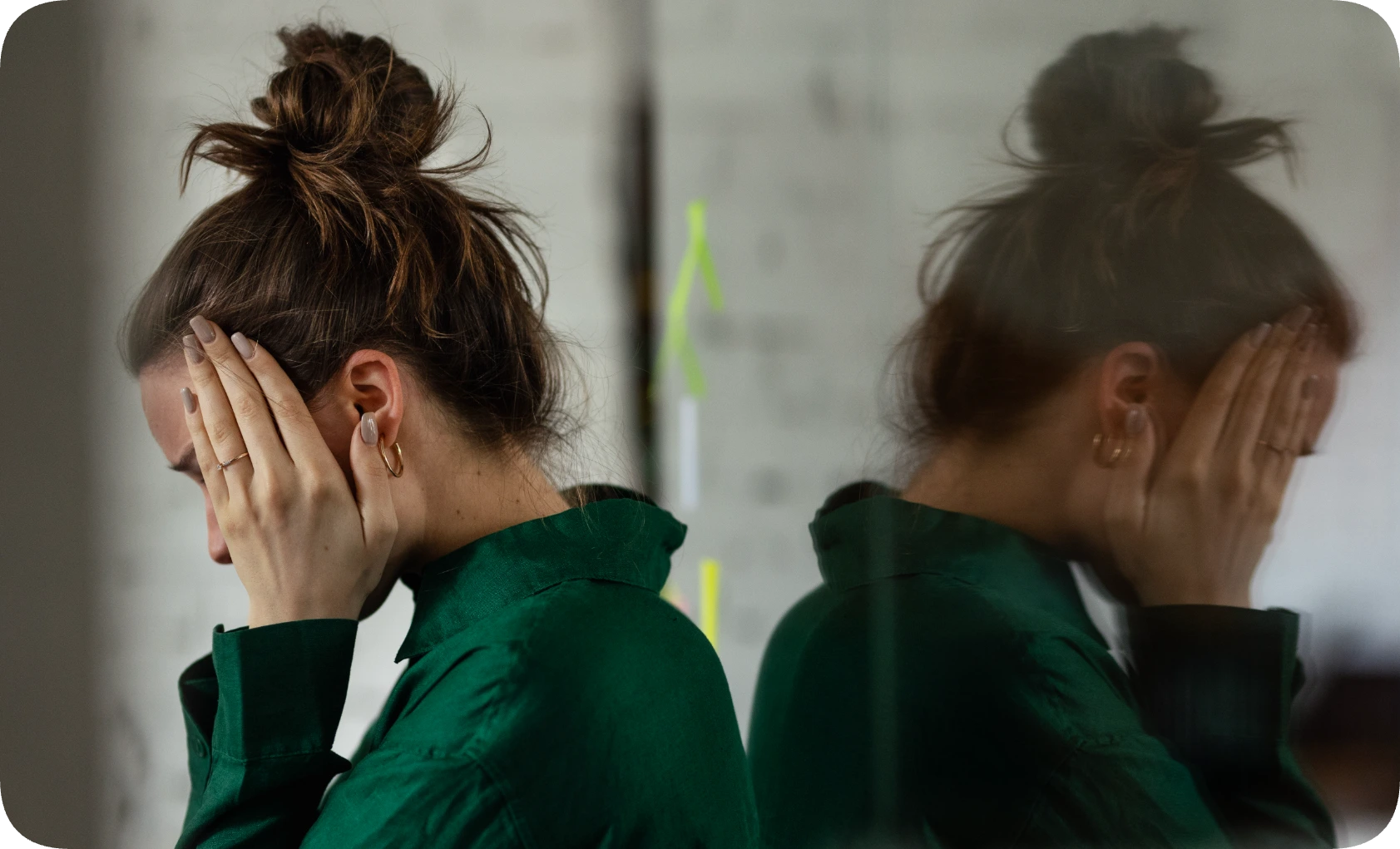
profile silhouette contemplation sadness depression

According to mental health professionals, depression involves experiencing five or more of these symptoms during the same two-week period:

1

Persistent sad, anxious, or “empty” mood

2

Loss of interest or pleasure in activities you once enjoyed

3

Significant weight loss or gain or changes in appetite

4

Excessive sleep or inability to sleep

5

Physical restlessness or slowness

6

Fatigue or loss of energy

7

Feelings of worthlessness or excessive guilt

8

Difficulty concentrating, remembering or making decisions

9

Recurrent thoughts of death or suicide

Can depression and sadness coexist?

Absolutely. You may experience clinical depression and also experience appropriate sadness in response to life events. In fact, people with depression often feel sad about the impact that depression itself has on their lives, such as strained relationships, missed opportunities, and lost time from the condition.

In addition, some types of grief can develop into what is called complicated grief or persistent complicated grief disorder, when the grief does not follow a typical path and begins to resemble depression.

Self-Reflection Checklist: Should I Seek Professional Help?

While it’s best to talk to a professional if you’re experiencing symptoms of depression, you can use this checklist to assess your current experience and get started. Be honest with yourself, check everything that applies and remember: there is no judgment here.

Interpreting your results

5 or more items have been checked

If you checked 5 or more itemsespecially if they include thoughts of death or suicide: See a mental health professional as soon as possible. These symptoms suggest that you may be experiencing depression that would benefit from professional treatment.

3–4 items are checked

If you checked 3-4 items: Consider making an appointment with a therapist or primary care doctor to discuss what you’re experiencing. Early intervention can prevent symptoms from worsening.

1–2 items checked

If you checked 1-2 items: You may be experiencing normal sadness or anxiety, but if symptoms persist or worsen, don’t hesitate to seek support. Prevention is always easier than cure.

⚠️ Important: If you checked the item about thoughts of death or suicide: Get help right away, no matter how many other items you’ve checked. Call 988 (Suicide & Crisis Lifeline) or go to the nearest emergency room.

What should I do next?

enters the light journey of sadness vs. depression

If your score on the checklist indicates depression, here are specific next steps:

1

Talk to a Professional

Schedule an appointment with a therapist, psychologist, or psychiatrist who can do a proper evaluation. You can also start with your primary care doctor, who can screen for depression and provide referrals.

2

Consider your treatment options

Depression is highly treatable. Evidence-based approaches include psychotherapy (especially cognitive behavioral therapy and interpersonal therapy), medication (such as antidepressants), or a combination of both. Your provider can help you determine what’s right for you.

3

Practice self-compassion

Whether you are experiencing sadness or depression, your feelings are valid. Don’t minimize your pain and tell yourself you “should” be over it by now. Healing is not linear and seeking help is a sign of strength, not weakness.

4

Build your support system

While professional help is vital for depression, support from friends, family or support groups can complement treatment. Don’t isolate yourself, even when withdrawal is the only option.

You deserve support

If you’re struggling, you deserve help, whether you’re dealing with grief, depression, or something else entirely. You don’t have to suffer in silence and you don’t have to have all the answers before reaching out.

Depression can make you believe that nothing will help you, that you are beyond help, or that you don’t deserve help. In fact, treatment works, recovery is possible, and taking that first step toward support is often the hardest but most important thing you’ll ever do.

Your mental health matters. That’s why the professionals at GoodTherapy are ready to help you get the support you deserve.

Ready to find a therapist? Start here →



© Copyright 2026 GoodTherapy.org. All rights reserved.

The previous article was written exclusively by the author listed above. Any views and opinions expressed are not necessarily shared by GoodTherapy.org. Questions or concerns about the previous article can be directed to the author or posted as a comment below.

depression it.. sadness Understand
bhanuprakash.cg
healthtost
  • Website

Related Posts

What animal studies teach us about toxic work environments

April 27, 2026

I hate hope: How to manage hope when you have treatment-resistant bipolar disorder

April 19, 2026

Rose Byrne is raw, magnetic and unfiltered as a woman in crisis

April 18, 2026

Leave A Reply Cancel Reply

Don't Miss
Fitness

How to improve accessibility in your gym

By healthtostApril 28, 20260

Basic Takeaways Making fitness spaces accessible and improving coherence it concerns…

New blood-based method detects testicular cancer missed by standard tests

April 28, 2026

GLP-1 drugs promise broader health benefits, but experts advise caution on use

April 28, 2026

Navigating sexual health during and after cancer

April 28, 2026
Stay In Touch
  • Facebook
  • Twitter
  • Pinterest
  • Instagram
  • YouTube
  • Vimeo
TAGS
Baby benefits body brain cancer care Day Diet disease exercise finds Fitness food Guide health healthy heart Improve Life Loss Men mental Natural Nutrition Patients Pregnancy protein research reveals risk routine sex sexual Skin Skincare study Therapy Tips Top Training Treatment ways weight women Workout
About Us
About Us

Welcome to HealthTost, your trusted source for breaking health news, expert insights, and wellness inspiration. At HealthTost, we are committed to delivering accurate, timely, and empowering information to help you make informed decisions about your health and well-being.

Latest Articles

How to improve accessibility in your gym

April 28, 2026

New blood-based method detects testicular cancer missed by standard tests

April 28, 2026

GLP-1 drugs promise broader health benefits, but experts advise caution on use

April 28, 2026
New Comments
    Facebook X (Twitter) Instagram Pinterest
    • About Us
    • Contact Us
    • Privacy Policy
    • Terms and Conditions
    • Disclaimer
    © 2026 HealthTost. All Rights Reserved.

    Type above and press Enter to search. Press Esc to cancel.