



High histamine levels can cause a myriad of unpleasant symptoms that greatly affect your quality of life. When working with clients, histamine intolerance is always something I look out for.
What is histamine?
Histamine is a compound released by your body’s cells. Histamine release can be triggered by inflammation, an allergic reaction (food allergy or otherwise), injury, or threat.
Typically histamine is broken down either through the HNMT-assisted methylation process (histamine-N-methyltransferase enzyme) or with DAO (diamine oxidase) in your gut.
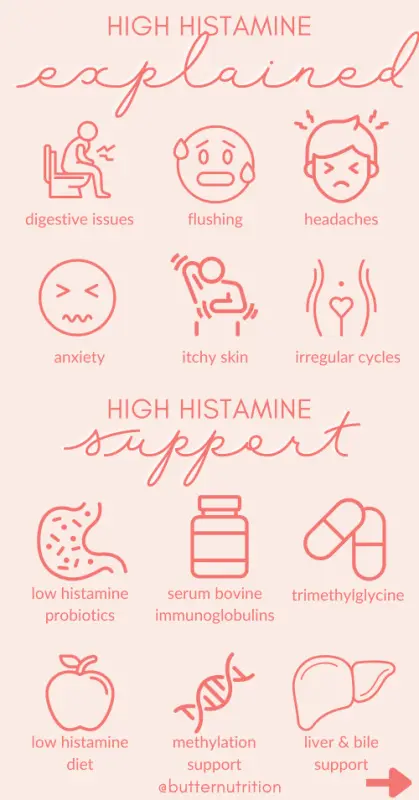
If you’ve never investigated whether histamine could be a factor in your symptoms, you may want to familiarize yourself with the signs and symptoms:
- itch
- flushing and redness
- nasal congestion
- irregular cycles
- anxiety and mood problems
- adhd
- urticaria
- excitement
- edema
- postprandial abdominal distension
- diarrhea
- abdominal pain and constipation
- dizziness
- headaches/migraines
- hypotension
- allergies
- tachycardia [3]
How to get rid of histamine intolerance by treating the root cause
Addressing the underlying cause of histamine problems requires attention where the increased histamine load comes fromincluding:
- gut health
- some gut bacteria are “histamine producers” and when they grow too much they create a higher histamine load in the body
- you need a healthy gut to produce enough DAO enzyme to break down histamine in your gut
- liver/gallbladder dysfunction
- methylation status (hypomethylation and genetics) [3]
- Your cells, histamine is produced by your body specifically in response to potential allergens (mold, pollen, problem foods)
- diet (the foods you eat, especially aged and fermented foods)
Now that you know the five main causes of histamine intolerance, let’s dive into each of them in more detail.
Gut bacteria that produce histamine
A very common cause of high histamine levels is a dysbiotic gut, meaning a gut where the bacteria levels are out of balance.
You see, some gut bacteria produce histamine, so if you have an overgrowth of them, your body could be overloaded with histamine regularly based on your gut health.
If you’ve completed a GI chart stool test, you’ll want to pull your own and look on page 3 to see if you have increased amounts of any of the major histamine producers that could be adding to your daily histamine burden. They are:
- Morganella
- Klebsiella
- Klebsiella pneumoniae
- Pseudomonas
- Pseudomonas aeruginosa
- Citrobacter freundii
- Proteus
- Primary mirabilis
When the above bacteria are out of normal range, it’s a big indication that a lot of the high histamine levels that cause histamine intolerance are rooted in your gut, and gut support is absolutely vital to reducing the levels of bacteria that produce histamine.
Short-term relief can come from avoiding constipation, increasing production of short-chain fatty acids (especially butyrate), and probiotics, but for long-term relief and resolution of symptoms, you need to focus on supporting the organs that regulate your gut. liver and gall bladder.
Liver, gallbladder and high histamine
Now that you know that a great source of histamine can come from your gut health, it’s important to emphasize the role of your liver and gallbladder in keeping your gut in good balance.
You see, your liver-gallbladder axis regulates your gut microbiome over the long term.
You can do all the “gut support” interventions you want, but the changes won’t stick unless you fix the problem that created them in the first place.
The liver-gallbladder axis governs digestion in many ways.
If this were a math equation it would look something like this: A diseased liver = poor bile acid synthesis & bile regulation = poor gut environment (more opportunities for overgrowth of histamine-producing bacteria).
This is why so many people get recurring episodes of histamine intolerance, SIBO, LIBO, dysbiosis, etc. because they just go after the gut and ignore the liver/gallbladder. This is why you see those who focus on their gut for years and ignore the liver actually don’t get better. It keeps coming back.
So how do you support the liver to help reduce high histamine levels? You need to start giving the liver “less work” so it can work more easily.
There are seven very easy ways to start supporting liver gallbladder health to reduce histamine intolerance:
- Find out what increases your toxicity. A state of toxicity to me is loosely defined as a build up of toxins faster than you can expel them. This may include minerals (HTMA) and blood tests to find out more about your iron and copper levels. It may also include a gut check to see what condition your gut is in and how to best support it.
- Eat more fiber — this helps passively support detoxification, and low fiber combined with a toxic diet and lifestyle is probably the #1 nutritional problem affecting your health.
- Eat enough high-quality animal protein. Lack of protein alone can impair liver detoxification.
- Take fewer supplements (learn what nutrients your body needs and forget the rest!)
- Be aware of the impact of Rx and OTC drugs on your liver (ie, liver damage). Antibiotics, painkillers and accutane are big here.
- Reduce your alcohol intake.
- Reduce plant toxins in the diet that give the liver “more work” to do.
- Nightshade vegetables are an example of a family of foods with a higher load of plant toxins, including hot peppers, tomatoes, ashwagandha (popular for adrenal support), bell peppers (also known as sweet peppers), gooseberries, eggplant, goji berries (also called wolfberry), paprika, potatoes (including potato starch found in many gluten-free foods), and tobacco.
- Intake of foods high in oxalates such as spinach, almonds, rhubarb, chocolate and cocoa/cocoa should also be considered.
Hypomethylation and Histamine
Another way that histamine levels can increase is if there are methylation problems that cause histamine to not be broken down properly.
That’s why it’s helpful to know a little about your methylation status (hypomethylator, hypermethylator, or normal methylator), which you can glean from labs like whole blood histamine and homocysteine.
Hypomethylators tend to have higher histamine levels and can benefit from more B vitamins and methyl-containing foods in their diet.
Read more about high histamine and hypomethylation here.
Increased release of histamine from your cells
Another way histamine intolerance can occur is when your body produces too much in response to a stimulus.
This could be something as simple as a food you’re allergic to, a pollutant in your environment (mold and pollen are big here), an injury, or a threat perceived by your body.
Investigation of any dietary or environmental factors is essential for a thorough histamine reduction protocol.
Foods high in histamine
Foods contain varying levels of histamine. One of the main factors to consider when choosing low histamine foods is the freshness of the food. As a general rule, the longer a food stays in your refrigerator, the higher the level of histamine it will contain.
Consider cutting back on the following high-histamine foods until your symptoms are under control:
- aged foods — aged cheeses, salami, red wine, processed and smoked meats
- fermented foods — beer, yogurt, vinegar, kefir, soy sauce, sauerkraut, pickles, and olives
- leftovers — the longer food sits, the more histamine it has as a general rule
- high histamine foods — citrus fruits, canned/smoked seafood, especially tuna and mackerel
- high histamine supplements — strains of probiotic bacteria that produce histamine should be avoided
While in the short term cutting out high histamine foods with a low histamine diet that emphasizes fresh foods can do a lot in terms of relieving the system, in the long term I don’t recommend it. Restrictive diets of any kind can be harmful and unintentionally restrict calories, posing other health risks.
Addressing the underlying cause of histamine intolerance is key to getting back to eating a wide variety of foods without symptoms.
How to lower histamine levels
How do you reduce histamine-producing bacteria and prevent their inflammatory effects? Here are some great places to start:
- Get data about your body so you can zero in on the cause of your histamine issues. Recommended tests include:
- improve overall liver health — the Align to Detox Masterclass is a great place to start!
- high-dose probiotics — choose one that doesn’t contain histamine-producing strains of bacteria, I discuss all my favorites in the Bulletproof Gut Masterclass.
- fiber — only if tolerated by food and/or prebiotic supplements
- bovine serum immunoglobulins
- DAO Enzyme Supplements
- low dose lactulose (outside US available over the counter, US Rx only)
- avoid constipation — constipation encourages bacterial overgrowth that contributes to high histamine levels
- supports methylation
- consider your surroundings
I hope this encourages you to explore the root causes of your high histamine levels and find more clarity about your health.
Change your histamine level, change your symptoms 💪🏻
You need help?
Get in touch to learn more about comprehensive testing and support for histamine-related symptoms.
PIN IT:
Bibliographical references:
