


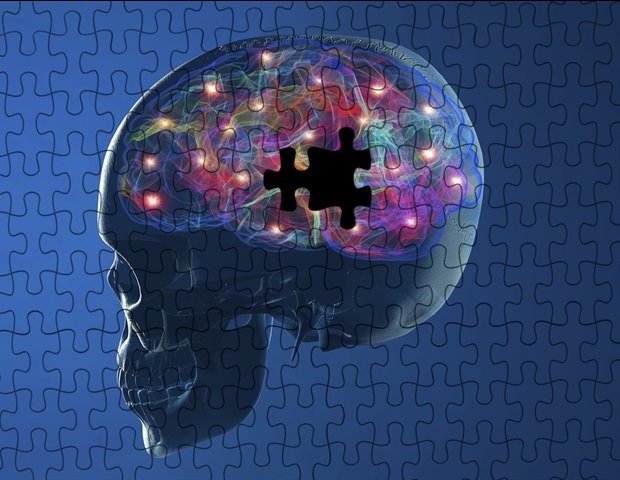
A new study led by researchers from VIB and KU Leuven shows that Parkinson’s disease can be divided into distinct subtypes, helping to explain why a single treatment does not work for all patients. Using a machine learning-based analysis, the team identified two main groups and five subgroups of the disease, marking an important step towards more personalized treatments. The findings were recently published in Nature communications.
Wdiscovered two broad subgroups that can be divided into five smaller groups of parkinsonism.“
Patrik Verstreken, VIB-KU Leuven Center for Neuroscience
Parkinson’s disease affects millions of people worldwide and has traditionally been defined by its clinical symptoms, including movement difficulties and progressive neurological decline. However, despite being grouped as a single disorder, Parkinson’s disease can be caused by mutations in many different genes, leading to various underlying biological mechanisms. This complexity has challenged the development of effective treatments, as treatments targeting one pathway may not work for all patients.
The new study reveals that these genetically diverse forms of Parkinson’s disease can be organized into distinct molecular subtypes, highlighting the need to rethink the disease as a collection of related conditions and opening the door to more targeted therapeutic approaches.
“When clinicians or patients look at the disease, they see the clinical symptoms, which unite people with Parkinson’s disease.” says Verstreken. “But when you look under the hood at the molecular level, then you see that they fall into subclasses. And that’s important because one drug to target the different molecular dysfunctions in all of Parkinson’s diseases basically doesn’t exist.”
An unbiased analysis for the clustering of different Parkinsonian mutations
Instead of starting with hypotheses about how different genetic mutations might affect the disease, the researchers tracked the behavior of fruit fly models carrying mutations in Parkinson’s-related genes over time and used unbiased computational and engineering methods to identify patterns. By allowing the data to guide the analysis, the team was able to uncover natural clusters of the disease in these animals that would not have been apparent using traditional hypothesis-based methods.
“We came in without any preconceived idea of how a particular mutation would affect our animal model. We took animals with mutations in any of these 24 different genes that cause the disease and simply monitored their behavior over periods of timeadds Dr. Natalie Kaempf, first author of the study.
Together, this unbiased strategy revealed previously hidden structure in Parkinson’s disease, showing that different genetic forms naturally cluster into distinct subtypes.
By moving away from assumptions and letting patterns emerge directly from the data, the study provided a powerful framework for understanding the biological diversity of disease and guiding future research toward more precise interventions. It is also an excellent example of how machine learning can uncover features of disease biology that would otherwise remain undetectable, revealing hidden structure and clinically relevant variation not apparent through conventional approaches.
Possible clinical translation and future perspectives
“We now know that there are different types of Parkinson’s disease.” says Verstreken. “Having these subcategories, we can now go and look at this group of patients with these specific mutations, look for specific biomarkers and develop drugs tailored to each group.“
Researchers were able to treat the Parkinson’s phenotype in animal models by testing compounds in different subgroups. They also observed that different subgroups respond differently to different compounds.
“When we took a first compound that hardens subgroup A and tested it on subgroup B, the latter was not rescued. Our study shows that you can make drugs for specific subgroups that have positive effects and are really specific to that subgroup,” explains Verstreken.
And this unbiased strategy could be adopted in other diseases caused by mutations in multiple genes.”The same principle can be applied to other types of diseases. Diseases caused by mutations in a variety of different genes or environmental factors could be classified according to this principleVerstreken concludes.
