


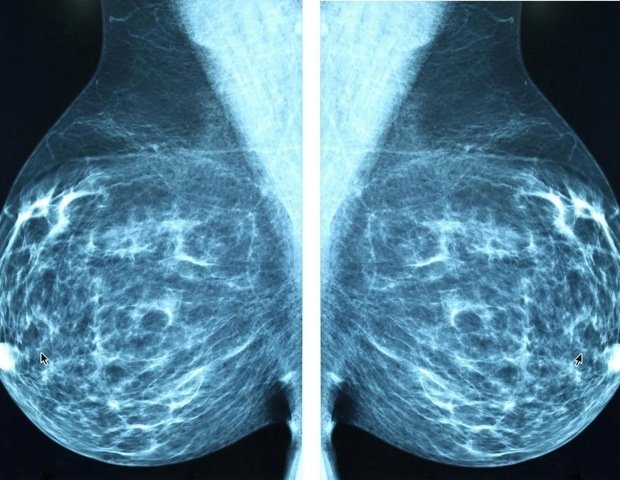
A new national survey reveals that many women aren’t sure when to start mammogram screening for breast cancer and think they should start later than doctors recommend.
The survey, commissioned by The Ohio State University Comprehensive Cancer Center–Arthur G. James Cancer Hospital and Richard J. Solove Research Institute (OSUCCC–James), found that 44% of women incorrectly believe that annual mammograms should begin at age 50. Leading medical organizations recommend that women at average risk for breast cancer start annual mammo40.
Our biggest concern is the continued confusion about screening guidelines. For most women, breast cancer screening should begin with annual mammograms at age 40. Clear, accurate information helps women make informed decisions with their clinician and can lead to early detection.”
Alyssa Cubbison, DO, breast radiologist at OSUCCC – James
What the main guidelines recommend
Confusion continues after the US Preventive Services Task Force (USPSTF) updated its mammogram recommendations in April 2024. The task force recommends average-risk women get a screening mammogram every other year starting at age 40. women, a guideline followed by OSUCCC – James.
The survey also found that many women believe that screening should start even earlier. More than half of women (51%) said mammograms should be done every year, and 41% believed screening should start at age 35.
“Starting screening mammography before age 40 is only indicated in certain patients who are considered to be at higher risk based on factors such as family history and genetic mutations,” said Cubbison.
In April 2026, the American College of Physicians updated its guidelines to recommend mammography for average-risk women ages 50 to 74 be performed every two years, citing individualized decision-making. OSUCCC – James follows guidelines that focus on radiology and recommend annual mammograms starting at age 40. Under the Affordable Care Act, annual screening mammograms starting at age 40 are covered by Medicare and most commercial insurance providers. Insurance coverage may vary. Patients should contact their insurance provider regarding specific coverage.
Why starting a mammogram at 40 is important
Experts say the confusion is especially concerning as breast cancer diagnoses in younger women are on the rise. According to the Centers for Disease Control and Prevention’s US cancer statistics, more than 27,000 US women under the age of 45 will be diagnosed with breast cancer in 2022. CDC data also shows that the number of new cases in this age group increased an average of 0.7% annually from 2001 to 2022. At a later stage, when treatment may be more complicated.
Why some women delay mammography
In addition to confusion about screening guidelines, about half (53%) of women surveyed reported some self-reported belief or reason for delaying or avoiding mammography, such as:
- Cost (28%)
- Discomfort (26%)
- Believing they were too young (26%)
- No symptoms (25%)
- Concerns about radiation exposure (21%)
Younger women: when to talk to a clinician
The survey also highlighted uncertainty among younger women. About one in four women aged 18 to 29 said they would wait until symptoms like pain or a lump appeared before seeing a doctor — an approach experts say can delay diagnosis and treatment.
Most women under 40 are not eligible for regular screening mammograms. However, experts encourage younger women — especially those with a personal or family history of breast cancer — to talk to a clinician about their risk. Knowing if you have dense breast tissue can also help. Dense breast tissue can increase your risk and make it harder to spot cancers on a mammogram. The survey found that most women would take follow-up steps if a mammogram showed dense breast tissue, including talking to a primary care doctor or gynecologist (60%) or requesting additional imaging, such as an ultrasound or MRI (54%).
“Sharing these findings is intended to correct misconceptions, clarify screening guidelines, and encourage women of all ages to talk to their health care providers about when to start mammograms and how to protect their breast health,” said Cubbison.
To learn more about breast cancer research and patient care at OSUCCC – James, visit Cancer.osu.edu/breastcancer. OSUCCC – James also recently launched the Building Research Innovation and Care Delivery for Early Onset Cancer Groups (BRIDGE) initiative to support people diagnosed with cancer at a young age.
Research methodology
This survey was conducted by SSRS on the Opinion Panel Omnibus platform. The SSRS Opinion Panel Omnibus is a national, twice-monthly, probability-based survey. Data collection took place from April 2 to 6, 2026, on a sample of 1,043 female respondents. The survey was conducted via the Internet (n=1,014) and telephone (n=29) and was administered in English. The margin of error for all respondents is +/-3.4 percentage points at the 95% confidence level. Opinion Panel Omnibus data were weighted to represent the target population of US adult women aged 18 and older.
