


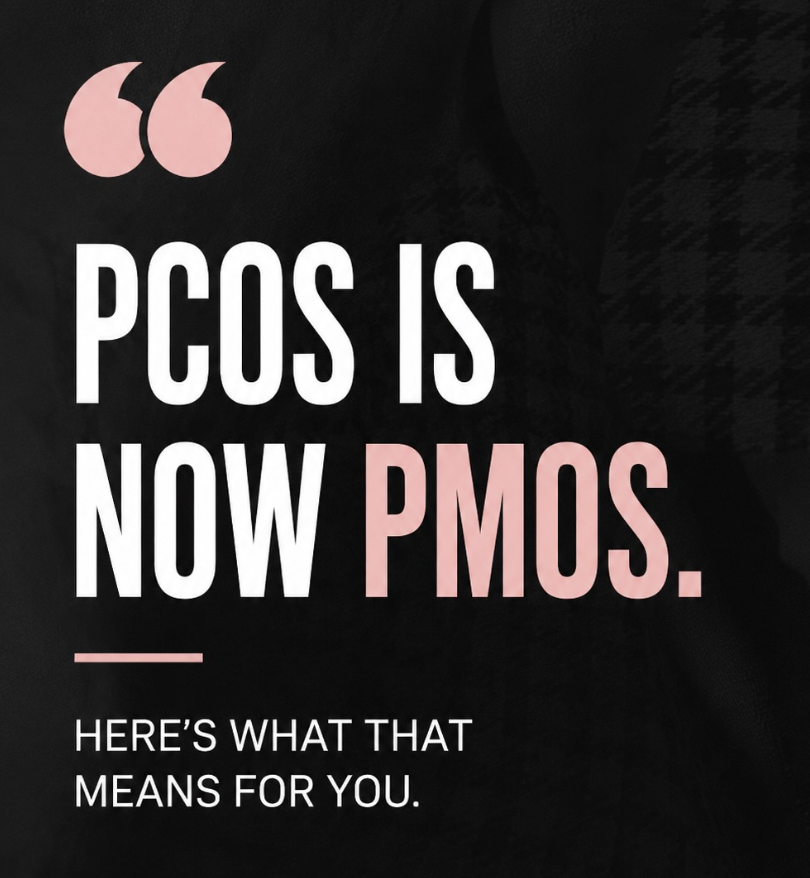
Women’s Health • Hormonal Wellness • PMOS
If you’ve ever been diagnosed with PCOS, wondered if you might have it, or felt like something in your body didn’t feel right hormonally, this is a major change.
Researchers have officially renamed polycystic ovary syndrome, commonly known as PCOS, to polyendocrine metabolic ovarian syndrome or PMOS. The updated terminology follows more than a decade of international collaboration and input from women, health professionals and global health organizations.
At first glance, it may seem like a minor wording change. In fact, it reflects a much larger conversation happening around women’s health.
Because the previous name lost the bigger picture
For years, the term “polycystic ovary syndrome” centered the conversation around the ovaries and fertility. But many women develop symptoms long before they try to conceive, and many never realize that these symptoms may be connected.
Fatigue, persistent weight fluctuations, mood swings, irregular cycles, acne, skin concerns, inflammation, hair changes, and energy issues are often treated separately rather than considered part of a larger hormonal and metabolic picture.
The updated name acknowledges what many women and health care providers have been saying for years: this condition affects much more than reproductive health alone.
“For so many women, the hardest part is not just the symptoms, but the feeling that their concerns are minimized or treated individually instead of looking at the bigger picture. Women deserve to feel heard, supported and educated about what’s going on in their bodies.”
Tamara Johnson, founder of The Spoiled Mama
What does PMOS reflect on women’s health?
The term PMOS focuses on endocrine and metabolic health, not just ovarian function.
Current research and medical commentary continue to support the idea that insulin resistance, inflammation, hormonal dysregulation, metabolic health, and nutritional status can all be part of the bigger picture. Fertility may still be part of the conversation, but it is no longer seen as the sole determining factor.
This change is important because it encourages women to look at hormonal health from a more holistic perspective.
- Sleep quality
- Stress response
- Skin health
- Energy levels
- Blood sugar balance
- Digestion
- Disposal
- Cycle regularity
These systems are deeply connected. This is why hormonal wellness deserves a whole-body discussion.

At The spoiled momwe talk to women every day navigating hormonal changes during pregnancy, postpartum recovery and beyond. Many seek support because they know something is wrong, even when they have yet to receive clear answers.
“After experiencing pregnancy loss myself, I realized even more how profoundly hormonal health can affect a woman emotionally and physically. Women deserve more compassionate conversations and more whole-body support at every stage of life.”
Tamara Johnson, founder of The Spoiled Mama
What does this mean for women moving forward?
Whether you’ve previously been diagnosed with PCOS, are hearing the term PMOS for the first time, or are simply trying to better understand your hormonal health, this moment is important.
It’s a reminder that hormonal wellness isn’t just isolated to fertility. It affects the whole body.
When women begin to support their bodies more holistically through diet, lifestyle habits, stress management, targeted supplementation, sleep, and consistent self-care, many begin to notice significant changes in how they feel every day.
This may look different for everyone, but may include:
- More stable energy
- Improved skin health
- Better awareness of the cycle
- Reduced feelings of hormonal imbalance
- Improved overall wellness and recovery
The goal is not perfection. It’s about understanding your body more clearly and supporting it more intentionally.
If you suspect PMOS, PCOS, or another hormonal concern, talk to your OB/GYN, dermatologist, endocrinologist, or qualified health care provider. This article is for education only and does not constitute a diagnosis or medical treatment plan.

Supportive skin care during hormonal changes
Hormonal changes can show up in the skin in a number of ways, including dryness, breakouts, dullness, sensitivity, uneven tone, and changes in texture. While skin care can’t treat PMOS, it can support the skin barrier and help you feel more comfortable in your body.
Frequently asked questions about PCOS, PMOS and hormonal skin changes
Is PCOS officially called PMOS now?
Yes. PMOS, or polyendocrine metabolic ovarian syndrome, is the updated name for the condition formerly known as PCOS. The new name is intended to better reflect the hormonal and metabolic nature of the condition.
Does the name change mean the condition is different?
No. A name change does not mean that this is a new situation. It reflects a broader and more accurate understanding of how the condition can affect hormones, metabolism, skin, mental health and reproductive health.
Can Skin Care Treat PMOS?
No. Skin care cannot cure PMOS or replace medical care. However, supportive skin care can help address visible skin concerns such as dryness, dullness, uneven tone and blemish-prone skin. Always talk to your healthcare provider about hormonal symptoms or medical concerns.
Who should I talk to if I think I have PCOS or PMOS?
Start with your OB/GYN, primary care provider, endocrinologist, or dermatologist, depending on your symptoms. If you are pregnant, postpartum, trying to conceive, or managing irregular cycles, professional guidance is especially important.
Images by @pcoswithcandice. You can visit her website and purchase her book at
Sources: Endocrine Society, The Lancet and current reports on PCOS renamed PMOS. This article is educational and should not be used as medical advice.
