


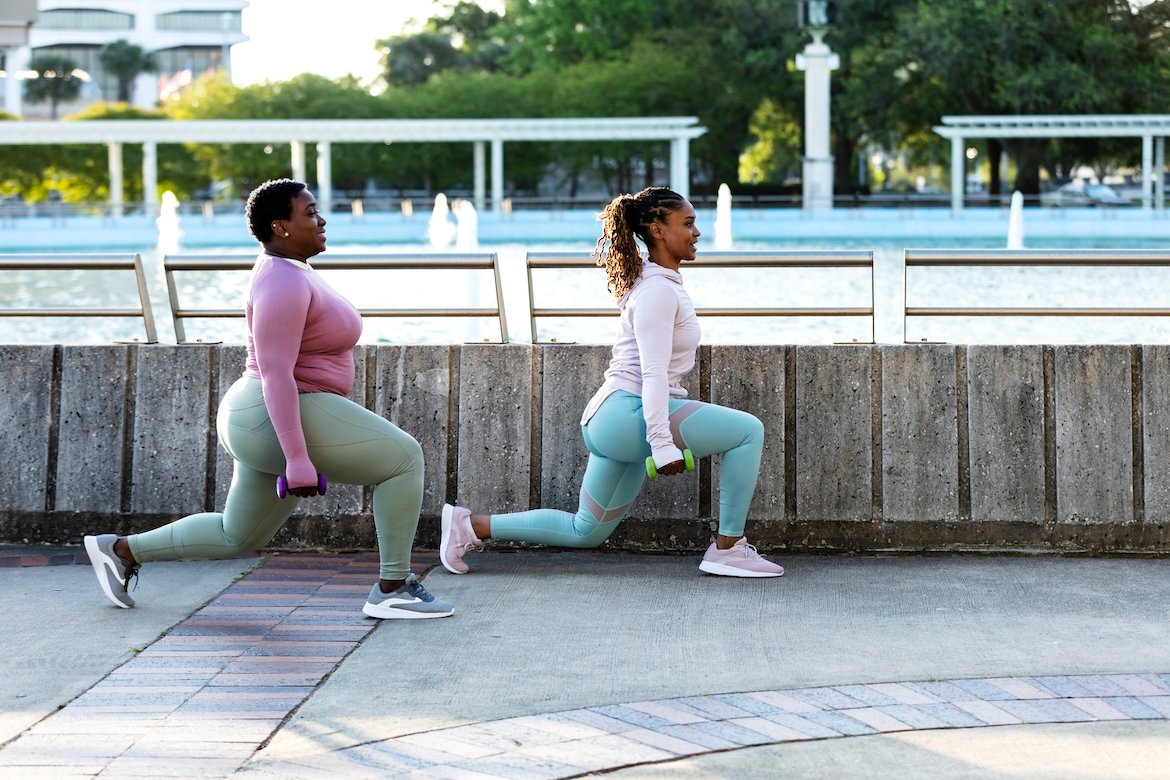
IIf you have a goal to tone and sculpt your legs, squats and lunges may come to mind for your gym routine. However, it can be difficult to know which one to choose to get the best results—let alone how to do it with proper form.
“Both squats and lunges are recommended for a well-rounded sculpted lower body,” says the certified personal trainer Nico Gonzales, CPTglobal movement trainer and trainer for Balanced body.
Here’s everything you need to know about lunge vs. squat, how to do each, their pros and cons, and which one you should choose based on your goals.
Occupations
When you think about it, squats aren’t just for sculpting legs (although they can definitely help with that!). They are an essential part of functioning in everyday life.
“We squat every day of our lives, so it’s important to keep those muscles and joints working as much as possible,” says Gonzalez. “We should all be squatting – whether with hand weights, a barbell, or just our body weight.
Practicing squats can tone your legs while improving your overall balance and mobility.
How to do it
Here’s how to properly perform a squat, according to Gonzalez.
- Stand with your feet shoulder-width apart, shoulders back, toes slightly pointed, and arms at your sides.
- Bend your knees as you push your hips back and shift your weight into your heels as you squat.
- Keep your chest up and your core tight. Raise your arms straight overhead as you squat so your biceps are next to your ears.
- Squat until your knees are parallel to the ground—or stop before that if you’re in pain or can’t maintain proper form.
- Squeeze your glutes and push through your heels to straighten your legs and return to a standing position.
“Work toward a neutral spine, where your back is neither rounded nor arched,” says Gonzalez.
Related stories
If you’re a beginner, you should start with bodyweight only, but you can add weights to progress over time. The weights should always be light enough that you can maintain proper form.
Complete three sets of 15 to 20 repetitions each, twice a week.
The muscles worked
Squats are great for sculpting legs, but they also strengthen your core while helping you maintain stability and balance.
The squat works the following muscles:
- All three gluteal muscles (gluteus minimus, gluteus medius and gluteus maximus)
- Quadriceps (knee extensors)
- Hamstrings (knee flexors)
- Erectors (at the back)
- Gastrocnemius (the calves)
- Core muscles (stabilizers)
It may come as a surprise that squats target your core. This exercise is great for activating several core muscles—not just your abs.
“When you bend from your hips and lean your body forward, the deep lower back muscles called the multifidi fire up,” says Gonzalez. “Additionally, the pelvic floor muscles react during the squat in a positive, healthy way.”
Advantages
The squat allows you to use heavier loads as you stand on two legs. It also provides more balance and stability than a walker, he says Jahkeen Washington, CPTits owner Harlem Kettlebell Club.
“If your goal is to move a lot more weight and get maximal strength, I’d prioritize the squat over the lunge,” says Washington.
A natural functional movement, the squat movement mirrors the movements you make every day when you sit down, get up from the toilet, etc.
Squats also work several parts of your body at once, called a compound exercise.
“A squat requires a lot of muscle to perform, which can increase your heart rate and burn more calories during a workout,” says Gonzalez.
Disadvantages
It’s important to follow the steps above to properly perform a squat because they are often done with poor form (mistakes include rounding your back and collapsing your knees in), which can lead to injury.
This is especially important as you continue to add weight to your squat training, which is key to building muscle over time.
“Although you can use your own body weight for squats, progressions require additional weight,” says Gonzalez. “Bodyweight squats are amazing on their own, but if you want to sculpt legs, then adding resistance is essential.”
Additionally, you’ll need to incorporate more variety than simple squats into your routine to keep your muscles balanced.
“You can’t live on squats alone—repetitive squats without a well-rounded training routine will lead to muscle imbalances,” says Gonzalez. “Incorporate lower body lateral movements like circular band side steps and inner thigh work to balance it all out.”
“We squat every day of our lives, so it’s important to keep those muscles and joints working as much as possible.” —Nico Gonzalez, CPT
Lunges
Lunges build lower-body strength and sculpt your legs, both through weight training alone and when you add resistance like weights.
“They also improve lower body balance,” says Gonzalez. “This balance is challenged through lunges because we use one leg at a time, either in front of or behind the body.
Because of this, lunges are a great exercise for improving your overall balance and stability.
How to do it
Here’s how to properly perform a lunge, according to Gonzalez.
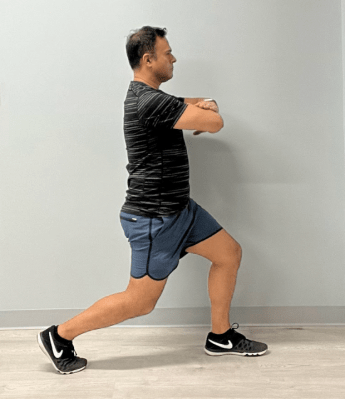
- Start standing with your feet hip-width apart, arms folded in front of your chest.
- Step your left leg forward, bending both the front and back legs to a 90-degree angle.
- Keeping your chest high, bend both knees and drop toward the floor with control. Continue lowering until your back knee is about an inch off the ground (or as low as you can comfortably go).
- Push off your left leg to bring yourself back to the starting position.
- Repeat until all reps on one side are completed, or alternate your reps, stepping forward with your right leg next.
“The knee of your back leg should be bent just below your hips, and the knee of your front leg should also be bent—ideally both at 90 degrees,” says Gonzalez. “The back heel must be raised.”
As with squats, beginners should start with bodyweight only, but you can add weights to progress over time. However, the weights should be light enough that you can maintain proper form.
Complete three sets of 15 to 20 repetitions each, twice a week.
The muscles worked
The muscles worked in a fly are similar to those worked in a squat, including the core. However, ruffles may target the back erector muscles somewhat less.
When you perform a lunge, the main muscles it works include:
- Buttocks
- Four-headed
- The muscles of the muscles
- Gastrocnemius
- Core muscles
Advantages
Lunges allow you to strengthen both sides of your body separately, which is helpful if you’re an athlete who spends more time on one leg, Washington says. You can work to reduce any apparent imbalances between the two sides—all while increasing your balance and stability.
“If you’re looking to build strength while also training other qualities like balance, coordination, and stability, the lunge will be a better choice over the squat,” says Washington.
Similar to squats, lunges can also help you perform daily activities with greater ease.
“Lunges are a functional exercise that improves walking, running, hiking and stair climbing,” Gonzalez says.
You can also try variations like walking lunges and side lunges to add variety to your workout routine and target different muscles.
Disadvantages
If balance is a challenge for you, lunges can be too.
“You may want to hold on to something as you learn how to fall properly without falling—and eventually move forward without assistance,” says Gonzalez.
If you have certain underlying conditions or injuries, you may also want to avoid lung.
“Lungs can put too much pressure on the knees and ankles, depending on the clients’ injuries and limitations,” says Gonzalez.
While you may be able to make the movements shorter to accommodate, it’s always best to talk to your doctor or a certified trainer if you feel pain or are concerned.
“If you want to build strength while training other qualities such as balance, coordination and stability, the lunge will be a better choice than the squat.” —Jahkeen Washington, CPT
The bottom line
Both squats and lunges can help tone your legs. “If you want sculpted legs, I recommend using both to get the most benefits,” says Washington.
That said, squats may be a better option if you struggle with balance—or want to avoid putting too much stress on a single joint, like your knee.
In either case, plan how you will increase your load over time to build strength.
“Whether you prefer squats or lunges, or use both, the best way to build sculpted legs is through progressive overload,” says Washington.
If you have questions about safely adding weight to your squats or lunges, or determining what’s best for you, talk to a certified trainer who can guide you.
