

Close Menu
Healthtost
  • News
  • Mental Health
  • Men’s Health
  • Women’s Health
  • Skin Care
  • Sexual Health
  • Pregnancy
  • Nutrition
  • Fitness
  • Recommended Essentials
What's Hot

What is SPF? A guide to Indian skin

May 10, 2026

Online friendships with strangers are linked to greater loneliness in adults

May 9, 2026

The best allergen-free makeup for sensitive skin

May 9, 2026
Facebook X (Twitter) Instagram
  • About Us
  • Contact Us
  • Privacy Policy
  • Terms and Conditions
  • Disclaimer
Facebook X (Twitter) Instagram
Healthtost
SUBSCRIBE
  • News

    Online friendships with strangers are linked to greater loneliness in adults

    May 9, 2026

    NIH funding terminations disproportionately affect marginalized health justice researchers

    May 9, 2026

    Short bouts of exercise help smokers manage the immediate craving for nicotine

    May 8, 2026

    India’s first large-scale search for biomarkers of aging

    May 8, 2026

    Non-hormonal treatments for vasomotor symptoms

    May 7, 2026
  • Mental Health

    Every mental health journey starts with being seen

    May 2, 2026

    What animal studies teach us about toxic work environments

    April 27, 2026

    I hate hope: How to manage hope when you have treatment-resistant bipolar disorder

    April 19, 2026

    Rose Byrne is raw, magnetic and unfiltered as a woman in crisis

    April 18, 2026

    Can a single mother change her child’s surname in India?

    April 16, 2026
  • Men’s Health

    35 Minute High Rep Bodyweight Full Body Workout Challenge

    May 7, 2026

    Study reveals neglected crisis of paternal deaths after childbirth

    May 5, 2026

    Aging in place takes more than good intentions — It takes smart infrastructure

    May 5, 2026

    Dr. William O. Brant on male sexual health and the risks and benefits of supplements

    May 4, 2026

    3 Day Home Workout Plan: Build Muscle and Burn Fat

    April 30, 2026
  • Women’s Health

    What is SPF? A guide to Indian skin

    May 10, 2026

    Eat Your Way to a Stronger Heart: The Essential Guide to Healthy Eating

    May 9, 2026

    Carrying the Load: What Mental Health Looks Like for Black Women Leaders

    May 8, 2026

    Your sex life after menopause

    May 8, 2026

    How to insert a tampon: Step by step guide

    May 7, 2026
  • Skin Care

    The best allergen-free makeup for sensitive skin

    May 9, 2026

    Skin Spa NYC: What to book for radiance, pore cleansing and lifting

    May 7, 2026

    What is Skinification? A simple guide to this beauty trend

    May 6, 2026

    How I Did It: Fading Hormonal Hyperpigmentation Without Lasers

    May 3, 2026

    The truth about waterless care: What your skin really needs

    May 2, 2026
  • Sexual Health

    Fildena The best time for optimal results

    May 9, 2026

    how do you tell them apart?

    May 7, 2026

    What is Sexology? Complete guide to the field — Sexual Health Alliance

    May 6, 2026

    5 Ways to Improve Heart Health for Men

    May 5, 2026

    Early signs of Peyronie’s disease and when to seek help

    May 3, 2026
  • Pregnancy

    What to eat & avoid

    May 9, 2026

    Transforming birth through informed, empowered support

    May 6, 2026

    4 Key Steps to Reconnecting with Your Core

    May 5, 2026

    Why is anemia during pregnancy high in Indian women?

    May 2, 2026

    5 things you need for the third trimester

    May 1, 2026
  • Nutrition

    The best supplements for fatty liver disease

    May 9, 2026

    Low energy after 35? Because your sleep and blood sugar feel low

    May 8, 2026

    How living with joy becomes a powerful act of rebellion

    May 5, 2026

    Can magnesium help you lose weight?

    May 4, 2026

    9 Easy Chia Pudding Recipes (+ The Perfect Pudding Ratio) • Kath Eats

    May 4, 2026
  • Fitness

    The best menopause workout for women over 40

    May 8, 2026

    Dealing with customer misconceptions with Ask-Offer-Ask

    May 7, 2026

    A must-have pre-wedding diet plan for every bride-to-be

    May 7, 2026

    Kemari Copeland’s Explains His Strategy for Squatting 605 Pounds for 10 Reps

    May 6, 2026

    The most underrated skill I wish everyone learned

    May 3, 2026
  • Recommended Essentials
Healthtost
Home»Women's Health»Is stress our friend? Here’s what the expert thinks
Women's Health

Is stress our friend? Here’s what the expert thinks

healthtostBy healthtostApril 1, 2024No Comments6 Mins Read
Facebook Twitter Pinterest LinkedIn Tumblr Reddit WhatsApp Email
Is Stress Our Friend? Here's What The Expert Thinks
Share
Facebook Twitter LinkedIn Pinterest WhatsApp Email

Is stress our friend? Well, yes… and no, says Dr Amber Johnston – a clinical psychologist specializing in neuropsychology. Here’s what he has to say about regulating an overactive stress response

We, as a society, are overwhelmed with stress, which is evident in the alarming health statistics for conditions related to emotional and physical stress.

Minimizing stress in our lives should clearly be a priority, but it’s never as easy as saying, “just reduce your stress!”

What is stress?

From a neurological point of view, anxiety is something very specific – it’s an alarm, a call to action. The stress response is a normal reaction that occurs in the brain and body in response to a trigger.

Stimuli can be environmental and captured by the senses, or psychogenic thoughts or interpretations of the body’s signal. A known danger can release an immediate reflexive action. For example, if you touch a hot stove or if you see a bear on your way, this sensory information will quickly enter your brain and be processed to release adrenaline to fire the body ready for immediate reaction.

A reflex may occur (taking the hand away from the stove) or it may be preparation for fight or flight (I prefer to run away from the bear). All of this can happen before you even realize it. You don’t have to think, because really, conscious thought is very slow.

The brain would rather be cautious, and only later, after you’ve run off the trail back to the safety of your car, can you slow down to determine if the bear was real or perhaps just a cardboard cut-out prank.

From a neurological point of view, anxiety is something very specific – it’s an alarm, a call to action

Considering its purpose, stress is actually our friend. It is an evolutionary tool that has been refined over time to keep us safe. Through the coordinated functioning of the sympathetic nervous system, also known as our stress response, our senses can interpret our environment and prepare our bodies for immediate response so that we have the best bet for survival.

Our sympathetic nervous system activates our heart to start pumping blood to our major muscle groups (biceps and quadriceps) away from our periphery (fingers and toes), shortens our breathing to allow more oxygen to flow, turns off the digestive function (when there’s a bear, it’s not time to eat), and it sharpens our senses to tune in to the threat (see bear and only bear).

When the threat is gone, a separate system (the relaxation response) is activated and the body returns to normal function.

The alerting process works incredibly well when you’re out in the wilderness looking for wildlife, as generations of ancestors before us did.

Today, we don’t usually face a fast physical threat that suddenly retreats after fighting or fleeing. Instead, we often face threats that are more enduring, less natural, more social, and often abstract.

READ MORE: 7 physical signs of stress you shouldn’t ignore – plus what can help

stress-response-fight-or-flight-.jpg
Worries about mortgage payments pose real, troubling threats to our sense of home security

What does our body do with this stress?

Take a moment to remember what it’s like to have your sympathetic system activated. Centered on preparing the body for action, our bodies undergo significant changes from the chemical messages our brains often send in response to thoughts.

A thought can be very threatening, especially one that brings up past problems or worries about the future. In my clinical experience, people often report feelings of chest pain, shortness of breath, upset stomach, hyperarousal, lapses in attention, and sensitivity to lights, noise, and people.

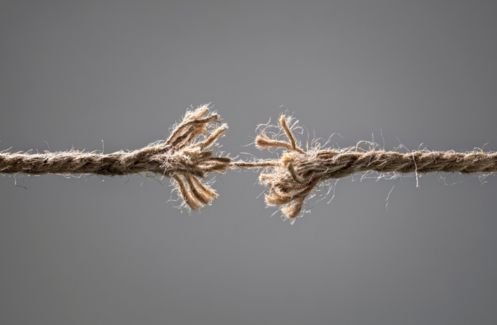
Constant, excessive cortisol can wreak havoc on our system

People with these symptoms often confirm that they have an active mind that can be plagued with worry, and at first many do not see the connection between these symptoms and their thoughts. But on deeper reflection, it sounds like a body with an active sympathetic nervous system.

The brain and body are on high alert, giving non-stop alerts that threat is near and we need to be prepared.

Worries about mortgage payments or social media preferences pose real, worrisome threats to a sense of home security or social inclusion. Our body responds. However, we can’t fight the public or leave the bank, so our system is thwarted and we keep the stress inside.

Constant, excess cortisol can wreak havoc on our system, contributing to inflammation, poor immunity, changes in the gut microbiome, blood pressure problems, sleep disorders, and various diagnosable medical conditions.

READ MORE: 3 ways to reduce stress in 24 hours

stress-reduction-.jpgstress-reduction-.jpg
we must interrupt the stress response through the powerful regulatory tool of our breath

How can we stop an overactive stress response?

The first way to stop an overactive stress response is to try to understand what’s going on internally. The body is ready to warn us and keep us safe, and sometimes we need to use our cognitive ability to override its alarm.

When stressors are time-shifted, we want to focus on mindfulness activities to bring us back to the present, safety here and now. This is not to exclude the very real stress we may face, but when a solution cannot be implemented in the present, we want to at least have moments of breaks and break down the body system.

Sometimes we need to discharge some of the stored energy, so we exercise, even quick jacks with jumps or push-ups

To deal with physical stress in this moment, we must interrupt the stress response through the powerful tool of regulating our breath, starting with deep, long exhalations. This simple act reduces the activity of the sympathetic nervous system to bring our body back into relaxation.

Sometimes we need to release some of our stored energy, so exercise, even quick jumping jacks or push-ups, or a walk in the fresh air, can help release energy stores in our major muscle groups as we strive to return to relaxation.

A technique called Progressive Muscle Relaxation (deliberately tensing and relaxing your large muscle groups, one at a time) can help the system fall further.

However, to prevent reactivation of our stress response, we must prevent our mind from creating more and more psychological stress which then activates the physiological stress state.

This is a harder skill to master, and I’ll devote the next article to exploring this—how to think about threats in our own minds, and why your anxiety triggers may be completely opposite to your partner’s.

Stay tuned for the next article in this series next Thursday.

Dr Amber Johnston is a clinical psychologist specializing in neuropsychology (healthmindpsychology.co.uk)

Do you like this article; Subscribe to our newsletter to get more articles like this straight to your inbox.

Expert friend heres stress thinks
bhanuprakash.cg
healthtost
  • Website

Related Posts

What is SPF? A guide to Indian skin

May 10, 2026

Eat Your Way to a Stronger Heart: The Essential Guide to Healthy Eating

May 9, 2026

Carrying the Load: What Mental Health Looks Like for Black Women Leaders

May 8, 2026

Leave A Reply Cancel Reply

Don't Miss
Women's Health

What is SPF? A guide to Indian skin

By healthtostMay 10, 20260

If you’ve ever stood in a skincare aisle looking at SPF 15, SPF 30, and…

Online friendships with strangers are linked to greater loneliness in adults

May 9, 2026

The best allergen-free makeup for sensitive skin

May 9, 2026

Fildena The best time for optimal results

May 9, 2026
Stay In Touch
  • Facebook
  • Twitter
  • Pinterest
  • Instagram
  • YouTube
  • Vimeo
TAGS
Baby benefits body brain cancer care Day Diet disease exercise finds Fitness food Guide health healthy heart Improve Life Loss Men mental Natural Nutrition Patients Pregnancy protein research reveals risk routine sex sexual Skin Skincare study Therapy Tips Top Training Treatment ways weight women Workout
About Us
About Us

Welcome to HealthTost, your trusted source for breaking health news, expert insights, and wellness inspiration. At HealthTost, we are committed to delivering accurate, timely, and empowering information to help you make informed decisions about your health and well-being.

Latest Articles

What is SPF? A guide to Indian skin

May 10, 2026

Online friendships with strangers are linked to greater loneliness in adults

May 9, 2026

The best allergen-free makeup for sensitive skin

May 9, 2026
New Comments
    Facebook X (Twitter) Instagram Pinterest
    • About Us
    • Contact Us
    • Privacy Policy
    • Terms and Conditions
    • Disclaimer
    © 2026 HealthTost. All Rights Reserved.

    Type above and press Enter to search. Press Esc to cancel.