


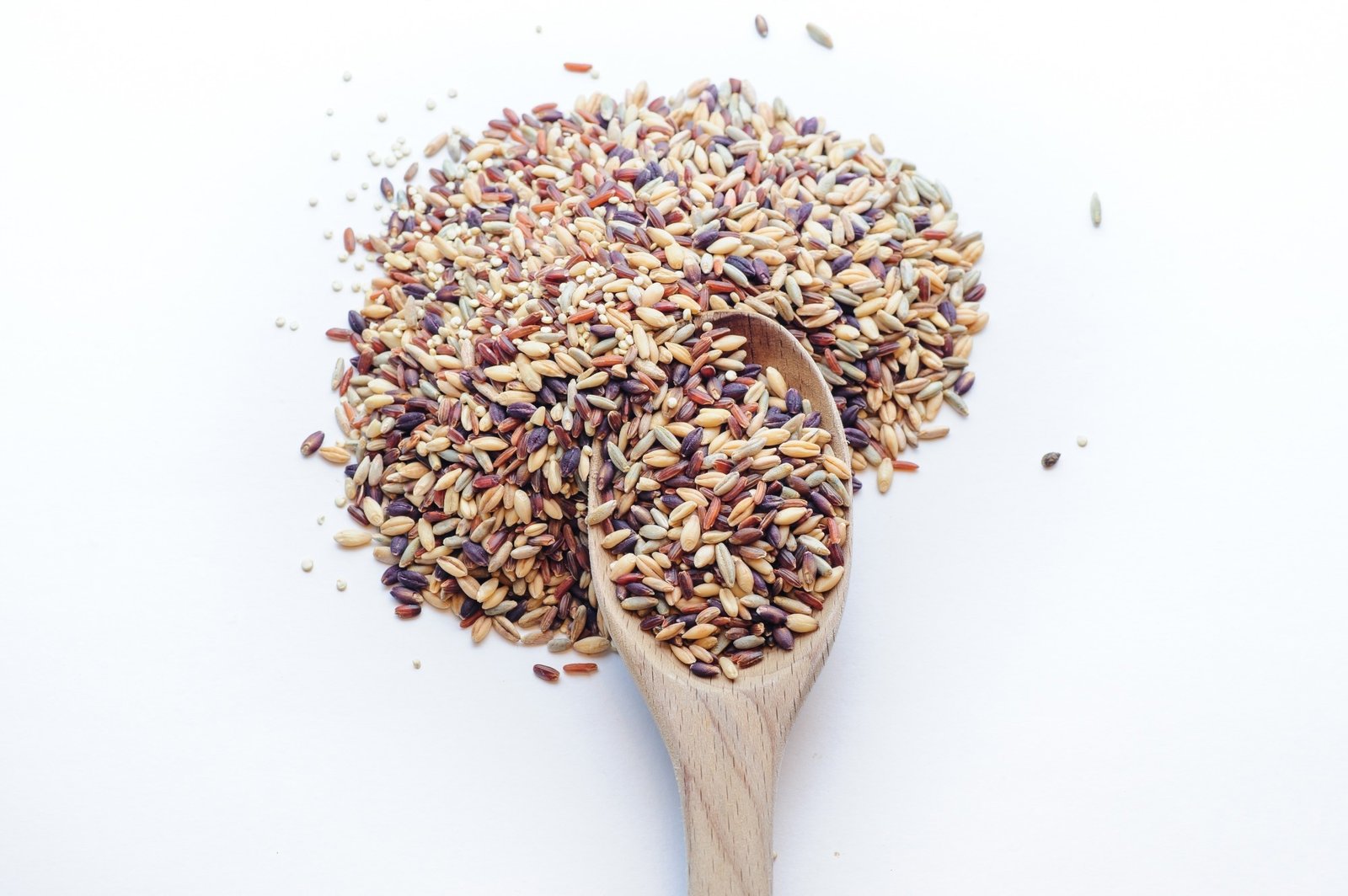
In a recent review and meta-analysis published in the journal Nutrition, Metabolism and Cardiovascular Disease, The researchers reviewed and reviewed the available literature investigating the health effects of “ancient” grains such as oats, brown rice, buckwheat, chia and others. A review of 29 randomized controlled trials and a meta-analysis of 13 reveals that consumption of oats, brown rice, and millet may improve type 2 diabetes mellitus (T2DM) outcomes (especially lipid profiles). However, heterogeneity between studies and insufficient sample sizes make these findings confounding, requiring further research to confirm the link between ancient grains and diabetes.
.Study: Use of Ancient Cereals in the Management of Diabetes Mellitus: A Systematic Review and Meta-Analysis. Image credit: windcoast / Shutterstock
Furthermore, with one exception, the health effects of ancient grain consumption in type 1 diabetes mellitus (T1DM) remain poorly understood. This review highlights the need for additional research with standardized methodologies before the diabetes benefits of ancient grains can be safely introduced to the public.
Diabetes research – a brief background
Diabetes mellitus (DM), colloquially abbreviated to simply “diabetes,” is an umbrella term for a group of chronic conditions that result in abnormally high blood sugar levels. Although rarely fatal by itself, the disease has been implicated in a number of outcomes that increase morbidity and mortality, primarily as a consequence of cardiovascular risk factors. Alarmingly, DM has more than doubled in global prevalence in the last 30 years alone, with this number expected to rise to more than 700 million by 2045.
Along with clinical and pharmacological interventions (glucose-lowering drugs), dietary modifications represent the leading treatment options for patients with DM. While pharmacological interventions have been extensively studied and reviewed for their anti-DM benefits, their nutritional counterparts remain less scientifically validated despite their lower side effects and more cost-effective nature.
“Cereals are prominent components of the daily dietary intake of patients with DM. Current guidelines recommend a balanced diet with adequate carbohydrate intake, preferring those with a lower glycemic index. Since cereals are the main source of carbohydrates in the human diet, the interest in the health effects of grain consumption is increasing.”
Ancient cereals, food grains that have not undergone human genetic modification or selective breeding, represent an untapped biodiversity resource with potential benefits in the war on DM. Despite limited evidence to support their consumption, ancient grains are believed to contain higher concentrations of DM-reducing phytochemicals and fiber than their human-modified counterparts (especially those varieties produced after the 1960s ‘Green Revolution’). Unfortunately, there is a lack of easily comparable data between the ancient and the “new” variety, leaving the debate as to which is better so far.
About the review
In the present review, researchers aim to gather and discuss evidence from the literature investigating the effects of ancient grain consumption in patients with DM. Specifically, the review aims to provide 1. an overview of the glycemic control effects of ancient grains in T1DM and T2DM, 2. the most frequently studied ancient grains using randomized controlled trial methodologies, and 3. the efficacy of diets based on ancient grains in the management of DM as conventional therapeutic enhancers. The review protocol conforms to the Preferred Reporting Items for Systematic Reviews and Meta-Analysis (PRISMA) guidelines and has been uploaded to the International Register of Candidate Systematic Reviews (PROSPERO; ref: CRD42023422386).
The review collected publications from four online databases (PubMed, Cochrane, CINAHL and Web of Science) from database inception to May 2023. Publication inclusion criteria included experimental designs (randomized controlled trials – the gold standard in evaluation health interventions) and outcomes of interest (survival, long-term morbidity, DM symptoms, glycemic control, monetary costs and psychological effects. Studies not written in English or investigating single-component extracts from ancient cereals were excluded.
Publication screening was performed using a combination of Endnote (duplication removal) and Rayyan platform (title view and abstract view). Finally, full-text manual screening was performed to determine the final review data set and for selected publications included in the meta-analysis. Data collected includes author(s), objectives, study design, sample (participant) details, outcome measures, study duration and outcomes. The Cochrane Risk of Bias 2 tool was used for risk of bias assessments and Rev-Man v.5 software for meta-analysis. Finally, heterogeneity between studies was assessed using the I2 inconsistency test and Cochran’s Q test.
Review the findings and conclusions
Of the initial 2,634 publications identified during the database search, 1,001 were found to be duplicates and 1,573 failed to meet the study’s inclusion criteria and were thus excluded, leaving a final data set of 29 publications, 13 of which met the requirements meta-analysis. The included studies had a total population size of 1,809 subjects, 55.2% male. Surprisingly, only one study examined the effects of ancient grains on T1DM, with the remaining 28 focusing on T2DM interventions. The most frequently investigated seeds were oats (n = 9) and brown rice (n = 6), with barley and Khorasan (n = 1) representing the rarest.
The results of the meta-analysis highlight that, while the consumption of ancient grains generally produces positive effects in T2DM patients (especially in the case of oats, brown rice and millet), the heterogeneity between studies renders these results unreliable, preventing their current recommendations. as interventions against SD. There is an urgent need for future researchers to use standardized methodologies and outcome reporting protocols so that results between studies can be compared and contrasted more effectively.
“Further emphasis should be placed on the design of future RCTs with better definition of dietary interventions, adequate sample sizes for relevant clinical outcomes, and adequate duration of treatment. In addition, studies specifically designed for T1DM patients should be implemented.”
Journal Reference:
- Magi, CE, Rasero, L., Mannucci, E., Bonaccorsi, G., Ranaldi, F., Pazzagli, L., Faraoni, P., Mulinacci, N., Bambi, S., Longobucco, Y., Dicembrini, , I., & Iovino, P. (2024). Use of ancient grains in the management of diabetes mellitus: A systematic review and meta-analysis. Nutrition, Metabolism and Cardiovascular Disease, 34(5), 1110-1128, DOI – 10.1016/j.numecd.2024.03.005,
