



|
Basic Takeaways
The Exercise is Medicine® initiative was first launched by the American College of Sports Medicine nearly 20 years ago with the goal of integrating physical activity into clinical care. This special Q&A explores the concept of Exercise is Medicine, as well as a new educational opportunity for ACE practitioners. Here are some key takeaways:
Watch the lesson here: Exercise is medicine®: Support for clients with chronic conditions.
|
The phrase Exercise is Medicine has been used in the fitness industry for many years to emphasize the importance of movement in preventing, managing and even reversing many chronic conditions. Health coaches and exercise professionals play vital roles in modern healthcare as population health and value-based care continue to shift fitness to the forefront.
Below, ACE CEO Cedric X. Bryant, PhD, FACSM, discusses a recent partnership with the American College of Sports Medicine to provide you with a continuing education opportunity that can help you expand your knowledge base and advance your career.
|
Cedric is the CEO of ACE. On a typical day, he works with partners as diverse as the World Health Organization, the Centers for Disease Control and Prevention, and the National Academies of Sciences, Enginemring and Medicine to support increased physical activity based on science and evidence-based practices. When sharing physical activity, Cedric often shares, “Some activity is better than none, and more is better than some! Every little bit counts.” Cedric bringsmall more than 35 years in the health and fitness industry and has authored more than 300 articles and co-authored or edited more than 40 books. He earned both his PhD in physiology and his master’s in exercise science from The Pennsylvania State University, where he received Penn State’s Distinguished Alumni Award, the highest honor given to its alumni.
|
The phrase “Exercise is medicine” has been used in the fitness industry for years. Can you tell us a little bit about this concept and why it is important for health coaches and exercise professionals to understand?
The concept of “Exercise is Medicine” represents one of the most powerful opportunities in modern healthcare: Movement isn’t just beneficial – it’s therapeutic. Decades of research show that appropriate physical activity can prevent, manage, and even help reverse aspects of many chronic conditions while improving physical function, mental health, and quality of life. When we view exercise through this lens, it shifts from optional or recreational to an essential component of health and wellness.
For health coaches and exercise professionals, this understanding is critical because they often form the bridge between health care recommendations and real-world behavior change. Doctors may advise patients to become more active, but fitness professionals and trainers help people implement these recommendations safely and consistently. Movement is often the starting point, but long-term health outcomes are influenced by many lifestyle factors. This is it because we emphasize it ACE 7 essential guides to healthy living—Move more, nourish your body, prioritize restorative sleep, build resilience to stress, build supportive connections, make safer informed choices, and cultivate purpose and growth mentality. Exercise professionals influence many of these drivers simultaneously, helping individuals create sustainable changes that extend far beyond a workout.
This course covers a range of chronic conditions, from hypertension and osteoarthritis to obesity and diabetes. What role can ACE professionals play in helping people manage these and other conditions?
ACE professionals play a vital role in the prevention and management of chronic disease by implementing evidence-based exercise programming within their scope of practice and collaborating with health care providers when appropriate. Their responsibility is not to diagnose or treat disease, but to translate medical guidance into safe, personalized physical activity and lifestyle strategies that improve function, reduce risk, and improve quality of life. This includes modifying intensity and mode, monitoring exercise responses, progressing programs appropriately, and recognizing when referral or medical clearance is required.
mVery important is supporting the behavioral and psychosocial aspects of change. Many people living with chronic conditions face fear, fatigue, pain or low self-confidence that may limit participation. Building self-efficacy, supporting motivation and leverage tools such as wearable technology and remote guidance platforms, ACE professionals influence multiple key driver programs simultaneously. Movement improvements often lead to better sleep, reduced stress, improved dietary choicesstronger social loginand increased sense of purpose—results that enhance compliance and create lasting health benefits. [Keep an eye out for more information on the ACE 7 Core Drivers of Healthy Living in upcoming issues of CERTIFIED.]
Finally, why is the American College of Sports Medicine the best partner for this course and why now? What does this kind of collaborative work mean for the industry as a whole?
THE American College of Sports Medicine (ACSM) has long been the gold standard in exercise science research and clinical exercise guidelines, and the Exercise is medicine® initiative itself was initiated through ACSM in partnership with the American Medical Association. Partnering with ACSM allows us to combine deep scientific credibility with clinical expertise with ACE’s strength in translating science into practical, application-focused education for health coaches and exercise professionals. The course also highlights the importance of addressing both the physiological and behavioral dimensions of chronic disease management, equipping practitioners to better support sustained lifestyle change.
The timing of this collaboration is particularly important as health care systems increasingly recognize the value of lifestyle interventions and look to skilled professionals to support patients outside of traditional clinical settings. Chronic diseases are influenced by many interrelated lifestyle factors – such as the ACE 7 Core Drivers – and addressing these complexities requires coordinated, multidisciplinary approaches. Collaborative efforts like this help strengthen professional standards, improve credibility in health care, and create clearer referral and integration pathways between physicians and qualified exercise professionals and health coaches.
Is there anything else on this topic that you would like to point out?
One of the most important messages is that people living with chronic conditions are not necessarily fragile – they are often extremely capable and can achieve meaningful improvements with the right guidance and progress. Unfortunately, fear or uncertainty sometimes leads to unnecessary inaction, which can worsen health outcomes over time. The right training enables practitioners to help clients move safely, confidently and progressively, which is often the turning point in their health journey.
It’s also important to remember that supporting clients with chronic conditions isn’t just about managing the disease – it’s about helping people live fuller, more meaningful lives. When practitioners address multiple factors of health—movement, sleep, stress, connection, and purpose—improvements extend far beyond clinical indicators. Exercise becomes more than just a program. becomes a pathway to independence, resilience and long-term well-being across the life span, while also reinforcing the growing role of qualified exercise professionals in the wider health care ecosystem.
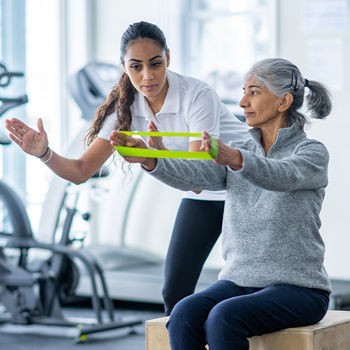 | ACE is proud to announce its launch Exercise is medicine®: Support for clients with chronic conditions. This course, worth 1.5 ACE CECs, was developed in partnership with the American College of Sports Medicine (ACSM) and includes educational insights from more than 35 ACSM subject matter experts. Through this lesson, will gain practical, science-based strategies for creating individualized programs, improving communication and documentation, and building strong relationships with health care providers. The course also incorporates behavior change techniques such as motivational interviewing to support long-term success. |
