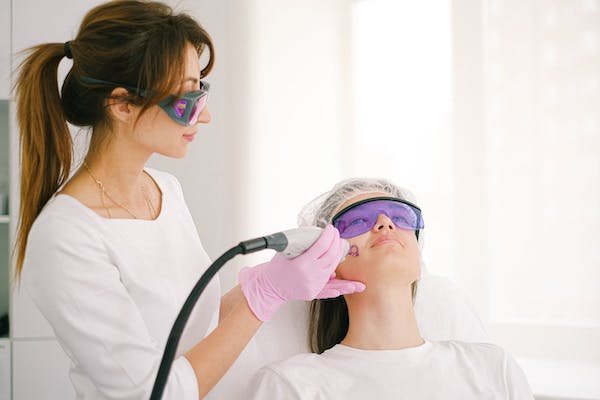
Laser aftercare is more important than many people realize because how you treat your skin after a procedure can affect your healing, comfort, and final results.
Laser treatments can help with texture, scarring, discoloration, redness, and signs of aging. But they also leave your skin temporarily injured on purpose.
This controlled injury is what prompts the skin to renew itself. It also means that your skin’s barrier will be weaker for a while, which leaves your skin vulnerable to irritation, infection, extra redness and pigmentation issues if not treated carefully after treatment.
The risk is that you will spend good money on a laser treatment and then undo some of the benefits by making mistakes with your post-treatment skin care. Some mistakes do more than slow healing—they can increase the risk of other problems, such as scarring or infection.
That’s why we’ve put together this guide. Read on to learn what laser treatments really do to your skin, why aftercare is so important, and the 7 mistakes that could be preventing the best results.
What laser treatments do to your skin
Laser treatments work by sending focused beams of light energy deep into your skin. Depending on the type of laser, this energy can target pigment (color), water in skin cells, or specific structures such as blood vessels or collagen fibers.
The goal is to create controlled damage. When the laser disrupts the skin, it activates the body’s natural healing response. Your skin then begins to produce new collagen and fresh skin cells to replace the old, damaged ones. Over time, the skin becomes smoother, firmer and more even. Laser effects can help erase sun damage, smooth deep wrinkles, improve acne scars and stimulate collagen regeneration
In the meantime, however, while the skin is healing, it is extremely vulnerable. Think of it as a mild wound that needs to heal. Your skin’s barrier is essentially removed, leaving you vulnerable to scarring, pigmentation issues, or infection if laser treatment post-care is not taken seriously. That’s why the steps you take—and the ones you avoid—in the days and weeks ahead are so critical.
Your provider will give you aftercare instructions based on your treatment and skin type. How you take care of your skin after laser will help you get the glowing, rejuvenated results you want, or it could cause you to end up with complications that could have been avoided.
Laser Treatment Aftercare Mistake #1: Too Soon in the Sun
This is one of the biggest mistakes you can make after laser treatment. Freshly processed leather is particularly sensitive to UV radiation. Sun exposure can worsen redness and inflammation and increase the risk of dark spots or uneven pigmentation after healing. This is even more important if your skin already tends to tan or discolor easily. Staying out of direct sunlight and using sunscreen is essential after laser and light procedures.
What to do instead:
Stay out of direct sunlight as much as possible while your skin heals. Follow your provider’s instructions about when to start sunscreen. Once approved by your doctor, use a broad-spectrum SPF of 30 or higher and opt for hats, shade, and umbrellas when possible.
Laser Treatment Aftercare Mistake #2: Allowing the skin to dry out too much
In the first 24 hours after treatment, remember that your skin has just been traumatized. You are likely to feel tight, hot, red and angry and may even experience swelling.
You may think you should let it dry and crust over, but this can make healing more uncomfortable and can make the irritation worse. When skin loses too much moisture, it becomes tight, irritated and more prone to cracking, which can slow healing.
Post-procedure guidance—days 0-3—usually recommends regular maximum occlusion (hydration with occlusive moisturizer) to prevent transdermal water loss and because the healing skin needs support while the barrier repairs itself.
What to do instead:
For the first two days, the provider may recommend petroleum jelly or Aquaphor to create an impenetrable barrier. We always recommend Restorative Skin Balm, which is a fragrance- and chemical-free occlusive ointment without harsh or irritating ingredients. It will create a protective barrier to help heal and protect the skin during the first two days of healing.
It’s important to apply regularly to reduce that raw, tight feeling. Applying several times a day can also make a big difference in how quickly and comfortably you heal.
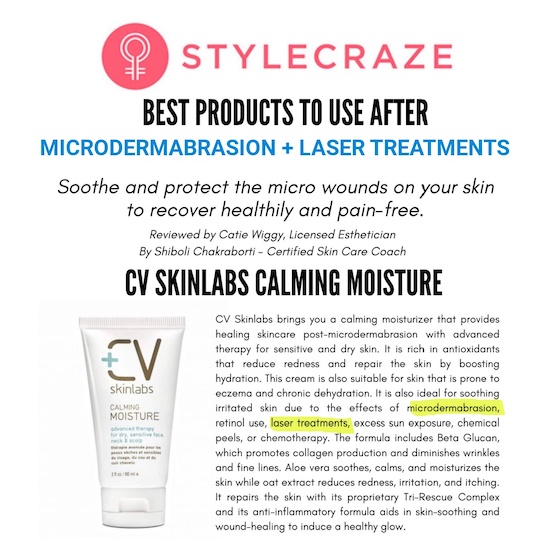
CV Skinlabs Calming Moisture for face and neck is a great choice for general hydration. It’s non-irritating, deeply hydrating and contains ingredients that actively reduce inflammation, which is exactly what skin needs.
Laser Treatment Aftercare Mistake #3: Harsh skin care too soon
While you’re healing, it’s understandable if you’re impatient and get back to your usual routine right away. This is often a mistake, however. Retinoids, peel acids, natural exfoliants, vitamin C, scrubs, benzoyl peroxide, perfumes, essential oils, and strong active ingredients can sting, burn, and keep skin inflamed when the barrier is already fragile.
THE American Society of Plastic Surgeons says that products like Retin-A and glycolic acid may need to wait about six weeks after laser resurfacing, unless your doctor tells you otherwise.
What to do instead:
Keep your routine simple. Only use what your provider says is safe. In the early healing phase (days 1-3), a thick protective occlusive ointment is usually recommended. On day 2 or 3, you can start using a gentle cleanser (never scrub) and a safe, non-irritating moisturizer. We recommend our Calming Moisturizer as it contains the ceramides, beta glucan, glycerin and anti-inflammatory ingredients your skin needs to help hydrate, regenerate skin and repair barriers.
If you want something soothing to manage swelling or burning, turn to Rescue + Relief Spray. It helps to tame redness, cool and calm inflammation. It will also help with the itching and peeling phase.
Laser Treatment Aftercare Mistake #4: Picking, Rubbing, or Peeling Skin
When skin starts to peel or crust, it’s tempting to want to help it. But picking or peeling the skin can delay healing and increase the chance of irritation, infection, and scarring. Blistering and peeling skin are part of how injured skin protects and repairs itself and dermatologists warn against tearing or pulling on damaged skin.
What to do instead:
Let the skin go away on its own. Clean it gently. Pat, don’t rub. Skip the toweling, scrubbing brushes, and anything abrasive until your provider says you’re ready.
Laser Treatment Aftercare Mistake #5: Ignoring Your Doctor’s Instructions
Not every laser treatment requires the same type of restoration. Laser hair removal aftercare is not the same as deep laser aftercare. Some patients are asked to use specific cleansers, soaked in vinegar, ointments or bandages. Others are told when to start wearing sunscreen or makeup again. The safest guidance comes from the person who treated your skin because they know the device, depth and settings they used.
What to do instead:
Follow your doctor’s aftercare sheet. Ignore social media suggestions. If something seems unclear, call the office and ask. If you have a product you would like to use, such as our CV Skinlabs products, ask your doctor to approve it. We have several dermatologists and skin care experts who readily recommend our products because they know they are safe for damaged skin.
Laser Treatment Aftercare Mistake #6: Doing too much too fast
After laser treatment, your skin needs time to heal. It’s easy to think that your skin will take care of itself, but remember—it’s the largest organ in your body. This means that it is heavily influenced by the rest of your body. So if you go back to hard workouts, hot showers, saunas, makeup and full skin care too soon, your skin may suffer. Heat, sweat, friction and too many products can cause irritation in the early phase. Healing skin works best when you keep things cool, soft and simple.
What to do instead:
Back to normal life. Use lukewarm, not hot, water. Put exercise and heat exposure on hold for as long as your doctor recommends. If your skin feels hot and angry, a soothing mist like Rescue + Relief Spray can help a lot more than random products that may have ingredients that can harm your sensitive skin.
Laser Treatment Aftercare Mistake #7: Ignoring the Signs of a Problem
Some redness, swelling and tenderness may be normal after laser treatment. Worsening pain, pus, spreading heat, fever or crusting that looks infected are not things to ignore as they could cause problems that will throw off your results.
What to do instead:
Watch your skin carefully. If things are slowly improving, that’s usually reassuring. If they get worse, call your dermatologist or treatment provider. Waiting and hoping is not a good strategy when there is an infection or something like that.
Good laser aftercare is really about respecting the fact that your skin has been through something traumatic. Laser procedures can provide real improvement, but the recovery period is part of the treatment, not a side note.
How did you take care of your skin after laser treatment?
Featured image by Anna Shvets via Pexels.