

Close Menu
Healthtost
  • News
  • Mental Health
  • Men’s Health
  • Women’s Health
  • Skin Care
  • Sexual Health
  • Pregnancy
  • Nutrition
  • Fitness
  • Recommended Essentials
What's Hot

What Really Works (and What Doesn’t)

April 22, 2026

New plug-and-play AI outperforms pathologists in detecting lymph node metastases

April 22, 2026

How accurate are herpes blood tests?

April 22, 2026
Facebook X (Twitter) Instagram
  • About Us
  • Contact Us
  • Privacy Policy
  • Terms and Conditions
  • Disclaimer
Facebook X (Twitter) Instagram
Healthtost
SUBSCRIBE
  • News

    New plug-and-play AI outperforms pathologists in detecting lymph node metastases

    April 22, 2026

    Injectable immunotherapy shrinks precancerous oral lesions in clinical trials

    April 21, 2026

    Final Patient Completes Phase Ib Clinical Study of AlzeCure with NeuroRestore ACD856

    April 21, 2026

    Certain prenatal medications are linked to an increased risk of autism

    April 20, 2026

    Study reveals significant gaps in MMR vaccine knowledge among ER patients

    April 20, 2026
  • Mental Health

    I hate hope: How to manage hope when you have treatment-resistant bipolar disorder

    April 19, 2026

    Rose Byrne is raw, magnetic and unfiltered as a woman in crisis

    April 18, 2026

    Can a single mother change her child’s surname in India?

    April 16, 2026

    Is it anxiety or OCD? 2 psychology experts explain the difference

    April 14, 2026

    Understanding the different types of treatment: C…

    April 10, 2026
  • Men’s Health

    Study finds many UK adults want to avoid ultra-processed foods but can’t clearly define them

    April 21, 2026

    How can you get the best sleep?

    April 21, 2026

    The Crazy Hard Standards of the Hardest PE Program in History

    April 20, 2026

    Becoming revolutionaries in our time: Calling men to change the world for good

    April 20, 2026

    35-minute bodyweight chest workout routine at home

    April 16, 2026
  • Women’s Health

    Mineral vs. Chemical Sunscreens Explained

    April 21, 2026

    Scientists identify simple rituals like drinking tea to help reconnect focus in a distracted world

    April 20, 2026

    Rooted in Justice and Joy: BWHI Appears for Black Maternal Health Week 2026

    April 20, 2026

    Can a girl be so tight it hurts? The Truth About Pelvic Strain – Vuvatech

    April 18, 2026

    At 76, she went from knee pain every night to climbing 7 flights without pain

    April 17, 2026
  • Skin Care

    What it is and how to do it right – Lifeline Skin Care

    April 21, 2026

    Best Face Mask Set: What to Use for Your Skin Goals

    April 21, 2026

    Earth Day Activities: A Fun Guide to Plogging and More

    April 20, 2026

    Calm & Correct: The 4-in-1 color correcting treatment

    April 19, 2026

    How to Get Glowing Skin: Beauty Guide

    April 17, 2026
  • Sexual Health

    How accurate are herpes blood tests?

    April 22, 2026

    Understanding the Asexual Spectrum — Sexual Health Alliance

    April 21, 2026

    The importance of sex and intimacy in the elderly

    April 18, 2026

    Judicial reform is the only real way out of today’s political hell

    April 15, 2026

    Personal and Professional considerations between generations

    April 15, 2026
  • Pregnancy

    Cameron Rodgers wants you to know you’re not the only one Googling “WTF is going on in my body” at 2 a.m.

    April 22, 2026

    A gentle space to navigate the becoming of motherhood

    April 21, 2026

    Transfer to birth center C-section, birth center VBAC and Surprise Footling Breech Transfer to home

    April 18, 2026

    What is an Onbuhimo? Everything you need to know about this underrated carrier

    April 18, 2026

    Is Saffron Milk safe in the 9th month of pregnancy?

    April 16, 2026
  • Nutrition

    What Really Works (and What Doesn’t)

    April 22, 2026

    What foods to avoid if you have fatty liver disease

    April 18, 2026

    Peanut Chicken Bowl + $75 Peanut Lover’s Giveaway

    April 18, 2026

    7 selective tips that really work

    April 17, 2026

    Baked Egg Muffin Cups with Vegetable Crust

    April 17, 2026
  • Fitness

    Why Professional Athletes Swear By Cold Therapy Tubs For Fast Recovery

    April 21, 2026

    Questions to Ask Before Choosing a Health Coaching Certification Program

    April 20, 2026

    Foods to support midlife health

    April 20, 2026

    Identity Inversion: Part 2 – Ben Greenfield Life

    April 19, 2026

    Lessons from an adaptive dance program

    April 19, 2026
  • Recommended Essentials
Healthtost
Home»Mental Health»How to stay optimistic in a world that is seemingly beyond saving
Mental Health

How to stay optimistic in a world that is seemingly beyond saving

healthtostBy healthtostDecember 8, 2023No Comments7 Mins Read
Facebook Twitter Pinterest LinkedIn Tumblr Reddit WhatsApp Email
How To Stay Optimistic In A World That Is Seemingly
Share
Facebook Twitter LinkedIn Pinterest WhatsApp Email

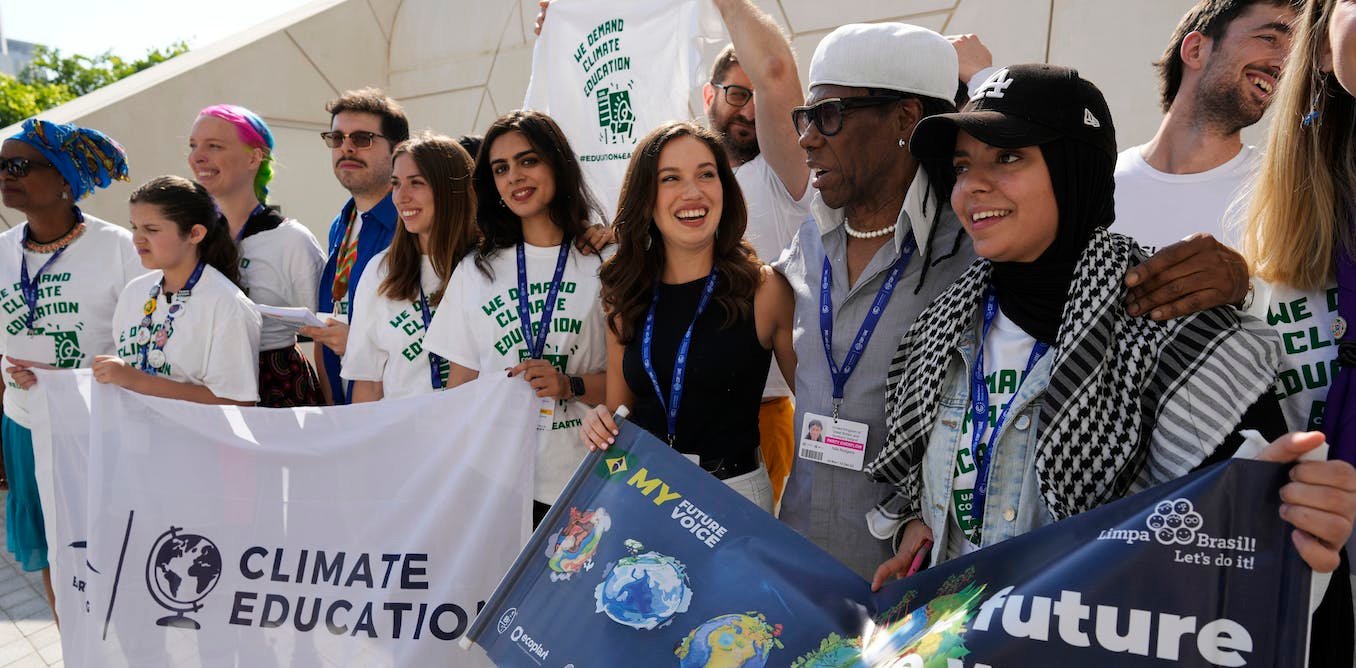
As world leaders begin another COP climate conferenceit can be easy to be cynical, scared or overwhelmed by the sheer scale the effects that climate change has (and will continue to have) on our world.

After all, its realities sea ​​level rise and more frequent and severe storms are terrifying prospects.

However, along with the bad, it is also important to recognize the good, such as the recent mission from the International Energy Agency showing that we may still be able to limit global temperatures to 1.5 degrees Celsius due to record growth in green technologies.


Read more: Reducing ecological stress is a critical step in achieving any climate action


Why should we care about good news in a world so clearly doomed? Don’t these distract us from more pressing matters? Simply put, the lack of good news is bad for our health and leads many to assume that all is lost, creating a self-fulfilling prophecy that prevents effective climate action.

A dark world?

Journalist David Wallace-Wells he opens his book, The uninhabited land with the line “It’s worse, much worse than you think.” This sentiment typifies the constant diet of bad news that in recent decades has instilled fear and anxiety in much of society, especially young people.

It manifests as ecological stress and explains why in a recent survey of 10,000 young people and children around the world, 7 percent of respondents felt the future was scary with over half feeling helpless or powerless. One in four of these respondents hesitate to have children for fear of bringing a child into a threatening or doomed world.


Read more: Is “climate anxiety” a clinical diagnosis? It should be;


If we add to these feelings research that shows that trust in institutions worldwide has declined in recent years, then the picture looks even bleaker. However, a 2019 Pew poll in the United States found that 71 percent of respondents even saw a decrease interpersonal trust.

This reality echoes the symptom of anxiety that communications professor George Gerbner coined in the 1970s as “moderate global syndrome.” Such a state sees violence and self-centeredness as embedded in society, which, not surprisingly, leads to increased fear and mistrust of the world and the future. This scenario is worrisome for two important reasons.

First, while some level of fear can spur action it can also lead to ecological paralysis. Ecological paralysis is the stress that can make people feel hopeless and disengaged, feelings that more than 10,000 young people probably feel.

Such fear can breed more than apathy, as Gerbner warned long ago. It can also leave individuals feeling, as he says, “more dependent, more easily manipulated and controlled, more prone to deceptively simple, strong, harsh measures and harsh attitudes…[who]…may welcome repression if it promises to alleviate their insecurities.”

A fire truck moves along California Highway 96 as the McKinney Fire burns in California’s Klamath National Forest, July 30, 2022. Images like these, while provocative and appealing, also reinforce notions of helplessness and anxiety.
(AP Photo/Noah Berger)

An authoritarian world will not be the answer to our climate crisis, because it is civil society that drives healthy change.

The second reason for concern about this bleak representation of the world is that such a depiction is not accurate. Yes, it is true—to continue the above example—that worldwide democracy has been eroded in many cases, which is not conducive to a just transition to a post-fossil fuel world. But democracy has also shown some notable successes in terms of civil liberties and political participation in countries such as South Africa, Indonesia and various other states such as Benin, Botswana, Ghana, Namibia, Mauritius and Senegal.

These cases should remind us that our negative perceptions of an “evil world” are not always well-founded, which can foster hope, something we badly need.

Negative biases

Howard Frumkin, professor emeritus at the University of Washington School of Public Health, reminds us that Hope is central to human flourishing. Hope, however, is not an easy concept to grasp.

Frumkin conceives of hope as a perception that we have agency or, more simply, a sense that we are capable of taking action. Add to this the psychological research that shows that can learn, even encourage, watching others, and we can see why environmental thinker David Orr defines hope as “a verb with the sleeves rolled up.”

What this tells us is that if we are to tackle climate change, we will need to listen to and follow the myriad stories of individuals and groups who, with agency, are actively pursuing a sustainable future.

Take his job Project Withdrawal, a nonprofit organization that uses climate science strategies to stop and even reverse climate change. His findings are remarkable: Chief among the strategies to address climate change is ensuring that girls around the world receive an education.


Read more: Keeping cool in a warming world: 8 steps to help manage eco-stress


Project Drawdown research shows that with more education Girls are more likely to manage their reproductive health, earn higher wages, have fewer cases of disease and contribute positively to feeding their families. All outcomes that have clear social, individual and environmental benefits.

Examining public perceptions of the state of girls’ education around the world reveals an important phenomenon: people doubt that such a goal is achievable. A 2018 study consisting of thousands of surveys around the world found that when asked “In all low-income countries around the world today, how many girls finish primary school?” Most people answered only 20 percent, when in fact, 60 percent do.

Simply put, our beliefs about girls’ education are not only negative but dangerously flawed, and this inability to conceive of the goal as attainable is another barrier to effective action to address global problems. From girls’ education to climate change, negative perceptions of futility and powerlessness have serious consequences.

Staying optimistic

Announcing the good news does not mean denying the bad. The trick to proclaiming the good news is not to ignore the darker realities of our time, for example, with projecting naïve or ideological optimism who would prefer us to embrace some thought groups or populist leaders. This way of thinking only delays action and perpetuates an entrepreneurial approach to climate change.

An overview of Dialectical Behavior Therapy produced by the University of California, San Francisco.

Instead, we have to think dialectically. Dialectical thinking it simultaneously holds us to seemingly opposite realities, such as the fact that still very few girls receive an education and that already 60 percent of girls in low-income countries today complete primary school with many working to increase that number. Or that there might be positive climate news in a world on fire.

The hope we need today is dark, to be sure. It recognizes the tragic realities of our time and it also seeks out, learns from and defends its successes. It is an active hope supported by the belief that reality can be paradoxical, both good and bad.

Engaging in the act of hope can help us be less terrified of the future and more confident in our belief that it is possible to build a better and more just world. We would all do well to remember this if, or indeed when, our leaders fail us at COP28.

optimistic Saving seemingly stay world
bhanuprakash.cg
healthtost
  • Website

Related Posts

Scientists identify simple rituals like drinking tea to help reconnect focus in a distracted world

April 20, 2026

Becoming revolutionaries in our time: Calling men to change the world for good

April 20, 2026

I hate hope: How to manage hope when you have treatment-resistant bipolar disorder

April 19, 2026

Leave A Reply Cancel Reply

Don't Miss
Nutrition

What Really Works (and What Doesn’t)

By healthtostApril 22, 20260

A scientific guide to supporting your body’s natural detoxification systemsAuthor: Megan XipolitosWhy detox is so…

New plug-and-play AI outperforms pathologists in detecting lymph node metastases

April 22, 2026

How accurate are herpes blood tests?

April 22, 2026

Cameron Rodgers wants you to know you’re not the only one Googling “WTF is going on in my body” at 2 a.m.

April 22, 2026
Stay In Touch
  • Facebook
  • Twitter
  • Pinterest
  • Instagram
  • YouTube
  • Vimeo
TAGS
Baby benefits body brain cancer care Day Diet disease exercise finds Fitness food Guide health healthy heart Improve Life Loss Men mental Natural Nutrition Patients People Pregnancy research reveals risk routine sex sexual Skin Skincare study Therapy Tips Top Training Treatment ways weight women Workout
About Us
About Us

Welcome to HealthTost, your trusted source for breaking health news, expert insights, and wellness inspiration. At HealthTost, we are committed to delivering accurate, timely, and empowering information to help you make informed decisions about your health and well-being.

Latest Articles

What Really Works (and What Doesn’t)

April 22, 2026

New plug-and-play AI outperforms pathologists in detecting lymph node metastases

April 22, 2026

How accurate are herpes blood tests?

April 22, 2026
New Comments
    Facebook X (Twitter) Instagram Pinterest
    • About Us
    • Contact Us
    • Privacy Policy
    • Terms and Conditions
    • Disclaimer
    © 2026 HealthTost. All Rights Reserved.

    Type above and press Enter to search. Press Esc to cancel.