

Close Menu
Healthtost
  • News
  • Mental Health
  • Men’s Health
  • Women’s Health
  • Skin Care
  • Sexual Health
  • Pregnancy
  • Nutrition
  • Fitness
  • Recommended Essentials
What's Hot

Global childhood immunization rates stagnate despite slight recovery from pandemic

July 15, 2026

Is it okay to be imperfect and still be happy? 6 Challenges

July 15, 2026

Sexual evolution: What 500 million years of life tell us about sex, gender and mating

July 15, 2026
Facebook X (Twitter) Instagram
  • About Us
  • Contact Us
  • Privacy Policy
  • Terms and Conditions
  • Disclaimer
Facebook X (Twitter) Instagram
Healthtost
SUBSCRIBE
  • News

    Global childhood immunization rates stagnate despite slight recovery from pandemic

    July 15, 2026

    Weight loss and anti-inflammatory drugs combine to fight leukemia

    July 14, 2026

    Unreliable datasets shape clinical prediction models

    July 14, 2026

    Bariatric surgery is safe, effective for obese teenagers and young adults

    July 13, 2026

    Engineered ribozyme repairs broken RNA to explain origin of life

    July 13, 2026
  • Mental Health

    Is it okay to be imperfect and still be happy? 6 Challenges

    July 15, 2026

    How can you be tired but wired? Blame it on your stone age brain

    July 12, 2026

    Almost 20% of new mums have anxiety or depression, but a promising psychedelic treatment is on the horizon

    July 7, 2026

    How can ART help us improve our mental health? With 3 Ways

    July 5, 2026

    How much do friends affect the mental health of teenagers? What a new study can (and can’t) tell us

    July 3, 2026
  • Men’s Health

    Sexual evolution: What 500 million years of life tell us about sex, gender and mating

    July 15, 2026

    Low testosterone or just stress? How to tell the difference

    July 11, 2026

    Gut-friendly diet linked to lower risk of coronary heart disease mortality

    July 9, 2026

    Men don’t just avoid their health. Many lose themselves.

    July 8, 2026

    The Crazy Hard Standards of the Hardest PE Program in History

    July 8, 2026
  • Women’s Health

    I tried to hide my hemiparesis

    July 15, 2026

    Kyoto recap, bamboo forest and monkey park

    July 13, 2026

    Menopause and Your Microbiome: How Gut Health Shapes Weight, Mood, and Hormones

    July 11, 2026

    They heard us. Now will they listen?

    July 11, 2026

    Taite Heller on Why Barre Became a Top-5 Fitness Trend

    July 8, 2026
  • Skin Care

    How to use nature’s retinol: Bakuchiol in your beauty routine

    July 13, 2026

    How our natural hair care achieves salon-level results without silicones

    July 11, 2026

    Coconut Allergy and Skin Care: 20 Questions Finally Answered by a Pharmacist

    July 11, 2026

    New Sunscreen Ingredient: Is This The SPF Upgrade We’ve Been Waiting For?

    July 9, 2026

    How to achieve the perfect tan

    July 8, 2026
  • Sexual Health

    Celebrating 30 years of Sex Sense

    July 15, 2026

    STDs in older adults are on the rise—up to seven times higher than in 2012

    July 13, 2026

    Fildena 150 Benefits | Effective ED & Sexual Performance Treatment

    July 11, 2026

    Painful sex after menopause: When is it time to seek treatment?

    July 11, 2026

    Emotional capitalism and artificial intimacy

    July 10, 2026
  • Pregnancy

    Exercise Wall Angels During Pregnancy: A Step-by-Step Guide

    July 15, 2026

    Breech VBAC (Vaginal Birth after Caesarean Section) Birth Story

    July 13, 2026

    How baby showers have changed throughout history

    July 13, 2026

    Calf Raises During Pregnancy: Step-by-Step Guide and Benefits

    July 8, 2026

    Tri-Tri Triplet Pregnancy with Vaginal Birth Story – The Birth Hour Triplet Pregnancy and Vaginal Birth Story with Ashlie Holladay

    July 7, 2026
  • Nutrition

    Chocolate Cherry Chia Pudding: Easy Vegan Recovery Snack

    July 14, 2026

    The Cholesterol Question: A Breakthrough Victory for Keto and Cognitive Health

    July 14, 2026

    15 No-Cook Dinners for Kids (Because It’s Too Hot to Turn on the Oven)

    July 12, 2026

    30 Minute Chicken Pesto Pasta (Dietist Approved)

    July 11, 2026

    5 Easy High Fiber Bowl Recipes

    July 8, 2026
  • Fitness

    How to Choose a Fitness Certification on a Budget

    July 14, 2026

    Meet the Belle Vitale™ Supplement System: Two Formulas. A comprehensive approach to hormone health.

    July 11, 2026

    where we ate in Tokyo (and gluten-free options!)

    July 9, 2026

    Using External Signaling to Improve Linear Acceleration – Tony Gentilcore

    July 8, 2026

    5 Simple Screen Changes That Can Improve Sleep and Focus

    July 7, 2026
  • Recommended Essentials
Healthtost
Home»Pregnancy»Stress and Fertility with Dr Haider Najjar
Pregnancy

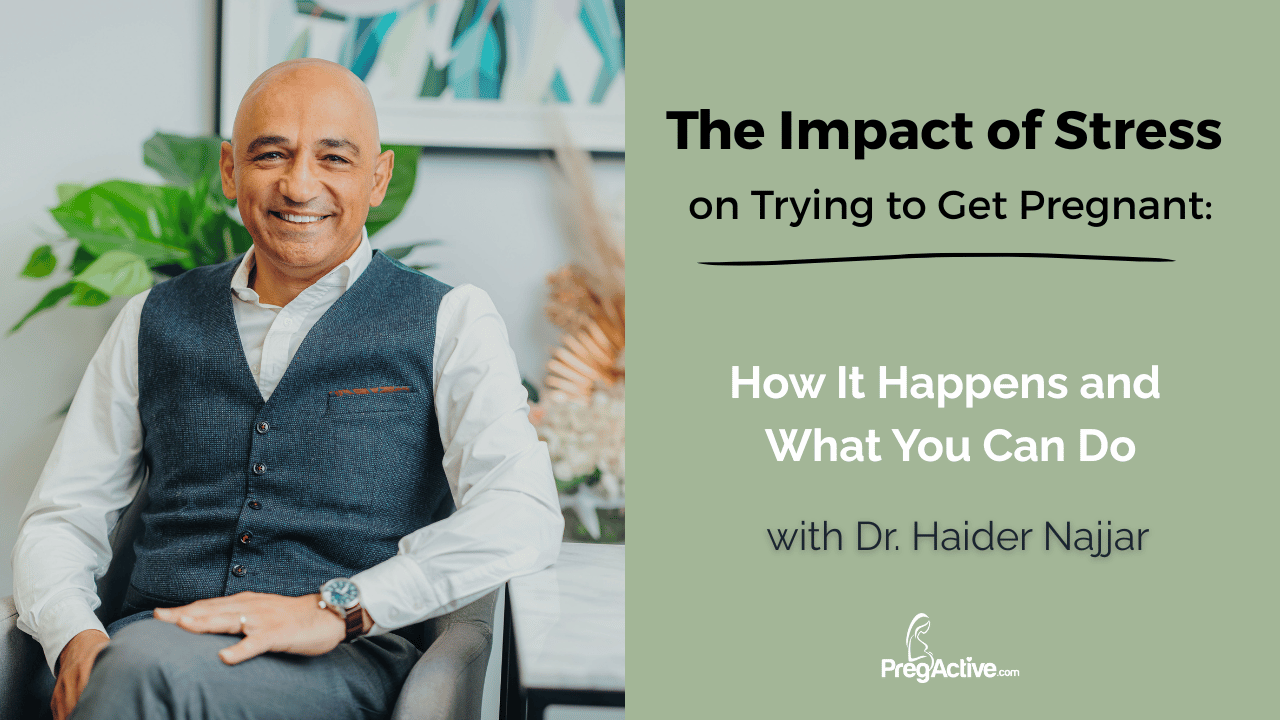
Stress and Fertility with Dr Haider Najjar

healthtostBy healthtostMarch 10, 2026No Comments5 Mins Read
Facebook Twitter Pinterest LinkedIn Tumblr Reddit WhatsApp Email
Stress And Fertility With Dr Haider Najjar
Share
Facebook Twitter LinkedIn Pinterest WhatsApp Email

How it happens and what you can do. From Dr. Haider Najjar, MBChB, FRANZCOG, Fertility Specialist and Co-Founder, Create Fertility and Create Health and

Kerryn Boyle, BExSci, Prenatal Exercise Specialist and Women’s Health Specialist, Co-Founder of PregActive.

In today’s busy world – with jobs, family, money worries and everything else – stress is something that almost everyone feels.

As people who help women (and couples) on their fertility and pregnancy paths, we see how constant stress can really hinder trying to conceive. It’s not the only factor, but it’s a big one that’s easy to overlook.

Dr. Najjar puts it simply:

“Fertility is not just about eggs and sperm. it’s about taking care of your whole self. Calm the stress and your body often responds positively.“

Let’s break down in everyday terms how stress affects fertility for both women and men, then share some simple ways to reduce it and support your chances.

How stress messes up your body’s baby-making signals

When you are very stressed, your body pumps out more cortisol (the main stress hormone). In small doses, it’s useful for quick “fight or flight” moments. But when it’s high for weeks or months, it starts to interfere with the hormones that control reproduction.

For women:

High cortisol can throw off signals from your brain to your ovaries. This can make periods irregular, delay or skip ovulation (no egg is released), or shorten the time after ovulation when pregnancy is possible.

For men:

It can lower testosterone levels and cause more damage to sperm from things like extra inflammation or “wear and tear” in the body.

This often means a lower sperm count, poorer motility or lower quality.

This can be very difficult if something like PCOS already exists in women, where stress worsens hormonal imbalances.

Stress can also harm eggs, sperm and the chance of implantation

In addition to hormones, long-term stress creates additional “damage” to cells through inflammation and unstable molecules (oxidative stress).

For the eggs:

It can damage the tiny power centers inside developing eggs, leading to fewer good quality eggs or higher chances of problems in early embryo development (especially noticeable in IVF).

For semen:

Constant stress can break the DNA in sperm. When the damage is high (above about 30%), the natural chances of pregnancy can be greatly reduced.

For the uterus

Stress hormones can make the lining less hospitable for an embryo to attach, increasing inflammation and reducing the “stickiness” needed for implantation.

Studies show that women with higher stress levels may have a 30-40% lower chance of getting pregnant each month naturally. In men, stress can reduce the success of treatments such as IVF by around 10-15%.

Stress during fertility treatments such as IVF

Going through IVF or similar treatments is stressful in itself – it often feels as big as other major health challenges.

Higher anxiety around egg collection or embryo transfer can sometimes be associated with lower quality embryos or a higher risk of early loss. Things like endometriosis in women or work pressures in men can add to it.

Simple, practical ways to reduce stress and support fertility

The good news?

Small, achievable changes in everyday life can make a real difference. These are safe ideas backed by guidance from experts like RANDSKOG.

You don’t have to do everything at once – pick one thing to start with, build from there and most people notice improvements in 6-8 weeks.

Calm your mind

Try 10 minutes of mindfulness or deep breathing every day – use it for free PregActive app in the morning or before bed.

Consider talk therapy such as CBT (often covered by a doctor’s referral).

Jot down three small positive things each day to shift the focus.

Eat for better balance

Add antioxidant-rich foods such as berries, nuts or vegetables daily. Include omega-3 sources like salmon or discuss fish oil with a fertility dietitian.

Prioritize sleep Aim for 7-9 hours. Create a routine that turns off the lights by 10 p.m., if possible. Try blue light blocking glasses after 8pm. or do gentle stretches such as 5-minute walking-on-the-wall pose to relax.

Move your body gently

Go for a brisk 30-minute walk 3 times a week. Add simple strength sessions 2x/week, e.g PregActive Fertility Stream routine (body weight, easy at home);

Additional useful options

Acupuncture: One or two sessions in the second half of your cycle or around transfer.

Restorative yoga: 10 minutes of supported poses in the evening or one class per week.

Keep track of how you’re doing

Take the free online Perceived Stress Scale (PSS-10) today. Check back every 4 weeks – aim to lower your score by 5-10 points.

Start small:

Choose one change this week, add another next week. Be kind to yourself – no one does everything perfectly and adding pressure to ‘fix’ stress can backfire.

Just pause right now:

Take a deep breath, hold it for a second, then let it out slowly. Do this two more times. Notice how your body feels calmer even for a moment.

A positive way forward stress isn’t ‘all in your head’ – it creates real changes in your body that can affect fertility.

But by making some gentle lifestyle changes along with any medical treatment, many people improve their chances and feel better overall.

As Dr. Najjar tells his patients: “Your body reacts to a tight deadline the same way it reacts to real danger. Teach it to feel safe and calm and things often start to fall into place.”

Dr. Haider Najjar is a leading fertility specialist and surgeon, co-founder of Create Fertility, focusing on advanced care and IVF in Melbourne.

Kerryn Boyle brings over 20 years to women’s health as a prenatal/postnatal exercise specialist and co-founder of PregActive, helping movement and wellness support fertility and pregnancy.

fertility Haider Najjar stress
bhanuprakash.cg
healthtost
  • Website

Related Posts

Exercise Wall Angels During Pregnancy: A Step-by-Step Guide

July 15, 2026

Breech VBAC (Vaginal Birth after Caesarean Section) Birth Story

July 13, 2026

How baby showers have changed throughout history

July 13, 2026

Leave A Reply Cancel Reply

Don't Miss
News

Global childhood immunization rates stagnate despite slight recovery from pandemic

By healthtostJuly 15, 20260

In 2025, 90% of infants worldwide – or nearly 116 million – received at least…

Is it okay to be imperfect and still be happy? 6 Challenges

July 15, 2026

Sexual evolution: What 500 million years of life tell us about sex, gender and mating

July 15, 2026

I tried to hide my hemiparesis

July 15, 2026
Stay In Touch
  • Facebook
  • Twitter
  • Pinterest
  • Instagram
  • YouTube
  • Vimeo
TAGS
Baby benefits body brain cancer care Day Diet disease exercise finds Fitness food Guide health healthy heart Improve Life Loss Men mental Natural Nutrition Patients People Pregnancy research reveals risk routine sex sexual Skin Skincare study Therapy Tips Top Training Treatment ways weight women Workout
About Us
About Us

Welcome to HealthTost, your trusted source for breaking health news, expert insights, and wellness inspiration. At HealthTost, we are committed to delivering accurate, timely, and empowering information to help you make informed decisions about your health and well-being.

Latest Articles

Global childhood immunization rates stagnate despite slight recovery from pandemic

July 15, 2026

Is it okay to be imperfect and still be happy? 6 Challenges

July 15, 2026

Sexual evolution: What 500 million years of life tell us about sex, gender and mating

July 15, 2026
New Comments
    Facebook X (Twitter) Instagram Pinterest
    • About Us
    • Contact Us
    • Privacy Policy
    • Terms and Conditions
    • Disclaimer
    © 2026 HealthTost. All Rights Reserved.

    Type above and press Enter to search. Press Esc to cancel.