

Close Menu
Healthtost
  • News
  • Mental Health
  • Men’s Health
  • Women’s Health
  • Skin Care
  • Sexual Health
  • Pregnancy
  • Nutrition
  • Fitness
  • Recommended Essentials
What's Hot

How to be more human

May 15, 2026

What are they trying to tell us and how to overcome them

May 15, 2026

Multi-institutional trial explores new lifeline for advanced prostate patients

May 15, 2026
Facebook X (Twitter) Instagram
  • About Us
  • Contact Us
  • Privacy Policy
  • Terms and Conditions
  • Disclaimer
Facebook X (Twitter) Instagram
Healthtost
SUBSCRIBE
  • News

    Multi-institutional trial explores new lifeline for advanced prostate patients

    May 15, 2026

    ExiVex reports human pharmacokinetic data showing that intranasal naloxone EMRX-101 approaches peak plasma concentrations similar to IV with a significantly faster Tmax than the currently approved comparator

    May 15, 2026

    Perioperative medicine is emerging as a system-wide strategy for better surgical outcomes

    May 14, 2026

    Regular arts and physical activity are associated with slow aging

    May 14, 2026

    The study links obesity with less pleasurable feelings during physical activity

    May 13, 2026
  • Mental Health

    Are you caught in the cycle of chronic pain? How does Thera…

    May 15, 2026

    Why Menopause Matters in Substance Use Disorder Prevention, Treatment, and Recovery

    May 14, 2026

    because you might be right to leave a party without saying goodbye

    May 14, 2026

    Are antidepressants dangerous? The truth about violence, overuse and fear

    May 11, 2026

    Feel like a fraud? Understanding Imp…

    May 10, 2026
  • Men’s Health

    10 Best Bodyweight Movements for Strength and Muscle

    May 14, 2026

    Two leading cardiac risk tools pass a major global test

    May 12, 2026

    Beyond symptoms: Into the push to finally change the effects of cerebral palsy

    May 12, 2026

    Mix up your workout with Myo-Reps

    May 11, 2026

    The Future of the USA: Why Empires End After 250 Years and What We Should Do Now

    May 11, 2026
  • Women’s Health

    I didn’t sleep so well. Should I still exercise? | The Wellness Blog

    May 15, 2026

    Minoxidil 5%: A proven solution for hair regeneration

    May 14, 2026

    Postpartum sexuality research reveals common ‘desire gap’

    May 13, 2026

    Paula Poundstone on the healing power of humor

    May 12, 2026

    What is SPF? A guide to Indian skin

    May 10, 2026
  • Skin Care

    Night Serum: What to use for best results overnight

    May 15, 2026

    7 Anti-Aging Foods That Slow Aging and Make You Look Younger

    May 14, 2026

    Benefits, uses and how to get glowing skin naturally – The natural wash

    May 14, 2026

    How to protect your skin from the sun – Tropic Skincare

    May 13, 2026

    The best allergen-free makeup for sensitive skin

    May 9, 2026
  • Sexual Health

    The impact of Covid-19 on young people’s access to contraceptives and contraceptive services

    May 15, 2026

    Are the symptoms of gonorrhea different in men and women?

    May 15, 2026

    How to choose the right program — Sexual Health Alliance

    May 14, 2026

    How to increase nitric oxide and without sexual health benefits

    May 12, 2026

    2026 Mother’s Day Gift Guide: Pleasure & Wellness

    May 11, 2026
  • Pregnancy

    Measles is back in the news. See what pregnant women need to know.

    May 15, 2026

    What your strange pregnancy cravings are trying to tell you

    May 14, 2026

    Doctor Birth Story with Dr. Manisha Ghimire

    May 11, 2026

    What they are, how they work and why parents love them

    May 11, 2026

    Folic acid before pregnancy may help reduce the risk of birth defects for women taking epilepsy drugs

    May 10, 2026
  • Nutrition

    How to be more human

    May 15, 2026

    Menstrual Nutrition: The right way to eat for your period

    May 14, 2026

    How we eat vs. How we think we eat

    May 13, 2026

    Because stress shows up in your gut

    May 12, 2026

    Why Weight Loss Isn’t The Key To Better Health (And What Is)

    May 11, 2026
  • Fitness

    What are they trying to tell us and how to overcome them

    May 15, 2026

    In Ozempic or Wegovy? Here’s the one thing you can’t miss.

    May 14, 2026

    Danger Coffee Review: Worth the Hype? My honest opinion

    May 12, 2026

    It happened again. | Nerd Fitness

    May 12, 2026

    5 Top Dental Health Tips for Preschoolers

    May 11, 2026
  • Recommended Essentials
Healthtost
Home»News»Oral cancer pain and opioid tolerance share a common EGFR mechanism
News

Oral cancer pain and opioid tolerance share a common EGFR mechanism

healthtostBy healthtostJanuary 30, 2026No Comments5 Mins Read
Facebook Twitter Pinterest LinkedIn Tumblr Reddit WhatsApp Email
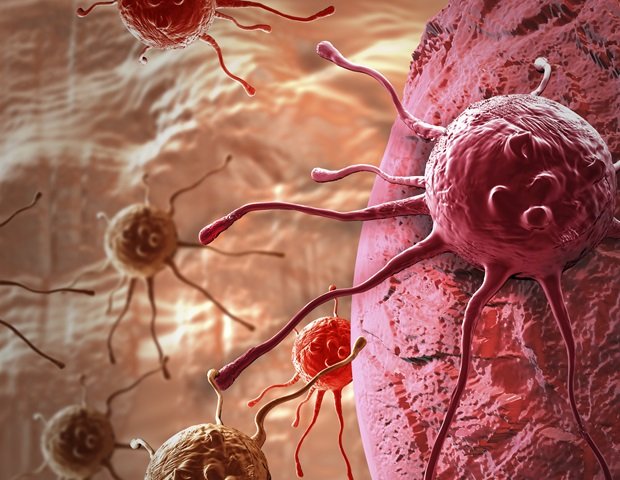
Oral Cancer Pain And Opioid Tolerance Share A Common Egfr
Share
Facebook Twitter LinkedIn Pinterest WhatsApp Email

Epidermal growth factor receptor (EGFR) signaling in tissue around oral cancers increases nerve sensitivity and makes opioids less effective, according to new research published in Scientific Signaling.

The findings point to a common mechanism underlying both oral cancer pain and opioid tolerance—and a potential new therapeutic strategy for both.

Repurposing existing anticancer drugs that block EGFR may be a promising way to manage oral cancer pain and prevent or reverse opioid tolerance.”

Yi Ye, PhD, Associate Professor at NYU College of Dentistry and Associate Director of Clinical Research Operations at NYU Dentistry’s Translational Research Center

The need for a new “gold standard”

Oral cancer can be extremely painful, making it difficult for patients to eat, drink and speak. Despite the known side effects and risk of addiction, opioids are still considered by experts to be the gold standard for treating oral cancer pain. In order to effectively manage this pain, patients often require high doses of opioids and develop tolerance more quickly than those with other forms of chronic pain, requiring increasingly large doses to manage it.

“In pain research, we struggle with the fact that—even after all these decades of research—the best medicine on the market is often opiates, which carry many risks,” said Ye, senior author of the study and a faculty member at the NYU Pain Research Center.

When people with cancer experience pain, the severity of the pain tends to increase as the tumor grows, suggesting that there may be common molecular drivers behind the two processes—ones that could be targeted to manage both cancer and pain.

“We are increasingly finding that cancer and the nervous system are interconnected. In my lab, we are trying to examine whether there is a common, overlapping mechanism between cancer and pain,” Ye added.

A mechanism that leads to both pain and tolerance

EGFR, a protein found on the surface of certain cells involved in promoting cell growth and division, has emerged as an important target in cancer therapy. The receptor is overexpressed in most oral cancers, and several FDA-approved drugs that block or inhibit EGFR are used to treat lung, breast, colon, pancreatic, and oral cancers.

Specifically, some research shows that when patients take EGFR inhibitors to treat their cancer, they also experience rapid pain relief. Additional studies point to a role for EGFR in other pain conditions and in opioid tolerance.

At Scientific Signaling study, the research team from NYU Dentistry, the University of Texas MD Anderson Cancer Center and Loma Linda University School of Dentistry studied human tissue samples from oral cancer patients as well as mice with oral cancer to better understand the role of EGFR signaling. In both human and mouse cells, they found that cancer cells and nearby glial cells secreted EGFR ligands, the molecules that activate the receptors.

EGFR was overexpressed in human and mouse nerves associated with oral cancer tumors, including the trigeminal ganglia, the main sensory nerve cells in the face and mouth. This EGFR activation also led to N-methyl-d-aspartate glutamate receptor (NMDAR) signaling and hyperactivity—a well-studied pain signaling receptor thought to play a critical role in the development of opioid tolerance—in the trigeminal ganglia and brainstem.

In additional studies in mice, researchers found that EGFR ligands that activate the receptor in the trigeminal system increased pain and made morphine less effective. In contrast, giving the mice an EGFR inhibitor drug reduced pain and restored the analgesic effects of morphine.

“These results are clinically relevant and reveal a link between EGFR signaling and NMDAR hyperactivity, a mechanism that enhances pain signaling and reduces the efficacy of opioid analgesics,” said study author Hui-Lin Pan, MD, PhD, professor of anesthesiology and perioperative medicine at MD Anderson.

Repurposing drugs to fight cancer

This new mechanistic understanding of oral cancer pain and opioid tolerance suggests a new and not-so-new approach to better manage oral cancer pain: EGFR inhibitors. Because these drugs have been widely studied as cancer treatments, researchers already know about their safety and side effects. In addition, EGFR inhibitors may reduce pain and the need for more opioids while controlling the cancer.

“This study provides a rationale for repurposing the FDA-approved EGFR inhibitors already used to treat oral cancer, moving from symptomatic suppression to mechanistic intervention. This approach may offer dual benefits, controlling cancer while treating pain through a non-opioid, biologically rational approach that could dramatically improve the head’s quality of life,” said the professor. at MD Anderson.

Researchers are continuing to examine the role of EGFR and its ligands in oral cancer pain and opioid tolerance by analyzing patient tumor and blood samples, along with self-reported pain scores and opioid use. In addition, leveraging an existing clinical trial for EGFR inhibitors in the remission of oral cancer, the team plans to retrospectively evaluate the effect of EGFR inhibitors on pain relief using clinical records.

“In drug development, it can take decades for a new compound to reach the market. If our mechanism holds true in future studies, repurposing EGFR inhibitors is attractive because it could lead to rapid translation and help patients quickly,” said Ye.

“These findings could significantly impact the way we treat cancer pain by providing a targeted approach that mitigates the harmful side effects seen with opioids. This new therapeutic approach provides hope for both patients and clinicians dealing with oral cancer alike,” said study author Chi Viet, DDS, MD, PhD, associate professor of oral and maxillofacial surgery at Loma Lindrya University.

Additional study authors include Naijiang Liu, Xiaojie Shi, Maria Daniela Santi, Maria Fernanda Pessano Fialho, Rocco Latorre and Nigel Bunnett of NYU Dentistry. Shao-Rui Chen, Hong Chen, Tongxin Xie, and Frederico Gleber-Netto of MD Anderson. and Dong Minh Phuong of Loma Linda University School of Dentistry. The research was supported by the National Institute of Dental and Craniofacial Research (R01DE032501, RM1DE033491).

Source:

Journal Reference:

Liu, N., et al. (2026). EGFR activation sensitizes trigeminal NMDA receptors to promote pain and tolerance to morphine analgesic in oral cancer. Scientific Signaling. DOI: 10.1126/scisignal.adt3026.

cancer Common EGFR mechanism opioid Oral Pain share tolerance
bhanuprakash.cg
healthtost
  • Website

Related Posts

Multi-institutional trial explores new lifeline for advanced prostate patients

May 15, 2026

ExiVex reports human pharmacokinetic data showing that intranasal naloxone EMRX-101 approaches peak plasma concentrations similar to IV with a significantly faster Tmax than the currently approved comparator

May 15, 2026

Are you caught in the cycle of chronic pain? How does Thera…

May 15, 2026

Leave A Reply Cancel Reply

Don't Miss
Nutrition

How to be more human

By healthtostMay 15, 20260

Where has our humanity gone? Locked in our homes for two years, glued to our…

What are they trying to tell us and how to overcome them

May 15, 2026

Multi-institutional trial explores new lifeline for advanced prostate patients

May 15, 2026

I didn’t sleep so well. Should I still exercise? | The Wellness Blog

May 15, 2026
Stay In Touch
  • Facebook
  • Twitter
  • Pinterest
  • Instagram
  • YouTube
  • Vimeo
TAGS
Baby benefits body brain cancer care Day Diet disease exercise finds Fitness food Guide health healthy heart Improve Life Loss Men mental Natural Nutrition Patients Pregnancy research reveals risk routine sex sexual Skin Skincare study Therapy Tips Top Training Treatment Understanding ways weight women Workout
About Us
About Us

Welcome to HealthTost, your trusted source for breaking health news, expert insights, and wellness inspiration. At HealthTost, we are committed to delivering accurate, timely, and empowering information to help you make informed decisions about your health and well-being.

Latest Articles

How to be more human

May 15, 2026

What are they trying to tell us and how to overcome them

May 15, 2026

Multi-institutional trial explores new lifeline for advanced prostate patients

May 15, 2026
New Comments
    Facebook X (Twitter) Instagram Pinterest
    • About Us
    • Contact Us
    • Privacy Policy
    • Terms and Conditions
    • Disclaimer
    © 2026 HealthTost. All Rights Reserved.

    Type above and press Enter to search. Press Esc to cancel.