

Close Menu
Healthtost
  • News
  • Mental Health
  • Men’s Health
  • Women’s Health
  • Skin Care
  • Sexual Health
  • Pregnancy
  • Nutrition
  • Fitness
  • Recommended Essentials
What's Hot

Global childhood immunization rates stagnate despite slight recovery from pandemic

July 15, 2026

Is it okay to be imperfect and still be happy? 6 Challenges

July 15, 2026

Sexual evolution: What 500 million years of life tell us about sex, gender and mating

July 15, 2026
Facebook X (Twitter) Instagram
  • About Us
  • Contact Us
  • Privacy Policy
  • Terms and Conditions
  • Disclaimer
Facebook X (Twitter) Instagram
Healthtost
SUBSCRIBE
  • News

    Global childhood immunization rates stagnate despite slight recovery from pandemic

    July 15, 2026

    Weight loss and anti-inflammatory drugs combine to fight leukemia

    July 14, 2026

    Unreliable datasets shape clinical prediction models

    July 14, 2026

    Bariatric surgery is safe, effective for obese teenagers and young adults

    July 13, 2026

    Engineered ribozyme repairs broken RNA to explain origin of life

    July 13, 2026
  • Mental Health

    Is it okay to be imperfect and still be happy? 6 Challenges

    July 15, 2026

    How can you be tired but wired? Blame it on your stone age brain

    July 12, 2026

    Almost 20% of new mums have anxiety or depression, but a promising psychedelic treatment is on the horizon

    July 7, 2026

    How can ART help us improve our mental health? With 3 Ways

    July 5, 2026

    How much do friends affect the mental health of teenagers? What a new study can (and can’t) tell us

    July 3, 2026
  • Men’s Health

    Sexual evolution: What 500 million years of life tell us about sex, gender and mating

    July 15, 2026

    Low testosterone or just stress? How to tell the difference

    July 11, 2026

    Gut-friendly diet linked to lower risk of coronary heart disease mortality

    July 9, 2026

    Men don’t just avoid their health. Many lose themselves.

    July 8, 2026

    The Crazy Hard Standards of the Hardest PE Program in History

    July 8, 2026
  • Women’s Health

    I tried to hide my hemiparesis

    July 15, 2026

    Kyoto recap, bamboo forest and monkey park

    July 13, 2026

    Menopause and Your Microbiome: How Gut Health Shapes Weight, Mood, and Hormones

    July 11, 2026

    They heard us. Now will they listen?

    July 11, 2026

    Taite Heller on Why Barre Became a Top-5 Fitness Trend

    July 8, 2026
  • Skin Care

    How to use nature’s retinol: Bakuchiol in your beauty routine

    July 13, 2026

    How our natural hair care achieves salon-level results without silicones

    July 11, 2026

    Coconut Allergy and Skin Care: 20 Questions Finally Answered by a Pharmacist

    July 11, 2026

    New Sunscreen Ingredient: Is This The SPF Upgrade We’ve Been Waiting For?

    July 9, 2026

    How to achieve the perfect tan

    July 8, 2026
  • Sexual Health

    Celebrating 30 years of Sex Sense

    July 15, 2026

    STDs in older adults are on the rise—up to seven times higher than in 2012

    July 13, 2026

    Fildena 150 Benefits | Effective ED & Sexual Performance Treatment

    July 11, 2026

    Painful sex after menopause: When is it time to seek treatment?

    July 11, 2026

    Emotional capitalism and artificial intimacy

    July 10, 2026
  • Pregnancy

    Exercise Wall Angels During Pregnancy: A Step-by-Step Guide

    July 15, 2026

    Breech VBAC (Vaginal Birth after Caesarean Section) Birth Story

    July 13, 2026

    How baby showers have changed throughout history

    July 13, 2026

    Calf Raises During Pregnancy: Step-by-Step Guide and Benefits

    July 8, 2026

    Tri-Tri Triplet Pregnancy with Vaginal Birth Story – The Birth Hour Triplet Pregnancy and Vaginal Birth Story with Ashlie Holladay

    July 7, 2026
  • Nutrition

    Chocolate Cherry Chia Pudding: Easy Vegan Recovery Snack

    July 14, 2026

    The Cholesterol Question: A Breakthrough Victory for Keto and Cognitive Health

    July 14, 2026

    15 No-Cook Dinners for Kids (Because It’s Too Hot to Turn on the Oven)

    July 12, 2026

    30 Minute Chicken Pesto Pasta (Dietist Approved)

    July 11, 2026

    5 Easy High Fiber Bowl Recipes

    July 8, 2026
  • Fitness

    How to Choose a Fitness Certification on a Budget

    July 14, 2026

    Meet the Belle Vitale™ Supplement System: Two Formulas. A comprehensive approach to hormone health.

    July 11, 2026

    where we ate in Tokyo (and gluten-free options!)

    July 9, 2026

    Using External Signaling to Improve Linear Acceleration – Tony Gentilcore

    July 8, 2026

    5 Simple Screen Changes That Can Improve Sleep and Focus

    July 7, 2026
  • Recommended Essentials
Healthtost
Home»Nutrition»Is it possible to have too much protein?
Nutrition

Is it possible to have too much protein?

healthtostBy healthtostDecember 24, 2024No Comments5 Mins Read
Facebook Twitter Pinterest LinkedIn Tumblr Reddit WhatsApp Email
Is It Possible To Have Too Much Protein?
Share
Facebook Twitter LinkedIn Pinterest WhatsApp Email

Protein is one of the basic building blocks of the human body, vital for building and repairing muscle. If you’re interested in gaining muscle and/or losing fat, you probably know how important it is to increase your daily intake of this macronutrient. But is there an upper limit to how much you should consume? How much protein is considered too much?

There are goalposts, but it’s hard to get over the line. Here’s what the experts say.

Are high protein diets safe?

First of all, it is very difficult to eat so much protein that it negatively affects your health. According to a study published in American Journal of Clinical Nutritionconsumed by the average American less than half from what is widely considered the “upper limit” of protein consumption: 35 percent of daily calories.

However, studies suggest that active people who exceed this upper limit may not experience any negative effects. In one 2016 study was published on Journal of Nutrition and Metabolism14 healthy resistance-trained men alternated between months of their normal diet and a “high-protein diet” (more than 3 grams per kilogram of body weight per day). To put that into context, a 154-pound person would need to eat more than 210 grams of protein per day on this diet, which equates to nearly two pounds of chicken.

After following the subjects for a year, the researchers found “no deleterious effect on blood lipid measurements as well as liver and kidney function,” where most adverse reactions to the protein would occur.

Moreover, there is research suggesting that existing recommendations may be too low for some populations, including adults over 65 years of age, pregnant and lactating women, and healthy children over 3 years of age. So while the scientific debate surrounding how much protein is too much continues, it’s important to recognize the emerging literature validating the safety and effectiveness of high-protein diets for those who need more of it.

3 Effects associated with high protein diets

While studies have explored potential risks of too much protein, the Institute of Medicine’s Dietary Intake Report states that there is “insufficient evidenceto provide causal relationships between protein and health complications, thus underscoring the need for controlled clinical studies.

1. Stomach upset/discomfort

Some people may experience gastrointestinal problems that result from taking protein supplements. This can be attributed to the lactose content in some protein drinks, such as those containing whey protein concentrate. In these cases, using whey protein isolate or plant-based protein is less likely to lead to these problems, as they contain less lactose than whey protein concentrate or none at all.

Potential gastrointestinal problems can also come from whole foods. “If you eat too much animal protein and not enough complex carbohydrates, which contain fiber, you may experience mild constipation,” explains Quyen Vu, MS, RDN.

2. Kidney problems

Some studies have reported an association between high-protein diets and renal function. However, it is “extremely rare” for exercisers to develop kidney problems or other metabolic disorders due to high protein consumption, he says Glenn Gaesser, PhD, FACSMprofessor of exercise physiology at Arizona State University.

3. Heart problems

Some research suggests that eating too much protein can affect the cardiovascular system.

“Many population-based cohort studies show a higher risk of premature mortality associated with high-protein diets, such as the classic low-carbohydrate diet, which has much more protein than the typical American diet,” says Gaesser.

However, he continues, “Higher protein intake, per se, may not be the problem, but rather other features of the diet, such as high amounts of animal fat and low amounts of fiber-rich foods.”

Can eating too much protein affect weight loss?
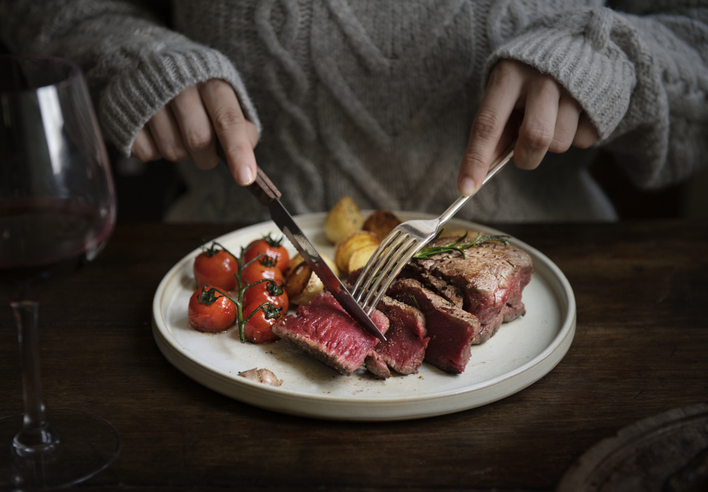
cutting a steak | How much protein is too much?

In a word, yes. Protein is a source of calories. If your goal is to lose weight, it’s important to create a calorie deficit, a state in which you burn more calories than you take in. If you eat so much protein that you limit (or delete) your calorie deficit, that can undermine weight loss.

“Protein not used for the body’s normal growth and maintenance functions can be used for energy if there is a shortage from other sources, and can be turned into fat,” he says. Mindy Haar, Ph.D., RDN, CDN, FANDregistered dietitian nutritionist and assistant dean at the New York Institute of Technology School of Health Professions. “If overconsumption of protein causes you to consume more calories than you need, you will gain weight.”

However, protein is still an integral part of most weight loss efforts. A meta-analysis of 24 studies found that calorie-restricted, high-protein diets produced more positive changes in total body composition than a standard-protein diet. This is likely because protein promotes fullness and can help preserve muscle.

How do you know if you’re eating too much protein?

Your first clue will probably be a stomach ache or some other minor gastrointestinal drama. Even if you have guts of steel, know that it’s possible to eat more protein than you can efficiently process.

“Your body can only use a certain amount of protein in one sitting—about 30 grams,” he says Lisa Moskovitz, RD, CDNCEO of New York Nutrition Group. “This is equivalent to about four ounces of cooked chicken breast or cooked fish, one cup of Greek yogurt, or two cups of black beans.”

It is also important to spread out your protein intake throughout the day because the body does not store excess protein.

“I see a lot in my practice that athletes try to cram their protein intake into one or two meals,” he says. Maddi Osburn, RDN, LDregistered dietitian nutritionist in Wichita, Kansas. “If an athlete consumes too much protein in one or two meals, they will not have the most optimal muscle growth response and will either be excreted or stored as fat. In addition, eating too much protein could replace other important nutrients – such as carbohydrates, fat and fiber – that are just as important for optimal recovery and performance.”

protein
bhanuprakash.cg
healthtost
  • Website

Related Posts

Chocolate Cherry Chia Pudding: Easy Vegan Recovery Snack

July 14, 2026

The Cholesterol Question: A Breakthrough Victory for Keto and Cognitive Health

July 14, 2026

15 No-Cook Dinners for Kids (Because It’s Too Hot to Turn on the Oven)

July 12, 2026

Leave A Reply Cancel Reply

Don't Miss
News

Global childhood immunization rates stagnate despite slight recovery from pandemic

By healthtostJuly 15, 20260

In 2025, 90% of infants worldwide – or nearly 116 million – received at least…

Is it okay to be imperfect and still be happy? 6 Challenges

July 15, 2026

Sexual evolution: What 500 million years of life tell us about sex, gender and mating

July 15, 2026

I tried to hide my hemiparesis

July 15, 2026
Stay In Touch
  • Facebook
  • Twitter
  • Pinterest
  • Instagram
  • YouTube
  • Vimeo
TAGS
Baby benefits body brain cancer care Day Diet disease exercise finds Fitness food Guide health healthy heart Improve Life Loss Men mental Natural Nutrition Patients People Pregnancy research reveals risk routine sex sexual Skin Skincare study Therapy Tips Top Training Treatment ways weight women Workout
About Us
About Us

Welcome to HealthTost, your trusted source for breaking health news, expert insights, and wellness inspiration. At HealthTost, we are committed to delivering accurate, timely, and empowering information to help you make informed decisions about your health and well-being.

Latest Articles

Global childhood immunization rates stagnate despite slight recovery from pandemic

July 15, 2026

Is it okay to be imperfect and still be happy? 6 Challenges

July 15, 2026

Sexual evolution: What 500 million years of life tell us about sex, gender and mating

July 15, 2026
New Comments
    Facebook X (Twitter) Instagram Pinterest
    • About Us
    • Contact Us
    • Privacy Policy
    • Terms and Conditions
    • Disclaimer
    © 2026 HealthTost. All Rights Reserved.

    Type above and press Enter to search. Press Esc to cancel.