


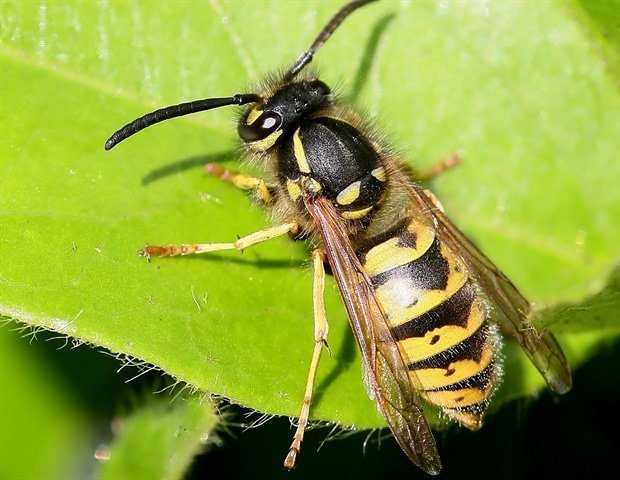
In the ongoing arms race between parasites and their hosts, innovation was thought to be the key to a successful attack or defense that outlasts the competition.
But sometimes, like in the corporate world, outright theft can be a faster way to achieve dominance.
Biologists at the University of California, Berkeley, have shown that several fruit fly species have hijacked a successful bacterial defense to survive predation by parasitic wasps, which in some flies can convert half of all fly larvae in surrogate mothers for baby wasps -. a gruesome fate that inspired the creature in the 1979 film “Alien.”
Bacteria and other microbes are notorious for stealing genes from other microbes or viruses. This so-called horizontal gene transfer is the source of troublesome antibiotic resistance among disease-causing microbes. But it is thought to be less common in multicellular organisms such as insects and humans. Understanding how common it is in animals, and how these genes are selected and shared, can help scientists understand the evolution of animal immune defenses and could point the way to human treatments to fight parasitic or infectious diseases or of cancer, which is a kind of parasite.
It is a model for understanding how immune systems evolve, including our own immune system, which also contains horizontally transferred genes.”
Noah Whiteman, UC Berkeley professor of molecular and cellular biology and integrative biology and director of the campus’s Essig Museum of Entomology
Last year, the researchers and their colleagues in Hungary used CRISPR genome editing to eliminate the gene responsible for defense in a widespread species of fly. Drosophila ananassaeand found that almost all of the genetically modified flies died from predation by parasitic wasps.
In a new study published Dec. 20 in the journal Current Biologybiologists proved that this defense -? a gene that codes for a toxin -? can be modified in the genome of the common laboratory fly, Drosophila melanogasterto make them resistant to parasitic wasps as well. The gene essentially becomes part of the fly’s immune system, a weapon in its arsenal to fend off parasites.
The results demonstrate how critical stealth defense is to flight survival and highlight a strategy that may be more common in animals than scientists suspect.
“This shows that horizontal gene transfer is an underappreciated way in which rapid evolution occurs in animals,” said UC Berkeley doctoral student Rebecca Tarnopol, first author of Current Biology paper. “People credit horizontal gene transfer as one of the main drivers of rapid adaptation in microbes, but these events are thought to be extremely uncommon in animals. But at least in insects, they seem to be quite common.”
According to Whiteman, senior author of the paper, “the study shows that to keep up with the onslaught of parasites constantly evolving new ways to overcome host defenses, a good strategy for animals is to borrow genes from even faster evolving viruses and bacteria, and that’s exactly what these flies have done.”
Gene flow from virus to bacteria to fly
Whiteman studies how insects evolve to resist toxins produced by plants to avoid being eaten. In 2023, he published a book, “Most Delicious Poison,” about plant toxins people enjoy, such as caffeine and nicotine.
A plant-herbivore interaction that focuses is that between the housefly Scaptomyza flava and sour-tasting mustards, such as the watercress that grow in streams around the world.
“The larvae, the immature stages of the fly, live in the leaves of the plant. They’re leaf miners, they leave little tracks in the leaves,” Whiteman said. “They are true pests of the plant, and the plant tries to kill them with its specialized chemicals. We study this arms race.”
What he learned, however, likely applies to many other insects, among the most successful herbivores on Earth.
“These are obscure flies, but when you consider the fact that half of all living insect species are herbivores, it’s a very popular life story. Understanding this evolution is very important to understanding evolution in general in terms of the success of herbivores it is,” he said.
Several years ago, after sequencing the fly’s genome in search of genes that allow it to resist mustard toxins, he discovered an unusual gene that he learned was widespread in bacteria. A search of previously published genome sequences found the same gene in a related fly, Drosophila ananassaeas well as in a bacterium that lives inside an aphid. Researchers studying the aphid uncovered a complicated story: The gene actually comes from a bacterial virus, or bacteriophage, that infects bacteria living inside the aphid. The bacteriophage gene, expressed by the bacteria, makes the aphid resistant to a parasitic wasp that plagues it.
These wasps lay their eggs inside the larvae, or maggots, and remain there until the larvae turn into immobile pupae, at which point the wasp eggs mature into wasp larvae that consume the fly pupa, eventually emerging as adults.
When Tarnopol first used gene editing to express the toxin gene in all its cells D. melanogaster, all the flies died. But when Tarnopol expressed the gene in only certain immune cells, the fly became just as resistant to the parasite as its cousin, D. ananassae.
Whiteman, Tarnopol and their colleagues then discovered that the gene found in the genome of D. ananassae -? a fusion between two toxin genes, cytotoxic toxin B (cdtB) and 56kDa apoptosis-inducing protein (aip56), which the researchers called fusionB -? encodes an enzyme that cuts DNA.
To find out how this nuclease can kill a wasp egg, the UC Berkeley researchers contacted István Andó at the Genetics Institute of the HUN-REN Center for Biological Research in Szeged, Hungary, who had previously shown that these same flies have cellular defense against wasp eggs that essentially detaches the eggs from the fly’s body and kills them. Andó and his colleagues in the lab created antibodies to the toxin that allowed them to track it through the fly’s body and found that the nuclease essentially floods the fly’s body to surround and kill the egg.
“We’re finding this huge untapped world of humoral immune factors that may play in the invertebrate immune system,” Tarnopol said. “Our work is among the first to show, at least in Drosophila, that this type of immune response may be a common mechanism by which natural enemies such as wasps and nematodes are dealt with. They are much more lethal in nature than some microbial infections that most people work with.”
Whiteman and his colleagues are still investigating the complexity of these fly-wasp interactions and the cellular and genetic changes that allowed the flies to synthesize a toxin without killing themselves.
“If the gene is expressed in the wrong tissue, the fly will die. That gene is never going to sweep through the populations through natural selection,” Whiteman said. “But if it lands on a part of the genome that’s close to some enhancer or some regulatory component that expresses it a little bit in the adipose tissue of the body, then you can see how it can pick up that leg very quickly, you get this amazing advantage. “
Horizontal gene transfer in any organism would pose similar problems, he said, but in the arms race between predator and prey, it might be worth it.
“When you’re a poor fly, how do you deal with these pathogens and parasites that quickly evolve to take advantage of you?” he said. “One way is to borrow genes from bacteria and viruses because they evolve quickly. It’s a smart strategy—instead of waiting for your own genes to help you, get them from other organisms that evolve faster than they do. And. This seems to have occur many times independently in insects, since so many different have taken this gene It gives us a picture of a new kind of dynamism appears even in animals which have merely innate immune system and do not have adaptive immunity’.
Whiteman’s work was funded by the National Institute of General Medical Sciences of the National Institutes of Health (R35GM119816). Other co-authors on the paper are Josephine Tamsil, Ji Heon Ha, Kirsten Verster and Susan Bernstein from UC Berkeley, Gyöngyi Cinege, Edit Ábrahám, Lilla B. Magyar and Zoltán Lipinszki from Hungary and Bernard Kim from Stanford University.
Source:
Journal Reference:
Tarnopol, RL, et al. (2024). Experimental horizontal transfer of phage-derived genes in Drosophila confers innate immunity to parasitoids. Current Biology. doi.org/10.1016/j.cub.2024.11.071.
