

Close Menu
Healthtost
  • News
  • Mental Health
  • Men’s Health
  • Women’s Health
  • Skin Care
  • Sexual Health
  • Pregnancy
  • Nutrition
  • Fitness
  • Recommended Essentials
What's Hot

Global childhood immunization rates stagnate despite slight recovery from pandemic

July 15, 2026

Is it okay to be imperfect and still be happy? 6 Challenges

July 15, 2026

Sexual evolution: What 500 million years of life tell us about sex, gender and mating

July 15, 2026
Facebook X (Twitter) Instagram
  • About Us
  • Contact Us
  • Privacy Policy
  • Terms and Conditions
  • Disclaimer
Facebook X (Twitter) Instagram
Healthtost
SUBSCRIBE
  • News

    Global childhood immunization rates stagnate despite slight recovery from pandemic

    July 15, 2026

    Weight loss and anti-inflammatory drugs combine to fight leukemia

    July 14, 2026

    Unreliable datasets shape clinical prediction models

    July 14, 2026

    Bariatric surgery is safe, effective for obese teenagers and young adults

    July 13, 2026

    Engineered ribozyme repairs broken RNA to explain origin of life

    July 13, 2026
  • Mental Health

    Is it okay to be imperfect and still be happy? 6 Challenges

    July 15, 2026

    How can you be tired but wired? Blame it on your stone age brain

    July 12, 2026

    Almost 20% of new mums have anxiety or depression, but a promising psychedelic treatment is on the horizon

    July 7, 2026

    How can ART help us improve our mental health? With 3 Ways

    July 5, 2026

    How much do friends affect the mental health of teenagers? What a new study can (and can’t) tell us

    July 3, 2026
  • Men’s Health

    Sexual evolution: What 500 million years of life tell us about sex, gender and mating

    July 15, 2026

    Low testosterone or just stress? How to tell the difference

    July 11, 2026

    Gut-friendly diet linked to lower risk of coronary heart disease mortality

    July 9, 2026

    Men don’t just avoid their health. Many lose themselves.

    July 8, 2026

    The Crazy Hard Standards of the Hardest PE Program in History

    July 8, 2026
  • Women’s Health

    I tried to hide my hemiparesis

    July 15, 2026

    Kyoto recap, bamboo forest and monkey park

    July 13, 2026

    Menopause and Your Microbiome: How Gut Health Shapes Weight, Mood, and Hormones

    July 11, 2026

    They heard us. Now will they listen?

    July 11, 2026

    Taite Heller on Why Barre Became a Top-5 Fitness Trend

    July 8, 2026
  • Skin Care

    How to use nature’s retinol: Bakuchiol in your beauty routine

    July 13, 2026

    How our natural hair care achieves salon-level results without silicones

    July 11, 2026

    Coconut Allergy and Skin Care: 20 Questions Finally Answered by a Pharmacist

    July 11, 2026

    New Sunscreen Ingredient: Is This The SPF Upgrade We’ve Been Waiting For?

    July 9, 2026

    How to achieve the perfect tan

    July 8, 2026
  • Sexual Health

    Celebrating 30 years of Sex Sense

    July 15, 2026

    STDs in older adults are on the rise—up to seven times higher than in 2012

    July 13, 2026

    Fildena 150 Benefits | Effective ED & Sexual Performance Treatment

    July 11, 2026

    Painful sex after menopause: When is it time to seek treatment?

    July 11, 2026

    Emotional capitalism and artificial intimacy

    July 10, 2026
  • Pregnancy

    Exercise Wall Angels During Pregnancy: A Step-by-Step Guide

    July 15, 2026

    Breech VBAC (Vaginal Birth after Caesarean Section) Birth Story

    July 13, 2026

    How baby showers have changed throughout history

    July 13, 2026

    Calf Raises During Pregnancy: Step-by-Step Guide and Benefits

    July 8, 2026

    Tri-Tri Triplet Pregnancy with Vaginal Birth Story – The Birth Hour Triplet Pregnancy and Vaginal Birth Story with Ashlie Holladay

    July 7, 2026
  • Nutrition

    Chocolate Cherry Chia Pudding: Easy Vegan Recovery Snack

    July 14, 2026

    The Cholesterol Question: A Breakthrough Victory for Keto and Cognitive Health

    July 14, 2026

    15 No-Cook Dinners for Kids (Because It’s Too Hot to Turn on the Oven)

    July 12, 2026

    30 Minute Chicken Pesto Pasta (Dietist Approved)

    July 11, 2026

    5 Easy High Fiber Bowl Recipes

    July 8, 2026
  • Fitness

    How to Choose a Fitness Certification on a Budget

    July 14, 2026

    Meet the Belle Vitale™ Supplement System: Two Formulas. A comprehensive approach to hormone health.

    July 11, 2026

    where we ate in Tokyo (and gluten-free options!)

    July 9, 2026

    Using External Signaling to Improve Linear Acceleration – Tony Gentilcore

    July 8, 2026

    5 Simple Screen Changes That Can Improve Sleep and Focus

    July 7, 2026
  • Recommended Essentials
Healthtost
Home»Fitness»Factors to consider when training around pain – Tony Gentilcore
Fitness

Factors to consider when training around pain – Tony Gentilcore

healthtostBy healthtostMarch 27, 2026No Comments1 Min Read
Facebook Twitter Pinterest LinkedIn Tumblr Reddit WhatsApp Email
Factors To Consider When Training Around Pain Tony Gentilcore
Share
Facebook Twitter LinkedIn Pinterest WhatsApp Email

Getting hurt is a drag.

It’s even harder when you’re someone who’s used to being active and an injury prevents you from training consistently or training as hard as you’d like.

There are generally two approaches that many people take:

1. Complete rest.
2. Channel their inner Jason Bourne and grit their teeth through it.

Neither is ideal in my opinion.

I realize that injury (or training with some degree of pain <- sometimes) is inevitable. As I’ve jokingly (but not really) said before…

…”Weightlifting isn’t supposed to tickle.”

Pain, the science of pain and how to educate around pain is a very complex and complex topic. This is a blog post, not a thesis.

To that end, today I want to take a moment to discuss some strategies for how to train for pain that doesn’t revolve around the extremities: Sit on the couch watching Netflix or plan to hit the Treadstone.

Full disclosure: Much of what I will cover below can be found in Dr. Michael Mash, Barbell Rehabwhich is currently my new spirit of favorite continuing education courses.

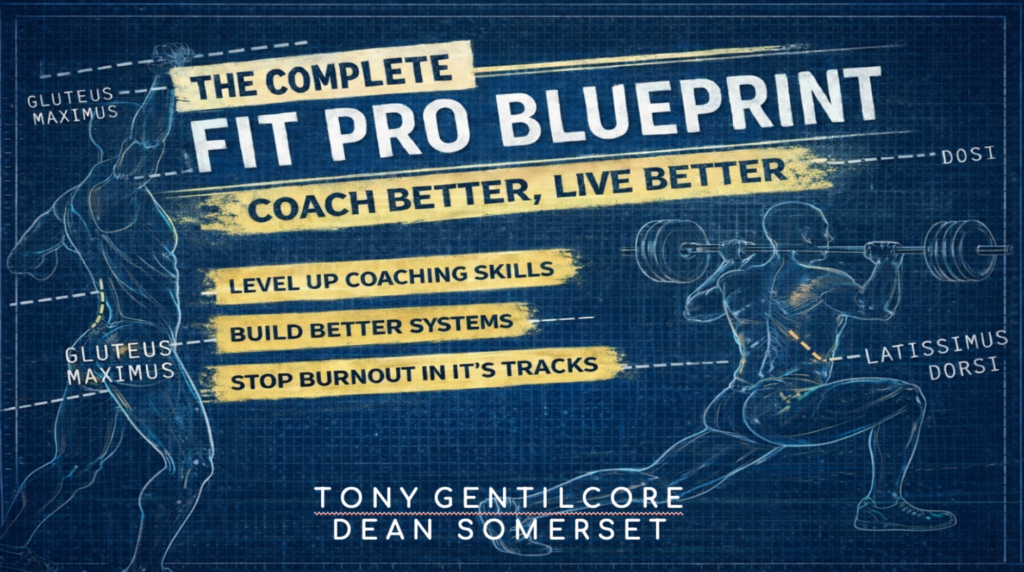
Also: Just as a heads up, much of what I discuss below will be covered in more detail in mine and Dean Somerset’s latest IN-PERSON Continuing Education workshop – The Complete Fit Pro Blueprint – Coming to Boston (June 6-7) and Dublin (October 3-4) later this year. More dates coming soon… ;o)

Factors to consider when training around pain

Let’s start with the definition of “pain”.

Pain

/pan/

substantive

1. A localized or generalized unpleasant physical sensation or complex of sensations that causes mild to severe physical discomfort and emotional distress and usually results from a physical disorder (such as injury or illness).

2. That feeling you get when your significant other wants to talk about feelings, or what your eyes see when you see someone doing pull-ups with kicks.

More specifically, we often associate pain with real damage. However, pain does not always have to revolve around this denominator.

Pain can also be equated to a smoke alarm alerting the body that something is wrong:

  • “Hey, biceps here: I think I’m close to hitting, can you tone down the bench dips?”
  • “Hey, kneecap here: I’m going to end up on the other side of the room if you don’t fix your squat.”
  • “Watch out – a ninja!”

More specifically, pain is multifaceted and can manifest itself in many ways, so it is imperative that we educate people that it is not always centered around a physical injury.

Take for example this cup analogy highlighted in a 2016 study from the medical journal Physiotherapy: Theory & Practice titled “The clinical application of teaching people about pain” by Louw, et al.

Pain is like a cup and there are many factors that can fill it.

Additionally, you can deal with people’s pain in one of two ways:

1. Reduce the contents of the cup.

2. Make the cup bigger (through proper strength training)

As addressed by Michael Barbell Rehabthere are several ways to build a training framework around pain that do not involve passive behavior, subjecting you to corrective exercise in purgatory, or, worst case, surgery.

1. Technical Control

When someone comes to Core Collective for an evaluation with me and they clarify how the bench press bothers their shoulders, instead of taking 30 minutes to assess their shoulder range of motion, wax poetic about the myriad exercises they can do to improve chest expansion and/or go to the weeds in the diaphragmatic position instead of asking them where mechanical breathing is. to…

…wait for it.

…wait for it.

… is coming.

…show me their stall.

Many times, all it takes is a subtle technical tweak to the set-up and execution of the lift itself, and their shoulder hates them less almost immediately.

This is not to say that we would completely ignore other factors such as thoracic mobility and breathing mechanics. particularly of deficits exist. However, I have found that most people are less inclined to want to set their face on fire from the tedium of corrective exercises if I simply narrow down the issue at hand.

Their bad technique.

2. Scheduling Control

This is a point I remember Dr Quinn Henoch driving home when I heard him present a few years ago.

How often do you check your programs?

Has it ever occurred to you that maybe, just maybe, the reason you (or your clients) are hurting is because you were a little overzealous with an exercise variation—or, more often, you were too aggressive with the loading—and that that was the culprit of your (or their) lower back pain?

…and not because your left ankle didn’t have two degrees of dorsiflexion or, I don’t know, it was windy yesterday?

Load management (or the lack of it) is the lowest hanging fruit that we often overlook.

via GIPHY

Here is an example of what I mean.

Using the same person over the shoulder bothers them when he/she bench presses: Let’s say they like to bench press 1 time a week, on Mondays of course.

Like clockwork, the day after benching, their shoulder looks like Johnny Lawrence used it for target practice with his fists. It feels like this for a few days, it dissipates, and then, by the time the next day hits the bench, it feels better, and the same cycle continues.

A more convincing approach might be to spread the same volume over TWO workouts instead of one.

Here’s what they usually do:

Monday: Bench Press: 6×5 @ 185 lb

(Total Capacity = 5,550 lbs.)

Here’s what they should do:

Monday/Thursday: Bench: 3×5 @ 185

(Total capacity = 2,775 lbs) x 2

Wipe the leg.

via GIPHY

3. Change modifiable factors

Looking for the above, when something hurts or is painful, always, always, always look at volume/load first.

From there you can ascertain at what load something hurts – what is the symptom threshold? A find that and when you do, train right underneath to build tolerance and resilience. The result will be twofold:

1. You will encourage a real training effect.

2. Eventually, you will exceed the original symptom threshold because you forced an adaptation.

An easy example here would be squatting. If someone experiences knee pain at a certain depth – perhaps parallel or just below it – have them do a box (or free) squat ABOVE that point.

Similarly, maybe all it takes to make the squat less painful is to change the width of the stance or the degree of toe-out? You can also experiment with the position of the bar or even the tempo. The point is: Assuming we’ve ruled out anything malicious, I’d rather someone continue to squat with a variation/tweak that dramatically reduces their symptoms than skip it altogether,

4. An Exorcism

But only as a last resort.

Factors Gentilcore Pain Tony Training
bhanuprakash.cg
healthtost
  • Website

Related Posts

How to Choose a Fitness Certification on a Budget

July 14, 2026

Meet the Belle Vitale™ Supplement System: Two Formulas. A comprehensive approach to hormone health.

July 11, 2026

where we ate in Tokyo (and gluten-free options!)

July 9, 2026

Leave A Reply Cancel Reply

Don't Miss
News

Global childhood immunization rates stagnate despite slight recovery from pandemic

By healthtostJuly 15, 20260

In 2025, 90% of infants worldwide – or nearly 116 million – received at least…

Is it okay to be imperfect and still be happy? 6 Challenges

July 15, 2026

Sexual evolution: What 500 million years of life tell us about sex, gender and mating

July 15, 2026

I tried to hide my hemiparesis

July 15, 2026
Stay In Touch
  • Facebook
  • Twitter
  • Pinterest
  • Instagram
  • YouTube
  • Vimeo
TAGS
Baby benefits body brain cancer care Day Diet disease exercise finds Fitness food Guide health healthy heart Improve Life Loss Men mental Natural Nutrition Patients People Pregnancy research reveals risk routine sex sexual Skin Skincare study Therapy Tips Top Training Treatment ways weight women Workout
About Us
About Us

Welcome to HealthTost, your trusted source for breaking health news, expert insights, and wellness inspiration. At HealthTost, we are committed to delivering accurate, timely, and empowering information to help you make informed decisions about your health and well-being.

Latest Articles

Global childhood immunization rates stagnate despite slight recovery from pandemic

July 15, 2026

Is it okay to be imperfect and still be happy? 6 Challenges

July 15, 2026

Sexual evolution: What 500 million years of life tell us about sex, gender and mating

July 15, 2026
New Comments
    Facebook X (Twitter) Instagram Pinterest
    • About Us
    • Contact Us
    • Privacy Policy
    • Terms and Conditions
    • Disclaimer
    © 2026 HealthTost. All Rights Reserved.

    Type above and press Enter to search. Press Esc to cancel.