

Close Menu
Healthtost
  • News
  • Mental Health
  • Men’s Health
  • Women’s Health
  • Skin Care
  • Sexual Health
  • Pregnancy
  • Nutrition
  • Fitness
  • Recommended Essentials
What's Hot

Global childhood immunization rates stagnate despite slight recovery from pandemic

July 15, 2026

Is it okay to be imperfect and still be happy? 6 Challenges

July 15, 2026

Sexual evolution: What 500 million years of life tell us about sex, gender and mating

July 15, 2026
Facebook X (Twitter) Instagram
  • About Us
  • Contact Us
  • Privacy Policy
  • Terms and Conditions
  • Disclaimer
Facebook X (Twitter) Instagram
Healthtost
SUBSCRIBE
  • News

    Global childhood immunization rates stagnate despite slight recovery from pandemic

    July 15, 2026

    Weight loss and anti-inflammatory drugs combine to fight leukemia

    July 14, 2026

    Unreliable datasets shape clinical prediction models

    July 14, 2026

    Bariatric surgery is safe, effective for obese teenagers and young adults

    July 13, 2026

    Engineered ribozyme repairs broken RNA to explain origin of life

    July 13, 2026
  • Mental Health

    Is it okay to be imperfect and still be happy? 6 Challenges

    July 15, 2026

    How can you be tired but wired? Blame it on your stone age brain

    July 12, 2026

    Almost 20% of new mums have anxiety or depression, but a promising psychedelic treatment is on the horizon

    July 7, 2026

    How can ART help us improve our mental health? With 3 Ways

    July 5, 2026

    How much do friends affect the mental health of teenagers? What a new study can (and can’t) tell us

    July 3, 2026
  • Men’s Health

    Sexual evolution: What 500 million years of life tell us about sex, gender and mating

    July 15, 2026

    Low testosterone or just stress? How to tell the difference

    July 11, 2026

    Gut-friendly diet linked to lower risk of coronary heart disease mortality

    July 9, 2026

    Men don’t just avoid their health. Many lose themselves.

    July 8, 2026

    The Crazy Hard Standards of the Hardest PE Program in History

    July 8, 2026
  • Women’s Health

    I tried to hide my hemiparesis

    July 15, 2026

    Kyoto recap, bamboo forest and monkey park

    July 13, 2026

    Menopause and Your Microbiome: How Gut Health Shapes Weight, Mood, and Hormones

    July 11, 2026

    They heard us. Now will they listen?

    July 11, 2026

    Taite Heller on Why Barre Became a Top-5 Fitness Trend

    July 8, 2026
  • Skin Care

    How to use nature’s retinol: Bakuchiol in your beauty routine

    July 13, 2026

    How our natural hair care achieves salon-level results without silicones

    July 11, 2026

    Coconut Allergy and Skin Care: 20 Questions Finally Answered by a Pharmacist

    July 11, 2026

    New Sunscreen Ingredient: Is This The SPF Upgrade We’ve Been Waiting For?

    July 9, 2026

    How to achieve the perfect tan

    July 8, 2026
  • Sexual Health

    Celebrating 30 years of Sex Sense

    July 15, 2026

    STDs in older adults are on the rise—up to seven times higher than in 2012

    July 13, 2026

    Fildena 150 Benefits | Effective ED & Sexual Performance Treatment

    July 11, 2026

    Painful sex after menopause: When is it time to seek treatment?

    July 11, 2026

    Emotional capitalism and artificial intimacy

    July 10, 2026
  • Pregnancy

    Exercise Wall Angels During Pregnancy: A Step-by-Step Guide

    July 15, 2026

    Breech VBAC (Vaginal Birth after Caesarean Section) Birth Story

    July 13, 2026

    How baby showers have changed throughout history

    July 13, 2026

    Calf Raises During Pregnancy: Step-by-Step Guide and Benefits

    July 8, 2026

    Tri-Tri Triplet Pregnancy with Vaginal Birth Story – The Birth Hour Triplet Pregnancy and Vaginal Birth Story with Ashlie Holladay

    July 7, 2026
  • Nutrition

    Chocolate Cherry Chia Pudding: Easy Vegan Recovery Snack

    July 14, 2026

    The Cholesterol Question: A Breakthrough Victory for Keto and Cognitive Health

    July 14, 2026

    15 No-Cook Dinners for Kids (Because It’s Too Hot to Turn on the Oven)

    July 12, 2026

    30 Minute Chicken Pesto Pasta (Dietist Approved)

    July 11, 2026

    5 Easy High Fiber Bowl Recipes

    July 8, 2026
  • Fitness

    How to Choose a Fitness Certification on a Budget

    July 14, 2026

    Meet the Belle Vitale™ Supplement System: Two Formulas. A comprehensive approach to hormone health.

    July 11, 2026

    where we ate in Tokyo (and gluten-free options!)

    July 9, 2026

    Using External Signaling to Improve Linear Acceleration – Tony Gentilcore

    July 8, 2026

    5 Simple Screen Changes That Can Improve Sleep and Focus

    July 7, 2026
  • Recommended Essentials
Healthtost
Home»News»Researchers are developing powerful tools to advance microbiome research
News

Researchers are developing powerful tools to advance microbiome research

healthtostBy healthtostDecember 13, 2025No Comments4 Mins Read
Facebook Twitter Pinterest LinkedIn Tumblr Reddit WhatsApp Email
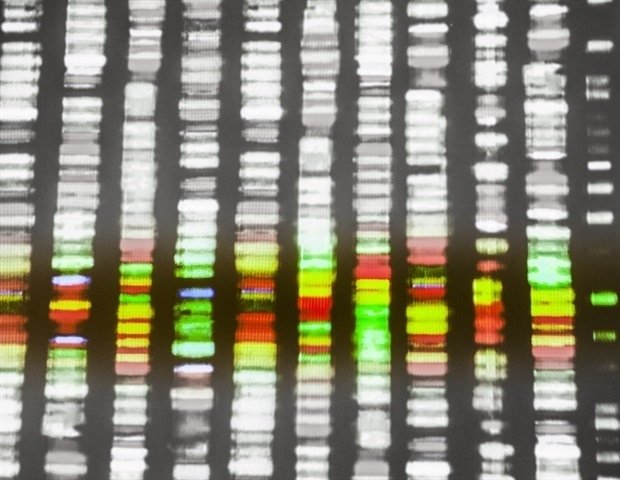
Researchers Are Developing Powerful Tools To Advance Microbiome Research
Share
Facebook Twitter LinkedIn Pinterest WhatsApp Email

The microscopic organisms that populate our bodies, soil, oceans and atmosphere play essential roles in human health and the planet’s ecosystems. However, even with modern DNA sequencing, understanding what these microbes are and how they are related to each other remains extremely difficult.

In a pair of new studies, researchers at Arizona State University are introducing powerful tools that make this work easier, more precise, and much more scalable. A tool improves the way scientists build microbial family trees. The other provides a software base used worldwide to analyze biological data.

Together, these advances strengthen the scientific foundations of microbiome research, disease surveillance, environmental monitoring, and emerging fields such as precision medicine.

Our team builds open source software tools because we believe that when everyone can access and extend scientific tools, the entire community benefits and discovery is accelerated.”


Qiyun Zhu, Arizona State University;

Zhu is a researcher in the Biodesign Center for Fundamental and Applied Microbiomics and an assistant professor in ASU’s School of Life Sciences. He is joined by ASU colleagues and international partners.

The first study, on improving the marker genes, appears in the journal Nature communications. The second study, describing an open source software library known as scikit-bio, appears in Nature Methods.

A family affair

Building detailed and accurate evolutionary trees is essential to understanding how microbes evolve and affect the world. Better evolutionary trees improve disease tracking and help scientists track how harmful microbes change over time. They also sharpen environmental research by showing how microbial communities respond to pollution or climate change. Clearer microbial identification also enhances studies of the gut microbiome and its role in health.

Unraveling how microbes are related starts with choosing the right marker genes – the marks in the DNA that trace their evolutionary history.

For many years, scientists relied on the same small set of traditional marker genes. But in the growing field of metagenomics, researchers are now working with millions of genomes, often directly from environmental samples. Metagenomics allows scientists to collect all the DNA in an environment and sequence it instantly, revealing entire hidden microbial communities.

These genomes are extremely valuable, but are often incomplete or uneven in quality. This makes it difficult to use a fixed set of marker genes and expect accurate evolutionary results.

To solve this, Zhu and his colleagues helped develop TMarSel (short for Tree-based Marker Selection). Instead of selecting genes by hand, TMarSel automatically searches thousands of possible gene families and selects the combination that creates the most reliable evolutionary tree. It evaluates each gene for how common it is, how informative it is, and how much it contributes to a stable, meaningful picture of microbial relationships.

The result is a flexible, data-driven way to create microbial trees that work well even for large and diverse groups of organisms—even when many genomes are only partially complete.

Scikit-bio: Ancestry.com for germs

Zhu is also the lead developer of scikit-bio, a massive open source software library. Scikit-bio gives scientists the tools they need to analyze massive biological datasets. It is particularly useful for studying microbiomes—communities of microbes that live in a specific environment, such as the human gut.

Biological data sets are unlike any other kind of data: they are extremely large, very sparse, and often contain thousands of interconnected features. Standard data analysis programs are not built for this level of fragmentation and complexity. Scikit-bio fills this gap by offering more than 500 functions for tasks such as:

  • Comparison of microbial communities.
  • Diversity calculation.
  • Transform composition elements.
  • Analysis of DNA, RNA and protein sequences.
  • Construction and modification of phylogenetic trees.
  • Preparing data for machine learning.

The project is community-driven, supported by more than 80 contributors, and maintained with rigorous testing and documentation. It has already been cited in tens of thousands of scientific papers across medicine, ecology, climate science and cancer biology. It has become an essential tool for researchers analyzing the microbiome and other large, data-rich areas of modern biology.

A new era in microbial research

As biological datasets grow, tools such as scikit-bio and TMarSel make large-scale research more reliable and reproducible.

The studies reinforce ASU’s expanding role at the intersection of biology and computing. Zhu’s work shows how combining evolutionary insight with advanced software engineering can produce tools used by scientists around the world.

As DNA sequencing continues to get faster and cheaper, scientists will uncover even more of the microbial universe. Tools like TMarSel and scikit-bio ensure that this deluge of data can be turned into real scientific knowledge.

Source:

Journal Reference:

Aton, M., et al. (2025). Scikit-bio: a fundamental Python library for analyzing biological ohmic data. Nature Methods. DOI:10.1038/s41592-025-02981-z. https://www.nature.com/articles/s41592-025-02981-z.

advance Developing microbiome powerful research Researchers tools
bhanuprakash.cg
healthtost
  • Website

Related Posts

Global childhood immunization rates stagnate despite slight recovery from pandemic

July 15, 2026

Weight loss and anti-inflammatory drugs combine to fight leukemia

July 14, 2026

Unreliable datasets shape clinical prediction models

July 14, 2026

Leave A Reply Cancel Reply

Don't Miss
News

Global childhood immunization rates stagnate despite slight recovery from pandemic

By healthtostJuly 15, 20260

In 2025, 90% of infants worldwide – or nearly 116 million – received at least…

Is it okay to be imperfect and still be happy? 6 Challenges

July 15, 2026

Sexual evolution: What 500 million years of life tell us about sex, gender and mating

July 15, 2026

I tried to hide my hemiparesis

July 15, 2026
Stay In Touch
  • Facebook
  • Twitter
  • Pinterest
  • Instagram
  • YouTube
  • Vimeo
TAGS
Baby benefits body brain cancer care Day Diet disease exercise finds Fitness food Guide health healthy heart Improve Life Loss Men mental Natural Nutrition Patients People Pregnancy research reveals risk routine sex sexual Skin Skincare study Therapy Tips Top Training Treatment ways weight women Workout
About Us
About Us

Welcome to HealthTost, your trusted source for breaking health news, expert insights, and wellness inspiration. At HealthTost, we are committed to delivering accurate, timely, and empowering information to help you make informed decisions about your health and well-being.

Latest Articles

Global childhood immunization rates stagnate despite slight recovery from pandemic

July 15, 2026

Is it okay to be imperfect and still be happy? 6 Challenges

July 15, 2026

Sexual evolution: What 500 million years of life tell us about sex, gender and mating

July 15, 2026
New Comments
    Facebook X (Twitter) Instagram Pinterest
    • About Us
    • Contact Us
    • Privacy Policy
    • Terms and Conditions
    • Disclaimer
    © 2026 HealthTost. All Rights Reserved.

    Type above and press Enter to search. Press Esc to cancel.