


Close Menu
Healthtost
  • News
  • Mental Health
  • Men’s Health
  • Women’s Health
  • Skin Care
  • Sexual Health
  • Pregnancy
  • Nutrition
  • Fitness
  • Recommended Essentials
What's Hot

Brain-Gut Health Initiative supports AI-assisted diagnosis of psychiatric disorders

April 25, 2026

Yeong Kim (Rian) – The Structural Elegance of Intellect and Honor

April 25, 2026

Researchers identify new genetic links to Hyperemesis Gravidarum

April 25, 2026
Facebook X (Twitter) Instagram
  • About Us
  • Contact Us
  • Privacy Policy
  • Terms and Conditions
  • Disclaimer
Facebook X (Twitter) Instagram
Healthtost
SUBSCRIBE
  • News

    Brain-Gut Health Initiative supports AI-assisted diagnosis of psychiatric disorders

    April 25, 2026

    Researchers uncover new mechanism linking metabolism, immunity and skeletal health

    April 25, 2026

    Genetic research identifies rare DNA changes that cause common heart valve damage

    April 24, 2026

    Air quality in infancy may fundamentally shape long-term immune development

    April 24, 2026

    The endoscopic procedure may prevent weight regain after stopping GLP-1

    April 23, 2026
  • Mental Health

    I hate hope: How to manage hope when you have treatment-resistant bipolar disorder

    April 19, 2026

    Rose Byrne is raw, magnetic and unfiltered as a woman in crisis

    April 18, 2026

    Can a single mother change her child’s surname in India?

    April 16, 2026

    Is it anxiety or OCD? 2 psychology experts explain the difference

    April 14, 2026

    Understanding the different types of treatment: C…

    April 10, 2026
  • Men’s Health

    45-Minute No-Equipment Home Workout (Full Body)

    April 23, 2026

    Study finds many UK adults want to avoid ultra-processed foods but can’t clearly define them

    April 21, 2026

    How can you get the best sleep?

    April 21, 2026

    The Crazy Hard Standards of the Hardest PE Program in History

    April 20, 2026

    Becoming revolutionaries in our time: Calling men to change the world for good

    April 20, 2026
  • Women’s Health

    Yeong Kim (Rian) – The Structural Elegance of Intellect and Honor

    April 25, 2026

    I felt ashamed of my dad’s illness

    April 25, 2026

    What are the different stages of puberty?

    April 24, 2026

    Understanding Hot Flashes – HealthyWomen

    April 24, 2026

    Because you are still inflamed

    April 22, 2026
  • Skin Care

    What it is and how to do it right – Lifeline Skin Care

    April 21, 2026

    Best Face Mask Set: What to Use for Your Skin Goals

    April 21, 2026

    Earth Day Activities: A Fun Guide to Plogging and More

    April 20, 2026

    Calm & Correct: The 4-in-1 color correcting treatment

    April 19, 2026

    How to Get Glowing Skin: Beauty Guide

    April 17, 2026
  • Sexual Health

    How accurate are herpes blood tests?

    April 22, 2026

    Understanding the Asexual Spectrum — Sexual Health Alliance

    April 21, 2026

    The importance of sex and intimacy in the elderly

    April 18, 2026

    Judicial reform is the only real way out of today’s political hell

    April 15, 2026

    Personal and Professional considerations between generations

    April 15, 2026
  • Pregnancy

    Researchers identify new genetic links to Hyperemesis Gravidarum

    April 25, 2026

    Loss of Appetite During Pregnancy: A Third Trimester Guide

    April 24, 2026

    Cameron Rodgers wants you to know you’re not the only one Googling “WTF is going on in my body” at 2 a.m.

    April 22, 2026

    A gentle space to navigate the becoming of motherhood

    April 21, 2026

    Transfer to birth center C-section, birth center VBAC and Surprise Footling Breech Transfer to home

    April 18, 2026
  • Nutrition

    Doing the work in the face of fear

    April 25, 2026

    Can the “dark shower” reduce stress and improve sleep?

    April 24, 2026

    High Fiber Smoothie Recipe • Kath Eats

    April 23, 2026

    Which potato is the most nutritious?

    April 22, 2026

    What Really Works (and What Doesn’t)

    April 22, 2026
  • Fitness

    4.24 Friday Faves – The Fitnessista

    April 25, 2026

    The workout we forgot (it’s time to bring it back 💪 )

    April 24, 2026

    Cardio or weightlifting? – Tony Gentilcore

    April 24, 2026

    7 super healthy ways to take care of yourself

    April 23, 2026

    Wake up with these symptoms? Your health may be at risk

    April 23, 2026
  • Recommended Essentials
Healthtost
Home»Mental Health»Primary care can play a key role in suicide prevention
Mental Health

Primary care can play a key role in suicide prevention

healthtostBy healthtostJanuary 1, 2025No Comments5 Mins Read
Facebook Twitter Pinterest LinkedIn Tumblr Reddit WhatsApp Email
Primary Care Can Play A Key Role In Suicide Prevention
Share
Facebook Twitter LinkedIn Pinterest WhatsApp Email

NIMH-funded study used universal screening, risk assessment and safety planning to reduce suicide attempts among adult primary care patients

December 30, 2024
• Research Highlights

Suicide is the leading cause of death in the United States and a major public health concern. Previous research has shown that identifying and helping people at risk of suicide during regular care visits can help prevent it. Primary care clinics are particularly important in this regard, as research has shown that beyond 40% of people who died by suicide seen in this setting the month before their deaths.

A recent study funded by the National Institute of Mental Health (NIMH) found that when primary care clinics added suicide drills to routine visits, suicide attempts decreased by 25% at 3 months after the visit. The findings highlight how important it can be for primary care clinics to take an active role in suicide prevention and help health systems integrate these practices into clinical care.

What did the researchers do in the study?

Primary care clinicians screen for depression during most care visits, and depression screeners often include questions about suicide risk. Before Research supported by NIMH found that screening for suicidal thoughts and behaviors followed by brief safety planning can reduce the risk of suicide attempt.

Zero Suicide aims to improve suicide care in health systems. Check it out refusal for information about the framework developers.

Researchers led by Julie Angerhofer Richards, Ph.D., MPH at the Kaiser Permanente Institute for Health Research in Washington, D.C. aimed to see if incorporating suicide care into routine adult primary care visits could prevent subsequent suicide attempts.

This study analyzed secondary data from a larger comprehensive study of National zero-suicide model . The Zero Suicide Comprehensive Approach is the first US program linked to a significant reduction in suicide among behavioral health patients. The research team previously tested this model in a separate NIMH-sponsored study in six health systems in the United States.

Before the intervention, providers provided care as usual, which did not include population-based suicide screening or follow-up. The 22 participating clinics were randomly assigned to begin providing suicide care at staggered dates (4 months apart) over a 2-year period. During the study, 333,593 patients had more than 1.5 million primary care visits.

Suicidality care consisted of:
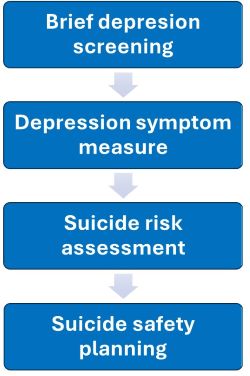
Brief Depression Screening to Depression Symptom Measurement for Suicide Risk Assessment to Suicide Safety Planning.

  • Depression Check: All patients completed a short two-question depression screening, followed by a longer depression symptom scale for those who scored positively on each question.
  • Depression Symptom Scale: Screening was followed by a longer depression symptom scale for patients who scored positively on each question.
  • Suicide Risk Assessment: Patients with self-harm or suicidal thoughts completed a measure of suicidal thoughts and behaviors.
  • Suicide Safety Planning: Patients who reported suicidal intent or plans in the past month were referred to designated care staff, including mental health social workers, for same-day suicide safety planning. Safety planning was a collaborative process between patients and providers that included identifying warning signs, documenting coping and support strategies, and creating safe environments for managing a suicidal crisis.

Three main strategies supported the intervention:

  • Skilled facilitators led trainings at each clinic and met with staff on an ongoing basis to provide support and resolve issues.
  • Clinical decision support, including pre-visit reminders and visit prompts, came from the clinics’ electronic medical record system.
  • Regular monitoring of medical record performance reported in clinician review and assessment rates.

Researchers compared clinics providing suicide care with clinics providing usual care in:

  • Rates of providers documenting suicide risk assessment and safety planning in the medical record within 2 weeks of an at-risk patient’s primary care visit
  • Rates of suicide attempt or death by suicide of patients in the 90 days following their primary care visit

What did the study results show?

Incorporating suicide care into routine adult primary care visits resulted in significantly higher rates of suicide risk screening, assessment, and collaborative safety planning. The intervention in turn led to a 25% reduction in suicide attempts in the 90 days following the primary care visit compared to usual care clinics. Together, the results demonstrate that incorporating suicide prevention practices into adult primary care results in more people being screened for suicidal thoughts and behaviors and fewer suicide attempts once they leave the clinic.

These findings support The NIMH priority for suicide prevention in health care settings with the ultimate goal of reducing the suicide rate in the USA. The study provides critical next steps for providers and care teams to respond to suicidal concerns during clinical practice, helping to save lives in the process.

Reference

Richards, JA, Cruz, M., Stewart, C., Lee, AK, Ryan, TC, Ahmedani, BK, & Simon, GE (2024). Effectiveness of integrating suicide care into primary care: Secondary analysis of a cluster-randomized implementation trial. Annals of Internal Medicine, 177(11), 1471–1482. https://doi.org/10.7326/M24-0024

Financing

If you or someone you know is struggling or having suicidal thoughts, call or text the 988 Suicide and Crisis Lifeline at 988 or chat at 988lifeline.org . In life-threatening situations, call 911.

For more information on suicide prevention, see:

Refusal

The Zero Suicide Framework was developed at the Education Development Center (EDC) through the federally funded Suicide Prevention Resource Center and the National Suicide Prevention Lifeline. The Zero Suicide brand and information are freely available on Zero Suicide ToolboxSM managed by EDC. No official endorsement by EDC is intended or should be inferred.

care key play Prevention primary Role Suicide
bhanuprakash.cg
healthtost
  • Website

Related Posts

7 super healthy ways to take care of yourself

April 23, 2026

What it is and how to do it right – Lifeline Skin Care

April 21, 2026

I hate hope: How to manage hope when you have treatment-resistant bipolar disorder

April 19, 2026

Leave A Reply Cancel Reply

Don't Miss
News

Brain-Gut Health Initiative supports AI-assisted diagnosis of psychiatric disorders

By healthtostApril 25, 20260

Psychiatric disorders affect millions worldwide, but their diagnosis is still based on clinical observation rather…

Yeong Kim (Rian) – The Structural Elegance of Intellect and Honor

April 25, 2026

Researchers identify new genetic links to Hyperemesis Gravidarum

April 25, 2026

Doing the work in the face of fear

April 25, 2026
Stay In Touch
  • Facebook
  • Twitter
  • Pinterest
  • Instagram
  • YouTube
  • Vimeo
TAGS
Baby benefits body brain cancer care Day Diet disease exercise finds Fitness food Guide health healthy heart Improve Life Loss Men mental Natural Nutrition Patients Pregnancy research reveals risk routine sex sexual Skin Skincare study Therapy Tips Top Training Treatment Understanding ways weight women Workout
About Us
About Us

Welcome to HealthTost, your trusted source for breaking health news, expert insights, and wellness inspiration. At HealthTost, we are committed to delivering accurate, timely, and empowering information to help you make informed decisions about your health and well-being.

Latest Articles

Brain-Gut Health Initiative supports AI-assisted diagnosis of psychiatric disorders

April 25, 2026

Yeong Kim (Rian) – The Structural Elegance of Intellect and Honor

April 25, 2026

Researchers identify new genetic links to Hyperemesis Gravidarum

April 25, 2026
New Comments
    Facebook X (Twitter) Instagram Pinterest
    • About Us
    • Contact Us
    • Privacy Policy
    • Terms and Conditions
    • Disclaimer
    © 2026 HealthTost. All Rights Reserved.

    Type above and press Enter to search. Press Esc to cancel.