


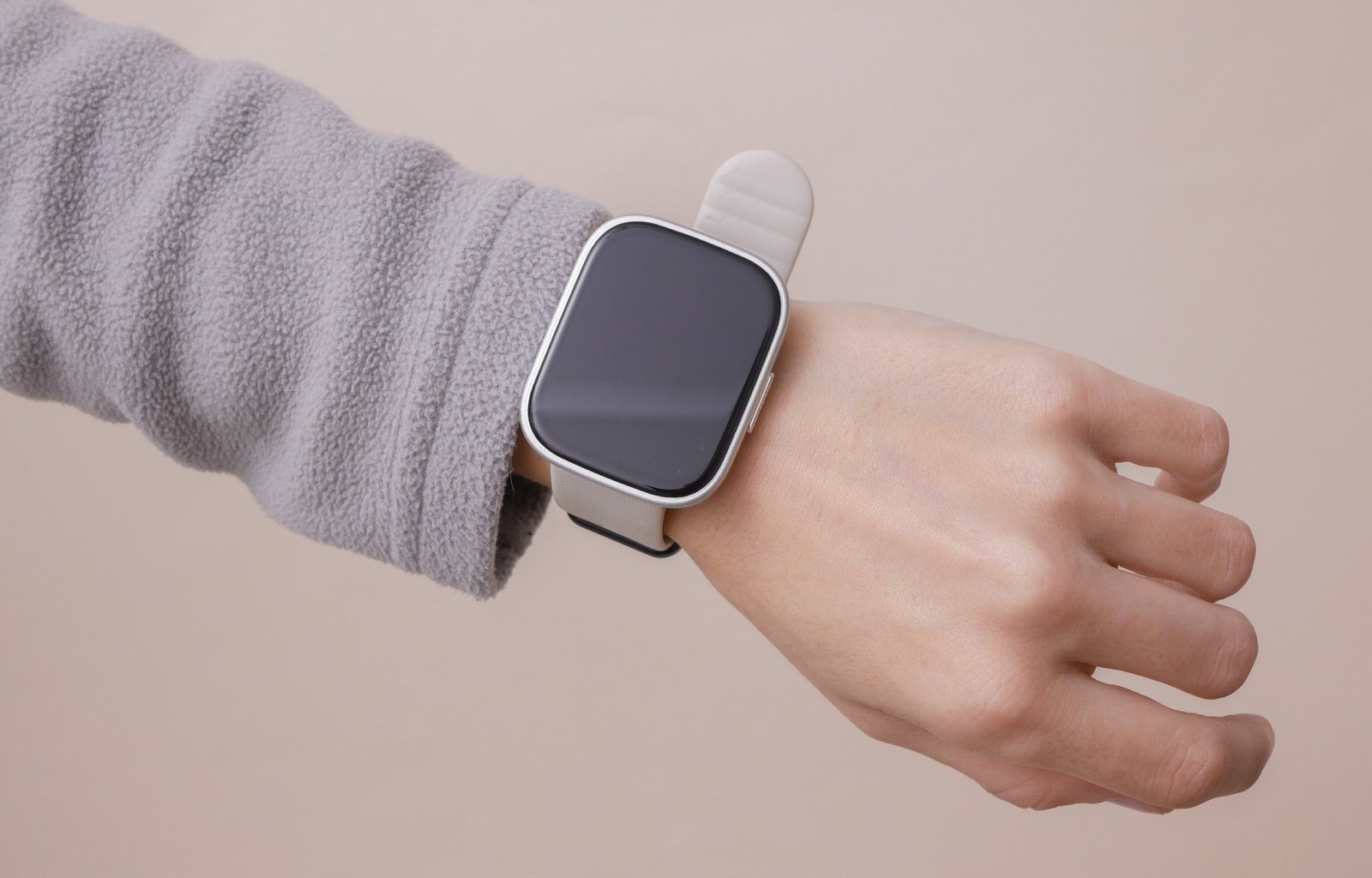
An FDA-cleared smartwatch app detected nearly every tonic-clonic seizure in a Phase III trial while producing only one false alarm every 12 days, potentially addressing one of the biggest challenges in wearable epilepsy monitoring.
Study: Phase III trial of EpiWatch for tonic-clonic seizure detection in children and adults. Image credit: VI-stock studio/Shutterstock.com
A Phase III clinical trial evaluating the efficacy of the smartwatch-based EpiWatch app concluded that it could detect tonic-clonic seizures (TCS) relatively early and had a low false alarm rate (FAR). However, its real-world performance remains to be tested. The study was published in the journal Neurology Open Access.
Why tonic-clonic seizures increase the risk of SUDEP
Tonic-clonic seizures (TCS), which include both generalized and focal to bilateral seizures, are among the most dangerous forms of epilepsy. Beyond the immediate risks of injury and prolonged seizures, they are strongly associated with sudden unexpected death in epilepsy (SUDEP), particularly in people who live or sleep alone. After a seizure, patients often experience a period of immobility, muscle relaxation, and respiratory dysfunction, including, in some cases, terminal apnea, which is thought to contribute to this increased risk.
EpiWatch brings seizure detection to consumer wearables
The threefold lower risk of SUDEP among TCS patients who share a bedroom with someone else suggests the benefit of early detection and early intervention. Accordingly, the International League Against Epilepsy (ILAE) recommends the use of mobile devices to detect TCS and generate alerts.
However, given the stigma associated with epilepsy, devices meant to be worn only by epilepsy patients are less popular. Additionally, high FARs (often exceeding actual alarms) can cause caregiver fatigue. Given this need, researchers at Johns Hopkins developed the EpiWatch app, which uses a seizure detection algorithm in the widely used Apple Watch to detect TCS in children and adults with epilepsy.
The application was licensed to EpiWatch, Inc., which funded the clinical trial. Notably, the authors note that this is the first Apple Watch seizure monitoring app to undergo a Phase III clinical trial.
EpiWatch, Inc., was not involved in the study, and the Johns Hopkins researchers participated under appropriate precautions to mitigate potential conflicts of interest. The paper notes that EpiWatch was developed at Johns Hopkins, two of the study’s authors are shareholders in the company, and the trial incorporated blinding and conflict management procedures to reduce potential bias. Based on this testing, the app received 510(k) clearance from the Food and Drug Administration (FDA) for marketing as EpiWatch – Seizure Monitor, a prescription app available in the Apple App Store.
Phase III trial tests smartwatch seizure detection
The current trial was a prospective, multicenter Phase III study designed to assess the diagnostic accuracy of the app. It involved six epilepsy monitoring units (EMUs) over a two-year period. The trial included 242 participants, either children aged 5 years or older or adults aged 22 years or older (mean age 22.7 years), with a history of TCS or clinically likely to have TCS. All participants were monitored by video and electroencephalography (EEG).
The objective was to evaluate the reliability of TCS detection by the wearable, using kinetic and physiological signals. The app can generate alerts for caregivers when seizures are detected, although alerts were disabled during the trial to maintain blinding. App detections were compared to clinically confirmed TCS events by an independent panel of experts.
EpiWatch detects almost every tonic-clonic seizure
About 34% of participants had seizures with motor activity during the follow-up period. Thirty-seven participants had TCS, with 27 of them experiencing only one seizure. Of the TCS, 19 occurred during sleep.
The researchers found that EpiWatch detected 46 of 47 TCS events, thus showing a high sensitivity of 98%. For the one seizure missed by the EpiWatch, the caregiver had restrained the hand of the participant wearing the watch. The adjusted percent positive agreement (PPA) was 94%, indicating a high degree of agreement between the detected TCS and the clinically confirmed TCS used as reference.
False alarms only occur once every 12 days
Out of a total of 16,189 hours of monitoring, EpiWatch produced 56 false alarms, which equates to one every 12 days or so. According to the authors, this is about one-tenth the false alarm rate reported for other published prospective TCS monitors.
About 38% of false alarms were motor convulsions that did not meet TCS criteria, and the rest came from movements during video games or repetitive movements. Excluding these non-TCS seizure-related detections, the FAR for non-seizure-related detections is one false alarm every 18.7 days.
The authors estimated that in a population experiencing a median of three TCS per month, the positive predictive value (PPV) would be approximately 0.55 for TCS and even higher for any seizure. This means that true seizures are expected to outnumber false alarms. This reduces the risk of caregiver fatigue, where frequent detections are ignored. FAR remained consistently low across all age groups and did not vary by gender or race, unlike other wearables, which perform better in adults.
Seizures are detected within half a minute
The median delay of TCS detection (TCS detection time) was 31.5 seconds after clinical onset, allowing relatively rapid notification of the caregiver. This is comparable to that of other wearable devices, well within the average duration of a TCS. Equally important, it falls well within the recommendation for crisis detection latency within one minute.
Every night a tonic-clonic seizure was detected
All TCS occurring during sleep were successfully detected. All false alarms during sleep were associated with seizure activity. This indicates that the system may work particularly well for reliable seizure detection during nocturnal sleep, especially since then No normal sleep behavior triggered a false alarm during the study.
Other advantages
Integrating EpiWatch into the Apple Watch is likely to appeal to epilepsy patients because it is not a disease-specific device and requires no additional training. It is compatible with older or refurbished Apple Watch models, according to the authors, potentially reducing cost barriers to adoption.
Unrelated benefits include the Apple Watch’s ability to host software that could map seizure frequency and patterns, medication logs, seizure triggers, and other seizure-related illnesses. However, caregivers must have Wi-Fi access or a mobile phone to receive notifications. Like any wearable, the effectiveness of the EpiWatch depends on the patient keeping it charged and wearing it.
Real-world performance still needs validation
A key limitation of this test is the controlled EMU environment, which may differ significantly from actual usage conditions. Real data on the risk of SUDEP after EpiWatch use would require large, diverse real-world studies with long follow-up periods. Furthermore, the study only looked at TCS in people aged 5 years and older, limiting its generalizability.
Tracking smartwatches could boost epilepsy care
The researchers emphasize that wearables and apps do not replace clinical assessment or standard epilepsy management. However, they could be a valuable adjunct to epilepsy care, especially for high-risk patients who need continuous monitoring, supporting earlier intervention during seizures. Long-term real-world studies are needed to determine how performance translates outside of the EMU setting.
