

Close Menu
Healthtost
  • News
  • Mental Health
  • Men’s Health
  • Women’s Health
  • Skin Care
  • Sexual Health
  • Pregnancy
  • Nutrition
  • Fitness
  • Recommended Essentials
What's Hot

Blue LED lights help chemists create complex drug molecules

July 12, 2026

How can you be tired but wired? Blame it on your stone age brain

July 12, 2026

15 No-Cook Dinners for Kids (Because It’s Too Hot to Turn on the Oven)

July 12, 2026
Facebook X (Twitter) Instagram
  • About Us
  • Contact Us
  • Privacy Policy
  • Terms and Conditions
  • Disclaimer
Facebook X (Twitter) Instagram
Healthtost
SUBSCRIBE
  • News

    Blue LED lights help chemists create complex drug molecules

    July 12, 2026

    Harvard University hosts the world’s largest conference dedicated to longevity biotechnology

    July 12, 2026

    Comprehensive insurance-supported oncology symptom management program benefits cancer patients

    July 11, 2026

    Azenta announces the completion of the sale of B Medical Systems to Thelema Sa rl. Whitestone Group acquires 40% stake in Thelema Sa rl, a special purpose vehicle (SPV) established to own B Medical Systems

    July 11, 2026

    Specialized therapies offer a new approach to regenerative medicine

    July 10, 2026
  • Mental Health

    How can you be tired but wired? Blame it on your stone age brain

    July 12, 2026

    Almost 20% of new mums have anxiety or depression, but a promising psychedelic treatment is on the horizon

    July 7, 2026

    How can ART help us improve our mental health? With 3 Ways

    July 5, 2026

    How much do friends affect the mental health of teenagers? What a new study can (and can’t) tell us

    July 3, 2026

    What happens in your blood when you are stressed? We put it to the test

    June 28, 2026
  • Men’s Health

    Low testosterone or just stress? How to tell the difference

    July 11, 2026

    Gut-friendly diet linked to lower risk of coronary heart disease mortality

    July 9, 2026

    Men don’t just avoid their health. Many lose themselves.

    July 8, 2026

    The Crazy Hard Standards of the Hardest PE Program in History

    July 8, 2026

    Why our relationships are becoming more dishonest and what we can do about it

    July 7, 2026
  • Women’s Health

    Menopause and Your Microbiome: How Gut Health Shapes Weight, Mood, and Hormones

    July 11, 2026

    They heard us. Now will they listen?

    July 11, 2026

    Taite Heller on Why Barre Became a Top-5 Fitness Trend

    July 8, 2026

    Sunscreen TikTok convinces young people

    July 7, 2026

    Biology, Myths and Real Care

    July 7, 2026
  • Skin Care

    How our natural hair care achieves salon-level results without silicones

    July 11, 2026

    Coconut Allergy and Skin Care: 20 Questions Finally Answered by a Pharmacist

    July 11, 2026

    New Sunscreen Ingredient: Is This The SPF Upgrade We’ve Been Waiting For?

    July 9, 2026

    How to achieve the perfect tan

    July 8, 2026

    How I did it: I plump the skin without fillers

    July 6, 2026
  • Sexual Health

    Fildena 150 Benefits | Effective ED & Sexual Performance Treatment

    July 11, 2026

    Painful sex after menopause: When is it time to seek treatment?

    July 11, 2026

    Emotional capitalism and artificial intimacy

    July 10, 2026

    Why report e-6929 matters in Canada — Sexual Health Research Lab

    July 9, 2026

    Complete Career Guide — Sexual Health Alliance

    July 8, 2026
  • Pregnancy

    Calf Raises During Pregnancy: Step-by-Step Guide and Benefits

    July 8, 2026

    Tri-Tri Triplet Pregnancy with Vaginal Birth Story – The Birth Hour Triplet Pregnancy and Vaginal Birth Story with Ashlie Holladay

    July 7, 2026

    Common pregnancy drugs linked to higher rates of autism diagnosis in large study

    July 6, 2026

    Monsoon Infections During Pregnancy: Safety Tips for Expectant Moms

    July 5, 2026

    How to be the support she really needs

    July 4, 2026
  • Nutrition

    15 No-Cook Dinners for Kids (Because It’s Too Hot to Turn on the Oven)

    July 12, 2026

    30 Minute Chicken Pesto Pasta (Dietist Approved)

    July 11, 2026

    5 Easy High Fiber Bowl Recipes

    July 8, 2026

    Salmon Teriyaki Recipe (Ridiculously Easy!) • Kath Eats

    July 8, 2026

    Can exercise counteract a high-fat meal?

    July 6, 2026
  • Fitness

    Meet the Belle Vitale™ Supplement System: Two Formulas. A comprehensive approach to hormone health.

    July 11, 2026

    where we ate in Tokyo (and gluten-free options!)

    July 9, 2026

    Using External Signaling to Improve Linear Acceleration – Tony Gentilcore

    July 8, 2026

    5 Simple Screen Changes That Can Improve Sleep and Focus

    July 7, 2026

    How to prevent muscle loss while losing weight

    July 5, 2026
  • Recommended Essentials
Healthtost
Home»Mental Health»How can you be tired but wired? Blame it on your stone age brain
Mental Health

How can you be tired but wired? Blame it on your stone age brain

healthtostBy healthtostJuly 12, 2026No Comments5 Mins Read
Facebook Twitter Pinterest LinkedIn Tumblr Reddit WhatsApp Email
How Can You Be Tired But Wired? Blame It On
Share
Facebook Twitter LinkedIn Pinterest WhatsApp Email

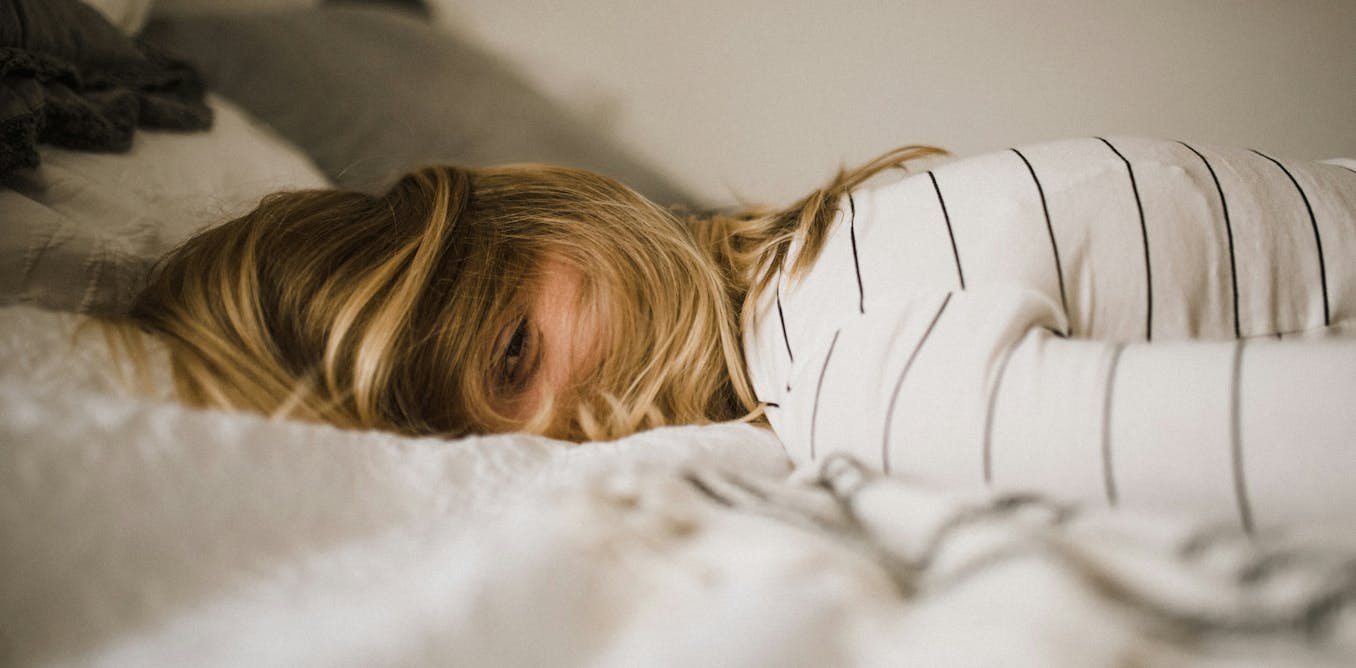
The clock reads 2:13 am. You are exhausted. Your eyes hurt, your body feels heavy, and the alarm has already started going off during the night, yet your brain refuses to let go. Instead, thoughts arrive in waves. Did you send this email? What if you forgot something important? Maybe now is also the perfect time for your brain to replay a conversation from 2017 with forensic precision.

Many people recognize this frustrating state of being “wired but tired” – the paradoxical feeling of being physically exhausted but mentally unable to switch off. Certainly fatigue should automatically induce sleep, but the brain does not fall asleep simply because the body is tired. In fact, under stress, exhaustion and insomnia often occur together. Part of the reason lies in the biology of survival.

The human stress response evolved to deal with immediate physical threats. For most of human history, danger tended to be extreme and short-lived—a nearby predator, an environmental hazard, or a conflict with another human group. In those moments, the brain’s priority was not rest but survival.

When the brain detects a threat, an area called the amygdala initiates the body’s classic fight-or-flight response. Stress hormones, including adrenaline and cortisol, are released. Heart rate increases, breathing quickens and attention sharpens. Energy is diverted from long-term maintenance work to immediate action.

This answer is extremely useful – if you are trying to escape from a tiger with teeth. It’s much less helpful when the “threat” is overflowing inflows or mounting financial pressure.

Modern stressors are psychologically powerful but biologically strange. Unlike predators, they rarely resolve quickly. The emails keep coming. Work follows us home via smartphones and laptops. Social media creates a constant stream of social comparison and low-level vigilance. Even free time has become strangely porous, interrupted by notifications, messages and often the expectation of permanent availability.

The result is that the parts of the brain responsible for keeping us alert can remain partially activated for long periods of time. This matters because sleep is not simply the absence of wakefulness. You need the brain to fall asleep actively reduce alertness. A network of arousal centers in the brainstem, hypothalamus, and forebrain keeps us normally awake and alert during the day. In order to transition to sleep, these systems must quiet down.

Under long-term stress, however, the brain can become stuck in a state of hyperarousal. Even when the body is exhausted, the brain continues to scan, predict and rehearse. From an evolutionary perspective, this makes a certain kind of sense. If the environment feels threatening or uncertain, going completely offline may not seem safe.

One reason this situation is so unpleasant is that physical exhaustion and mental arousal are controlled by overlapping but partially separate systems. Your muscles may be in desperate need of rest while your brain continues to generate stress alertness. The result is the strange mismatch that many people know well, the tired body and racing thoughts.

Cortisol also plays an important role. Under normal circumstances, cortisol follows a daily rhythm. Levels increase in the morning to promote alertness and gradually decrease towards night. Chronic stress can disrupt this patternleaving the body activated later in the evening.

Some studies suggest that people with insomnia show increased metabolic and neurological activity even when they are trying to sleep – almost as if the brain is idling too high. Modern life can amplify this problem in ways our nervous systems did not evolve to handle.

Chronic stress disrupts normal cortisol rhythms.
Miljan Zivkovic/Shutterstock.com

Because the modern world makes it worse

Artificial light suppresses melatoninthe hormone that helps regulate sleep time. Smartphones provide endless cognitive stimulation right when the brain needs to shut down. Doomscrolling combines emotional stimulation, uncertainty and novelty – three things that human attention systems find almost impossible to ignore.

Then there is rumination: the mental repetition of worries and problems over and over again. Humans possess a remarkable ability to mentally simulate the future and revisit the past. This ability helps us plan, learn and avoid danger. But it also means that the brain can continue to produce stress responses long after any immediate threat has passed.

The cruel irony is that the more exhausted we become, the more difficult emotional regulation often becomes. Sleep deprivation itself increases the reactivity of the amygdala, while reducing the moderating effect of the prefrontal cortex—the part of the brain involved in rational control and perspective-taking.

A tired brain becomes more emotionally reactive, which can make worries feel even stronger at night. In other words, being too tired can make the brain less able to calm down.

This explains why “just relax” is usually terrible advice for insomniacs. Hyperarousal is not simply a failure of will. It is a deeply biological state shaped by stress systems, hormones, attentional networks, and learned vigilance patterns. This does not mean that the situation is hopeless.

Sleep researchers often emphasize that rest and safety are closely linked in the brain. Consistent routines, reduced evening arousal, exercise, daylight exposure, and limiting late-night screen use can all help reinforce signals that the night is a time of recovery rather than wakefulness. Cognitive behavioral therapy for insomnia it has also been shown to be highly effective, in part because it targets the cycle of stress and insomnia itself.

Perhaps the most important point is broader. Feeling “wired but tired” is not evidence that your body is not properly rested. It’s often evidence that the brain has become very good at staying alert in a digital world that really never stops.

age blame brain stone tired wired
bhanuprakash.cg
healthtost
  • Website

Related Posts

UCSF and Samsung launch remote study of aging brain health

July 9, 2026

Almost 20% of new mums have anxiety or depression, but a promising psychedelic treatment is on the horizon

July 7, 2026

How can ART help us improve our mental health? With 3 Ways

July 5, 2026

Leave A Reply Cancel Reply

Don't Miss
News

Blue LED lights help chemists create complex drug molecules

By healthtostJuly 12, 20260

In drug discovery, rapidly building complex molecules is the name of the game. Chemists want…

How can you be tired but wired? Blame it on your stone age brain

July 12, 2026

15 No-Cook Dinners for Kids (Because It’s Too Hot to Turn on the Oven)

July 12, 2026

Harvard University hosts the world’s largest conference dedicated to longevity biotechnology

July 12, 2026
Stay In Touch
  • Facebook
  • Twitter
  • Pinterest
  • Instagram
  • YouTube
  • Vimeo
TAGS
Baby benefits body brain cancer care Day Diet disease exercise finds Fitness food Guide health healthy heart Improve Life Loss Men mental Natural Nutrition Patients People Pregnancy research reveals risk routine sex sexual Skin Skincare study Therapy Tips Top Training Treatment ways weight women Workout
About Us
About Us

Welcome to HealthTost, your trusted source for breaking health news, expert insights, and wellness inspiration. At HealthTost, we are committed to delivering accurate, timely, and empowering information to help you make informed decisions about your health and well-being.

Latest Articles

Blue LED lights help chemists create complex drug molecules

July 12, 2026

How can you be tired but wired? Blame it on your stone age brain

July 12, 2026

15 No-Cook Dinners for Kids (Because It’s Too Hot to Turn on the Oven)

July 12, 2026
New Comments
    Facebook X (Twitter) Instagram Pinterest
    • About Us
    • Contact Us
    • Privacy Policy
    • Terms and Conditions
    • Disclaimer
    © 2026 HealthTost. All Rights Reserved.

    Type above and press Enter to search. Press Esc to cancel.