


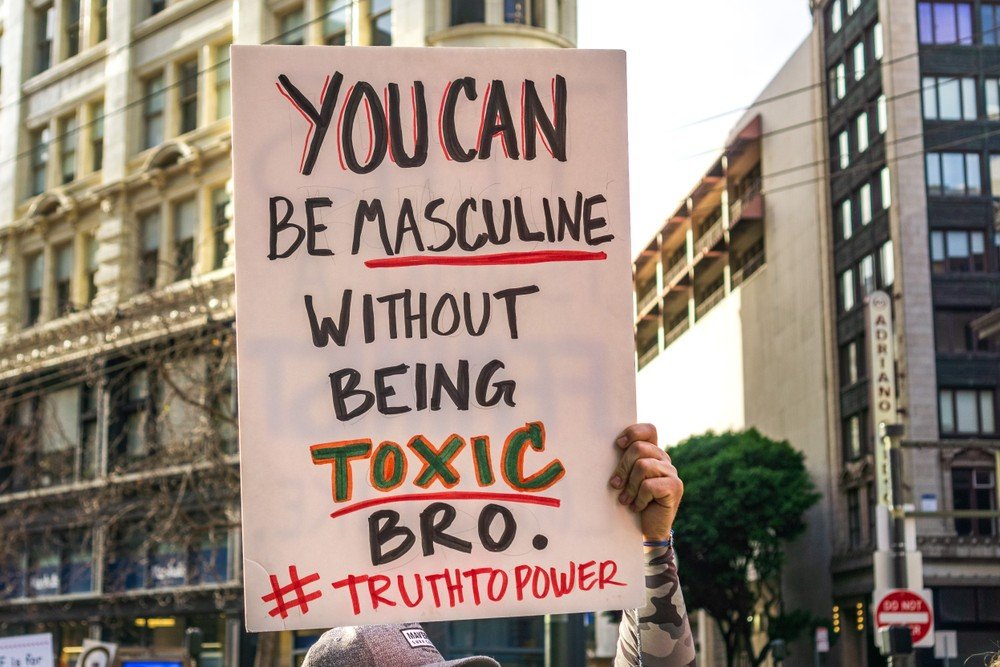
The toxic manosphere is harming girls and boys and should be treated as a public health risk, experts urge.
The rise of online misogyny threatens decades of progress for women and girls — while also benefiting at the expense of boys’ health.
Three of the world’s leading authorities on gender justice and global health have warned that the manosphere has become so toxic and unsafe that it is putting public health at risk for both boys and girls, with harmful effects ranging from violence and abuse to body dysmorphia and other serious mental health harms, including depression and anxiety.
The rise of online misogyny, facilitated by social media and artificial intelligence, is intensifying existing crises of gender inequality, says Laura Bates, founder of the Everyday Sexism Project and bestselling author of The New Age of Sexism. “What we’re seeing is a pandemic and it’s flying under the radar. We’re only now realizing the extent of the damage after a generation of boys has been shaped by these systems.”
Feminist sociologist and masculinity expert Raewyn Connell, Emeritus Professor at the University of Sydney, says the manosphere is a platform for exploiting vulnerable young women and men to make money. “The manosphere isn’t just an online subculture, it’s a business built on anger, sexism, misogyny and false promises of belonging and well-being – and the damage is mounting. It’s a business whose market is boys and young men who are struggling to find their way in life.”
Both women were guest speakers at In Dialogue: Gender justice in the age of the manosphere, the first in a series of public lectures and discussions hosted by the independent thinktank Global 50/50in Cambridge.
“If extreme online misogyny is categorized as a public health risk, we could move away from a focus on punishment to address prevention through regulation and interventions in our health and education systems and workplaces,” said Global 50/50 co-founder Professor Sarah Hawkes, who moderated the discussion.
“We are seeing the creation of an incredibly toxic environment for girls and women who go online and for boys and young men who are exposed to risks such as body dysmorphia and other mental health harms,” said Professor Hawkes, who is also co-chair of the Lancet Commission on Gender and Global Health.
Hawks identified “a broad congregation of influencers, incels, pick-up artists and look-maxxers” who “represent a wide range of views on misogyny, selling young men enticing narratives while positioning women as the primary enemy and leading to a loss of confidence in positive human relationships.”
“Addressing manosphere as a public health risk will unlock coordinated action between governments, regulators, schools and technology companies and shift the focus from response to prevention.”
The rate at which children, not just young people, are being exposed to extreme content online — which is algorithmically promoted and commercially rewarded — is unprecedented. It takes an average of just 23 minutes from the time a teen signs up for a TikTok account to the first piece of extreme misogynist content being promoted on their timeline, Bates explained. “The manosphere is a purposefully facilitated and targeted algorithmic bombardment based solely on profit that creates these perfect radicalization machines, and they are subtle and effective,” he said.
Add artificial intelligence to this toxic mix, and the harm to women and girls increases dramatically, Bates added. “Millions of women are being targeted by artificial intelligence tools deliberately designed to facilitate abuse on a mass scale and threaten women out of public spaces, out of the public eye, out of journalism, out of activism, out of politics.”
Not only that, but AI systems used in public services such as healthcare and in the workplace reproduce existing sexist and racist patterns because they are trained on biased data – a topic Bates explored at length in her latest book.
Getting to the root of the issue, the panel agreed that anti-gender movements online do not arise by accident, but are part of a wider far-right political strategy that exploits vulnerable people, including children, while undermining the promotion of equality in health and across public life.
“What’s really frustrating is how effective the ideologies and voices of the manosphere have been in convincing people that gender equality is a zero-sum game; that if we benefit women, we’re taking something away from men,” Bates said. “The clearest example is in men’s mental health and especially the male suicide rate, because often online you will see these problems being weaponized by men who have no interest in finding solutions that support men and boys, but every interest in using these statistics to silence the voices of feminists.”
Global 50/50 joined both speakers in calling for tighter regulation of global technology companies and security by design, as well as better education in schools and at home, as part of a whole-of-society response based on the work of positive initiatives.
“Addressing manosphere as a public health risk will unlock concerted action between governments, regulators, schools and technology companies and shift the focus from response to prevention,” Professor Hawkes said.
“I think what’s far more effective than banning technology is giving girls and boys the tools and the confidence to recognize what they see when they see it,” Bates suggested. “And there are so many ways to give your kids these little shots that people might not think about. If you have a boy under 14, maybe the most effective thing you can do to protect him from the manosphere isn’t about smartphones or algorithms or parental controls. Friendships.”

