


A new LMU study shows how proteins function reliably even without a fixed three-dimensional structure – and the critical importance not only of short sequence motifs, but also of chemical features.
Many proteins do not consist only of stable folded components. They also contain flexible parts known as intrinsically disordered regions (IDRs), which do not form any stable three-dimensional structure and yet perform essential tasks in the cell.
Such disordered protein regions constitute approximately one third of all protein structures. Recently, they have received much attention as it has become clear that they are involved in a particularly diverse range of interactions, are able to form biomolecular condensates, and are involved in almost all major cellular functions.”
Professor Philipp Korber, group leader in the Chair of Molecular Biology at LMU’s Biomedical Center
These disordered regions have long puzzled researchers: Their linear amino acid sequences are often difficult to maintain during evolution, even though their function remains the same. A new study, which was recently published in the journal Nature Cell Biologyresolves this apparent contradiction. According to the authors, the varying combinations of two properties are decisive: the linear amino acid sequence of the small stretches (motifs) and the chemical characteristics of the larger region as a whole.
Flexible departments with a critical role
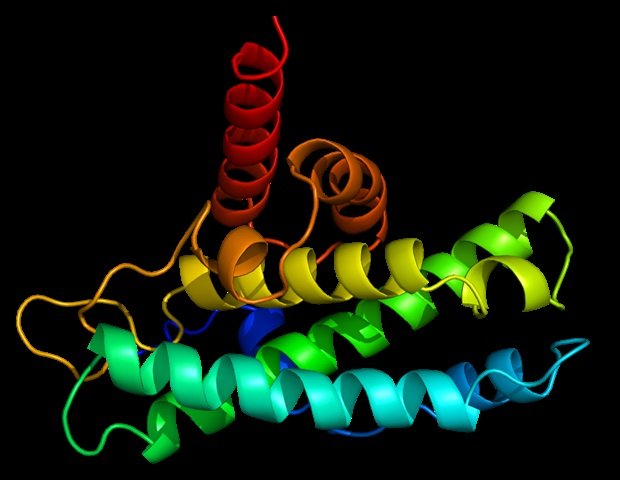
For their work, the researchers from LMU Munich, the Technical University of Munich (TUM), Helmholtz Munich and Washington University in St. Louis investigated a key disordered protein segment of the yeast protein Abf1. Using this easy-to-manipulate model system, they systematically experimented with more than 150 Abf1 variants to see which modified and, in some cases, newly designed sequences could replace the function of the native segment. Their results showed that short binding motifs play an important role—that is, short stretches of linear sequence that allow very specific molecular contacts. Another important contribution, they found, comes from the overall chemical context, such as the amount of negative charges and water-soluble or poorly soluble amino acids within the disordered region. It is the interplay of these two aspects – the linear patterns and the larger chemical context – that determines whether the protein domain is functional.
“Intrinsically disordered regions seem counterintuitive at first glance: they are biologically very important, yet often poorly explained by classical sequence comparisons,” says Korber, who led the study with Alex Holehouse, a professor of biochemistry and molecular biophysics at the University of Washington. “Our results show that their function does not depend on a conserved linear pattern, but on the variable interplay of different ratios of linear sequence patterns and physicochemical characteristics.”
When chemistry balances an absent pattern
Particularly surprising was a finding that is relevant beyond this particular model system: a binding motif that is essential in the naturally evolved protein domain can become essential under certain conditions. This is because the chemical characteristics of the sequencing environment can be modified to compensate for the loss of function. Conversely, it is not enough to simply maintain the rough composition of a region when the critical pattern is destroyed or the chemical context is unfavorable. The study thus makes clear that IDRs operate in a kind of functional landscape in which various molecular solutions can lead to the same outcome.
“This greatly expands the space of possible functional sequences,” notes Korber. “The evolution of intrinsically disordered regions can clearly use different molecular strategies and maintain the same biological function. This helps us understand why these protein regions can be so variable over the course of evolution without losing their function.”
New perspectives for evolutionary biology and medicine
The work thus provides a general framework for better understanding the evolution of disordered protein domains. At the same time, it opens up new perspectives for biomedical research. Many disease-related changes affect such flexible protein segments, the significance of which has been difficult to measure until now. If their function emerges not just from an exact sequence, but from an interplay of motifs and chemical features, this could help researchers better interpret mutations in the future and design synthetic proteins in a more targeted way.
Source:
Journal Reference:
