


Key information from Holistic Health Week 2026
When Dr. Will Cole started the world’s first functional medicine telehealth practice, the term “telehealth” didn’t even exist. He called it “virtual functional medicine practice” for lack of better language. That was in 2009. A decade later, when the pandemic forced all clinicians online overnight, Dr. Cole and his team were already years into the infrastructure. They spent 2020 helping other practitioners understand what they had already accomplished the hard way.
Today, Dr. Cole is a New York Times bestselling author of four books including Intuitive fasting, Gut feelings, Ketotarianand The spectrum of inflammation. It hosts The art of being well podcast. He has been named one of the nation’s top 50 functional and integrative medicine physicians. And she spends over 10 hours a day working with clients managing autoimmune diseases, hormone imbalances, digestive disorders, and the full range of chronic problems that conventional medicine struggles to solve.
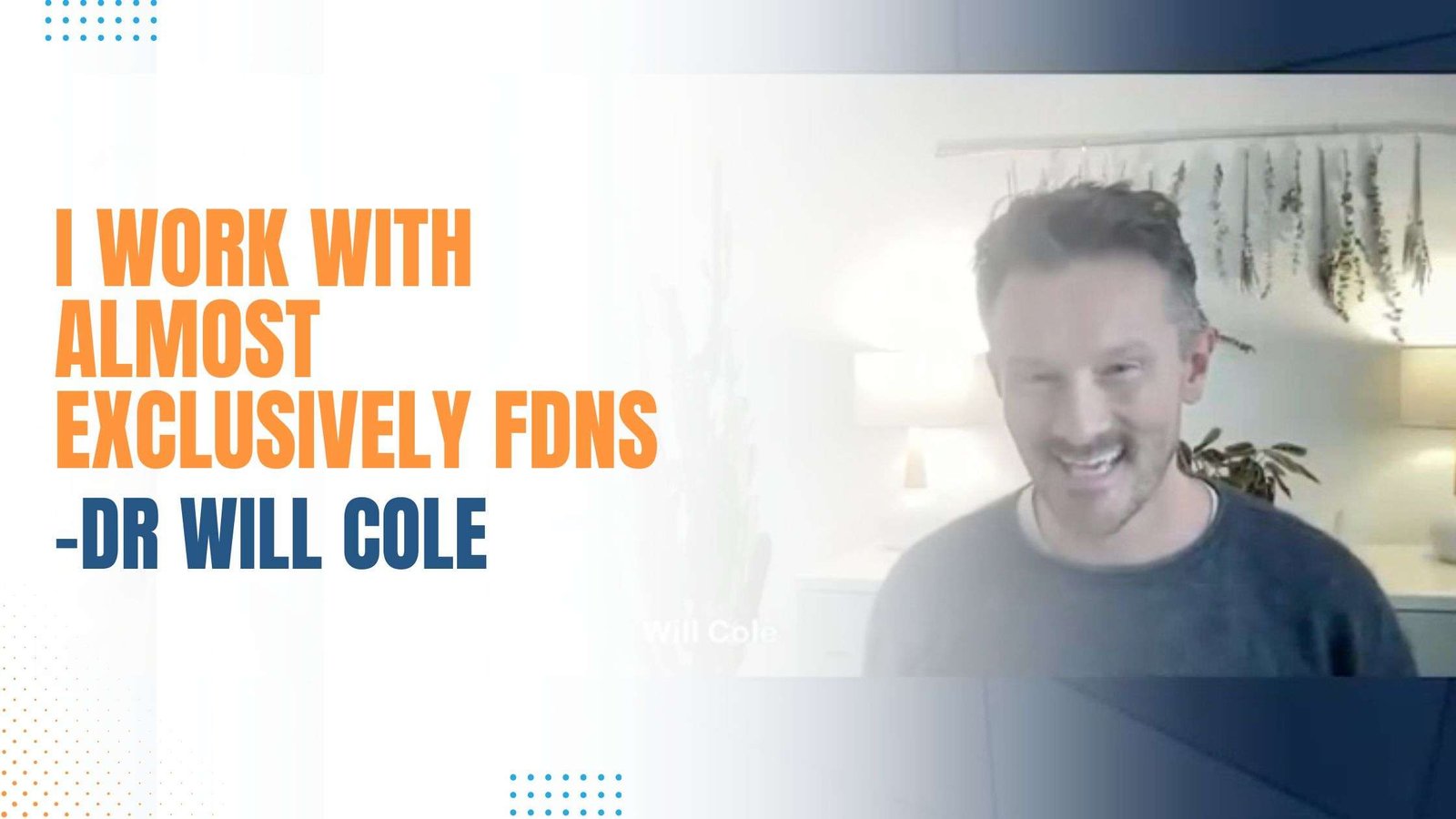
He was also a keynote speaker at FDN Holistic Health Week 2026 and his session included one of the most direct endorsements of FDN methodology we have received outside of our alumni network.
“I work almost exclusively with FDN”
When asked why he staffs his telehealth clinic with FDN Practitioners, Dr. Cole was clear:
“I work almost exclusively with FDNs. They are the best people to work with. The FDNs on my team I prefer to work with to help people heal, helping people optimize their health.”
Proceed below:
“These are the people I get to live my life with. They’re my family. They’re my work family. And we have to work together to be there for people.”
The reason, he explained, comes down to two things: clinical depth and the ability to turn data into action.
“It’s clinical acumen, without a doubt. It’s heavier on nutrition and heavier on diagnostics. Labs are important, knowing how to interpret the data is important, and then what do you do with that data?”
He added that every FDNP he has worked with has one thing in common:
“The people who go through the program here care about people. I haven’t met anyone where they didn’t. They’re loyal, loving, high-integrity people.”
Because the label “functional medicine” alone is not enough
One of the most useful moments in Dr. Cole was his warning about diluting the term “functional medicine.” As the space has gone mainstream, the label is being used more loosely and this has consequences for consumers trying to find real help.
“The term is used a little too loosely. Everybody’s functional, they’ve got it functional. What’s their actual training? We have to look beyond the label. Are they actually certified? What’s their training and beyond certification and training, what’s their experience?”
For aspiring practitioners, it’s worth sitting down with. The functional healthcare space is growing. The demand is real. Consumers are becoming more sophisticated and will increasingly ask what backs up a professional’s title claim. The depth of curriculum, clinical methodology, and graduate outcomes of a certification program will matter more in the next decade, not less.
The science and art of being a great professional
Dr. Cole spent several minutes describing what separates the strongest practitioners he works with from the rest. His framing was “science and art.”
Science is clinical acumen. Understanding hormones, digestion, immunity, detoxification, energy production and the nervous system. Knowing which labs to work for which person. Correct data interpretation. Creating protocols that address underlying causes rather than chasing symptoms.
Art is everything else. Reservation area. Reading the room, virtual or otherwise. Knowing when to lead and when to listen. Being present. Preparation. You come to the appointment having actually considered the case instead of catching up in real time in front of the client.
“It is a sacred responsibility to heal people.”
And on what the best interns have in common:
“People who care about improving your health see you as a human being, as a person who deserves wellness, who deserves to be healed and not just going through the motions. She’s not just a lab on a piece of paper. She’s a human being.”
This is the “treat the person, not the paper” principle at the heart of the FDN methodology. The framing of Dr. Cole adds weight to this from someone who has scaled it for over 15 years.
On test: complete without being overwhelming
Since FDN is based on functional laboratory analysis, Dr. Cole for the tests had special weight. He was direct about the pitfall of over-testing.
“We want to be comprehensive without being overwhelming. Comprehensive, but still cost-effective and practical and clinically appropriate.”
The starting point, he said, is always the health history. Labs flow from a well-stimulated intake, not the other way around. And test results only matter if the practitioner can do something with them.
“People come with good intentions, but you have a bunch of workshops and nothing to show for it. What good are workshops if you don’t have follow-up? Workshops are the beginning, but they’re only the beginning.”
For FDN students and graduates, this reinforces why the five core tests taught in the program are always taught along with the full methodology for correlating results with each client’s complaints. Tests without interpretation and execution are just papers.
The supplementary cemetery problem
One of the most resonant moments in the keynote address was Dr. Cole for what he calls the “supplement graveyard.”
“I have a lot of people who have tried a lot of things and have a bunch of supplements. A graveyard of supplements. They don’t even know why they’re taking it all.”
His position: more is not better. The professional’s job is to curate, adjust and distill. To identify the changes that will really move the needle for that particular person and give the client permission to stop doing the things that aren’t.
“Stressing about healthy things is not good for our health.”
This is the kind of principle that only comes from years of clinical work. It sounds simple. Putting this into practice, especially with clients who arrive carrying spreadsheets of supplements and interventions, takes real skill.
A career path for patients who want more
One part of the keynote speech stood out for anyone considering FDN certification. Dr. Cole shared that he regularly has telehealth patients who, through their own healing journey, want to pursue this work professionally. When they ask him where to train, he sends them to FDN.
“I can’t tell you how many telehealth patients have become FDNPs over the years because of their own health journey. When they met me, they were in banking, they were in an office job, they were in a completely different place professionally. Through their own health journey, they asked me, ‘Where would you go?’ I want to learn about it and maybe make a career change.” I’m sending them to you all.”
He added: “This has happened countless times over the years.”
For prospective students on the fence, it’s worth reading twice. A New York Times best-selling functional medicine physician with his own clinical team and practice of 15+ years, he actively refers his own patients to FDN when they want to become practitioners themselves.
What does this mean for you?
If you are a current FDNP, the approval of Dr. Cole is confirmation that the training you have completed is recognized and respected at the highest levels of the functional medicine field. Clinical acumen coupled with a bio-individual, integrative approach is what sets FDNPs apart from the growing field of “functional” generalists.
If you think about the FDN Program, the strongest message in any certification is what clinicians at the top of the field are doing when they need to recruit qualified physicians for their own teams. Dr. Cole has made this choice publicly and repeatedly.
The Holistic Health Week 2026 replay package is available if you would like to watch Dr. Cole along with all 24 other expert sessions from the event.
