


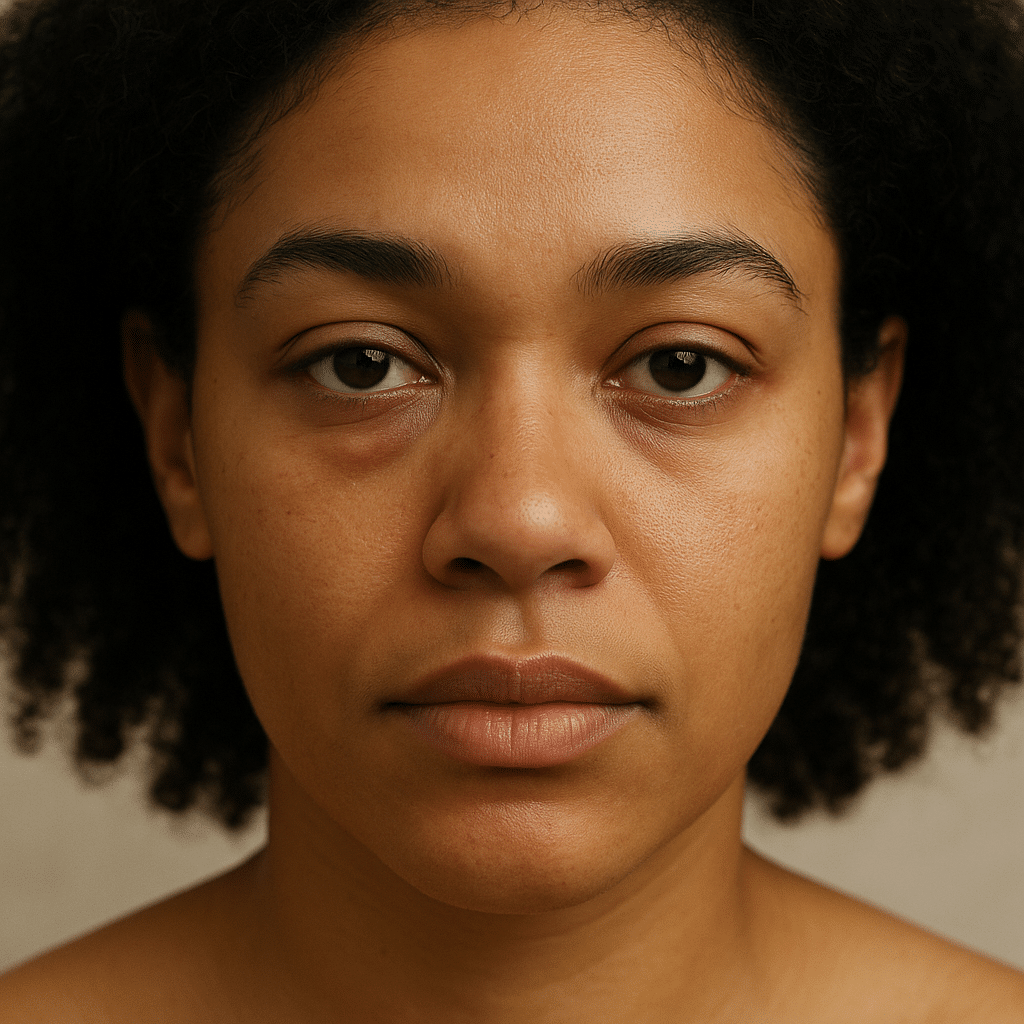
Caffeine has earned a place in everything from under-eye creams to firming serums, and for good reason. But with all the noise, it’s easy to get caught up in the hype. So what are the real benefits of caffeine on the skin, and which claims are just clever marketing? This article cuts through the noise to debunk 6 common myths about caffeine in skin care, using real science (not marketing jargon) to separate fact from fiction.
Myth #1: Caffeine permanently removes bags under the eyes
The Reality: Caffeine can help reduce the appearance of bags under the eyes, but the effect is temporary.
Here’s what happens: Caffeine acts as a vasoconstrictor, meaning it constricts blood vessels and reduces swelling. That’s why it works so well on bloating after sleep or salty meals. However, it does not “erase” the bags under the eyes. Especially if they are due to genetics or aging. The anti-inflammatory effect may last for a few hours, but it is not permanent. For long-term change, consistent use and complementary ingredients such as peptides or retinoids are key.
So what is the science-backed pack… Caffeine helps drain fluids and tighten skin, but does not remove structural fat bags.
Myth #2: Caffeine eliminates all types of dark circles
The Reality: Caffeine helps the dark circles of the vessels, but not the melanocytes.
This is one of the most misunderstood benefits of caffeine on the skin. Dark circles can be caused by:
- Vascular (blue/purple from blood pooling)
- Based on pigment (brown from melanin)
- Constructive (due to shadows from volume loss)
Caffeine is effective for dark circles because it improves circulation and constricts capillaries. But it has little effect on melanin, so if your circles are brown or gray, you’ll need brighteners like vitamin C or niacinamide. Plus, it won’t deal with dark circles from the thinning of your skin as you age.
So what is the science-backed pack… Caffeine can brighten tired eyes, but not all dark circles respond to it.

Myth #3: Caffeine works best on its own
The Reality: Caffeine is most effective when combined with other active ingredients.
Some brands market caffeine as a hero ingredient that can do it all, but in reality, it works best in multi-ingredient formulations. This is true because dark under eyes can be caused by many things and caffeine can only really address one. Also, when using a skin care product, consistency is difficult. And when you see results right away, you’re more likely to keep using it. This means that products designed to artificially address your skin care concerns immediately (typically with film formers, moisturizers and blurring ingredients) and then over time (with regenerating actives) are more likely to be used.
Research shows that the benefits of caffeine are enhanced when combined with:
- Retinyl esters, which enhance skin penetration up to 2.5 times
- Peptides, which target the structure and elasticity of the skin
- Vitamin K, which can support blood flow and discoloration
- Antioxidants such as vitamin C, to fight oxidative stress
So what is the science-backed pack… Caffeine is a team player. Look for it in carefully designed blends – not individually.
Myth #4 You can DIY caffeine skin care at home
The Reality: Coffee consumption ≠ clinical results.
It may be tempting to make your own caffeine scrub or eye mask using leftover coffee, but topical caffeine needs proper formulation to work. Caffeine is hydrophilic, meaning it does not easily cross the skin barrier. Without enhancers or delivery systems (such as emulsions or microencapsulation), it will not reach the deeper layers where it needs to act.
Additionally, applying coffee grounds under your eyes would cause natural peeling. The skin under your eyes is already so thin and sensitive, and you don’t want to do natural exfoliation in that area. You could inadvertently create microtears in your skin and do damage that could lead to more discoloration.
So what is the science-backed pack… Skip the ground coffee. Use professional products to see real benefits.

Myth #5 More caffeine = better results
The Reality: Higher concentrations are not always more effective and can even fail.
Most caffeine skincare products use 0.5% to 3%, which is both safe and effective. Beyond that range, more is not necessarily better. So don’t fall into the Olympics trap with the highest concentration. Sometimes brands increase the percentages of active ingredients beyond their effective concentrations. In fact, too much caffeine can damage collagen synthesis or irritate sensitive skin. Clinical studies showing benefits (such as atrophy or antioxidant activity) were done within this range of 0.5-3%. So this is the range to look for in your products.
So what is the science-backed pack… Maintain clinically supported concentrations. The quality of the composition is more important than the quantity.
Myth #6 Caffeine tightens skin by boosting collagen
Reality: Caffeine supports skin firmness, but not by directly generating collagen.
Some marketing claims suggest that caffeine “stimulates collagen production.” While caffeine helps firm the skin, the mechanism is more indirect.
Improves skin elasticity by:
- Reduction of oxidative stress, which destroys collagen over time
- Boosting microcirculation, which nourishes fibroblasts (the cells that produce collagen)
- Improving skin hydration and barrier function, which helps skin look more supple
But it doesn’t build the collagen under your eyes. For this, you need other actives like a retinoid.
So what is the science-backed pack…Caffeine maintains and supports skin structure — but doesn’t build collagen like retinol or peptides.

So remember that caffeine is powerful, but it’s not a miracle worker
The real benefits of caffeine for the skin are impressive: plumping, radiance, antioxidant defense and gentle tightening. But it is not a miracle solution and works best when combined with the right ingredients and used consistently.
Knowing what caffeine box and slope to do, you’ll be able to cut through the marketing fluff and choose products that really deliver.
References
Herman, A., & Herman, AP (2013). The mechanisms of action of caffeine and its cosmetic use. Skin Pharmacology and Physiology, 26(1), 8–14. doi: 10.1159/000343174Researchgate.netpmc.ncbi.nlm.nih.gov.
Amnuaikit, T., Maneenuan, D., & Boonme, P. (2011). Evaluation of caffeine gel on physicochemical characteristics and in vivo efficacy in reducing puffy eyes. Journal of Applied Pharmaceutical Science, 1(4), 56–61Researchgate.netResearchgate.net.
Ahmadraji, F., & Shatalebi, MA (2015). Evaluation of the clinical efficacy and safety of an ophthalmic patch containing caffeine and vitamin K in an emulsified Emu oil base. Advanced Biomedical Research, 4, Article 10Researchgate.netResearchgate.net.
Reddy, N. (MD). (2024). Can caffeine help with under eye circles and puffiness? GoodRx Health. Retrieved from GoodRx websitegoodrx.comgoodrx.com.
Rajabi-Estarabadi, A., et al. (2023). Efficacy and tolerability of a multicorrective topical treatment for suborbital dark circles and puffiness. (Open-label clinical study)Researchgate.netResearchgate.net.
Lim, HG, et al. (2016). Suborbital Dark Circles: A Review of Pathogenesis, Evaluation, and Treatment. (Article overview) International Journal of Dermatology (?)pmc.ncbi.nlm.nih.govpmc.ncbi.nlm.nih.gov.
Brandner, JM, et al. (2006). Caffeine improves the barrier function of male skin. International Journal of Cosmetic Science, 28(5), 343–347pubmed.ncbi.nlm.nih.govpubmed.ncbi.nlm.nih.gov.
Eye Cream Ingredients Effectiveness Review (2024). (Review of Retinoids, Peptides, Caffeine, etc. in Periorbital Skin) Journal of Drugs in Dermatology or similar, 23(??), xxx-xxxpmc.ncbi.nlm.nih.govpmc.ncbi.nlm.nih.gov.
Rosado, C., Tokunaga, V., Sauce, R., & Baby, AR (2019). Another reason to use caffeine in skin cosmetics: Sunscreen adjuvant. (Photoprotection study)Researchgate.net.
CosmeticsInfo (Personal Care Council). Ingredient Database: Caffeine. Retrieved 2025, from CosmeticsInfo.org
