

Close Menu
Healthtost
  • News
  • Mental Health
  • Men’s Health
  • Women’s Health
  • Skin Care
  • Sexual Health
  • Pregnancy
  • Nutrition
  • Fitness
  • Recommended Essentials
What's Hot

A cancer-causing contaminant in drugs and meat

May 3, 2026

Landmine Training and Why I Love It – Tony Gentilcore

May 3, 2026

Five-target drug beats GLP-1/GIP therapy in obese diabetic mice

May 3, 2026
Facebook X (Twitter) Instagram
  • About Us
  • Contact Us
  • Privacy Policy
  • Terms and Conditions
  • Disclaimer
Facebook X (Twitter) Instagram
Healthtost
SUBSCRIBE
  • News

    Five-target drug beats GLP-1/GIP therapy in obese diabetic mice

    May 3, 2026

    How fast your face ages can predict cancer survival outcomes

    May 2, 2026

    AI scribes save doctors time, but fail to reduce overtime

    May 2, 2026

    Identifying the ages at which Alzheimer’s biomarkers change sharply

    May 1, 2026

    Timing of food may shape how T cells respond to infection and therapy

    May 1, 2026
  • Mental Health

    Every mental health journey starts with being seen

    May 2, 2026

    What animal studies teach us about toxic work environments

    April 27, 2026

    I hate hope: How to manage hope when you have treatment-resistant bipolar disorder

    April 19, 2026

    Rose Byrne is raw, magnetic and unfiltered as a woman in crisis

    April 18, 2026

    Can a single mother change her child’s surname in India?

    April 16, 2026
  • Men’s Health

    3 Day Home Workout Plan: Build Muscle and Burn Fat

    April 30, 2026

    GLP-1 drugs promise broader health benefits, but experts advise caution on use

    April 28, 2026

    Trauma patients recover faster when medical teams know each other well, new study finds

    April 28, 2026

    I did red light therapy for 3 months so I shouldn’t have

    April 27, 2026

    Sex Secrets for Men Over 40: Surviving Male Menopause

    April 27, 2026
  • Women’s Health

    What is the difference between UVA and UVB rays?

    May 1, 2026

    Are you a fungus fanatic? We unpack the nutritional trend of mushroom mania

    April 29, 2026

    What the Patients’ Bill of Rights Could Mean for Black Women

    April 29, 2026

    Navigating sexual health during and after cancer

    April 28, 2026

    Do tampons break the hymen? Facts, Myths and What You Need to Know – Vuvatech

    April 27, 2026
  • Skin Care

    The truth about waterless care: What your skin really needs

    May 2, 2026

    What happens to your skin while you sleep? (the science of “Beauty Sle

    May 1, 2026

    Face Peeling Mask Guide: Shine Without Irritation

    April 28, 2026

    Is your moisturizing face mist really drying out your skin?

    April 28, 2026

    Uses and Benefits of TNW Natural Aloe Vera Face Gel – The Natural Wash

    April 27, 2026
  • Sexual Health

    Boost erectile health and confidence

    May 1, 2026

    Judicial Restrictions on Abortion COVID-19 < SRHM

    April 30, 2026

    Can herpes affect fertility?

    April 29, 2026

    The Importance of Personalized Care in Medication Assisted Therapy (MAT) Programs I Novus

    April 28, 2026

    Your favorite mold is lying to you (a little) — Sexual Health Alliance

    April 28, 2026
  • Pregnancy

    Why is anemia during pregnancy high in Indian women?

    May 2, 2026

    5 things you need for the third trimester

    May 1, 2026

    Eating disorders in pregnancy and breastfeeding: Why “healthy eating” is not always easy

    May 1, 2026

    Comprehensive yoga for pregnancy, birth and beyond

    April 29, 2026

    Midwifery and Life – The postnatal health check New mums don’t know they can ask for

    April 28, 2026
  • Nutrition

    A cancer-causing contaminant in drugs and meat

    May 3, 2026

    How Nutrition Supports Mood, Energy and Gut Health

    May 2, 2026

    How to create a self-care plan when you’re stressed

    May 1, 2026

    I answer the most HOT Questions about Fatty Liver

    April 29, 2026

    Why You’re Not Losing Weight After 35 (Even When You Eat Less)

    April 28, 2026
  • Fitness

    Landmine Training and Why I Love It – Tony Gentilcore

    May 3, 2026

    9 Powerful Fitness Tips for Pear Shaped Bodies

    May 2, 2026

    If you can still do these 7 things at 60, your body is aging better than most

    May 2, 2026

    A Hike Leader’s Must-Have Kit

    April 30, 2026

    Menopausal Hair Loss Solutions: 10 Expert Tips

    April 29, 2026
  • Recommended Essentials
Healthtost
Home»News»Study reveals that removing skin bacteria enhances the brain’s attention signals
News

Study reveals that removing skin bacteria enhances the brain’s attention signals

healthtostBy healthtostApril 4, 2024No Comments4 Mins Read
Facebook Twitter Pinterest LinkedIn Tumblr Reddit WhatsApp Email
Study Reveals That Removing Skin Bacteria Enhances The Brain's Attention
Share
Facebook Twitter LinkedIn Pinterest WhatsApp Email

Scientists at the National Central University of Taiwan investigated the relationship between skin microflora and cognitive brain functions using electroencephalography and machine learning methods.

The study is published in the journal Scientific Reports.

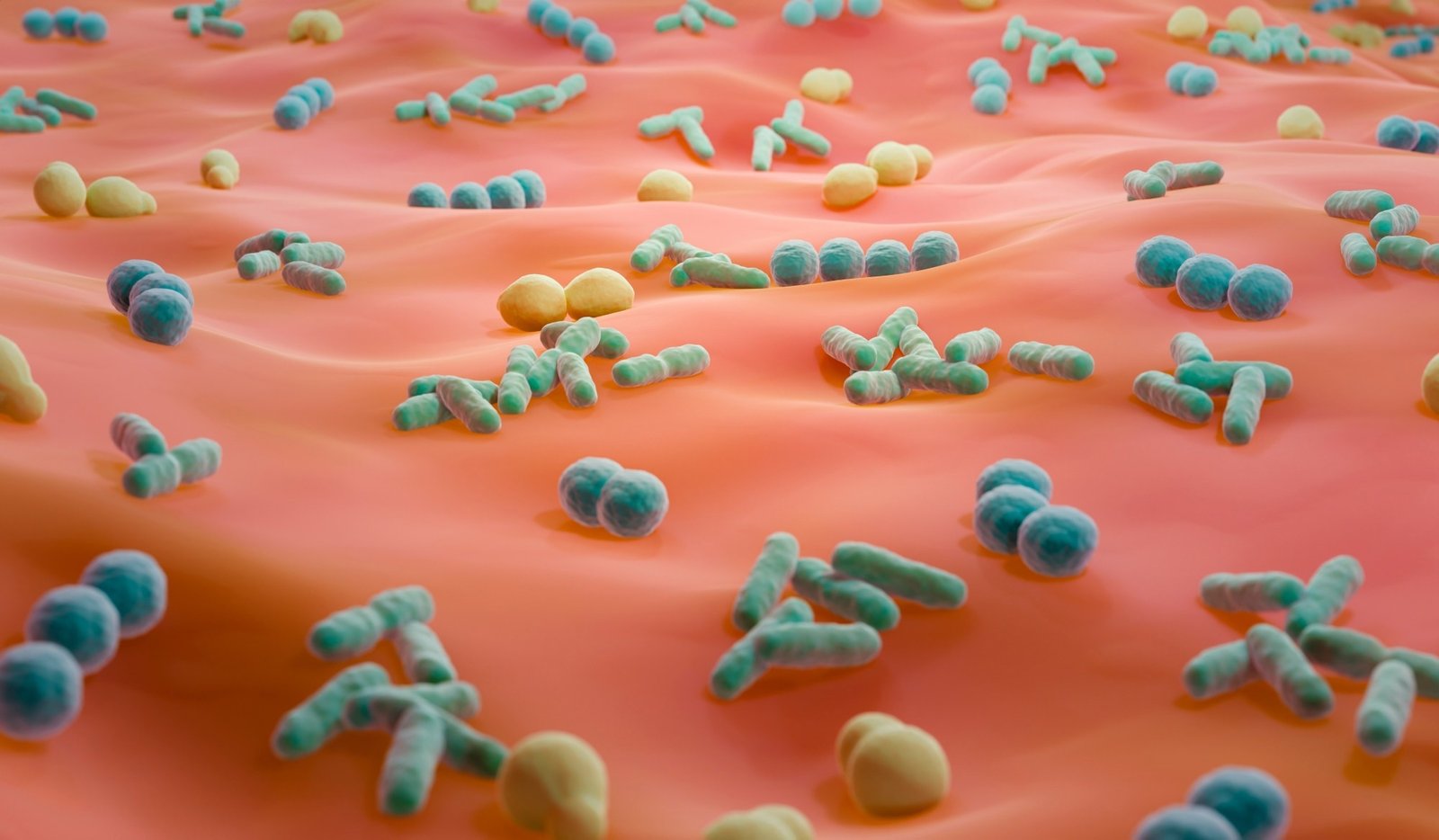
Study: Exploring the potential relationship between the skin microbiome and cognitive brain functions: a pilot EEG study. Image credit: ART-ur / Shutterstock

Record

The human microbiota is defined as a vast pool of heterogeneous microorganisms found primarily in the gastrointestinal tract (gut microbiota) and skin (skin microbiota).

The gut microbiota is known to play essential roles in regulating many physiological functions by producing short-chain fatty acids and other metabolites. In addition to maintaining intestinal homeostasis and regulating metabolic and immune functions, the gut microbiota plays a critical role in regulating vital brain functions through the bidirectional gut-brain axis.

Like the gastrointestinal tract, skin-inhabiting microorganisms are vital for maintaining skin homeostasis, preventing foreign invaders (pathogens and chemicals) from entering the body, regulating immune functions, and degrading natural products. These functions are exerted by short-chain fatty acids produced by the microflora of the skin.

The growth of bacteria on human skin depends on several factors, such as the skin microenvironment, age, sebum level, hormonal level and sweat production. An imbalance in the microbial composition and diversity of the skin (dysbiosis) can lead to various skin conditions, such as atopic dermatitis, wounds, psoriasis, acne vulgaris, diabetic foot ulcer or Pityriasis Versicolor.

In this study, scientists evaluated interactions between skin microbiota and brain signals related to cognition in healthy individuals.

Study design

The study was conducted on a total of 20 healthy subjects. Each participant’s level of attention (cognitive function) was measured using a classical monosphere task involving an odd and a standard stimulus with different frequencies presented in a random order.

Each participant’s electrical brain activities were measured during the oddball task using electroencephalography (EEG) under three different conditions of bacterial population manipulation on the participant’s forehead.

Bacterial populations were subjected to alcohol, glycerin and water manipulations to investigate the effect of skin microbiota on brain cognitive functions. Alcohol, glycerin, and water manipulations were applied to eliminate skin bacteria, increase skin bacterial growth, and mimic natural skin bacterial growth.

EEG changes (event-related potentials, ERPs) were analyzed using statistical and machine learning methods to detect the impact of skin microbiota manipulations on attention-related brain activities.
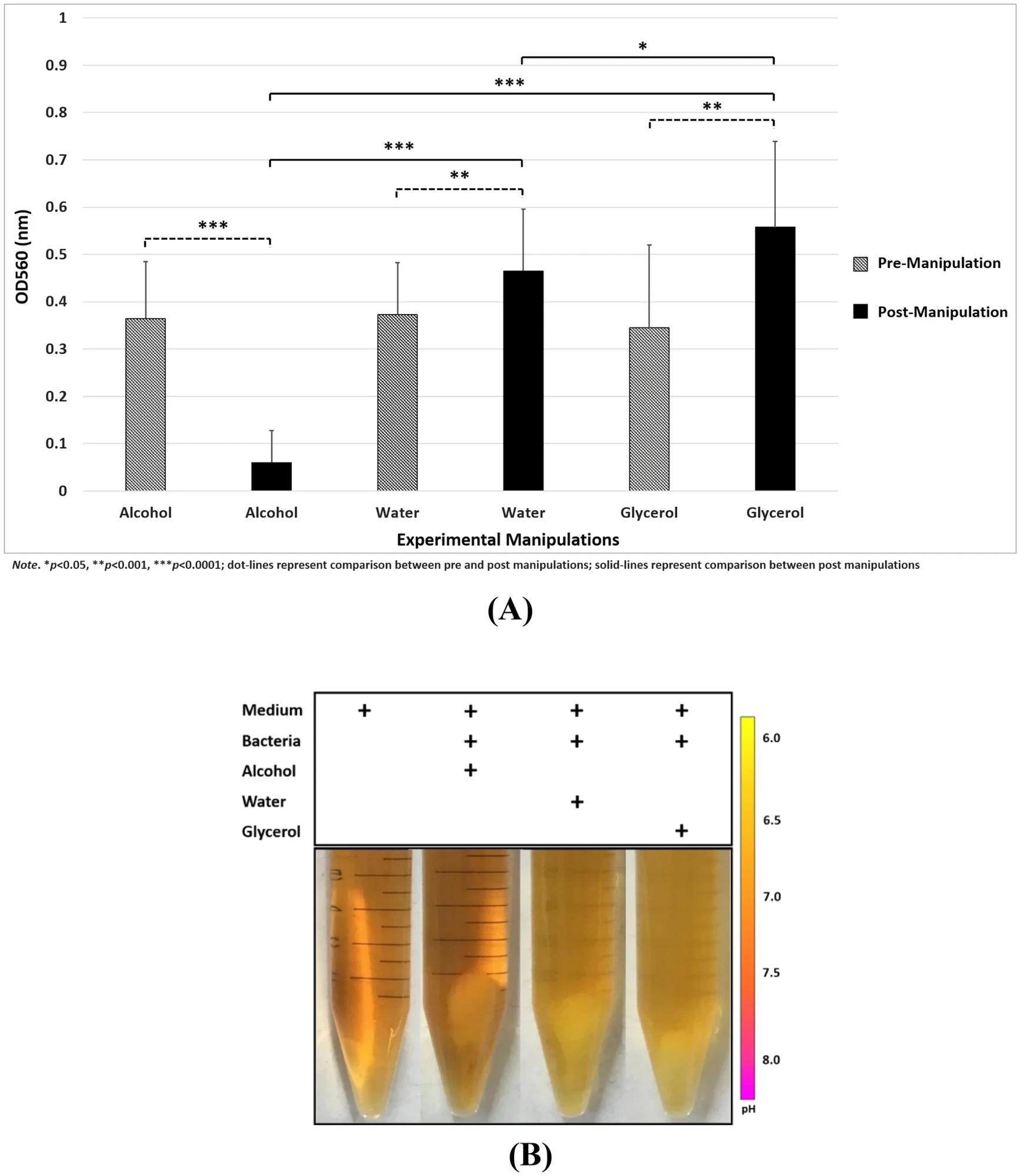
(A) Significant effects of the experimental manipulations on the bacterial population.  (B) Color changes after experimental manipulations indicated bacterial fermentation.(ONE) Significant effects of the experimental manipulations on the bacterial population. (si) Color changes after experimental manipulations indicated bacterial fermentation.

Important observations

Optical density measurements of bacterial populations under three experimental manipulations revealed significantly increased bacterial growth under water and glycerin conditions compared to that under alcohol conditions.

Participants’ levels of cognitive processes were determined by measuring ERPs of N200 (negative peak at 200 milliseconds) and P300 (a positive peal at 300 milliseconds) in response to experimental stimuli.

According to the available literature, increased N200 amplitudes are indicative of selective allocation of spatial attention, novelty or mismatch detection, and cognitive control. Similarly, enhanced P300 amplitudes are associated with selective attention.

Effective implementation of the oddball task was determined by examining ERPs under the water manipulation condition. Findings revealed significantly higher P300 amplitudes in the central-parietal region in response to the monosphere stimulus compared to that for the standard stimulus. This indicates efficient execution of the work.

ERP measurements under experimental manipulations revealed that alcohol manipulation (bacteria removal) induces a significant induction in P300 amplitudes in response to a single-shot stimulus alone compared to water and glycerol conditions (increased bacterial growth). These observations suggest that removing bacteria from the skin increases participants’ level of attention.

However, despite significant variation in bacterial growth under water and glycerol conditions, these two experimental manipulations observed no significant differences in P300 amplitudes.

This observation indicates that the effect of skin bacterial population on the P300 signal is not proportional to the number of bacteria. Conversely, it can be assumed that the increased bacterial population does not degrade brain signals.

Based on pre-existing evidence, the scientists hypothesized that glycerin may increase the growth of certain but not all bacteria, and that not all bacteria can affect brain signals. They further hypothesized that the decrease in P300 amplitude under water and glycerol conditions may be due to an imbalance in the concentration of short-chain fatty acids in the skin due to bacterial overgrowth.

Important study

The study finds that removing the skin’s bacterial population can significantly increase P300 amplitudes along the midline channels, suggesting a significant improvement in attention level.

The study also finds that machine learning classifiers can separate each experimental manipulation using EEG data with greater than 88% accuracy.

attention bacteria Brains enhances removing reveals signals Skin study
bhanuprakash.cg
healthtost
  • Website

Related Posts

Five-target drug beats GLP-1/GIP therapy in obese diabetic mice

May 3, 2026

How fast your face ages can predict cancer survival outcomes

May 2, 2026

AI scribes save doctors time, but fail to reduce overtime

May 2, 2026

Leave A Reply Cancel Reply

Don't Miss
Nutrition

A cancer-causing contaminant in drugs and meat

By healthtostMay 3, 20260

Billions of dollars worth of drugs have been pulled from the market for less carcinogenic…

Landmine Training and Why I Love It – Tony Gentilcore

May 3, 2026

Five-target drug beats GLP-1/GIP therapy in obese diabetic mice

May 3, 2026

How Nutrition Supports Mood, Energy and Gut Health

May 2, 2026
Stay In Touch
  • Facebook
  • Twitter
  • Pinterest
  • Instagram
  • YouTube
  • Vimeo
TAGS
Baby benefits body brain cancer care Day Diet disease exercise finds Fitness food Guide health healthy heart Improve Life Loss Men mental Natural Nutrition Patients Pregnancy protein research reveals risk routine sex sexual Skin Skincare study Therapy Tips Top Training Treatment ways weight women Workout
About Us
About Us

Welcome to HealthTost, your trusted source for breaking health news, expert insights, and wellness inspiration. At HealthTost, we are committed to delivering accurate, timely, and empowering information to help you make informed decisions about your health and well-being.

Latest Articles

A cancer-causing contaminant in drugs and meat

May 3, 2026

Landmine Training and Why I Love It – Tony Gentilcore

May 3, 2026

Five-target drug beats GLP-1/GIP therapy in obese diabetic mice

May 3, 2026
New Comments
    Facebook X (Twitter) Instagram Pinterest
    • About Us
    • Contact Us
    • Privacy Policy
    • Terms and Conditions
    • Disclaimer
    © 2026 HealthTost. All Rights Reserved.

    Type above and press Enter to search. Press Esc to cancel.