

Close Menu
Healthtost
  • News
  • Mental Health
  • Men’s Health
  • Women’s Health
  • Skin Care
  • Sexual Health
  • Pregnancy
  • Nutrition
  • Fitness
  • Recommended Essentials
What's Hot

2.6 Friday Faves – The Fitnessista

February 7, 2026

How to avoid shaving irritation: 7 myths that keep your skin angry

February 7, 2026

Smart Shoulder Solutions: An Evidence-based Approach

February 7, 2026
Facebook X (Twitter) Instagram
  • About Us
  • Contact Us
  • Privacy Policy
  • Terms and Conditions
  • Disclaimer
Facebook X (Twitter) Instagram
Healthtost
SUBSCRIBE
  • News

    European collaboration turns immune cell data into cancer biomarkers

    February 7, 2026

    Senescent neutrophils promote tumor survival in all cancer types

    February 6, 2026

    Preoperative factors predict persistent opioid use after surgery

    February 6, 2026

    AI-enabled stethoscope doubles detection of valvular heart disease

    February 5, 2026

    Gut microbial butyrate enhances mucosal vaccine antibody responses

    February 5, 2026
  • Mental Health

    Advancing the Future of Behavioral Health Data Exchange

    February 7, 2026

    How to avoid watching disturbing videos on social media and protect your peace of mind

    February 6, 2026

    Mental Health in the Black Community: Addressing…

    February 3, 2026

    Some people gain confidence when they think things through, others lose it – new research

    February 2, 2026

    3 practical ways to improve a writer’s mental health

    January 31, 2026
  • Men’s Health

    Air conditioning in nursing homes reduces heat-related risk

    February 6, 2026

    Analysis: What it’s like to have non-verbal autism and what helped me

    February 5, 2026

    Testicular cancer self-examination and why it could save your life

    February 2, 2026

    25-Minute Bodyweight Functional Training Program for Beginners

    February 1, 2026

    Turning everyday eggs into powerful nutrient delivery systems

    January 30, 2026
  • Women’s Health

    2.6 Friday Faves – The Fitnessista

    February 7, 2026

    Enjoying Endorphins: How to Spoil Your Mood with Feel-Good Hormones

    February 5, 2026

    A critical maternal health data system is at risk

    February 5, 2026

    Prenatal care in 2026: New recommendations for healthy pregnancy

    February 1, 2026

    3 Teens Quit Social Media for a Week — and Loved It

    February 1, 2026
  • Skin Care

    How to avoid shaving irritation: 7 myths that keep your skin angry

    February 7, 2026

    TNW Rich Cream for Soft, Smooth Skin – The natural wash

    February 7, 2026

    Inside Susie Ma’s Makeup | Founder of Tropic – Tropic Skincare

    February 6, 2026

    5 Expert-Backed Tips on How to Reduce Forehead Wrinkles

    February 6, 2026

    5 Powerful Skincare Osmolytes (And Why Your Skin Loves Them)

    February 5, 2026
  • Sexual Health

    Adventurous intimacy is more common than you think — Alliance for Sexual Health

    February 5, 2026

    A guide to a comfortable cervical check with Dr. Unsworth

    February 1, 2026

    How “Bridgerton” and the Other Romances Evolved in Their Depictions of Consent

    January 30, 2026

    Extraction, gold mining and SRHR in Kenya

    January 29, 2026

    How the Wabi-Sabi Body Frame is Rewriting Body Image Therapy — Sexual Health Alliance

    January 28, 2026
  • Pregnancy

    Pregnant on Chhath Puja? Hydration and nutrition tips

    February 6, 2026

    The second trimester sweet spot is real. Here’s how to get the most out of it

    February 4, 2026

    Is it safe to drink milk during pregnancy? What to know

    January 31, 2026

    12 Expert Answers to Your Pregnancy Yoga Questions

    January 29, 2026

    Best Pregnancy and Postpartum Fitness Course 2026

    January 27, 2026
  • Nutrition

    5 Ways You’re Sabotaging Your Metabolism

    February 2, 2026

    How to Save Money on Travel • Kath Eats

    February 1, 2026

    How low can LDL cholesterol go on PCSK9 inhibitors?

    January 31, 2026

    Signs that your body is ready to reset

    January 31, 2026

    Healthy Pakistani Recipes: Low-Oil Versions of Beloved Classics

    January 30, 2026
  • Fitness

    Smart Shoulder Solutions: An Evidence-based Approach

    February 7, 2026

    Ja’Marr Chase Offseason Training: The Explosive Workouts Fueling NFL Elite Performance

    February 6, 2026

    What’s NEW in February 2026 for the BODi Community of Experience!

    February 5, 2026

    AI As a Learning Coach – BionicOldGuy

    February 5, 2026

    Can your customers actually do what you want them to do? – Tony Gentilcore

    February 2, 2026
  • Recommended Essentials
Healthtost
Home»Nutrition»Is surgery necessary to reverse diabetes?
Nutrition

Is surgery necessary to reverse diabetes?

healthtostBy healthtostJanuary 10, 2026No Comments6 Mins Read
Facebook Twitter Pinterest LinkedIn Tumblr Reddit WhatsApp Email
Is Surgery Necessary To Reverse Diabetes?
Share
Facebook Twitter LinkedIn Pinterest WhatsApp Email

Losing weight without rearranging your gastrointestinal anatomy has advantages beyond the lack of surgical risk.

The surgical community objects in characterizing bariatric surgery as wiring the inner jaw and cutting into healthy organs just to discipline people’s behavior. They’ve even dubbed it “metabolic surgery,” suggesting that the anatomical rearrangements cause changes in digestive hormones that provide unique physiological benefits. As proof, they point to the remarkable remission rates for type 2 diabetes.

After bariatric surgery, about 50% of obese people with diabetes and 75% of “obese” diabetics go in remission, meaning they have normal blood sugar levels on a regular diet without diabetes medication. Normalizing blood sugar can happen within days after surgery. And 15 years after surgery, 30% remained without diabetes, compared to a 7% remission rate in a non-surgical control group. Are we sure it was the surgery, though?

One of the most challenging parts of bariatric surgery is lifting the liver. Since obese people tend to have such large, fatty livers, there is a risk of liver injury and bleeding. An enlarged liver is one of the most common reasons that a less invasive laparoscopic surgery can turn into a fully invasive open surgery, leaving the patient with a large abdominal scar, along with an increased risk of wound infections, complications, and recovery time. But lose even just 5% of your body weight and your fatty liver can shrink by 10%. That’s why those waiting for bariatric surgery are put on a diet. After surgery, patients are usually is placed on an extremely low-calorie liquid diet for weeks. Could their improvement in blood sugar levels simply be due to caloric restriction, rather than some sort of surgical metabolic magic? The researchers decided to test it.

At a bariatric surgery clinic at the University of Texas, patients with type 2 diabetes scheduled for gastric bypass he volunteered to stay in the hospital for 10 days to follow the same ultra-low-calorie diet—less than 500 calories a day—that would be placed before and after the operation, but without undergoing the procedure itself. After a few months, after they had regained the weight, the same patients then had the actual surgery and resumed their diet, matched daily. This allowed the researchers to compare the effects of caloric restriction with and without surgery—same patients, same diet, with or without surgery alone. If there was some kind of metabolic benefit to the anatomical rearrangement, the patients would do better after the surgery, but somehow, they actually did worse.

Caloric restriction alone led to similar improvements in blood sugar levels, pancreatic function, and insulin sensitivity, but many measures of diabetes control improved significantly more without surgery. The surgery appeared to put them at a metabolic disadvantage.

Caloric restriction works by first mobilizing fat from the liver. Type 2 diabetes is considered to be caused with the accumulation of fat in the liver and effusion in the pancreas. Anyone can have a “personal fat limit” to safely store excess fat. When this threshold is exceeded, fat is deposited in the liver, where it can cause insulin resistance. The liver can then unloading some of the fat (in the form of a fat transport molecule called VLDL), which can then accumulate in the pancreas and kill from insulin-producing cells. By the time diabetes is diagnosed, half of our insulin-producing cells may be gone destroyed byas shown below and at 3:36 in my video Bariatric surgery versus diet to reverse diabetes. Put people on a low-calorie diet, however, and this whole process can be done vice versa.

A large enough calorie deficit can cause a profound drop in liver fat sufficient to restore the liver’s sensitivity to insulin within seven days. Keep this up and the calorie deficit can reduce liver fat enough to help normalize levels of pancreatic fat and work in just eight weeks. Once you get below your personal fat limit, then you should be able to summary normal caloric intake and keep your diabetes at bay, as shown below and at 4:05 video.
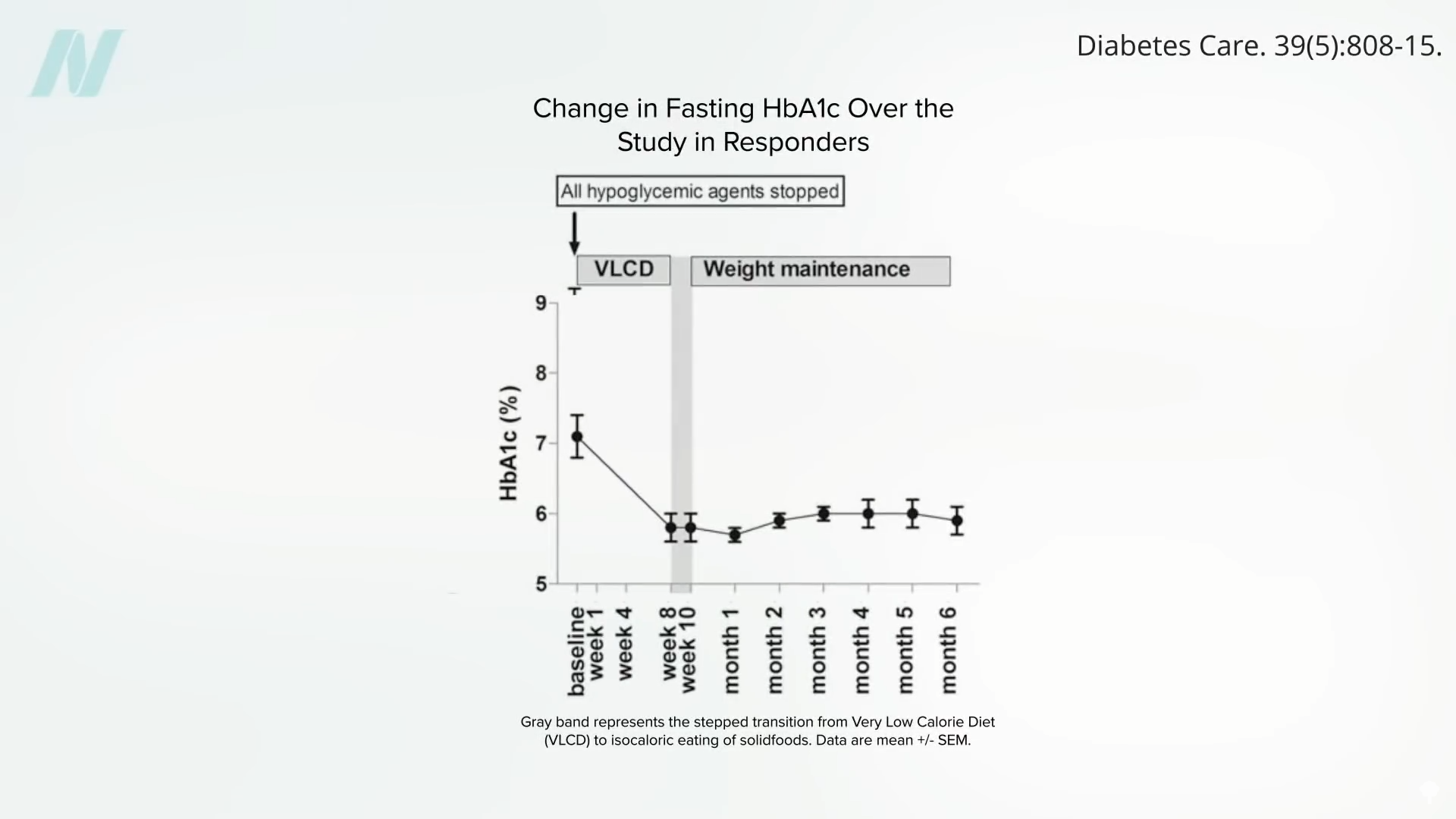
The bottom line: Type 2 diabetes is reversible with weight loss if you catch it early enough.

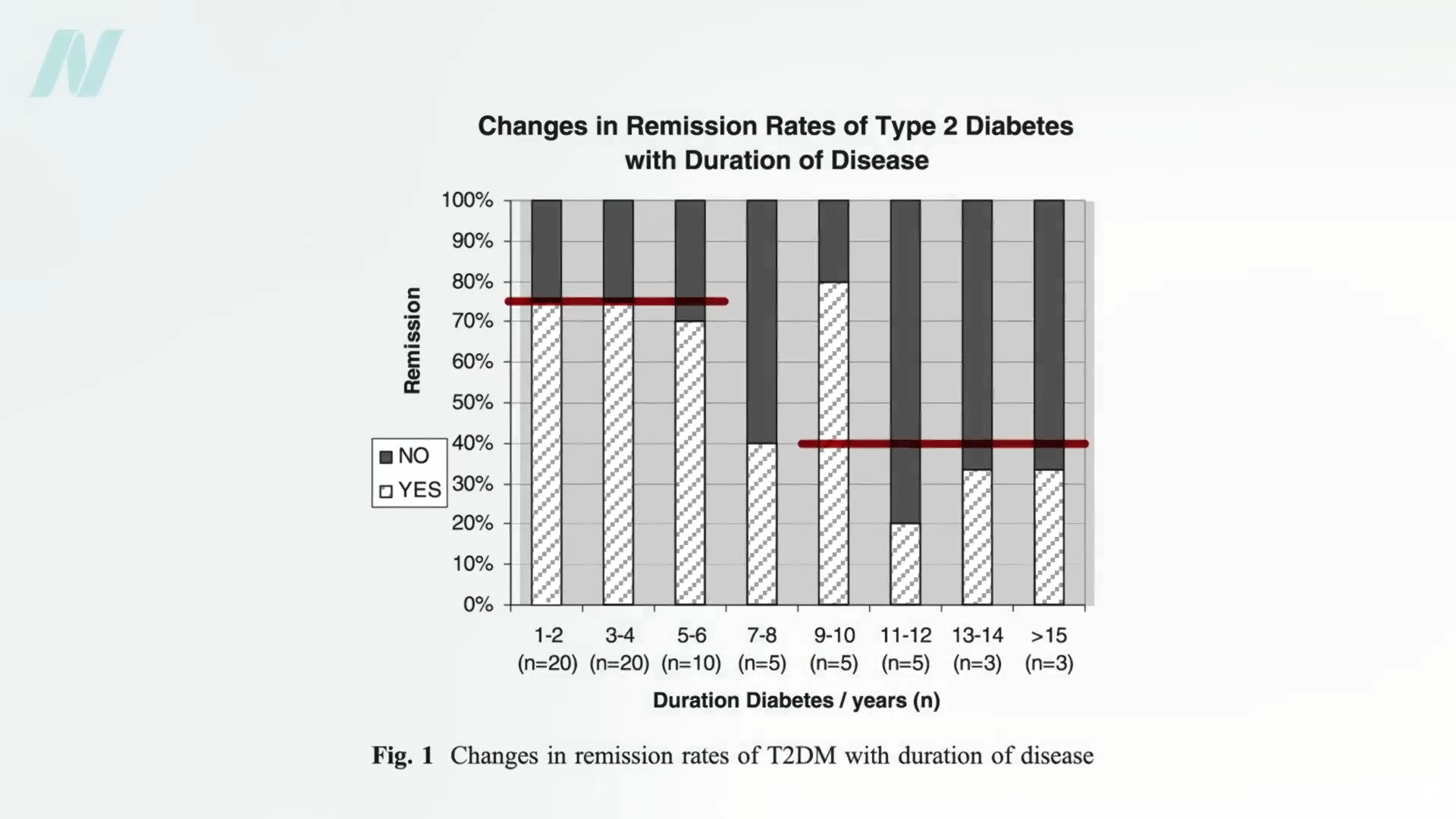
Lose more than 30 pounds (13.6 kg) and almost 90% of those with type 2 diabetes for less than four years can achieve non-diabetic blood sugar levels (indicating diabetes remission), while it may be reversible in only 50% of those who have lived with the disease for eight years or more. This is what happens with weight loss through diet alone. For people with diabetes, losing more than double the weight with bariatric surgery, diabetes remission may only be about 75% of those who have had the disease for up to six years and only about 40% for those who have had diabetes longer, as shown below and at 4:41 video.
Losing weight without surgery can provide other benefits as well. People with diabetes who lose weight by diet alone can significantly improve markers of systemic inflammation, such as tumor necrosis factor, while levels worsened significantly when about the same weight was lost by gastric bypass.

What about diabetic complications? A reason to avoid Diabetes is the avoidance of associated conditions such as blindness or kidney failure requiring dialysis. Reversing diabetes with bariatric surgery may improve kidney function, but, surprisingly, may not prevent the onset or progression of diabetic vision loss—perhaps because bariatric surgery affects the quantity but not necessarily the quality of nutrition. This reminds me of a famous study published in The New England Journal of Medicine that randomized thousands of people with diabetes to an intensive lifestyle program focused on weight loss. Ten years later, the study was stopped early because the participants were no longer living or having fewer heart attacks. This may be because they remained on the same heart-clogging diet, but only in smaller portions.

Doctor’s note

This is the third blog in a four-part series on bariatric surgery. If you missed the first two, check it out The mortality rate of bariatric weight loss surgery and The Complications of Bariatric Weight Loss Surgery.

My book How not to diet focuses exclusively on sustainable weight loss. Check it out from your local library or pick it up wherever you get your books. (All proceeds from my books go to charity.)

Diabetes reverse surgery
bhanuprakash.cg
healthtost
  • Website

Related Posts

Preoperative factors predict persistent opioid use after surgery

February 6, 2026

5 Ways You’re Sabotaging Your Metabolism

February 2, 2026

Simple hemiarch surgery effective for elderly patients with aortic dissection

February 2, 2026

Leave A Reply Cancel Reply

Don't Miss
Women's Health

2.6 Friday Faves – The Fitnessista

By healthtostFebruary 7, 20260

Hello friends! Happy Friday! what are you doing What are you doing this weekend? We…

How to avoid shaving irritation: 7 myths that keep your skin angry

February 7, 2026

Smart Shoulder Solutions: An Evidence-based Approach

February 7, 2026

European collaboration turns immune cell data into cancer biomarkers

February 7, 2026
Stay In Touch
  • Facebook
  • Twitter
  • Pinterest
  • Instagram
  • YouTube
  • Vimeo
TAGS
Baby benefits body brain cancer care Day Diet disease exercise finds Fitness food Guide health healthy heart Improve Life Loss Men mental Natural Nutrition Patients People Pregnancy protein research reveals risk routine sex sexual Skin study Therapy Tips Top Training Treatment ways weight women Workout
About Us
About Us

Welcome to HealthTost, your trusted source for breaking health news, expert insights, and wellness inspiration. At HealthTost, we are committed to delivering accurate, timely, and empowering information to help you make informed decisions about your health and well-being.

Latest Articles

2.6 Friday Faves – The Fitnessista

February 7, 2026

How to avoid shaving irritation: 7 myths that keep your skin angry

February 7, 2026

Smart Shoulder Solutions: An Evidence-based Approach

February 7, 2026
New Comments
    Facebook X (Twitter) Instagram Pinterest
    • About Us
    • Contact Us
    • Privacy Policy
    • Terms and Conditions
    • Disclaimer
    © 2026 HealthTost. All Rights Reserved.

    Type above and press Enter to search. Press Esc to cancel.