


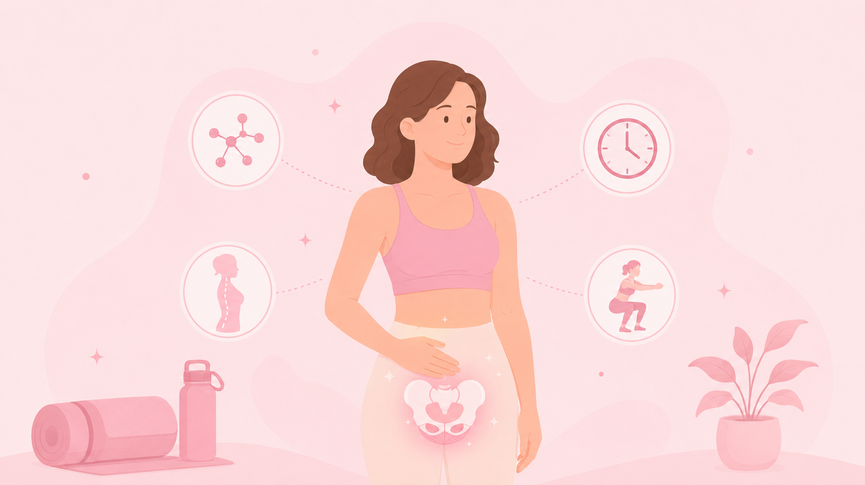
Your pelvic floor muscles are a net-like group of muscles at the base of your pelvis that support your bladder, bowel, and uterus. The pelvic floor muscles contract and relax to enable these vital functions, and like the rest of our bodies, they change with age.
Even if you’ve never been pregnant, pelvic floor changes in menopause can affect pelvic floor strength and function as you move into your 40s. Understanding these changes can help you be proactive about your pelvic health and reduce the chance of problems later.
How estrogen affects muscle collagen
Perimenopause is a transitional stage before menopause that usually begins in the late 30s to early 40s, when estrogen production gradually declines. Since estrogen is a key hormone that supports muscle tone and repair, as estrogen declines, all muscles in the body weaken and lose elasticity, including the pelvic floor muscles.
Some symptoms of low estrogen during perimenopause include:
- Pelvic organ prolapse
- Urinary incontinence
- Vaginal dryness or discomfort
- Heavier or irregular periods
- Disturbed sleep or fatigue
Common pelvic health problems after 40
In your 40s, a number of pelvic health problems become more common due to weakened pelvic floor muscles and a number of lifestyle factors.
While pelvic health problems are more common in women who have experienced pregnancy and childbirth, they are not the only contributing factor. Gaining weight, for example, can put extra strain on your pelvic floor muscles – and as our metabolism slows with age, it can be difficult to keep the weight off.
Fortunately, modern medical intervention can reduce or resolve many serious pelvic floor problems. If any of the health issues described below cause you discomfort or interfere with your daily activities, you should consult your gynecologist about medical or possible surgical intervention.
Pelvic floor dysfunction
Pelvic floor dysfunction refers to weak, tight or uncoordinated pelvic muscles. Common symptoms of pelvic floor dysfunction include:
- Pelvic pressure or a feeling of heaviness in the pelvic area
- Occasional leakage of urine or difficulty regulating urination
- Difficulty with bowel or bladder functions
- Pain during intercourse
Pelvic organ prolapse
Since the pelvic floor acts as a net that separates your lower organs from the vaginal canal, if the pelvic floor muscles become weak enough, the pelvic organs can become enlarged. Pelvic organ prolapse is more common in those who have given birth or are constantly putting pressure on their pelvic floor due to chronic constipation.
Symptoms of pelvic organ prolapse include:
- Pain in the lower back
- Vaginal swelling or pressure
- Difficulty urinating or having bowel movements
Urinary incontinence after 40: Why the “sneeze” happens.
After a certain age, jokes about peeing when you sneeze are traded between us women like baseball cards. Bladder control problems are one of the biggest problems for women over 40, with the most common being stress incontinence, when sudden pressure (such as sneezing) forces urine to come out involuntarily.
Studies show this 30-50% of women over 40 have experienced some form of stress incontinence from activities such as exercise, coughing or laughing.
Although “sneezing” sounds cute, you don’t have to worry about sneezing or laughing too loud. Stress incontinence need not be inevitable and can be managed through lifestyle, physical therapy or medical approaches. Some ways to alleviate or reduce mild stress incontinence as you get older include:
- Mindful movement that strengthens your core muscles and improves overall muscle tone, such as pilates or yoga
- Eat enough fiber to reduce constipation, as constant straining can weaken your pelvic floor
- Stay hydrated and pee regularly to avoid overexertion
Hormone replacement therapy (HRT) to stabilize estrogen levels is also an option for women going through menopause and menopause. Discussing HRT with your gynecologist will help you weigh the pros and cons and whether it is the right choice for you.
Advanced Kegel Routines for Women Over 40
It’s not all bad news for your pelvic floor after 40. The pelvic floor is a muscle and like all muscles, it can be strengthened through regular exercise.
Kegel exercises, which involve the deliberate rhythmic tightening and relaxation of the pelvic floor muscles, have consistently been shown in studies to be highly effective in strengthening the pelvic floor and reducing or preventing pelvic floor problems. In one 2014 study, between 27% and 75% of women who did regular Kegel exercises reported a reduction in SUI.
Supervised training is the most effective, which is why success rates cover such a wide range. 20-50% of women are unable to perform the technique correctly, reducing its effectiveness. If you struggle with Kegels, you should consult your gynecologist, who can offer guidance or recommend a training program using biofeedback technology to ensure proper technique.
You can also work with a pelvic health physical therapist for specific goals. Studies show that most women should notice the effectiveness of regular kegels after eight weeks.
Kegels to reduce reactive leaks
To get rid of the annoying “sneeze”, the goal is to control how your pelvic contractions react to the sudden pressure. Since you are aiming to stop leaks, practice standing up as this is when most leaks occur. Do the following once a day:
- Contract your pelvic floor muscles for 1 second and release.
- Repeat 10 times, working up to 30 fast contractions in a row.
Kegels to improve stamina
Holding the pelvic floor muscle contraction for longer will improve the strength of your pelvic floor for better bladder support. Try the following three times a week to build endurance:
- Contract your pelvic floor and hold for 3 to 5 seconds, continuing for up to 10 seconds.
- Perform 7-10 repetitions at first, eventually working up to 15-20 repetitions without rest.
Advanced Exercises
For the Kegel yogis among us who have achieved “long hold” endurance, you can progress to a more advanced form, preferably with the help of a physical therapist who can help you maximize your kegels.
Using biofeedback tools like electronic kegel kits provides data on the exact amount of pressure you’re applying to optimize your workout. It’s like a high-tech gym for your nether regions!
“Descending Elevators” are performed lying on your back in a relaxed position:
- Perform a pelvic muscle contraction at 100% effort (the amount of pressure shown on the screen when you contract as hard as you can), then hold a contraction at 50% effort for 3 seconds. Rest for a few minutes and then repeat 5 times. Once you can do this every day for 2-4 weeks, it’s time for stage 2.
- Contract at 100% and hold for three seconds, then hold contractions at decreasing pressure: 75%, 50% and 25%. Rest for a few minutes and repeat 5 times. Repeat this exercise three times a week to maintain muscle tone.
- To progress the exercise, you can go from ascending to descending. Start at 25%, go up to 100% and back down, holding for 2-3 seconds at each level.
Conclusion
Along with the rest of our muscles, the pelvic floor muscles also lose tone and elasticity as estrogen declines in our forties. Fortunately, regular kegels and lifestyle changes can often help strengthen the pelvic floor muscles during menopause and alleviate dysfunction. “Sneezing” is common, but not inevitable.
If you are experiencing pelvic floor dysfunction or other perimenopausal symptoms, consult your doctor.
