


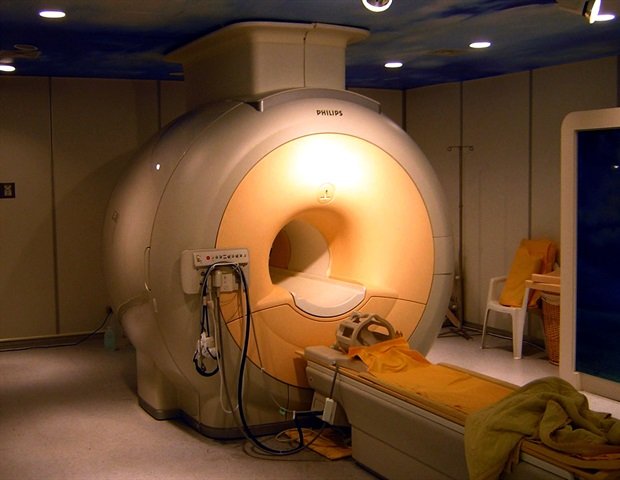
Lanthanide carriers could help define the next generation of biomedical imaging and fast-track the emerging field of theranostics—approaches that link diagnostic imaging to treatment selection, delivery, or monitoring.
That’s according to a new review published in Frontiers in Science, which maps recent progress and materials innovation in optics, X-rays and magnetic resonance imaging (MRI).
The authors highlight the potential of lanthanide to drive future leaps in healthcare and biomedical research, including the combination of lanthanide probes with smart delivery systems, artificial intelligence, and multisource data integration to make biomedical imaging and diagnostic tools more accurate, adaptable, and clinically useful.
The “vitamins of industry”
Lanthanide carriers are engineered chemical, nano- or biomolecular systems that bind, incorporate or stabilize lanthanide ions such as europium, terbium and gadolinium. These carriers can help reduce the risks of free metal ions while tuning their optical or magnetic behavior for imaging properties such as narrow emission bands, long-lived luminescence, high photostability, and strong paramagnetism to improve image clarity and generate higher contrast scans.
Together, these unique properties can support high-resolution, deep-tissue, multi-target imaging with optical approaches that could cause less tissue photodamage. In the clinic, these capabilities are being explored for applications such as tumor detection, vascular and organ imaging, and monitoring disease progression or response to therapy, although many next-generation lanthanide carriers remain preclinical.
The review also shows that these platforms move beyond imaging alone. Research groups are increasingly developing lanthanide carriers as dual-functional agents that combine imaging with targeted drug delivery, creating new opportunities for therapeutic applications, including cancer diagnosis and treatment.
Senior author Professor Xiaogang Liu at the National University of Singapore, said: “Lanthanide carriers are expanding the possibilities in biomedical imaging by providing high-resolution, highly sensitive contrast in a wide range of imaging techniques, from MRI and X-ray to optical imaging. in the biomedical field”.
Co-author Dr Jorge Méndez-Ramos, from the University of La Laguna in Tenerife, Spain, said: “Lanthanides, often called ‘vitamins of industry’ can lead us to untapped applications in many technological areas, such as biomedical imaging, as well as in multi-input detectors and AI-enabled image analysis.
Next generation imaging
The review reflects the vast range of lanthanide-based imaging systems now being developed, spanning carriers that combine optical and magnetic properties for higher resolution, multi-target and deep-tissue imaging for near-infrared scans, X-ray and MRI, and light-conversion nanoparticles that enhance body brightness and signals over the long term. inaccessible nanoscale measurements.
The team also points to lanthanide probes, lanthanide scintillators, persistent phosphors, and biosynthetic binding proteins as promising avenues that could offer new possibilities in low-dose X-ray imaging, more targeted MRI, imaging of biological targets, and thermal monitoring of inflammation. The paper further offers a glimpse into a possible future where AI-assisted data analysis and smarter materials design could improve the sensitivity, robustness and pace of imaging detector discovery, speeding the path from lab to clinical use.
The paper highlights how advances in molecular engineering and surface modifications of lanthanide carriers are now being applied, enhancing signal strength to improve accuracy and improve biocompatibility to benefit safety. The review also looks at emerging directions such as AI-enabled data analysis and multimodal probes that combine anatomical and functional information for richer data and clearer interpretation that guide diagnostic and treatment decisions.
Although many of these advances remain in the proof-of-concept stage, the authors say lanthanide carriers are well-positioned to help bridge the materials science, biophysics and clinical need to reshape biomedical imaging toward more accurate, responsive and personalized diagnostics.
Lanthanide carriers have already shown really exciting advantages in terms of multiplexing, sensitivity and functional imaging, and we believe they could be a strong foundation for the next generation of precision diagnostics. There are still significant hurdles to overcome – particularly around safety, scalability and regulation – but advances in detector design, mechanistic understanding and real-time image analysis are bringing the field closer to truly patient-tailored imaging and therapy, which is very exciting.”
Dr. Yuxia Lui, first author, National University of Singapore
