


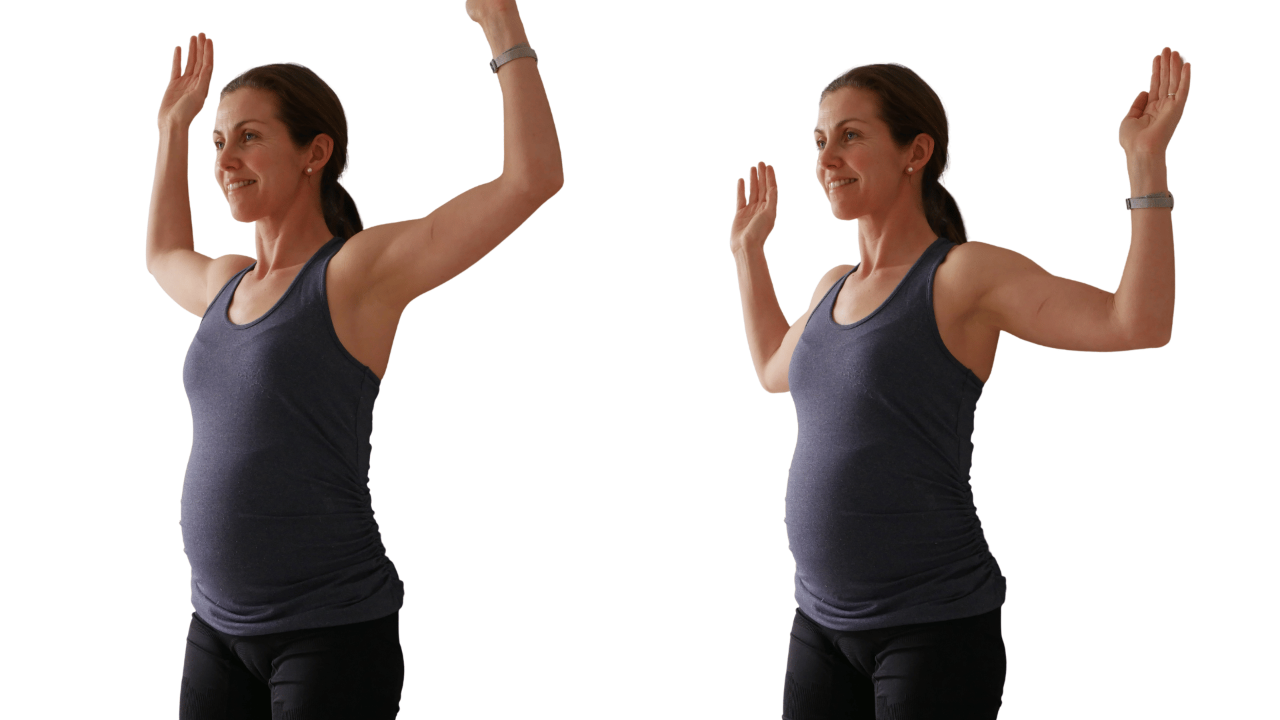
Growing belly causing slouching, shoulder tension or neck pain? Wall Angels is a gentle prenatal exercise that improves posture, opens the chest, strengthens the upper back and enhances breathing. Safe and effective for all trimesters! Feel taller and more comfortable every day.
Glowing from a growing belly? Wall Angels is a gentle, highly effective prenatal exercise that improves posture to help relieves back pain when pregnantopens tight shoulders, strengthens the upper back and relieves neck pain. Safe for all trimesters!
Enhance mobility, breathability and comfort every day.
Pregnancy often leads to postural changes as your belly grows, shifting your center of gravity and causing rounded shoulders, forward head posture, upper back tightness and neck pain.
Wall Angels (also called wall slides or wall snow angels) are a gentle, equipment-free exercise that addresses these issues by opening the chest, strengthening the upper back, and improving shoulder mobility.
This low-impact movement is generally safe for most healthy pregnancies in all trimesters when performed carefully.
Always consult your healthcare provider before starting, especially if you have conditions such as: diastasis rectisevere back pain or high-risk pregnancy.
The benefits of Wall Angels when pregnant
Wall Angels primarily target the pectoral (chest), rhomboids, trapezius and rotator cuff muscles while promoting mobility of the thoracic spine.
1. Improves posture and reduces back and neck pain
As your chest and belly grow, the shoulders tend to round forward.
Wall Angels strengthen the erector spinae muscles in the upper back, gather the shoulder blades and neutralize the slouch.
This eases upper back tension, forward head posture, and associated neck strain.
2. Opens the chest and improves breathing
The growing uterus compresses the rib and diaphragm, leading to shortness of breath.
Wall Angels expand the chest, mobilize the chest and create more space for deeper, easier breathing – beneficial for the comfort and oxygenation of you and your baby.
3. Enhances shoulder mobility and reduces tension
Pregnancy hormones loosen the ligaments, but daily habits tighten the front body.
This exercise stretches tight pectorals and front shoulders while improving range of motion, helping to prevent or relieve shoulder discomfort.
4. Strengthens upper back and core awareness
Activates the middle and upper back muscles (rhomboids, lower traps) for better stability.
Gentle core engagement during movement supports overall spinal alignment without great strain.
5. Supports labor preparation and postpartum recovery
Better posture and upper body strength help with pushing positions and everyday tasks like holding/carrying your baby after birth. It also promotes body awareness and relaxation.
Ready for more pregnancy workouts you can do at home >
Additional benefits:
Low impact and joint friendly.
It can be done standing up (preferably in pregnancy) or modified supine early on.
Boosts circulation, mood and energy.
Helps prevent or manage pregnancy-related rib pain and tension headaches.
Regular exercise contributes to wider benefits of prenatal exercise, such as reduced back pain, better sleep and a lower risk of complications.
Step-by-step guide to performing Wall Angels safely
Standing Wall Angels (Recommended for Pregnancy)
This version avoids prolonged supine positioning, which is not recommended after the first trimester.
How to perform wall angels
1. Stand with your back against a clean wall.
2. Place feet hip-width apart, about 6-12 inches from the wall.
3. Bend the knees slightly for comfort and stability.
4. Gently press your lower back, upper back, shoulders and head against the wall (use a small towel behind your head if needed).
5. Tuck your chin in slightly and engage your core slightly by pulling your belly button toward your spine – without holding your breath.
Starting position
6. Bend your elbows to about 90 degrees (beam or “W” shape) with the backs of your hands and forearms aiming to touch the wall. Keep the shoulders relaxed and down, away from your ears.
Movement Phase (The Angel)
7. Inhale as you slowly slide your arms up along the wall into a ‘V’ position or upwards.
8. Keep elbows and wrists in contact with the wall as much as possible.
9. Move slowly and with control. Stop if you feel any stinging or significant loss of contact.
Top Position
10. Pause briefly at the highest comfortable point where you can maintain your form. Gently press the shoulder blades together.
Return Phase
11. Exhale as you slowly slide the arms down to the starting ‘W’ position. Focus on keeping your back flat against the wall.
Repetitions
Start with 8-12 slow reps per set. Aim for 2-3 sets. Run 2-4 days a week or as part of a daily mobility routine. Rest 30-60 seconds between sets.
Tips for basic forms
1. Move slowly – no bouncing or forced range of motion.
2. Breathe continuously. avoid holding your breath.
3. Keep neck neutral and shoulders down.
4. If your lower back is long, reduce the range or make the legs slightly further away from the wall.
5. Stop immediately if you feel pain, dizziness or pelvic pressure.
Changes since the quarter
First trimester
The standard version works fine. You can also try a gentle supine version (lying on your back with knees bent) if that’s comfortable.
Second and third trimesters
Prioritize standing. Use more knee bend for stability as balance changes. Reduce the range of motion if your belly prevents full contact. Hold the light support if needed.
A standing variation with a yoga block or wrapped towel between the upper back and the wall can provide targeted chest opening.
Seated or supported version (for fatigue or balance problems):
Sit tall in a chair with back support and perform similar arm slides against an imaginary wall or with your hands free.
Advancement
Once comfortable, add a short pause at the top or combine with gentle shoulder presses.
Additional Stretch
Combine with door chest stretches or cat-cow poses (on all fours) for balanced mobility.
Safety precautions and when to stop
Warm-up
Start with 5 minutes of gentle walking or hand circles.
Listen to your body
Stop if you experience pain, shortness of breath, dizziness, contractions, bleeding or reduced fetal movement. Contact your provider.
Avoid
Forcing the arms to remain in full contact if it causes strain. Prolonged flat-supine positioning after ~16 weeks.
Environment
Wear supportive shoes, stay hydrated and exercise in a cool area.
Frequency
Consistency vs. intensity. 5-10 minutes most days is great. Combine with walking, prenatal yogaor swimming.
Wall Angels are low risk for most, but individual needs vary. A prenatal physical therapist can provide individualized guidance.
