


What Listening to Mothers’ New Survey Says About Black Women, Birth and the Right to Be Believe
There is one sentence in the new Listening to Mothers survey that has stuck with us since we first read it.
“I didn’t feel heard or valued. I felt rejected.”
A mother wrote that about one of the most important days of her life. And if you’re a black woman who has carried a child or held the hand of a sister, daughter, or friend who did, you already know this phrase. You’ve experienced some version of it, or you’ve been afraid of it.
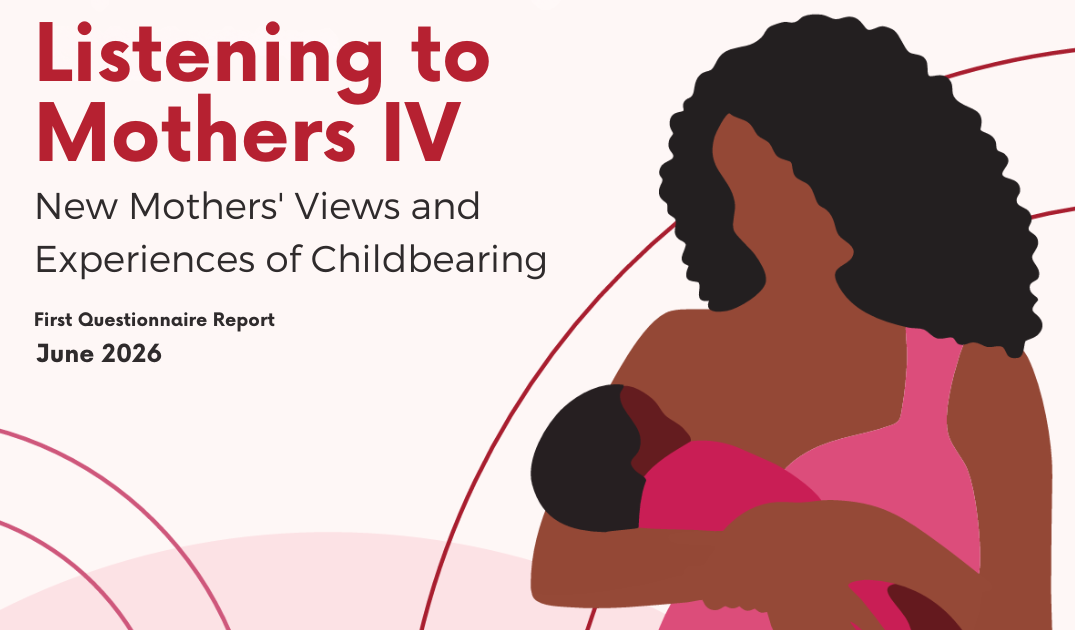
This month, the National Partnership for Women & Families, in partnership with the Black Mamas Matter Alliance and MomsRising, released its fourth Listening to Mothers survey. It’s the most comprehensive study of its kind in a decade, based on the experiences of more than 3,800 mothers in all 50 states and the District of Columbia who gave birth between 2023 and 2025. What sets this project apart is simple yet powerful. Instead of studying us, they asked us. They put the voices of mothers, especially Black, Indigenous and other mothers of color, front and center.
And what these mothers said deserves our full attention.
The data behind the dismissal
We talk a lot about respect. This survey measured it.
More than 40 percent of mothers said their providers did not respond in a timely manner when they asked for help during their care. Almost 1 in 5 said they were ignored or neglected. An official measure of respectful, person-centred care at birth found that too many women received less support than they needed and the shortfalls were specific and known. I don’t feel heard or appreciated. They treat him disrespectfully. They are kept in the dark about what was going on in their bodies. Experiencing discrimination. Having set aside their culture and customs.
One woman shared that she was treated, in her words, as having “no feelings, no mind of my own because I was young and black.” Another wrote that she felt that if she had “the right security, the right income, or the right color,” she would have been treated differently, or at least respected.
This is the part we cannot let slip. The research found the same painful pattern over and over again. American Indian and Alaskan mothers, Native Hawaiian and Pacific Islander mothers, black mothers, and multiracial mothers often fared worse than all others. So did mothers on Medicaid, younger mothers, mothers with disabilities, and mothers without a partner. The disrespect was no accident. He followed along the same lines he always followed.
When the care we want is out of reach
Here’s what makes the cut even deeper. The mothers told the researchers exactly what good care looked like and then described how rarely they received it.
Midwives stood out in the data, time and time again, for the quality of care they provided. However, only a small percentage of women had one. The vast majority did not have a doula at all, although mothers who had this support described it as life-changing. As one person put it, her doula was “like a childbirth coach, therapist and friend all rolled into one.” Another wished aloud that insurance would cover doulas for women who labor alone, because going through it alone was, she said, lonely.
Too many women were unable to make an early prenatal visit when they wanted, during the very window when questions are high and good guidance is most important. One mother did not have a single prenatal visit until one week before delivery due to insurance issues. Group prenatal care, virtual visits, and other models preferred by mothers remained rare.
And on the other side of that coin, many women received too much of the kind of care that works against the body rather than with it. Only a small fraction experienced what the report calls a normal birth, the natural process that unfolds without unnecessary interference. Most births were planned and managed, with inductions and C-sections before a woman’s body signaled it was ready. One mother described it as the fifth C-section performed by a single doctor in 24 hours. Another said she believed a doctor told her she needed a C-section she didn’t need, just to get over it faster.
Decisions were made without consensus. Women who wanted to move during labor were told to stay put. Women who wanted to try a vaginal delivery after a previous caesarean section were denied the option. Women who had every reason to plan for a healthy vaginal delivery were pushed into inductions based on predictions of a “big baby” that turned out to be perfectly average in size.
The pain we carry quietly
The survey also named something our community has lived with in silence for generations. The toll on our mental health.
Between 35 and 43 percent of mothers reported symptoms of anxiety before, during, and after pregnancy. Rates of both anxiety and depression were high at each stage and were higher among Native and Black mothers. Most of these women received no treatment at all, no counseling and no medication, because of the cost and the lack of providers who could help.
Read it again. A mother takes care of a newborn, runs without sleep and quietly drowns, and the system offers her nothing. One woman wrote: “I was so depressed I was almost catatonic. I told my doctors and my baby’s doctor but got no help.” Another said: “I felt that my feelings and concerns were ignored and I felt very alone.”
Single. This word appears again and again in these pages. It should break our hearts and move our feet.
This happens at the worst possible time
All this unfolds as the aid families rely on is withdrawn. Deep cuts to Medicaid are accelerating the closing of hospitals and labor and delivery facilities, especially in rural communities. Restrictions on reproductive care impede emergency treatment and exacerbate the shortage of providers willing and able to do this work. The very programs created to reduce maternal deaths are being curtailed.
We have made hard progress. Almost every state has extended Medicaid coverage to a full year after birth. There is now a national maternal mental health hotline. There has been real investment in community-based doula support and maternal health innovation. These profits are precisely what are at risk. And we know who pays first and who pays more when the safety net wears out. We always have.
What do we do with it?
It would be easy to read a report like this and feel defeated. Don’t give it to them. Because buried in all this harsh truth is a road map.
Mothers told us what they needed. Midwives and doulas, available and covered, are not for the few. Prenatal care that starts early and treats us as partners. Mental health support that actually occurs. Providers who ask before they act, who explain before they cut, who believe us when we talk. None of this is a mystery. As one of the researchers said, the people closest to the problem are closest to the solution. The evidence is here. The know-how is here. What is missing is the will.
At Black Women’s Health Imperative, this is the work we were born to do. For more than 40 years we have insisted that our health is our power and that our voices are at the center of every decision made about our bodies. This research is proof of what happens when someone finally hands us the microphone. Now we need to make sure that those in charge continue to listen and act.
So here’s what we ask of you. Read the report. Share it with the women in your circle. If you’re pregnant or planning to stay, learn what respectful care looks like so you can name it when you’re not getting it. Ask about midwives and doulas. Write down your wishes. Bring someone with you to support when you are too tired to fight. And know, deep in your bones, that listening is not a favor that anyone does for you. It’s your right.
They heard us this time. Our job now is to make sure they can never say they didn’t know.
Read the full Listening to Mothers survey at the National Partnership for Women & Families HERE.
