


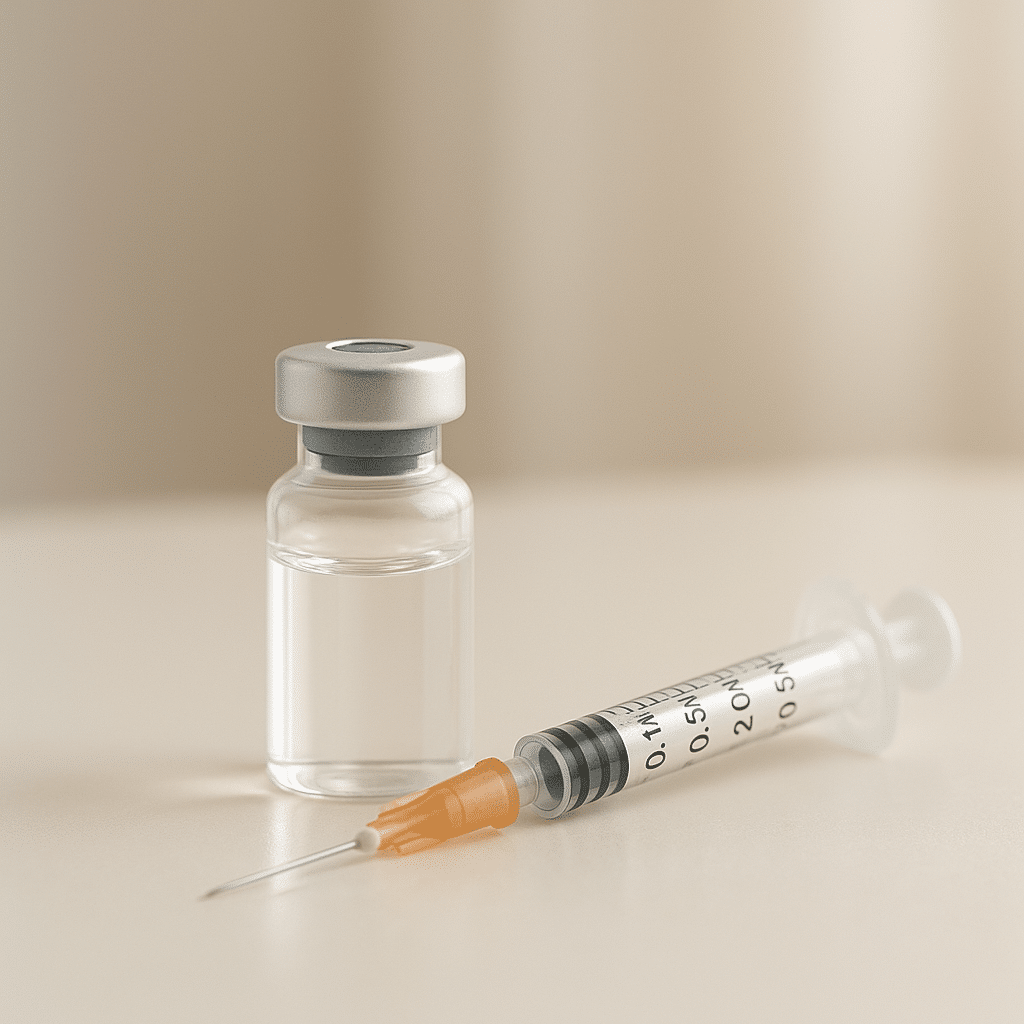
If you’re exploring wrinkle treatments, you’ve probably heard of one of the newest neuromodulators, Jeuveau. As you weigh your options, you probably want something that looks natural and lasts. If you’re considering Jeuveau, you’re probably wondering: how long does Jeuveau last? And how does it compare to Botox?
Both Jeuveau and Botox are FDA-approved treatments used to smooth wrinkles that come from expressions like frown lines between the eyebrows or crow’s feet around the eyes. But when it comes to longevity, effectiveness and overall value, the differences may surprise you.
Here’s a clear, science-backed guide to how long Jeuveau lasts and how it responds to Botox.
What is Jeuveau?
Jeuveau is an injectable wrinkle treatment made from botulinum toxin type A, the same key ingredient found in Botox, Dysport and other neuromodulators. Its main job is to temporarily relax the facial muscles that cause lines and wrinkles.
Unlike Botox, which is also approved for medical issues like migraines and muscle spasms, Jeuveau is made specifically for cosmetic use. It was approved by the FDA in 2019 and is sometimes referred to as “Newtox” for its similarity to Botox, but with a modern twist.
So, how long does Jeuveau last?
Typical Treatment Results
In most clinical trials, Jeuveau lasts about 3 to 4 months, which is in line with what is typically seen with Botox. Most people notice smoother skin as early as 2-3 days after treatment, with peak results at around 1 month. After that, the effects gradually disappear as muscle movement returns.
The typical timeline of results after the injection is:
- After 2 to 3 days, you can expect to start to feel your muscles hardening.
- About 7 to 14 days, you can expect to see the full results of your injections.
- For up to 4 months after the injection, you can expect to continue to see results.
This means you’ll probably want 3 to 4 treatments a year if this is something you plan on doing all the time. You should consult your doctor to determine which treatment plan is best for you and to make sure you don’t overdo it.
Can Jeuveau outlast Botox?
Potentially! And this is one of the most exciting updates from the research. It is important to note that the results are from only one clinical study. However, in a clinical study comparing standard (20 units) versus higher dose (40 units) Jeuveau, the higher dose extended results for up to 6 months for many participants without increasing side effects.

Specifically, in this study, they found that about 48% of patients still had improvement in wrinkles at 5 months. And nearly 40% of patients still had visible results after 6 months. This is great news for patients who want fewer appointments per year without sacrificing results. Or patients who are on a budget and want to make their money stretch without sacrificing results. It is important to remember that these results are not guaranteed because everyone is different.
Jeuveau vs. Botox: Duration of Results Summary
| Feature | Jeuveau | Botox |
|---|---|---|
| Start the results | 2-3 days | 3-4 days |
| Standard Duration | ~ 3-4 months | ~ 3-4 months |
| Long lasting option | Up to 6 months (in 40 units) | It usually lasts about 4 months |
| Year of FDA approval | 2019 (cosmetics only) | 2002 (cosmetics + medical) |
| Price per treatment | Often 20-25% less than Botox | Standard purchase price |
What affects how long Jeuveau lasts?
Everyone is unique and different. This means there are so many things that can affect your results. Several factors can affect the duration of treatment with Jeuveau:
- Dosage used – Higher doses tend to last longer, as seen in the 40 unit study group.
- Muscle Power – Stronger facial muscles may cause the product to break down faster. this is influenced by your genetics.
- Metabolism – Faster metabolisms can process botulism toxin faster, which is also affected by your genetics.
- Injection area – Smaller areas such as the eyebrow may retain the effects longer than larger areas.
- Cohesion – Repeated treatments can lead to longer lasting results over time.
Is Jeuveau safe for long-term use?

Yes. Clinical trials involving thousands of patients have shown that Jeuveau is well tolerated, with no serious safety concerns. The most common side effects were mild and included headache, injection site bruising, or eyelid drooping, which occurred in less than 2% of cases. Even at higher doses, Jeuveau’s safety profile remained consistent with no increased risk of side effects compared to the standard dose of Botox.
Final Verdict: How Long Does Jeuveau Last?
Jeuveau usually lasts 3-4 months, with some users enjoying up to 6 months of smooth skin when using higher doses. This puts it on par with, or even slightly ahead of, Botox in terms of longevity. Whether you’re new to wrinkle treatments or looking for a more affordable alternative to Botox, Jeuveau offers an exciting option backed by research, results and real reviews.
References
Alexopoulos, A., Eberlein, B., Kompatscher, P., Läuchli, S., Reimann, K., & Staubach-Renz, P. (2022). A randomized, blinded, vehicle-controlled, multicenter trial of a cream containing ectoin and hyaluronic acid for atopic dermatitis in children. Journal of Dermatological Treatment, 33(7), 3300–3307. orttps://doi.org/10.1080/09546634.2021.2000172
Fontbonne, D., Becquart, F., & Kurzen, H. (2024). Positive and ecological contribution to skin photoprotection by ectoin and mannitol combined in vivo with UV filters. Photodermatology, Photoimmunology & Photomedicine, 40(1), 19–29. 10.1111/jocd.15893
Heinrich, U., Garbe, B., Tronnier, H., & Wiegand, C. (2007). In vivo evaluation of ectoin: A randomized, vehicle-controlled clinical trial. Dermatological Pharmacology and Physiology, 20(4), 211–218. 10.1159/000103204
Jeong, D., Lee, J., Jeong, H., Kim, B., & Kim, Y. (2019). Skin whitening effects of ectoin through suppression of α-MSH-stimulated melanogenesis and activation of Nrf2 antioxidant pathways in UVA-irradiated keratinocytes. International Journal of Molecular Sciences, 20(19), 4941.
Kudryavtseva, A., & Migaliev, D. (2017). Topical application of ectoin in children and adults for the treatment of inflammatory diseases associated with impaired skin barrier: A systematic review. Clinical, Aesthetic and Research Dermatology, 10517–531.10.1007/s13555-021-00676-9
Lefort, R., Durbec, F., & Lhomme, C. (2019). Visible light (400–800 nm) genotoxicity and photoprotection assessment of ectoine, L-ergothioneine and mannitol and four sunscreens. Journal of Photochemistry and Photobiology B: Biology, 198, 111573. 10.1016/j.jphotobiol.2008.01.008
Reuter, S., Schiller, M., & Bauer, G. (2010). Ectoins as novel anti-inflammatory and protective lead compounds with special emphasis on inflammatory bowel disease and lung inflammation. Inflammation Research, 59(12), 573–581. doi: 10.1016/j.phrs.2020.105389.
Wolnicka-Glubisz, A., Stachurska, A., & Zaleska, K. (2019). The effect of ectoine on parameters of skin damaged by a CO2 laser. Applied Sciences, 9(23), 4998.
