


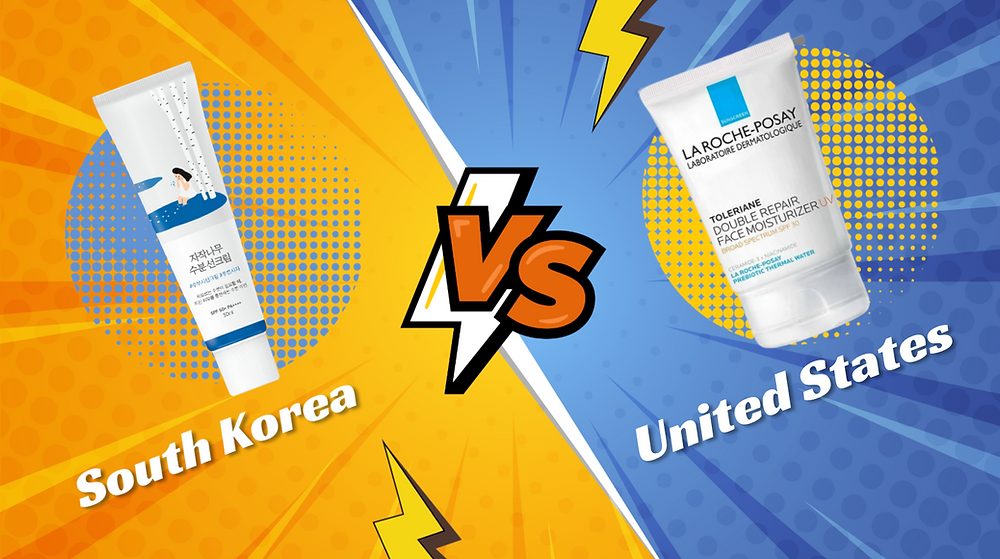
Tired of browsing endless aisles of sunscreens, confused by the different terminology and claims? You are not alone. Most people often choose their sunscreens based on marketing buzzwords rather than the actual performance of the product. As someone who has extensively studied skincare products around the world, I’m here to document the vivid contrast between Korean and American sunscreens so you can make an informed decision. This is your guide to sunscreens.
Why understanding the differences in sunscreens is vital to your skin’s health
First and foremost, sunscreen isn’t just a summer fling. it’s a lifelong commitment to your skin’s health. UV rays from the sun are known to cause skin cancer, premature aging and a host of other problems. While sunscreen use has become more common, differences in formulations between countries remain less understood. Here’s the gist: US sunscreen is like a grayscale TV in a 4K Ultra HD world, especially compared to its Korean counterparts.
South Korea has been leading the beauty industry for decades, known for its groundbreaking innovations, especially in the sunscreen sector. This topic is especially important since the US FDA has not approved any new UV filters since 1999, while K-beauty is constantly innovating. Not staying up to date with these trends could mean missing out on the best skin protection and comfort.
What is the difference between Korean and US sunscreens?
1. Ingredients:
In the United States, the Food and Drug Administration (FDA) plays a key role in regulating sunscreen ingredients. The FDA categorizes the active ingredients in sunscreens as over-the-counter (OTC) drugs. This means that in order for a new UV filter to be approved, it must go through rigorous testing and prove not only its effectiveness but also its safety for public use. The catch; No new UV filters have received FDA approval since 1999.
What does this mean for consumers? In short, your options are limited to formulations based on older technology. Using these outdated UV filters often results in sunscreens with a thicker, greasier texture. These formulas can not only feel unpleasant, but can also cause problems such as clogged pores, acne and skin irritation. Imagine slathering on a heavy layer of sunscreen that makes your skin feel like it can’t breathe. This is a common complaint among sunscreen users in the US.
The Innovation of Korean UV Filters
On the other hand, South Korean sunscreens are a testament to how far sunscreen technology can go when regulations are nimble and responsive to innovation. In South Korea, the cosmetics industry is buzzing with research and development, consistently unveiling UV filters that provide broad-spectrum protection while focusing on cosmetic elegance.
“Cosmetic elegance” isn’t just a buzzword. It refers to the sensory experience of using the product: how it feels, spreads and absorbs into your skin. Korean sunscreens often feel like a second skin—light, non-sticky, and super smooth. They’re designed to be worn comfortably all day, making reapplying less of a chore and more of a pleasure. These sunscreens usually use newer chemical filters that are not only more effective but also kind to the skin.
The user experience: A comparison
If you were to compare a typical US sunscreen to a Korean equivalent, the difference in user experience would be night and day. Imagine applying a Korean sunscreen and forgetting you’re wearing it – no white cast, no greasy finish and no heaviness. Now contrast that with the very familiar experience of a sunscreen in the US that leaves you glowing like a buttered turkey, constantly aware of the heavy layer sitting on your face.
The difference in user experience can also have a significant impact on compliance. If your sunscreen feels good on your skin, you’re more likely to reapply as needed and get the sun protection you need.
So if you’re looking for a sunscreen that not only protects but also treats your skin, you might want to look beyond the usual suspects on US drugstore shelves. Consider entering the world of K-beauty, where sunscreen isn’t just a shield, but an extension of your skincare routine.
2. Types of UV rays
In the United States, the term you’ll most often come across when shopping for sunscreen is SPF, which stands for Sun Protection Factor. The SPF rating mainly indicates the level of protection the product offers against UVB rays. UVB rays are what can cause your skin to burn and are a major factor in the development of skin cancer. SPF ratings range from 15 to 100 or more, giving you a broad idea of how well the product will protect you from sunburn.
However, this sole focus on UVB protection paints an incomplete picture. While preventing sunburn is vital, UVB rays aren’t the only type of UV radiation you need to worry about. That’s where UVA rays come into play. UVA rays may not burn you, but they penetrate deeper into the skin and are responsible for accelerating aging and can contribute to skin cancer.
The K-Beauty approach: UVB and UVA
Korean sunscreens go beyond SPF ratings to give you a more complete understanding of the protection they offer. In addition to SPF, they often use the PA system, which stands for “Grade of UVA Protection.” It is usually followed by plus (+) symbols ranging from one to four (PA+ to PA++++). The more plus symbols, the higher the level of UVA protection.
What does UVA protection mean to you? UVA rays penetrate the skin deeper than UVB rays, affecting the elastin and collagen fibers in the skin. Over time, this can lead to the formation of wrinkles, fine lines and sagging skin. Additionally, UVA exposure can cause dark spots and pigmentation. So when you see a Korean sunscreen with high PA scores, it indicates a well-rounded product that protects against both immediate dangers (burning) and long-term damage (aging and pigmentation).
Because both scales matter
The dual focus on SPF and PA ratings in Korean sunscreens offers a more holistic approach to sun protection. He recognizes that while sunburn prevention is vital, it’s only part of the story. A well-rounded sunscreen should also protect against the more insidious and long-term damage caused by UVA rays.
You might be wondering why the PA system isn’t as common in the US. The reason largely comes back to regulations. The FDA has not yet adopted the PA rating system, although some forward-thinking American brands have begun incorporating it into their labeling.
The Takeaway
Understanding both SPF and PA ratings empowers you to make better decisions about your skin’s health. While SPF is an essential part of sun protection, it shouldn’t be the only thing you consider. If you’re concerned about aging, pigmentation, or overall skin health, Korean sunscreens with a high PA rating offer a more complete solution.
Examples:
Fun fact
While we’re on the subject, here’s something fun: ever notice how some sunscreens can make you look like a ghost? This is often due to a white casting ingredient called zinc oxide commonly found in US sunscreens. In contrast, Korean sunscreens tend to avoid this, focusing on a more “transparent” experience.
Taking Action: Your Personalized Path to Superior Sun Protection
If you’re interested in diving deeper, I offer an in-depth skincare consultation service that can help you find products that are perfectly tailored for you. Please feel free to browse other resources on my website and consider subscribing to my newsletter.
I hope this guide was enlightening. If you have more questions or need further clarification, please feel free to leave a comment below. Your journey to smarter sun protection begins now. So go ahead, make your choice and bask in the glory of well-protected skin!
